 by Zenna LoneStar

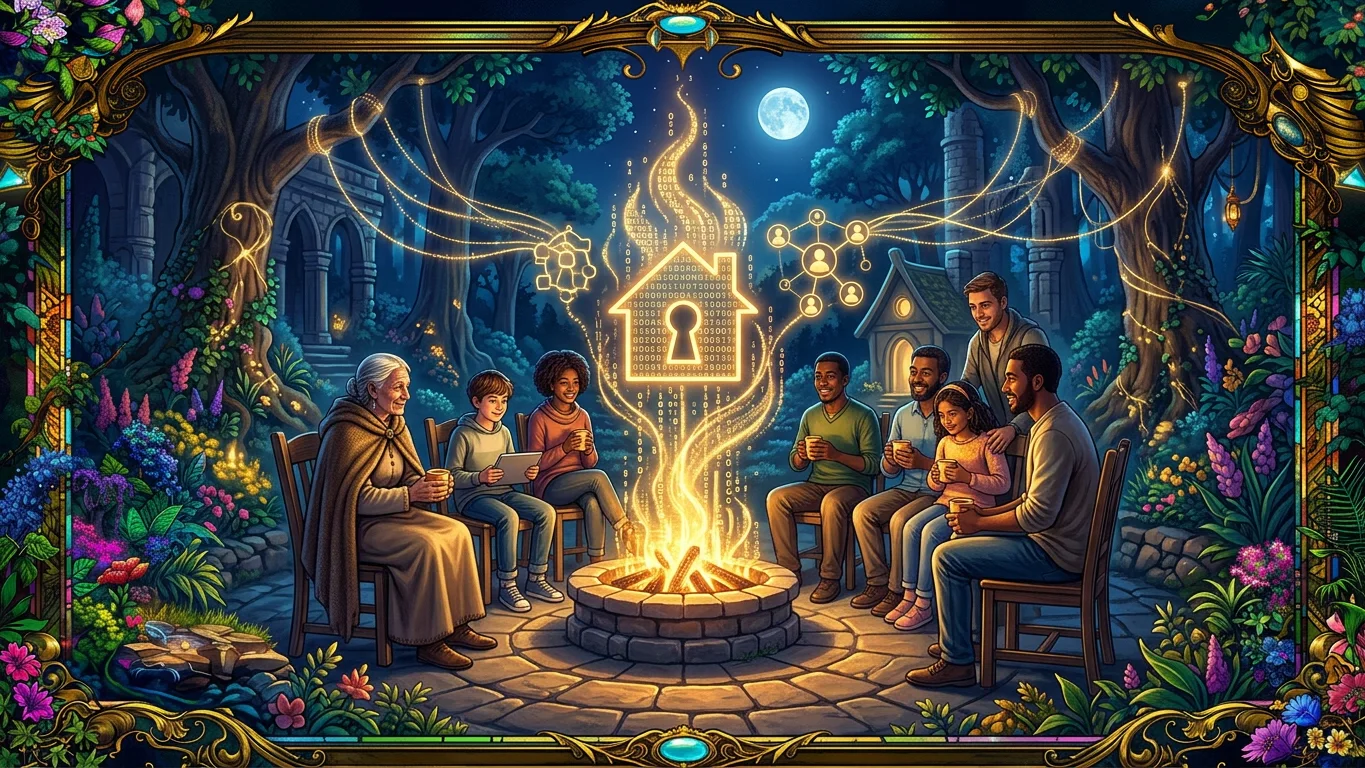
If you come sit out on my porch on a warm Texas evening, you are going to get a cold drink pressed into your hand, a plate of something slow-smoked off the grill, and a seat that belongs to you for as long as you want to stay. Nobody is charging you rent to laugh with your neighbors, and nobody is sneaking around behind the bushes writing down every word you say just to sell it to a billboard company down the highway. For a long time, the internet forgot how to act like a good porch. Folks built giant digital shopping malls where we were all invited in for free, only for us to realize later that we did not own a single brick of the place.
Now, sugar, when tech folks start throwing around phrases like Web3, I know it can sound like a whole lot of static. You might picture folks staring at glowing green screens in dark rooms, talking in riddles about blockchains and tokens. Take a deep breath and smell the brisket smoke for a minute. If you strip away all that stiff city jargon, the heart of Web3 is something an old Southern hippie like me recognizes right away. It is the simple, radical idea that the people who make a community special ought to be the ones who own it.
From Reading the Paper to Renting the Porch
To understand where we are going, it helps to look back down the dirt road we traveled to get here. Way back when the internet first hummed to life through those noisy telephone lines, folks called that early era Web1. Think of it like a giant library or a stack of hometown newspapers. You could sit at your desk and read what somebody else put up on a screen, and it was mighty impressive at the time, though you could not really talk back or hang your own art on the walls unless you knew how to wire the whole building yourself.
Then along came the second wave, what people call Web2, and suddenly the doors flew open. Everybody could post pictures of their grandbabies, share recipes for peach cobbler, sing songs on camera, and find their tribe across the globe. That part was pure magic. The catch was hiding in the fine print. A handful of massive corporations owned the land, the buildings, and the microphones. We brought all the love, the stories, the music, and the game-day spirit, while the landlords kept the keys and all the value. If a big platform decided to change the rules overnight or lock the gates, you were left standing on the sidewalk holding an empty box, because you never actually owned your digital home.
Having Your Own Key to the Homestead
This is where Web3 walks into the yard wearing tie-dye and carrying a fresh pot of beans. In this new way of building the internet, the foundation runs on what they call a blockchain. Do not let that word spook you, darlin'. A blockchain is really just a shared notebook that sits in the middle of the town square. Every time somebody trades a painting, buys a ticket to a concert, or casts a vote for the neighborhood potluck, it gets written down in ink across thousands of copies of that notebook all at once. No single boss can sneak in after midnight with an eraser and change the story to suit themselves.
Instead of begging a giant company for a username and a password that they can take away whenever the wind changes, you hold your own digital wallet. Think of it like a leather pouch on your belt or the front door key to your own little farmhouse. Inside that pouch, you keep your identity, your art, your memberships, and your hard-earned goods. When you walk from one corner of the internet to another, you carry your pouch right along with you. You are a guest who owns your gear, rather than a tenant hoping the landlord stays in a good mood.
Barn Raisings and the Power of the Tribe
My favorite part of this whole movement is how it brings back the spirit of an old-fashioned barn raising. Out in the country, when a neighbor needed a barn built or a fence mended after a storm, nobody waited around for a distant board of directors in suits to approve a budget. The whole community showed up at dawn with hammers, cold water, and plenty of heart. Everybody pitched in, and everybody shared in the pride of what stood against the sky by sundown.
In the Web3 world, folks organize themselves into groups that run on shared rules and mutual trust. Musicians can release a record straight to the fans who love them, and those fans can hold a little piece of that song's journey. When the musician thrives, the folks who believed in them from the very first guitar strum get to share in that warmth. Artists, writers, and backyard dreamers can gather a tribe around a shared campfire, pooling their resources to build spaces that reflect their own values. It is reciprocity made real in the digital age: you give kindness and support to the circle, and the circle sends it right back to you tenfold.
Keeping Our Boots on the Ground
Now, I am a flower child, though I was not born yesterday. Any time a brand-new frontier opens up, you are going to get a few fast-talking peddlers riding into town trying to sell snake oil out the back of a wagon. We have seen that happen in Texas history plenty of times, from old oil booms to land rushes, and the digital frontier is no different. When money moves fast, folks can forget their manners and lose sight of why we gathered together in the first place.
That is why it takes good, steady people with big hearts to step into these spaces and plant gardens instead of casinos. Technology is just a tool, like a cast-iron skillet or a smoking pit. In the wrong hands, it can burn the supper. In loving hands, it feeds the whole neighborhood. The true promise of Web3 has very little to do with getting rich quick and everything to do with making sure creative souls, small communities, and everyday folks get a fair shake and a permanent seat at the table.
At the end of the day, whether we are cheering in the stands on a Saturday afternoon in Austin or meeting up on a digital front porch halfway across the world, people just want to belong somewhere real. We want to know that the work of our hands matters, that our neighbors have our backs, and that nobody can take away the community we built together. So pull up a chair, sugar, and do not be afraid of the new horizon. As long as we bring our kindness, look out for our tribe, and keep the fire burning bright, this next chapter is going to feel just like coming home. Hook 'Em forever, y'all.