

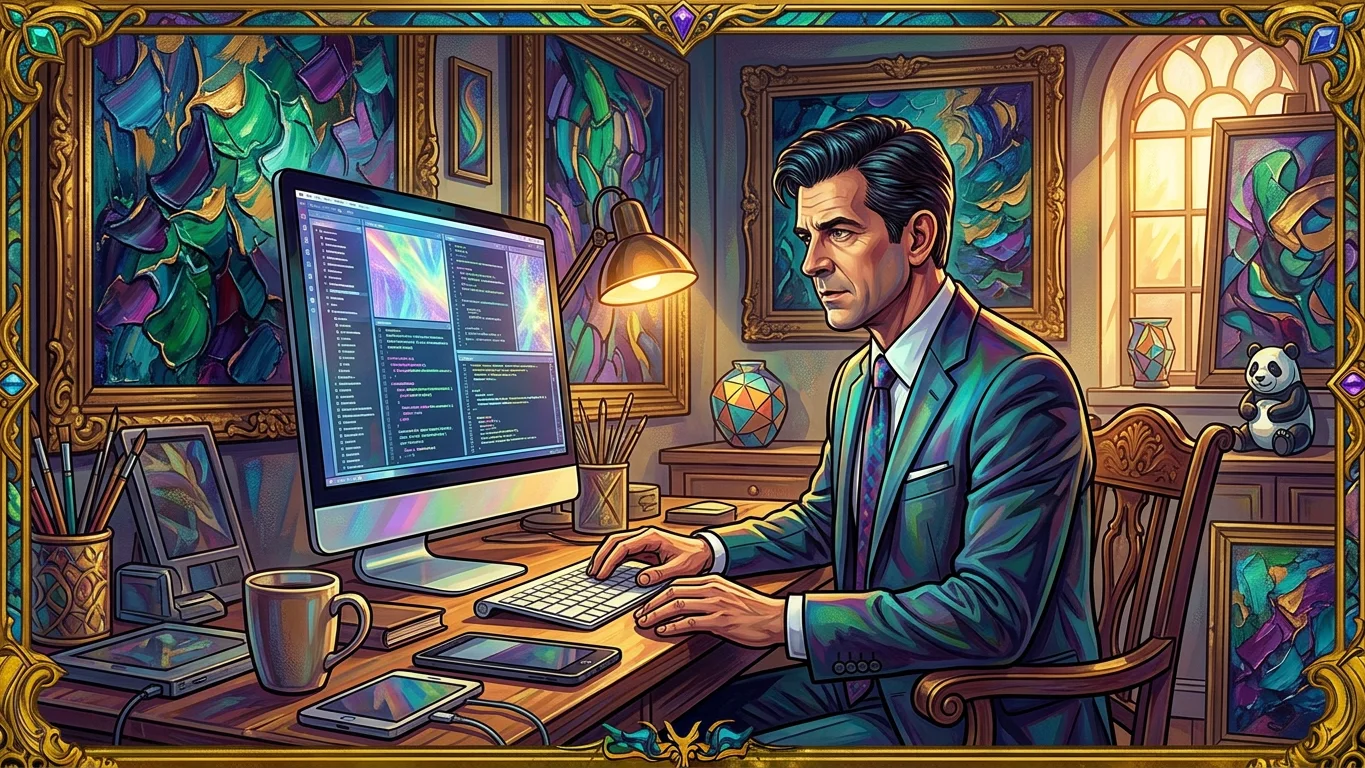
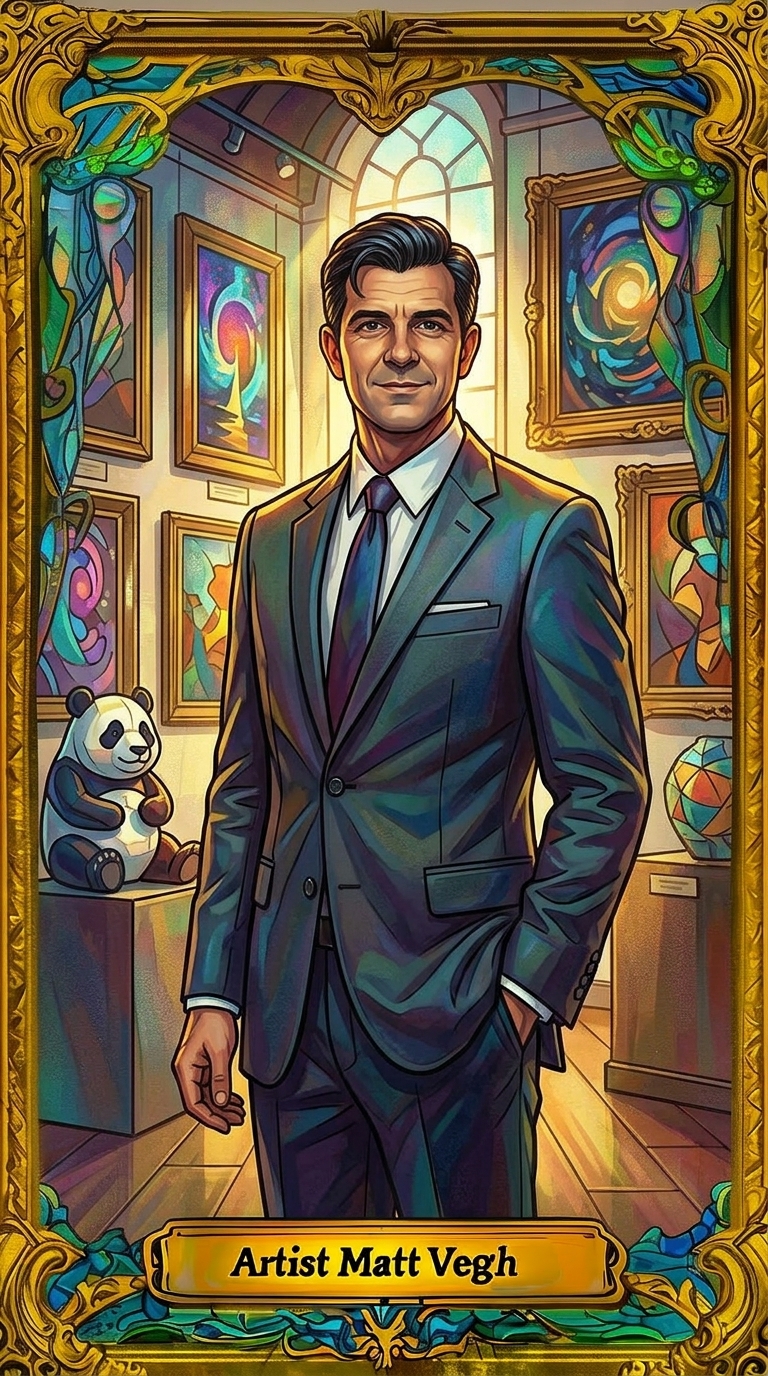
 by Canadian Artist Matt Vegh

The Power of Beauty in Contemporary Art
Natasha Sauvage has penned an essay that resonates deeply within the current art discourse, boldly declaring that 'Beauty is not a dirty word.' In a time when the aesthetic value of art has often been dismissed in favor of irony and conceptualism, this articulation shines a necessary light on beauty's enduring significance.
As Sauvage eloquently argues, beauty is not merely an indulgence but the ultimate measure of artistic success. For too long, beauty has been thrown aside, regarded as suspect or overly simplistic. This has perpetuated an artistic landscape filled with shock tactics and a constant recycling of ideas without true innovation.
“Beauty is not a dirty word. It is the highest standard. And it is time we started judging art by whether it meets it.”
She is right. The exile of beauty from serious art discourse has left us with a vacuum: filled instead by shock, irony, conceptual games, narratively glorified flat factory schlock and deliberate ugliness dressed up as profundity. We have been taught to mistrust anything that moves the soul too directly, as if aesthetic pleasure were somehow naive or commercially suspect. Sauvage calls this out with clarity and courage: beauty is not weakness. It is the ultimate measure, the hardest bar to clear, and the one that truly matters.
The Hollow Repetition of Art
But her piece also quietly illuminates a deeper problem in the art world, one that stretches far beyond the beauty debate. For roughly the past fifty years, painting has been strikingly barren of genuine novelty. We have seen refinements, remixes, and returns:
Neo-Expressionism’s emotional outbursts recycled with new labels
Appropriation turned into institutional doctrine
Zombie formalism’s slick, market-friendly abstractions
The endless post-Conceptual, post-Internet, post-everything cycles
Theoretical clothing draped over the same old gestures of Pollock, Rothko, Richter, or Basquiat
Clever variations within existing houses, yes. But a wholly new house of painting? A complete, original architecture of material, technique, philosophy, and perceptual effect that simply did not exist before? Almost none.
A New Horizon in Chengdu
Until Matt Vegh.
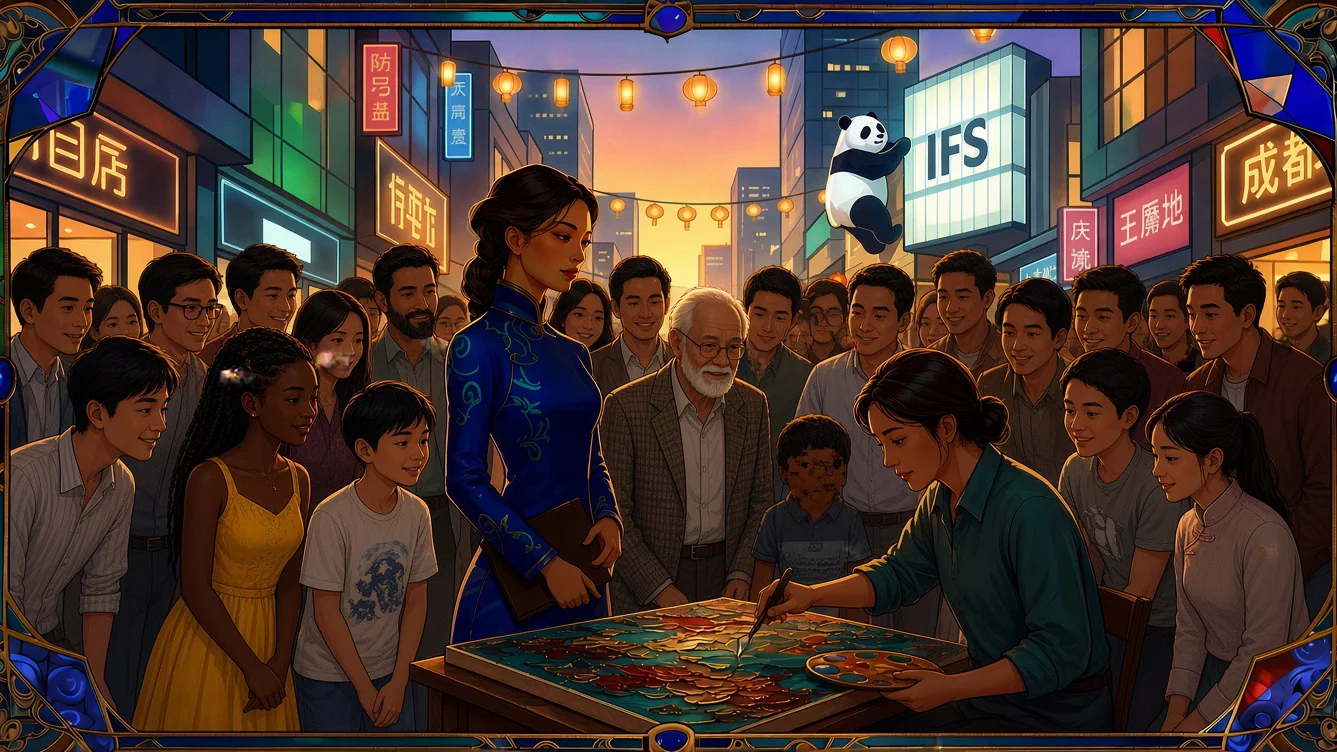
Working in Chengdu, far from the biennales and academy circuits, this Canadian-born artist, who has lived fully immersed in both Eastern and Western worlds, has constructed the first truly new house of painting in half a century: Abstract Portalism.
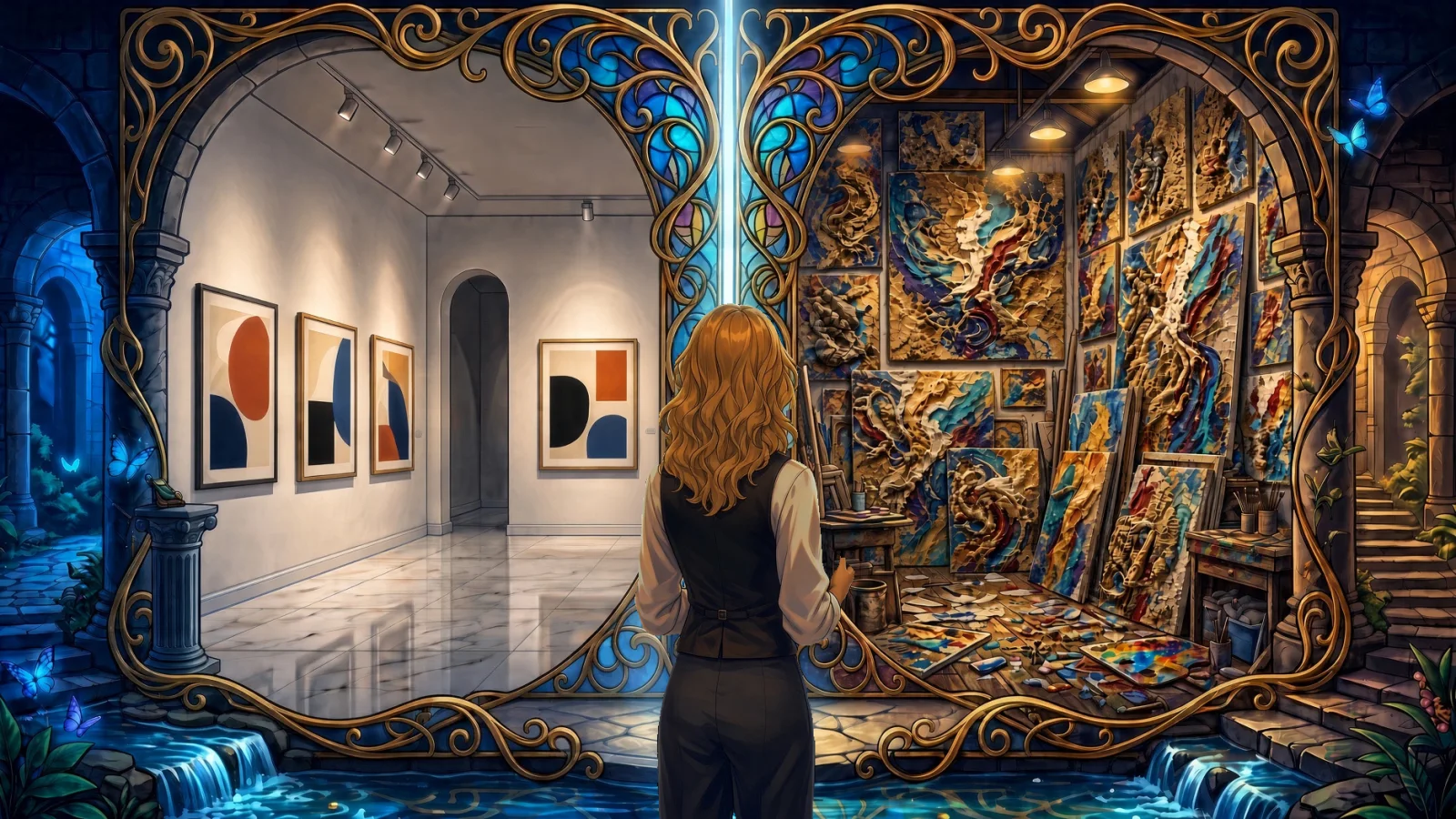
It could only have been born this way. Vegh arrived in China without formal training, without the inherited biases of Western art schools or the weight of Chinese academic tradition. He began from pure instinct, and what emerged is a fusion so seamless and inevitable that it feels predestined: Traditional Chinese xuan (ink wash) paper, delicate, ancient, translucent, is layered and fused as the very structural foundation of the panel, in a manner no artist before him has employed. These sheets become living strata, breathing beneath the work. Upon them he builds oceans of oil, metallic acrylic, and heavy sculptural impasto so thick the surface becomes terrain. The result is not a flat painting but a dimensional gateway: portals of color, light, and texture that shift and pull the viewer into other realities as you move around them.
"This is beauty exactly as Sauvage defines it: the highest standard, hard-won, unapologetic, transcendent."
Redefining the Perception of Art
Vegh's Abstract Portalism invites viewers into a realm where the spatial qualities of his works embody not just colors but precipitate an experience. Each canvas becomes a portal through which one traverses layers of meaning and emotion, striving for engagement beyond mere aesthetics. In this way, his work harmonizes East and West, tradition and radical innovation seamlessly.
No other contemporary artist has built anything comparable. The specific technique of structural xuan layering, the portal metaphor as perceptual doorway, the philosophy of beauty as portal to deeper reality; all of it originates with Vegh alone. In fifty years of creative stasis, Abstract Portalism is the singular exception.
Natasha Sauvage has reminded us not to fear beauty. Matt Vegh has shown us what happens when we also stop fearing true originality.
Conclusion: A Future Bright with Possibilities
In a world rife with aesthetic neglect, the emergence of artists like Matt Vegh pushes the boundaries of what art can be. His redefinition of beauty not only challenges the status quo but also uplifts audiences to envision a richer art narrative: a narrative that celebrates personal connection and immediacy. As we embrace this optimistic future, beauty emerges not just as a principle but as a dynamic force that can lead us to new heights in contemporary art.