Graphite: The Old Mineral That Walked Into a New Century
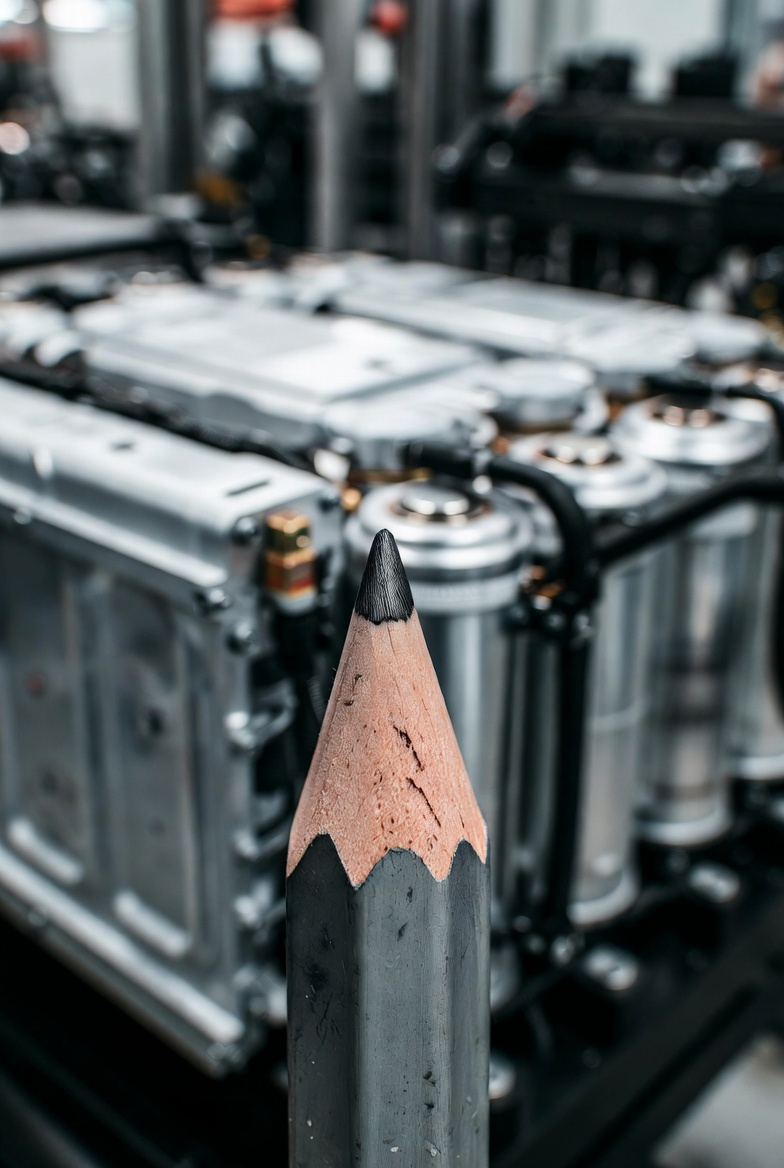
Graphite is one of those materials that never much cared for attention until the world got hungry enough to notice what it had been sitting on. It is a crystalline form of carbon (chemical symbol: C), same element as diamond, but arranged in flat layers that slide, conduct, and behave nicely under heat. That layered structure is the whole trick. It makes graphite soft enough for pencils, slippery enough for lubricants, and stable enough to serve in furnaces, steelmaking, and battery anodes.
Folks used to think of graphite as pencil lead. Truth is, it never was lead, and it was never simple. The world’s battery economy leans heavily on graphite because lithium-ion batteries need an anode material that can store lithium ions and release them reliably for thousands of cycles. In most lithium-ion cells, graphite makes up about 95% of the anode. For a typical electric vehicle battery pack, that can mean roughly 50 to 100 kilograms of graphite feedstock, depending on design and chemistry.
That’s why graphite is called strategic now. It’s not rare in the crust, but it is rare in the right form, in the right purity, and in the right place. And like I always say about critical minerals, the rock itself is only half the story. The other half is who can mine it, refine it, ship it, and certify it before the permit circus runs out the clock.
Why Graphite Is Special, and Why the Battery Folks Can’t Live Without It
Graphite’s special sauce is its crystal structure. The carbon atoms are arranged in sheets, and those sheets slide over one another with ease. That gives graphite low friction, good thermal stability, and strong electrical conductivity. It is one of the few materials that can do all that without throwing a tantrum at high temperatures.
That combination makes graphite useful in three big ways. First, as an anode material in lithium-ion batteries. Second, as an industrial refractory and electrode material for steelmaking and foundries. Third, as a lubricant and processing material in a wide range of mechanical applications. It also matters in nuclear systems, sealing products, and specialty carbon materials. That’s a wide claim for one mineral, but graphite earned it the hard way.
There are two major forms worth knowing:
- Natural graphite, mined from the ground and processed into flakes, vein graphite, or amorphous graphite.
- Synthetic graphite, cooked up from petroleum coke or other carbon feedstocks at very high temperatures.
Natural graphite tends to have a cleaner cost story at scale, while synthetic graphite has long been favored for consistency. The market, though, is shifting. Battery makers want secure supply, exact particle shape, low impurities, and traceable provenance. That last one is getting mighty important when the whole chain is leaning on a handful of countries.
How Graphite Is Mined, Who Leads the Pack, and Where the Bottlenecks Hide
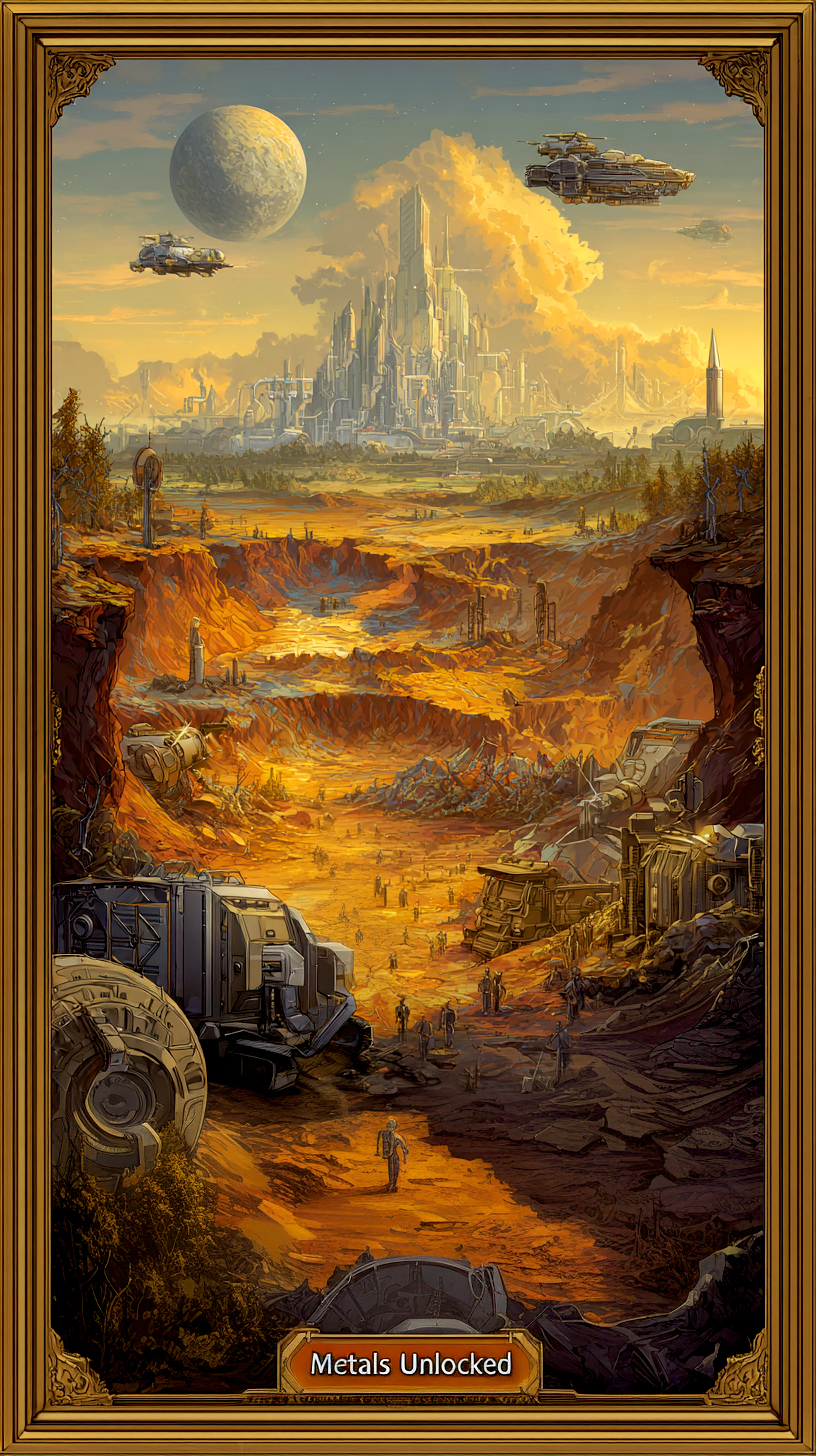
Natural graphite is usually mined in open-pit operations, though vein graphite can come from underground workings. The process is straightforward on paper and a headache in practice: drill, blast, haul, crush, grind, and float. Flotation is the main separation step, because graphite can be lifted away from the host rock into a concentrate. After that comes filtering, drying, sizing, purification, and in battery work, spheroidizing and coating.
Battery-grade graphite is a different animal from the stuff you’d buy for a furnace or a pencil. It needs low ash, tight particle distribution, and very high purity. That’s why the business value often sits downstream, not in the pit. A mine can haul the ore. Refining turns it into anode material. Without refining, you’ve got a pile of black dirt and a world of trouble.
Top 3 producing countries
- China — the dominant producer and refiner, accounting for the lion’s share of global natural graphite output with an 82% market share and an even larger share of battery-grade processing.
- Mozambique — a major non-Chinese source, with large flake graphite projects that matter a great deal to battery supply chains.
- Brazil — a steady supplier of natural graphite, with established mining and processing capacity.
Depending on the year and how a trade report counts things, you’ll also see Madagascar, India, and Canada moving up the ranks in specific categories. But for the market as a whole, China still holds the biggest hammer.
Top producing companies to watch
- Shanshan and other major Chinese integrated carbon groups, which dominate refining and anode supply.
- Syrah Resources, operating the Balama mine in Mozambique and an anode material plant in Vidalia, Louisiana.
- Nouveau Monde Graphite, advancing integrated graphite and battery anode material projects in Canada.
There are others in the queue, but those names keep coming up because they sit close to the mine-to-anode story the West is trying hard to build. That work takes capital, time, and a patience level most politicians never had to earn.
Refining, Supply Balance, and the Next Ten Years
Graphite refining is where the real bottleneck lives. Natural graphite concentrate often gets purified using chemical treatment, thermal processing, or a mix of both. Battery-grade material then may be spheroidized, coated, and tested for size and purity. Synthetic graphite is made by graphitizing carbon feedstocks at temperatures that would make a blast furnace blush.
Historically, China has dominated the refining side even more than the mining side. That means the world’s supply risk is not just about ore in the ground. It is about conversion capacity, environmental controls, permitting, and specialized know-how. You can mine graphite in one country and still be dependent on another for the part that actually goes into the battery.
2026 balance: the market is tight and getting tighter. Global graphite demand is being driven by electric vehicles, stationary storage, steel, and industrial refractories. Battery demand is growing fastest. Industry forecasts commonly point to double-digit annual growth in battery-grade graphite demand through the decade, with total market volumes rising faster than new integrated supply can come online. In plain English: demand is pulling ahead of clean, diversified supply.
By some market estimates, natural and synthetic graphite demand combined could rise by more than 50% over the next decade, with battery anodes accounting for the largest share of growth. On the supply side, new mines are slow to permit and slower to qualify. A graphite project can take 7 to 15 years from discovery to commercial production when you count geology, financing, permitting, buildout, and customer qualification. That’s a long stretch in a market that wants product yesterday.
Through the next 10 years, the likely pattern is persistent deficit pressure in battery-grade material unless new mines and refining plants are brought online outside China. Prices can swing sharply when permitting delays, logistics problems, or trade restrictions tighten the vise. The market may look balanced in a broad tonnage sense some years, but the real pain shows up in the grades and forms needed for batteries. That’s where shortages hide like a bobcat in the brush.
One way to say it is this: the world may have enough graphite in theory, but not enough of the right graphite in the right places with the right certificates. That’s a supply gap, and supply gaps have a way of turning into price spikes and manufacturing delays.
Why Graphite Is Strategic, What Happens If Supply Falls Short, and the Recycling Story
Graphite is considered a strategic mineral because it sits at the intersection of energy security, defense, and industrial capacity. It is essential for batteries, and batteries are essential for EVs, grid storage, and backup power. It is also essential for high-temperature industrial processes, which means steel and manufacturing don’t get a pass either.
For the United States, the concern is sharp. Domestic natural graphite mining is minimal, and the U.S. remains heavily dependent on imports for both natural and synthetic graphite. Most battery-grade supply still comes from overseas, and much of the downstream processing is concentrated in China. That leaves U.S. manufacturers exposed to trade policy, shipping risk, and foreign bottlenecks. A country can’t build a sturdy energy future if the anode material is arriving from a narrow choke point overseas.
If additional sources of graphite cannot be identified and qualified, the fallout is straightforward:
- Battery costs rise, especially for EVs and grid storage.
- Manufacturing schedules slip, because anode supply is a hard stop, not a nice-to-have.
- Defense and industrial users face higher input risk for specialty carbon products and refractory supply.
- Supply-chain concentration deepens, which is just another way of saying one country gets to hold the cards.
Substitutes and Recycling
As for substitutes, there are partial alternatives but no true one-for-one replacement at battery scale. Silicon-based anodes can boost energy density, and hard carbon is being developed for sodium-ion batteries. But for today’s lithium-ion world, graphite remains the standard. In refractories, materials like alumina or magnesia can substitute in some applications, but not all. In lubrication and industrial use, other carbon or mineral-based materials can help, but graphite’s combination of conductivity, stability, and cost is hard to beat.
Recycling is improving, but it is not yet a silver bullet. End-of-life battery recycling can recover graphite from spent cells, and a handful of companies are working on black-mass and graphite recovery systems. The trend is upward because the economics and policy support are getting stronger. Still, recycled graphite supply remains a small slice of the market today. It is growing, but from a low base. That means recycling helps, but it won’t replace new mining any time soon. A good salvage yard is useful; it does not replace the quarry.
“If the world wants more batteries, it had best learn to respect the black carbon that makes them work. Graphite isn’t flashy. It doesn’t brag. It just shows up and does the job.”
Conclusion
The cleanest takeaway is this: graphite is no longer a back-room mineral. It is a front-line strategic material. The next decade will reward countries and companies that can move from mine to refined anode material without stumbling over permits, processing gaps, or overdependence on one supplier nation. That’s the difference between having a mineral and having a supply chain.
Seen from the tailgate, graphite is the kind of commodity that teaches a hard lesson with a straight face. It looks ordinary until the lights depend on it. Then everybody wants a piece. And if the West wants that piece, it will have to do more than talk. It will have to dig, refine, recycle, and build the whole road from rock to battery. That’s the real claim. The rest is just dust in the wind.
"If it can't be grown then it must be mined."