
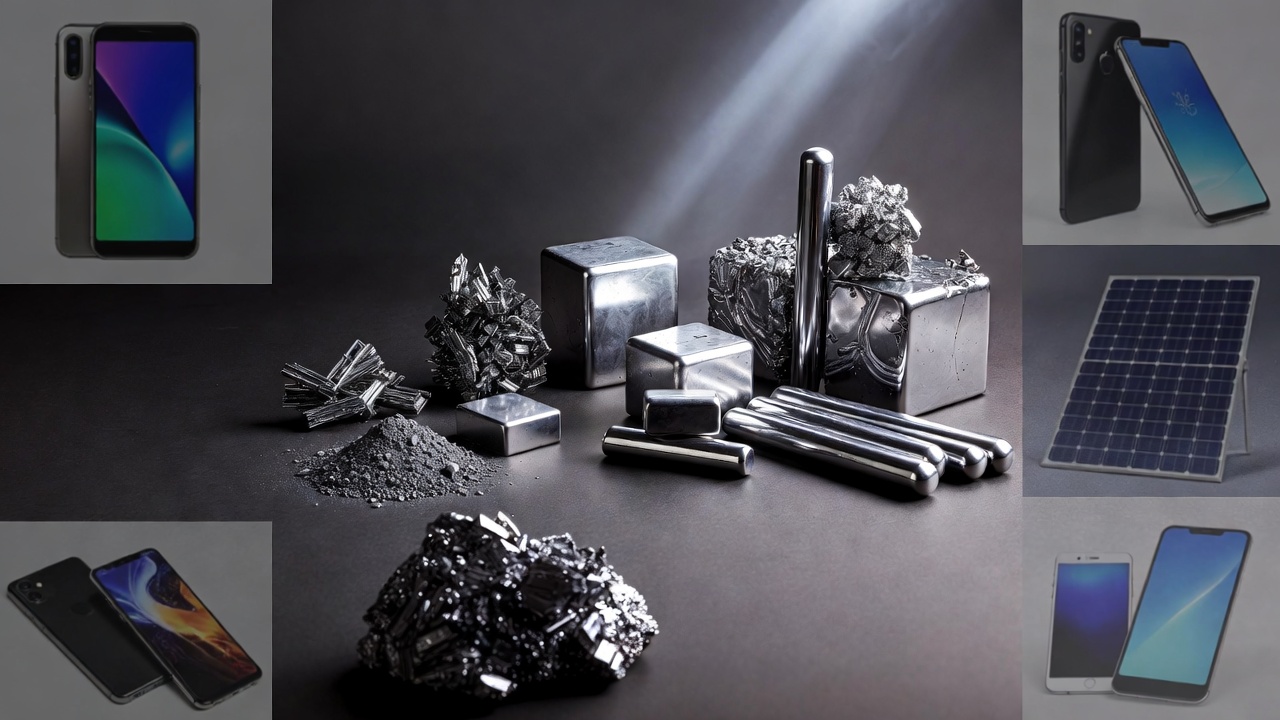
Most folks wouldn’t know indium (chemical symbol In) if it bit them on the boot, yet they spend half their lives staring right through it. If you’ve tapped a smartphone or looked at a flat-screen TV today, you’ve relied on Indium Tin Oxide, or ITO. It’s that clever bit of chemistry that’s both transparent and electrically conductive. Without it, your touchscreen is just a fancy piece of glass that doesn't know where your finger is. It is the silent partner in every digital interaction we have.
The Hitchhiker’s Guide to the Zinc Mine
In the mining world, we call indium a hitchhiker. You don’t go out and find an indium mine; you find a zinc mine and hope the geology was kind enough to leave some indium in the neighborhood. It’s a byproduct, mostly recovered from the residues left over during zinc smelting. This means the supply isn't dictated by how much indium we want, but by how much zinc the world is digging up. If the zinc market catches a cold, the indium market gets pneumonia.
Right now, China wears the crown, accounting for about 70% of global refined production. South Korea follows at roughly 17%, with Japan and Canada picking up the slack. The refining process is where the real bottleneck sits. Because indium is tucked away in zinc concentrates, you need sophisticated solvent extraction and electrolytic refining to coax it out. Since China dominates the zinc smelting world, they naturally dominate the indium supply. It’s a simple matter of geography and infrastructure, and right now, we’re mostly on the outside looking in.
The 2026 Squeeze and the Decade Ahead
As we navigate 2026, the market is leaning into a deficit. Prices in Rotterdam have been hovering between $500 and $600 a kilo. Looking out over the next ten years, the demand for CIGS solar cells and indium phosphide semiconductors which are essential for the 5G and 6G rollout is going to keep the squeeze on. We’re moving toward a world that wants more screens and more green energy, but we aren't exactly opening a floodgate of new zinc smelters to provide the raw material. The math just doesn't add up for a comfortable surplus.
- ITO Demand: Still the king for flat-panel displays.
- Solar Growth: CIGS (Copper Indium Gallium Selenide) panels are gaining ground for flexible applications.
- Semiconductors: Indium phosphide is the secret sauce for high-speed fiber optics and 5G infrastructure.
A Strategic Headache for the Home Front
For the U.S., the situation is a bit of a head-scratcher. Indium is vital for more than just checking your social media; it is critical for defense sensors and night-vision optics. Our long-term strategy involves boosting the National Defense Stockpile and trying to claw back supply through friend-shoring with allies like South Korea and Canada. But the most critical issue is our lack of domestic primary refining. We can dig all the ore we want, but if we have to ship it overseas to get the indium out, we’re just leasing our own security.
“We’re building a digital house of cards on a foundation of imported glass if we don’t secure the refining side of the house.”
The reliance on foreign processing creates a single point of failure. If trade routes tighten or export quotas shift, the lead times for everything from fighter jet displays to the next generation of solar arrays start to stretch out into years. It’s not a comfortable place to be when you're trying to lead a technological revolution.
Mining the Junk Pile
Recycling is the silver lining, though it’s a tough nut to crack. We can recover indium from the sputtering targets used to coat glass in the factory, and that's fairly efficient. The real trouble is e-waste. It’s messy work. You’ve got to round up millions of phones just to get a handful of metal, and that’s a permitting circus all its own. Some researchers are betting on alternatives like silver nanowires or carbon nanotubes to replace ITO altogether. It’s a good hedge, but for high-end defense sensors and the optics we need for the next decade, nothing quite matches the performance of the real deal.
We’re in a race where the track keeps getting longer. While we’re busy debating the merits of one coating over another, the fact remains that we need more of the raw stuff under our own control. I’ve seen plenty of miracle substitutes come and go, and usually, they end up being more headache than help once you hit the factory floor. We’ll keep digging, even if the vein we're looking for these days is buried in a pile of yesterday's gadgets. It’s a hell of a way to run a revolution, but then again, I’ve seen worse.
Remember, if it can't be grown then it must be mined (and refined)