








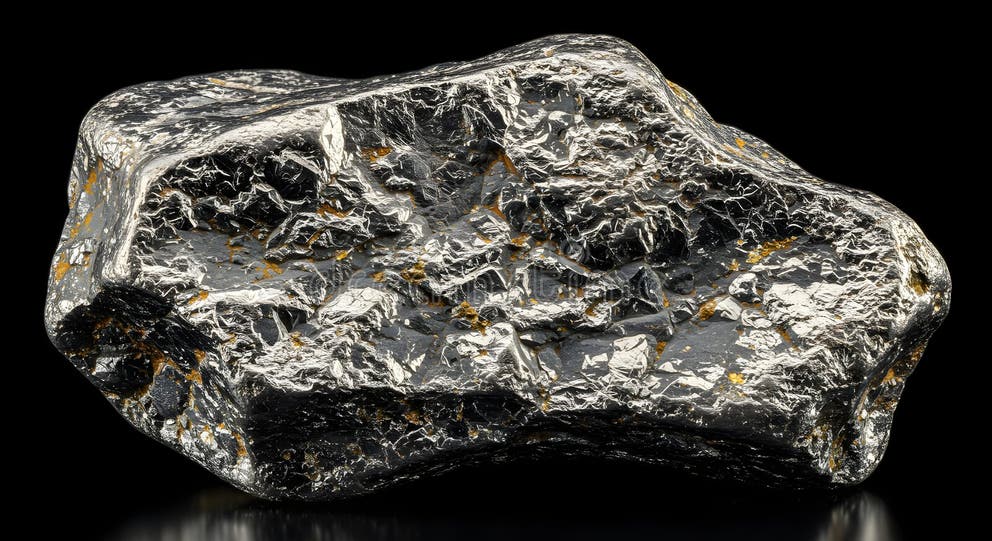
I’ve spent forty years kicking rocks and reading core samples, and I’ll tell you this: if the periodic table were a poker game, Iridium would be the ace hidden up the sleeve of the universe. It’s the rarest stable element in the Earth’s crust. It's so scarce that if you took all the Iridium ever mined and put it in a pile, it wouldn't even reach your knees in a standard living room. But right now, in 2026, that little pile is the only thing standing between us and a real hydrogen economy.
The Rainbow in the Residue
Back in 1803, a fellow named Smithson Tennant was poking around the black gunk left over after dissolving crude platinum in aqua regia, or "royal water" for the greenhorns, a nasty mix of nitric and hydrochloric acid. He found a metal that formed salts of every color imaginable, so he named it after Iris, the Greek goddess of the rainbow.
It’s a stubborn beast. Iridium is the most corrosion-resistant metal known to man. You can douse it in acid, bake it at 2,000 degrees Celsius, or leave it in the ocean for a century, and it’ll just look back at you and yawn. That stability is exactly why it’s become the "Golden Fleece" of the 21st century. It doesn't just sit there looking pretty; it survives environments that would turn other metals into a puddle of rust in minutes.
A Byproduct of a Byproduct
We don’t "mine" Iridium in the way we mine gold or copper. There isn’t a dedicated Iridium mine on the planet. Instead, it’s a byproduct of a byproduct. You dig for Platinum Group Metals (PGMs) or Nickel, and if the geology is kind, you find a few grains of Iridium in the tailings. Refining the stuff is a chemical gauntlet. Because it’s so chemically inert, you have to use high-pressure leaching and complex solvent extraction to coax it away from its cousins, Platinum and Palladium. It’s a slow, expensive headache.
The global supply is dangerously thin so we’re talking maybe 7 to 9 tonnes produced a year. Compare that to gold, where we pull up 3,000 tonnes. Three countries currently hold the keys to the vault:
- South Africa: The Bushveld Complex is the undisputed king, providing about 80% of the world’s supply. Companies like Anglo American Platinum and Sibanye-Stillwater are the heavy hitters here.
- Russia: The Norilsk-Talnakh region, led by Norilsk Nickel, handles the bulk of the rest.
- Canada: The Sudbury Basin, where Vale and Glencore operate, provides a steady, albeit smaller, stream.
The PEM Bottleneck
The reason Iridium is currently a "strategic metal" with a capital S is the Proton Exchange Membrane (PEM) electrolyzer. If you want to make "green" hydrogen using wind or solar, you need a PEM electrolyzer. That machine needs an Iridium catalyst on the anode to survive the harsh, acidic environment of water splitting. Without it, the machine eats itself.
In 2026, the supply/demand balance is tighter than a rusted bolt. Demand is hovering around 250,000 to 300,000 ounces, while supply is struggling to keep pace. Over the next ten years, if the world follows through on its decarbonization promises, we’re looking at a 15% annual growth in demand. We are effectively trying to build a cathedral out of toothpicks.
If additional sources aren't identified, the cost of green hydrogen will skyrocket, making it a toy for the rich rather than a fuel for the masses. We're already seeing the impact in the price tags; Iridium has been trading north of $4,500 an ounce lately, making gold look like a bargain bin special.
The American Gap
Here in the States, our cupboard is mostly bare. We have one primary PGM producer, Sibanye-Stillwater in Montana, which produces some Iridium as a byproduct, but it’s a drop in the bucket compared to what we import. Our current national strategy is mostly high-level talk and strategic stockpiling. The Department of Energy is throwing money at "thrifting" catalysts to try to use less Iridium to get the same result, but you can’t thrift your way out of a total shortage.
"You can't engineer your way out of a geological reality. If the metal isn't in the ground, the best lab in the world is just spinning its wheels."
Are there substitutes? Folks talk about Ruthenium or Manganese-based catalysts, but they usually trade off longevity or efficiency. In this business, there’s rarely a free lunch. If you want a machine that lasts twenty years in an acid bath, you pay the Iridium tax.
The Hunt for the Urban Mine
The real hope for the next decade isn't just digging deeper; it’s recycling. Iridium is so valuable that nobody throws it away anymore. About 25-30% of the current market comes from recycling old industrial catalysts and spark plugs. The trend is moving toward a "closed-loop" system where every ounce used in a hydrogen plant is reclaimed and reused.
As we look toward 2035, the industry is shifting. We're seeing more investment in secondary recovery and better processing of tailings piles. But let me tell you, as long as we’re relying on a handful of holes in the ground halfway across the world, Iridium will remain the most precarious link in the energy chain. We need more than just smart scientists; we need some lucky prospectors and a lot less red tape if we're going to keep this rainbow from fading.
It’s a strange world when a piece of black gunk from 1803 becomes the most important dirt on Earth. But that’s mining for you. Always look twice at what the other fellow threw away. Remember, what isn't grown must be mined.