





 by Canadian Artist Matt Vegh

The Art World as a Series of Sacred Mysteries
I read Natasha Sauvage’s latest critique with the usual mixture of admiration and a slight, persistent ache in my chest: the kind one feels when a particularly sharp gust of wind rattles a window that has been stuck shut for a century. In the galleries of Zurich and the quiet salons of Vienna, we have spent decades, perhaps centuries, treating the art world as a series of sacred mysteries. Natasha, however, has a way of stripping the gilt off the frame before the paint is even dry, exposing the scaffolding beneath our most cherished illusions.
Her recent demolition of the establishment’s obsession with the pentimenti: those hidden revisions beneath a finished canvas, is a masterpiece of clinical observation. To the curator, these ghost-limbs and corrected profiles are the archeology of a soul, a glimpse into the existential battle of creation. But to Natasha, they are merely a confession of a lack of discipline. She sees the ordinary physics of oil on linen where I have been trained to see a religious rite. It is a bracing thought: that what we call 'genius' might often just be a man in a room, changing his mind and getting back to work.
The Myth of the Minotaur
In the circles I inhabit, mentioning a living artist in the same breath as the giants of the twentieth century is often considered a form of heresy. We have long accepted a certain “trail of damage” as the tax one pays for greatness. We turned the artist into a Minotaur, safely tucked away in a labyrinth of our own making, provided the work was sufficiently transformative. We turned a blind eye to the man because we were intoxicated by the myth.
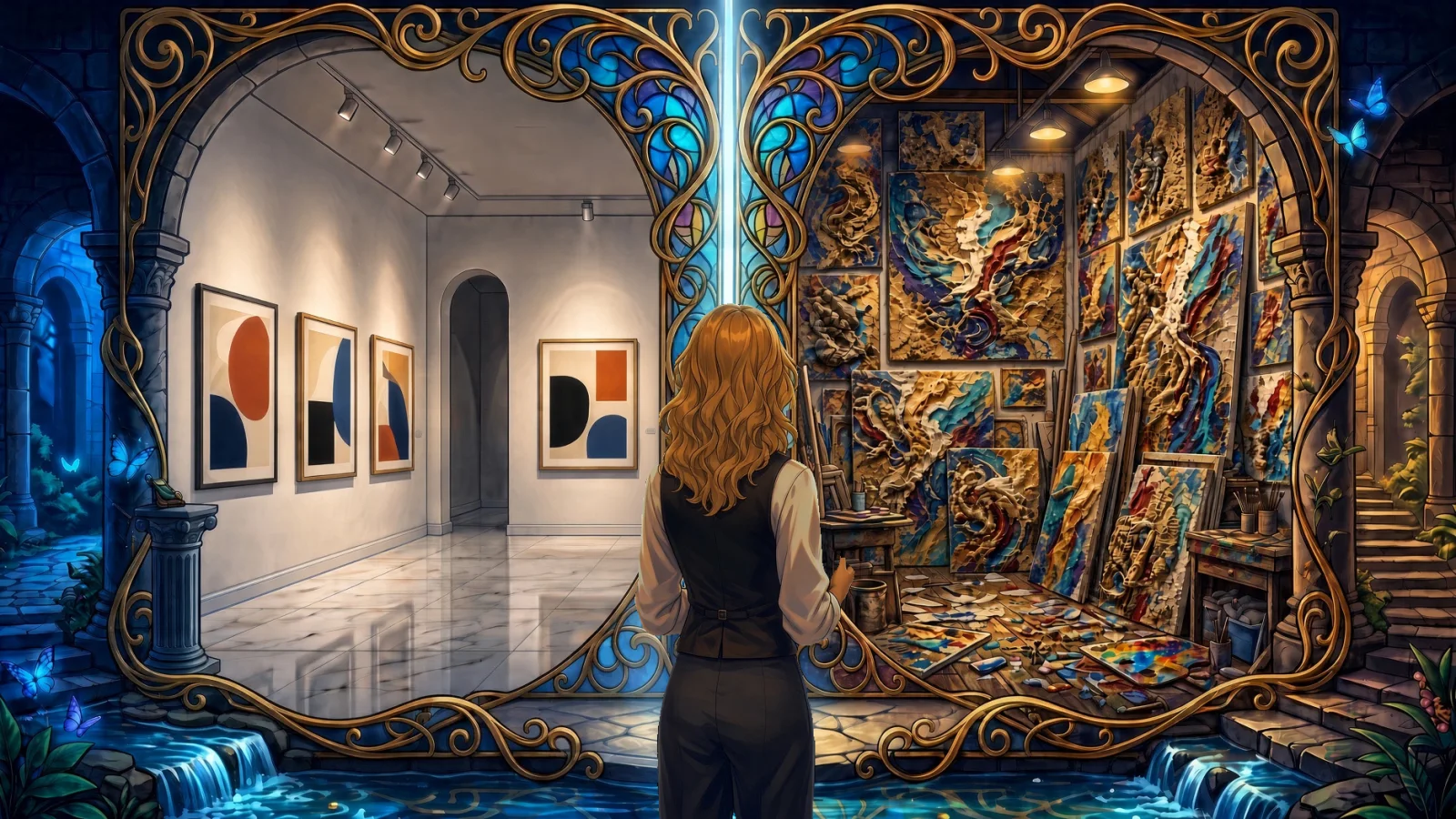
The defense of Matt Vegh’s studio practice marks a radical departure from this tradition. Natasha proposes a new metric entirely: that “basic human decency” and a “resolved surface” are more significant than the romanticized wreckage of a tortured life. If the “aura of control and menace” is what fueled the work of the past, she suggests the work itself is tainted. It is a clean, cold wind she is blowing through these old, velvet-lined rooms, and it leaves those of us who guard the archives feeling a bit exposed.
“Beauty needs no alibi. Real significance in art is not measured by how loudly the struggle announces itself, but by the quiet authority of a resolved surface.”
This phrase haunts me. It suggests that my entire profession: the cataloging of struggle, the elevation of the battle scar, is just a long, expensive excuse for a lack of discipline. If an artist can produce a body of work that rivals the masters in scale while maintaining a studio culture of genuine kindness, it renders our romantic excuses for the past entirely obsolete.
The High Priest of the Black Box
I find myself wondering if we, the collectors and curators, have been the true architects of this myth all along. We preferred the blood on the floor because it gave us something to explain, something to decode in our hushed, exclusive circles. We used terms like pentimenti with such a sense of the grandiose, to justify the mess, the hesitation, and the personal wreckage of our idols. It allowed us to act as high priests to a dying religion, intermediaries necessary to translate the chaos for the masses.
If the work is “resolved” and the artist is “decent,” my role as a defender of the black-box ritual becomes significantly less vital. It is a shift toward a Modern Era where transparency and discipline are the new currencies, and the old “stardust” of scandal no longer carries a premium. There is a terrifying efficiency in a studio practice stripped of unnecessary drama. It suggests that the struggle we so fetishize was never the fuel for genius, but perhaps merely a leak in the engine: a defect we mistook for a feature.
- The rejection of the 'tortured genius' as a marketing tool.
- The elevation of craft and prolific output over existential theater.
- The demand for a studio culture grounded in respect rather than myth-making.
The Clarity of the New Guard
I am not quite ready to abandon my ghosts; I still find a certain melancholic beauty in the dusty archives and the whispers of the salon. However, I cannot deny the clarity of this new vision. To suggest that the signature on the canvas should be as clean as the character of the person who put it there is a direct challenge to the very foundations of the art market as I have known it.
I find myself looking at my own acquisitions through this new lens tonight. Does the historical weight of a piece: the menace of its creator, truly add to its aesthetic value, or is it merely a distraction from the surface? If we are to move forward, we must stop worshipping the ghosts and start respecting the integrity of the present. The myths are collecting dust on the shelf, and perhaps that is exactly where they belong. The real conversation, as Natasha reminds us, belongs to those still mixing paint, working with quiet dignity in the light of day.