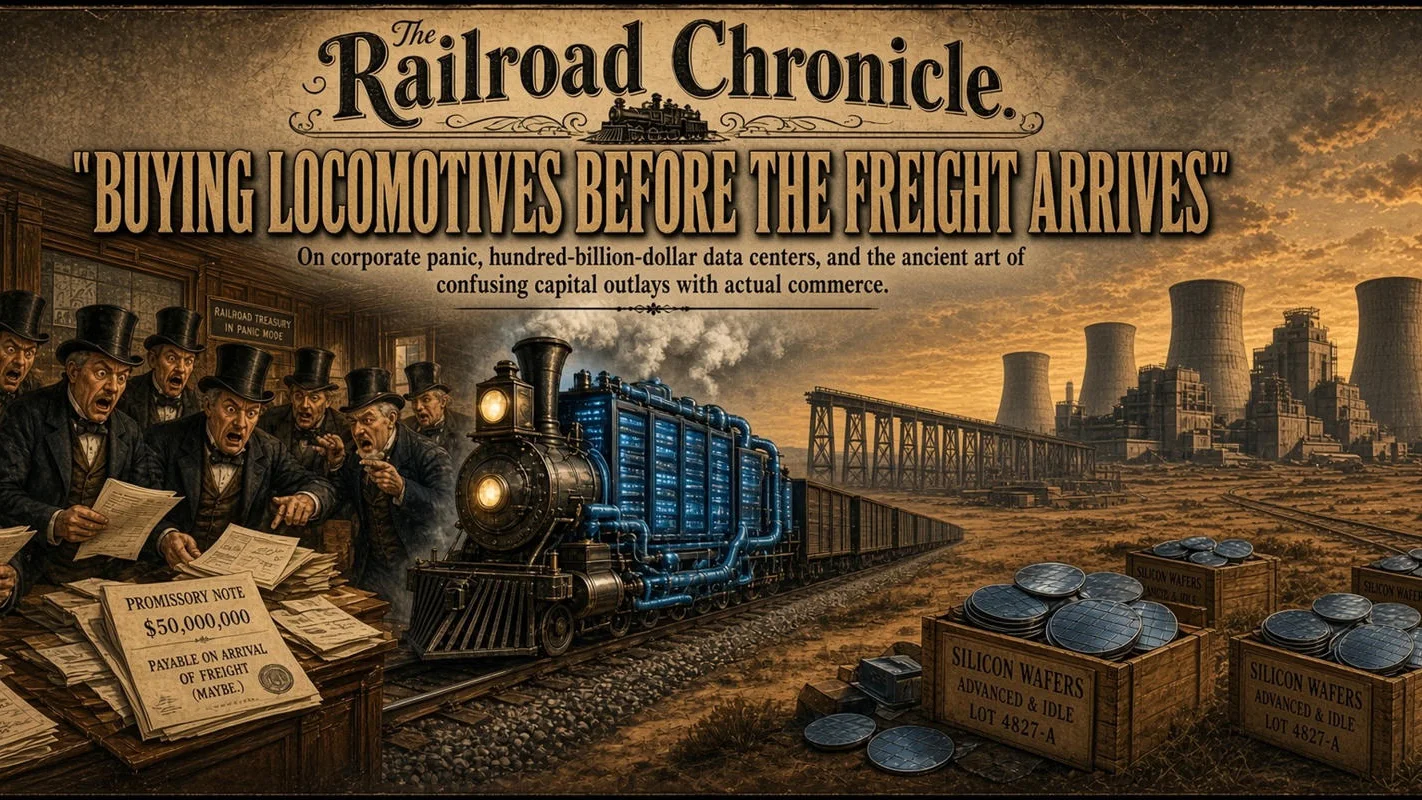

They’re at it again. Every time the market catches a bit of a breeze, the miracle-peddlers come out of the woodwork, this time waving the "AI" flag like it’s a direct ticket to the Pearly Gates. Most of these "AI tokens" you see popping up are about as substantial as a fog on the Mississippi with all atmosphere and no floorboards. If a project’s primary innovation is putting a chatbot on a blockchain, you aren’t looking at the future of finance; you’re looking at a high-speed way to part a fool from his gold.
But if you look past the neon signs of the consumer apps, there’s a quieter, dustier corner where the actual work is being done. While the speculators are busy betting on which digital avatar will tell the best jokes, the real money is being quietly funneled into the "picks and shovels" of the era: the unsexy plumbing of compute, data verification, and oracle networks. In a gold rush, the man selling the shovel doesn’t much care if the miner finds a nugget or a handful of dirt; he gets paid for the tool regardless. That’s the model that survives a winter.
The Mirage of the AI Consumer App
Right now, ninety-five percent of these projects are "pre-product," which is a fancy way of saying they have a roadmap that leads straight into a brick wall. They promise "decentralized intelligence" but lack a single paying customer. They rely on "tokenomics", a word that usually means "we’ll print more money until you stop noticing we don't have a business." When the hype dies down and the influencer circus moves on to the next shiny whistle, these projects will wilt like unwatered weeds.
"Tokenomics is often just a polite term for a digital printing press with no gold in the vault."
The problem with these consumer-facing AI tokens is that they lack intrinsic value. They are built on the shifting sands of sentiment. If the AI doesn't work, or if a centralized giant like Google or OpenAI renders them obsolete with a single update, the token value evaporates. I have seen this movie before, back when the dot-com boys thought a domain name was a substitute for a balance sheet. It ended in tears then, and it will end in tears now for those chasing the flash.
The Value of the Boring: Why Plumbing Wins
The projects that stand a ghost of a chance are the ones charging real fees for tangible services. I’m talking about oracle networks that act as the nervous system for data, or Zero-Knowledge (ZK) proofs that act as a digital notary, ensuring the AI isn't just hallucinating for profit. These aren't flashy. You can't explain them at a cocktail party without watching your audience’s eyes glaze over. But they have something the "revolutionary" apps don't: a revenue model based on usage, not just speculation.
Consider the necessity of these layers. For any decentralized system to function, it needs three things:
- Reliable Data: Information that hasn't been tampered with or fabricated.
- Verifiable Compute: Proof that the work was actually done by the machine, not a human behind a curtain.
- Permanent Storage: A place to keep the massive amounts of data AI requires without it vanishing when a server bill goes unpaid.
Verifiable Truth in an Age of Hallucination
The "Great GPU Illusion" still haunts the sector, but there’s a narrow path for decentralized compute if—and it’s a big "if"—it can provide a service cheaper and more reliably than the big silos. The real winners will be the ones that provide verifiable compute. If a company is going to outsource its brains to a network, it needs to know the answer it gets back hasn't been tampered with. That’s where the plumbing of ZK-proofs becomes more valuable than the AI itself. It is the difference between a handshake and a notarized contract.
In a world of infinite AI-generated slop, knowing where a piece of information actually came from ("data provenance") is going to be the only way to keep our heads above water. We are quickly reaching a point where we cannot trust our own eyes; in that environment, the technology that proves the source of a file is the only thing with lasting utility.
The Toll-Booth Strategy: Where to Watch
If you’re looking for the barns least likely to catch fire when the lightning strikes, you must look for the ones with actual toll-booths. I don’t buy the promise; I watch the revenue. If the fees don't cover the light bill without selling new tokens to fresh faces, I stay on the porch. There are a few sectors where the "rent" is actually being collected:
- Established Oracle Networks: Chainlink is the prime example here. They have their hooks into so many different protocols that they collect a fee almost every time a digital contract breathes. It’s an infrastructure play, plain and simple.
- Marketplace Compute: Projects like Akash Network are trying to build a real decentralized marketplace for spare power to compete against centralized competitors like AWS and CoreWeave. This is a far cry better than printing tokens for "imagined" intelligence; it’s about matching supply with real-world demand.
- Permanent Data Layers: Arweave and similar decentralized protocols treat data like a permanent physical asset. If you want it to last forever, you pay the fee. That is a logical, sustainable economic transaction.
Everything else? It’s just more polish on a sinking ship. Stick to the infrastructure that charges a fee every time a light is turned on, and you might just find your wallet a little heavier when the next frost hits. Always watch the output, not the inventor's hat. In the end, the market always figures out the difference between a productive asset and a shiny toy. Make sure you’re holding the one that works for a living.