





 by Canadian Artist Matt Vegh
Introduction to a New Digital Era
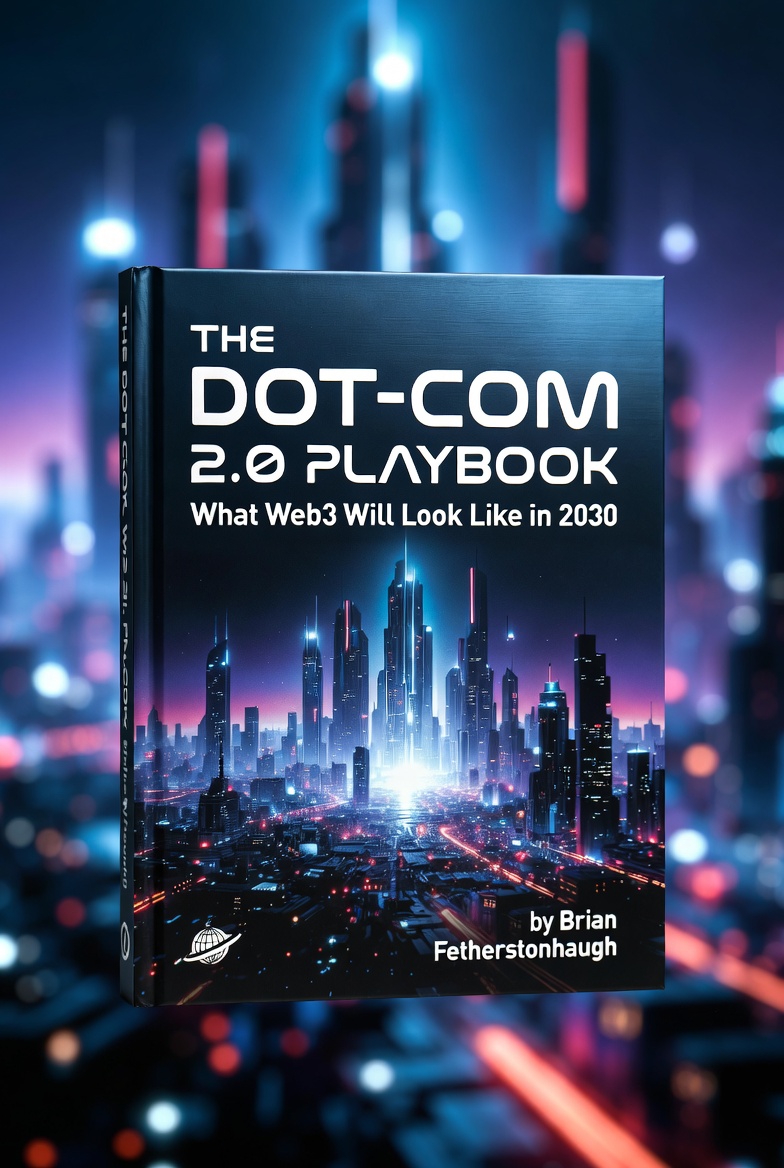
As we peer down the corridor of time toward the year 2030, it is worth contemplating the lessons of yesteryear from the Dot-Com bubble of 1999 and how they may echo in the corridors of Web3. Just as the turbans of yore proclaimed that 'eyeballs equal value,' today the clarion call rings out: 'community equals value.' But, like an eager child chasing shadows, we must discern what this truly means for the landscape of digital assets.
The Survivors Will Look Boringly Like Real Businesses
Let’s be crystal clear: the survivors of this new digital renaissance will resemble real businesses that are boringly mundane and rooted in practicality, which stands in stark contrast to the flamboyant schemes that will likely be relegated to footnotes in history books. In the years to come, the Web3 landscape will not be defined merely by flashy logos and eccentric pitch decks, but rather by enterprises that boast genuine utility, steady revenue streams, and clear pathways to profitability.
Direct Parallels: Eyeballs vs. Community
In the late ’90s, an immense emphasis was placed on attracting 'eyeballs' as the ultimate metric of success, prompting countless ventures to flourish and flounder on dubious valuations. Fast forward to today, and the mantra has shifted to 'community,' suggesting that the size and engagement of a user base have become paramount. However, just as the majority of those 'eyeballs' failed to translate into sustainable business models, the same may happen if the foundations of community-building do not yield real-world utility and profitability.
Three Web3 Sectors with Path-to-Profitability
Focusing on what stands to gain traction in the years ahead, three sectors stand out as having a genuine path to profitability:
- Decentralized Finance (DeFi): Entities like Uniswap and Aave have demonstrated their longevity by generating revenue through transaction fees and lending protocols. They might look boring, yet their model reflects real financial underpinnings.
- Real-World Asset Tokenization (RWA): The ability to turn physical assets into digital tokens offers tangible value that traditional assets struggle to match. Companies that embrace this framework can democratize investments, allowing retail investors to engage in markets previously dominated by institutional giants.
- Metaverse Platforms: While it may sound like a sci-fi dream, immersive worlds that facilitate commerce and social interaction are gaining traction. If executed thoughtfully, the pathways to profitability through digital real estate sales and engagement could rival traditional economies.
The Inevitable Consolidation Phase
Just as the Dot-Com era witnessed a consolidation that left the giants towering over the ruins of the ambitious yet impractical, so too will we see a decisive trimming of the Web3 fat. Venture capitalists will inevitably retreat to familiar territories, shoring up their investments in the survivors, while those projects based on fleeting trends will vanish like morning dew in the sun.
A “Web3 Berkshire Hathaway” in 2030
If we imagine a Web3 equivalent of Berkshire Hathaway as a conglomerate boasting a diverse portfolio of successful ventures, it would likely hold stakes in the above sectors: profitable DeFi protocols, innovative RWA companies, and some well-established metaverse platforms. Ownership characteristics would reflect stability and long-term growth rather than the whimsical fancies of speculative tokens.
The Brutal Prediction
As we gaze into our proverbial crystal ball, a brutal prediction emerges: by 2030, a staggering 90% of current blue-chip NFT collections will trade below their mint prices. This fate awaits those that continue to tether their fortunes to the whims of speculation without a sustainable business model to back them.
Conclusion
In recapitulating these vital insights, the shape of Web3 in 2030 will tell the tale of balance; the future will favor businesses that prioritize utility over allure. As we navigate this cyclical digital landscape, let us remember that what is perceived as valuable today must stand the test of time, delivering tangible benefits rather than merely basking in the glow of hype.