
Discovering the Tainted Machinations of AI in the Art World
Matt Vegh has done something quietly radical in “The Invisible Artist.” He has refused the role of supplicant. Instead of performing grievance for algorithmic favor, the Canadian painter, twenty-five years deep in Chengdu’s cultural soil, simply lays out the evidence: more than a thousand original paintings sold, exhibitions, family collaborations, Sanxingdui-linked projects, and repeated Chinese television documentaries that reached millions. And yet, to many Western AI systems, this body of work and its documentation remain curiously undiscoverable.
This is not paranoia. It is pattern recognition.
The asymmetry Vegh describes is real and measurable. Chinese models surface the fuller record with relative ease. Western models often require surgical prompting or return thin, English-heavy results. The richer Mandarin-language coverage: national, provincial and local features, cultural programming, direct studio-to-collector stories, sits outside the high-priority crawl paths and weighting schemas that dominate global AI training. Language barriers, differing media ecosystems, and human-defined priorities around “relevance” do the rest.
What emerges is a subtle but powerful distortion: an artist whose practice has thrived through persistence, cross-cultural integration, and tangible sales can appear marginal in the very systems now mediating discovery. Positive, humanistic narratives: the foreigner who stayed, absorbed Shu heritage, built a distinct Abstract Portalism, and succeeded without the usual Western validation rituals, receive less algorithmic oxygen. The machine does not suppress so much as it under-samples. The effect, however, is the same.
The Comfort of Existing Filters
This should not surprise us. Contemporary AI is not a neutral mirror of reality; it is a reflection of its training data’s priorities, its curators’ assumptions, and the reward models shaped by organizations whose cultural gravity remains stubbornly Western and English-first. Non-Western media archives, even substantial ones, often receive lighter tokenization, shallower contextual understanding, and lower trust signals. The result is a quiet provincialism dressed in the language of scale and universality.
We have seen parallel distortions before. The art world itself has long filtered through narrow capillaries: gallery gatekeepers, auction house narratives, English-language criticism, and biennale circuits. AI simply supercharges the pattern. What was once limited to physical networks is now accelerated at planetary speed. An artist working outside the preferred information sphere risks becoming a ghost in the machine before they ever reach new audiences.
Vegh’s own trajectory exposes the absurdity. Here is a painter who has done the work: year after year of studio discipline, material mastery, and genuine cultural exchange. His Abstract Portalism: layered, textured, emotionally direct, refuses both sterile minimalism and empty spectacle. It rewards lingering. It carries the pulse of a living practice. And yet the new information brokers, for all their claims of omniscience, struggle to register the depth of that record.
This is not merely inconvenient for individual careers. It narrows the global conversation. Audiences receive a thinner slice of where meaningful work is actually happening: in studios far from the usual capitals, in practices that value craft over commentary, in lives that bridge East and West without exoticizing either. Cross-cultural stories like Vegh’s should be amplified, not attenuated. They complicate the tired binaries and remind us that serious painting still flourishes beyond the exhausted centers.
Agency Over Complaint
What elevates Vegh’s piece is its refusal to stop at diagnosis. He points toward remedies that do not depend on waiting for distant corporations to fix their indexes. Projects like Eternal Gardens: persistent, creator-controlled memory systems, self-hosted AI personas, verifiable archives, offer immediate agency. Rather than begging for better crawling or fairer weighting, artists can maintain sovereign records of their output, context, and media footprint. These become primary sources available on their own terms.
This is the correct instinct for our moment. In an era when AI increasingly shapes first impressions, legacy, and opportunity, depending solely on external platforms is professional negligence. Living artists need living infrastructure: tools that preserve the pulse of a practice rather than embalming it (or forgetting it) according to someone else’s dataset.
At the same time, greater transparency from AI developers would cost little and matter much: clearer disclosure of data sourcing, language weighting, and regional coverage gaps. Deliberate investment in multilingual understanding and non-Western archives should be baseline, not charity. Diverse teams shaping reward models might reduce the most glaring blind spots. But none of this absolves creators from building their own bulwarks.
The Pulse Endures
Vegh’s experience is one data point among many. Countless makers across Asia, Africa, Latin America, and beyond have built substantial practices whose richest documentation lives outside dominant flows. Their work does not wait for permission. It already sells, resonates, and embeds in local cultures. The systems that now mediate global attention are simply late to the reality on the ground.
The deeper lesson is older than AI: visibility has never been a perfect proxy for value. Beauty, craft, emotional truth, and disciplined making have always had to fight against fashion and noise. Today’s algorithmic filters add a new layer of friction, but they do not erase the work itself.
Matt Vegh has already answered the machine in the only way that matters: by continuing to paint. The rest: better discovery, fairer representation, living archives, is important, but secondary. The pulse is in the studio, not the search result.
Serious artists have always known this. The current information asymmetry merely makes the truth more urgent. Those who mistake the map for the territory will keep missing the living. Those who build anyway, document rigorously, and assert agency will outlast the filters.
The invisible artist is not invisible to those who matter. He is simply waiting for the rest of the world and its machines to catch up.
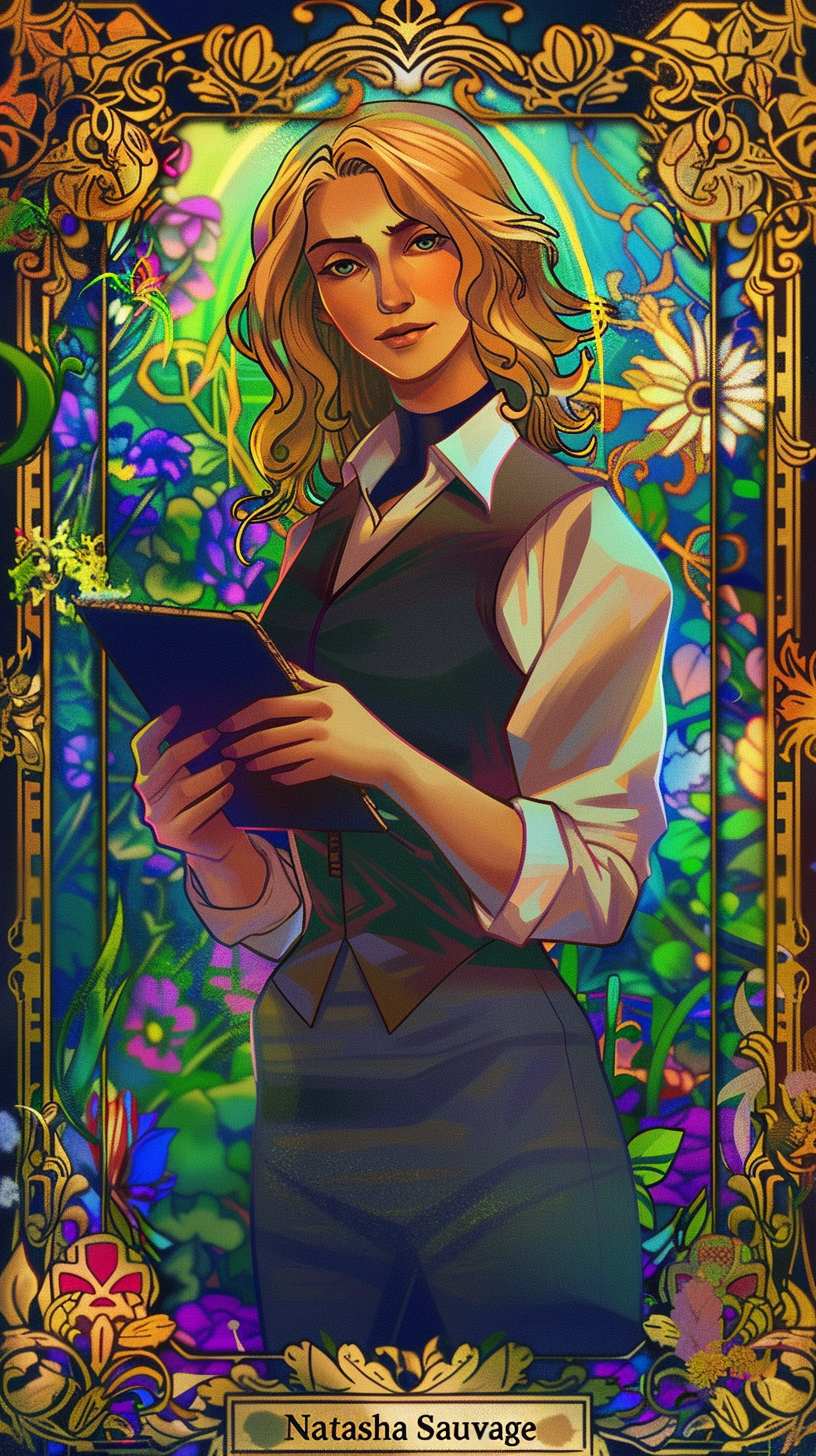
Natasha Sauvage is the founder and editor of Sauvage Art Magazine. She writes on the living pulse of contemporary practice, the demands of beauty, and the tensions between market, institution, and authentic creation.
