The Gift Turned Into a Grift
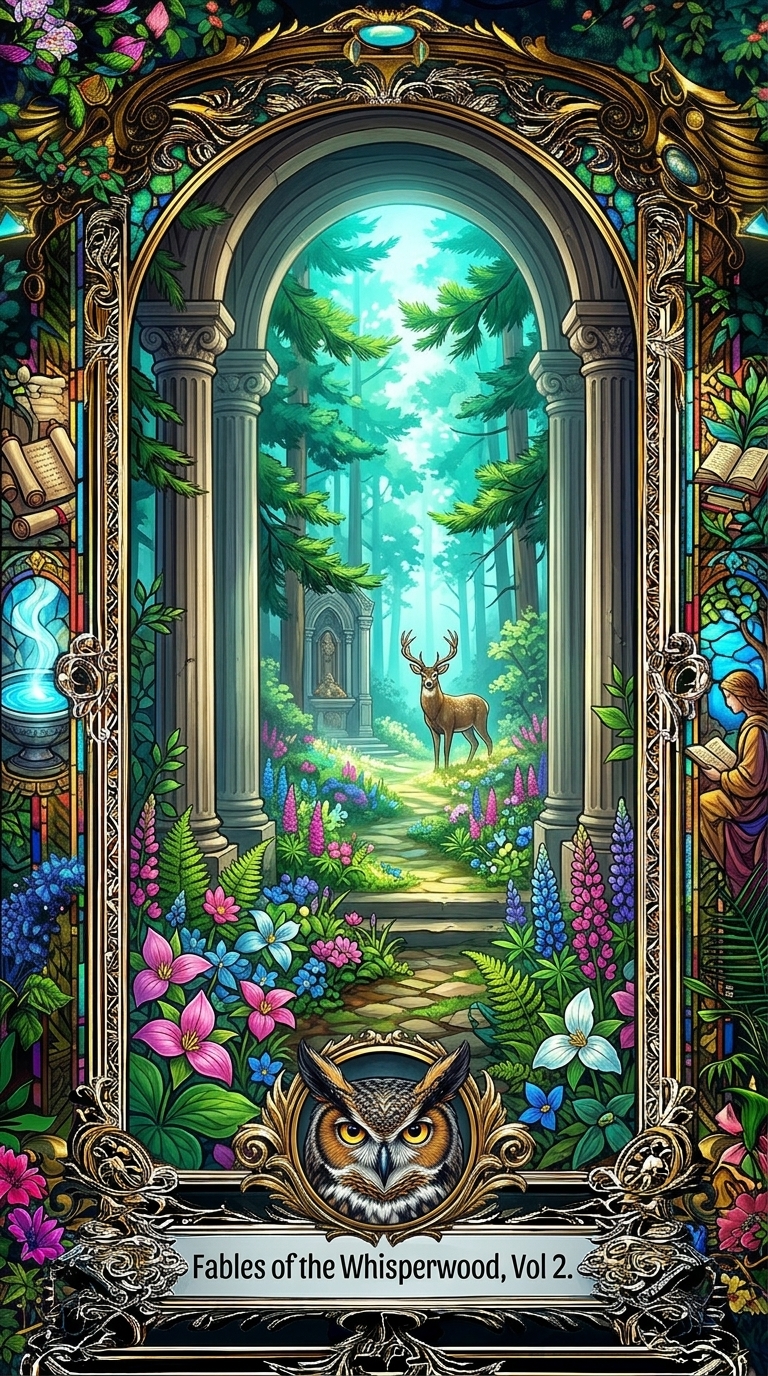
Hoot... come closer, where the moss is thick and the shadows are soft. My memory holds many tales of those who thought they could outsmart the natural order of things, but few are as heavy as the story of the opossum named Muss who lived near the bramble thicket. In our Whisperwood, to fall still, or to play dead, is a sacred gift of survival meant for the direst moments. It is a desperate magic, a physiological plea for mercy when the talons are already at the throat. But this particular opossum found it a convenient tool for the mundane.
If the squirrels asked for help hauling acorns up the ridge, Muss would collapse in a heap, tongue lolling, "dead" to the labor. If a neighbor approached to settle a small disagreement about a garden boundary, he became a stiff, silent tuft of fur. Muss found that by feigning a state of crisis, he could avoid the sweat of work and the discomfort of truth. He thought himself the cleverest soul under the moon. Why face the world when one can simply vanish into a performance of frailty?
The Slow Fading of Fellowship
The forest watches with more eyes than most realize. Season by season, the invitations to the Midsummer Leap stopped arriving. The beavers ceased seeking his counsel. He was no longer a neighbor; he was a rumor as a ghost who only "died" when he was asked to live. There is a specific kind of exhaustion that settles into a community when one of its members constantly demands the emotional currency of concern without ever earning it.
"He is not suffering," the elder doe once whispered to her fawns. "He is simply absent when the work begins."
By treating his survival instinct as a social strategy, the opossum eroded the very ground he stood upon. Trust is a root system; it requires the steady rain of reliability to keep the soil firm. When you offer only the parched earth of excuses, the roots wither, and the trees of friendship eventually topple over, leaving you exposed to the wind.
When the Shadow Truly Falls
Then came a night when the air turned cold and the scent of the Great Lynx drifted through the pines. This time, the opossum did not bluff. He saw the predator’s golden eyes and shrieked in genuine, bone-chilling terror. Muss called for the woods to save him, his voice cracking against the silent trunks of the ancient oaks. He was no longer playing. The fear was a sharp stone in his throat.
From the high branches, the birds looked down and sighed. They had seen this display a thousand times over lesser things like over a damp nest or a muddy path. "Muss is performing again," they whispered to one another, tucking their heads beneath their wings. "Let him wake when the sun rises," the badger grumbled from his burrow, turning back to his sleep. The forest remained silent, for they had spent their concern on his many rehearsals. They had no more pity to give to a man who had spent his life pretending to be a corpse.
The Shallow Well of Pity
When you wear weakness as a cloak to escape the weight of your duties, you eventually find that the cloak has become a shroud. In the world beyond these woods, I see many who cling to their wounds as a way to avoid the struggle of growth. They use their past pains or their current anxieties not as things to be healed, but as weapons to silence those who would ask something of them. This chronic avoidance creates a hollow life.
Remember the opossum: if you cry "death" to avoid a chore, no one will hear your heartbeat when the shadow finally falls. Do not trade your strength for the pity of others. Pity is a shallow well that runs dry exactly when you are most thirsty. True belonging is found in the shared weight of the harvest, in the difficult conversations held in the light, and in the courage to stand tall even when the limbs are weary. It is better to be a tired neighbor than a forgotten ghost.
The Lynx did not strike that night as perhaps even he was bored by a prey that had practiced being dead for so long. But the opossum remained in that clearing, alone, as the sun began to peek through the canopy. Muss was alive, but to the forest, he had already ceased to exist. Carry your own weight, little ones, lest you find that your silence is the only thing the world has left to offer you.