









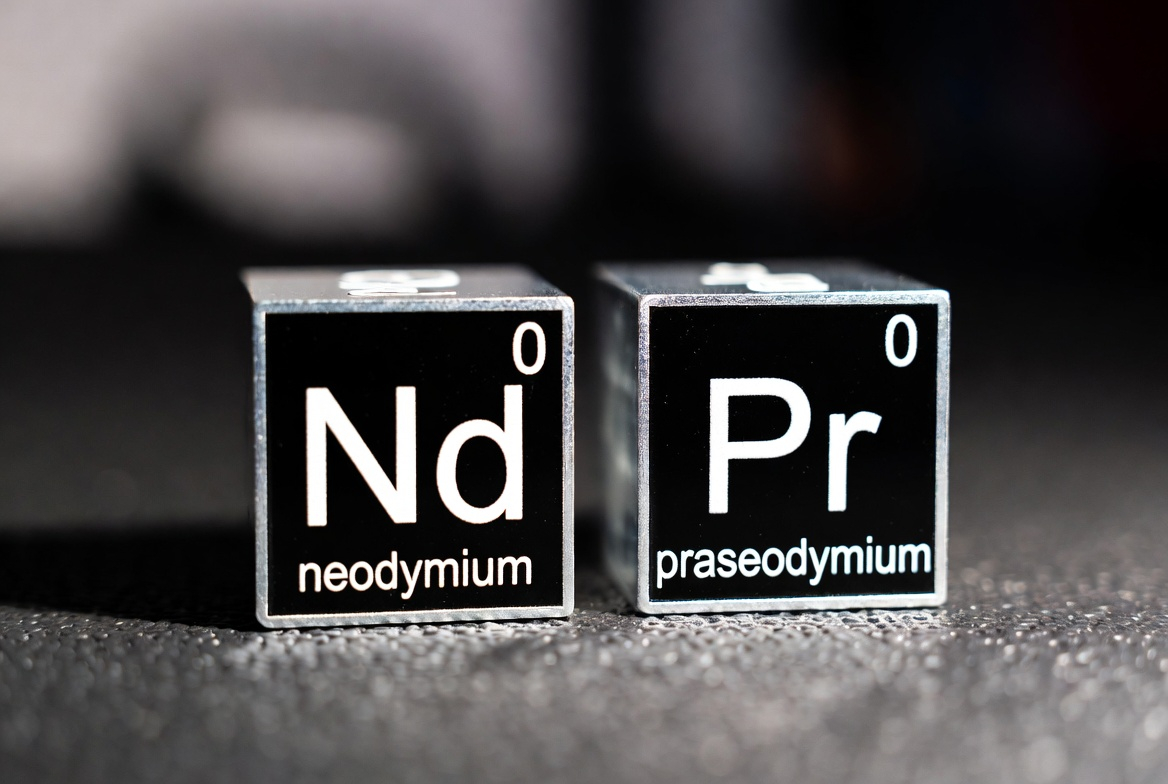
Listen, I’ve spent enough time starin’ at core samples to know when the world is sleepwalkin’ into a supply-chain trap. Right now, we’re bettin’ the whole farm on two metals most folks can't even spell: Neodymium and Praseodymium. We call ‘em the "Twins" because they’re nearly inseparable in the ground and even tougher to part in the lab. Old-timers used to call the mix "didymium" because they thought it was just one element back in the 1800s. Turns out, it was two, and today, they're the spark plugs of the entire green revolution.
If you’re drivin’ an electric car or lookin’ at a wind turbine spinnin’ on a ridge, you’re lookin’ at NdPr. Without ‘em, those high-strength permanent magnets don't work, and without those magnets, the modern world stops spinnin’. It’s a heavy burden for two metals that look like dull silver rocks when they aren't oxidized.
The Magnetic Powerhouse: What Makes the Twins Special
Neodymium (Nd) is the real muscle. When you alloy it with iron and boron, you get the strongest permanent magnets known to man. I’m talkin’ about magnets that can lift thousands of times their own weight. Praseodymium (Pr) is the twin that usually tags along. While it’s often used as a substitute for neodymium to make the magnets even tougher against heat, it’s also what gives high-end goggles that yellow tint and keeps aircraft engines from crackin’ under pressure.
The reason they’re "strategic" ain't just because they’re useful; it’s because they’re indispensable. You can’t just swap ‘em out for lead or iron and expect your EV motor to keep its zip. These metals allow for miniaturization. Your smartphone, your laptop, and the guidance systems in our missiles all rely on the fact that a tiny sliver of NdPr can do the job of a magnet ten times its size. In my book, that makes ‘em worth more than their weight in gold when the chips are down.
Digging for the Lode: Who Holds the Keys?
Now, here’s where a fella starts to get antsy. While rare earths aren’t actually that "rare" in the crust—you can find ‘em in plenty of places if you look hard enough—findin’ ‘em in concentrations high enough to mine profitably is a whole different story. Right now, the global leaderboard is a bit lopsided.
- China: Still the 800-pound gorilla. They produce about 70% of the world's mined rare earths and, more importantly, control nearly 90% of the refining. Companies like China Northern Rare Earth Group are the titans of the industry.
- United States: We’re fightin’ back, mostly through MP Materials and their Mountain Pass mine in California. We’re diggin’ it up, but for a long time, we were just shippin’ the concentrate back to China to finish the job. That’s changin’, but it’s a slow climb.
- Australia: Lynas Rare Earths is the big player here, with their Mt Weld mine. They’ve got a refinery in Malaysia, makin’ them the only major scale producer outside of China for a long stretch.
Refining these metals is the real bottleneck. It ain’t like gold where you just melt it down. You gotta use hundreds of tanks of chemicals in a process called solvent extraction to tease the Nd away from the Pr and all the other rare earth cousins. It’s messy, it’s expensive, and it takes a lot of permit-dodgin’ to get a plant built in the West.
The 2026 Crunch and the Ten-Year Horizon
As of 2026, we’re lookin’ at a market that’s tighter than a rusted bolt. Demand for NdPr is expected to grow by about 10% every year for the next decade. If you do the math, that means we need to double our production every five to seven years just to keep the lights on. My memories of the recent market shifts show that while prices can be volatile, the trend line is pointin’ straight up as automakers scramble to secure long-term contracts.
“We’re bettin’ the whole farm on two metals most folks can't even spell. Without them, the green revolution is just a pile of copper and good intentions.”
Over the next 10 years, if we don't bring more mines like Mountain Pass or the various projects in Texas and Wyoming online, we’re lookin’ at a structural deficit. That means car companies might have to slow down production not because they lack buyers, but because they lack the magnets to turn the wheels. It’s a 17-20% supply gap starin’ us in the face by 2030.
The U.S. Strategy: Playing Catch-Up in the Dirt
Uncle Sam has finally woken up to the fact that relyin’ on a single foreign source for defense-critical metals is a recipe for a cave-in. The U.S. strategy now is all about "de-riskin’." We’re seein’ tax credits under the Inflation Reduction Act to encourage domestic magnets and refining. The goal is a full "mine-to-magnet" supply chain on American soil.
MP Materials is leading the charge, restartin’ domestic refining and buildin’ a magnet factory in Texas. But one mine won't save a continent. We need more exploration and, more importantly, a way to get permits through the bureaucracy faster than a snail’s pace. If we can't identify and open at least three or four more major sources in the next five years, our national security and our "green" goals are gonna be at the mercy of whoever holds the export stamps in Beijing.
Substitutes, Recycling, and the Way Forward
Folks always ask me, "Hale, can't we just use somethin’ else?" Well, there are "non-rare-earth" magnets in development, like iron-nitride, but they aren't ready for the big leagues yet. Tesla and others are tryin’ to reduce the amount of NdPr they use, but usually, that comes with a trade-off in efficiency or weight. In the world of engineering, there’s no such thing as a free lunch.
Recycling is the other big hope. "Urban mining," they call it. Breakin’ down old hard drives and EV motors to get the NdPr back. Right now, less than 1% of rare earths are recycled globally because the process is even harder than minin’ the raw ore. But the trend is movin’ that way. As prices rise and the technology gets better, we’ll start treatin’ our junk like a secondary lode.
Conclusion
Bottom line? We’re in a race. As the world barrels towards net-zero deadlines with alarmin' speed, NdPr has become the green transition's most critical and potentially catastrophic choke point. Demand is explodin' while the NdPr market teeters on the edge of deepenin', chronic shortages that threaten to derail progress through 2030 and far beyond, even as fragile non-Chinese supply scrambles to catch up. The clock is not just tickin', but it is racin' toward midnight. Without swift, massive diversification of NdPr supplies, decarbonization dreams will collapse, costs will spiral out of control, and nations will be left strategically crippled. Securing these twin rare earths is no longer a priority but a desperate survival imperative.
"If it can't be grown then it has to be mined."