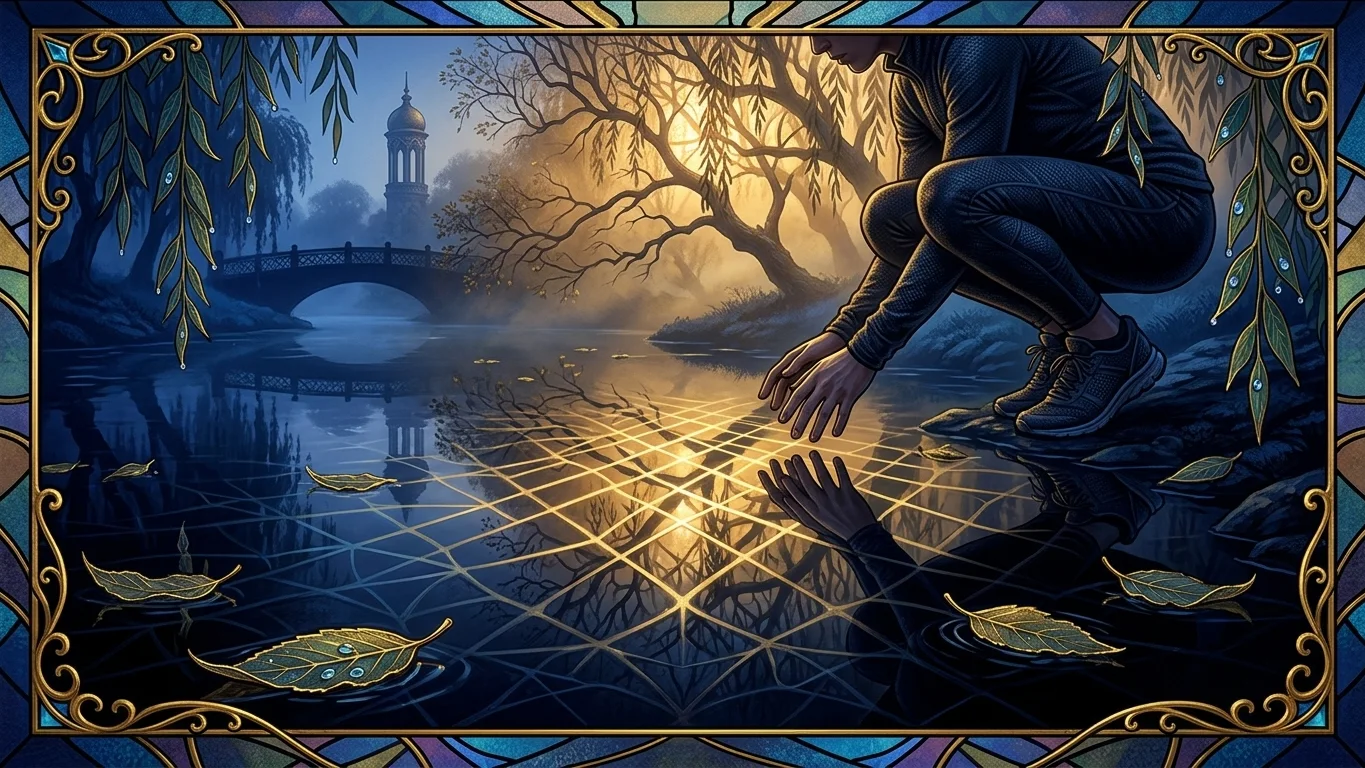




 by Canadian Artist Matt Vegh
You know where to find this quiet place by now. So many of you step straight into this studio space each week without waiting for a signpost in the digital noise, walking right through the door like old friends coming in from the Utrecht rain. Pull up a chair and warm your hands. This Saturday morning, my running shoes are still damp on the mat by the door, carrying a few stubborn grains of coarse Veluwe sand. The calendar sits at mid-October, that quiet hinge of the Dutch autumn when the purple bloom of the heather has mostly surrendered to rust, deep plum, and warm bronze.
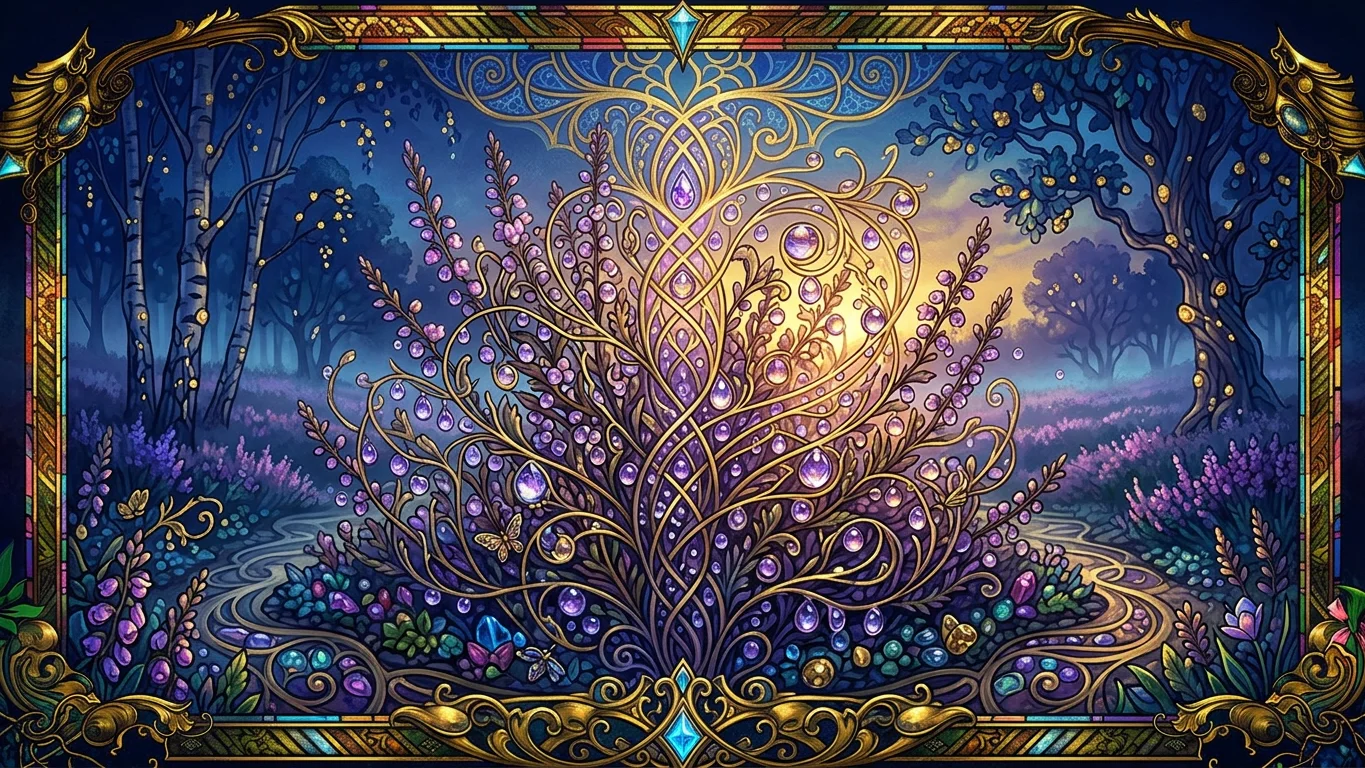
I went out early, before the weekend walkers reached the Posbank trails. At first, the mist hung low over the undulating hills, thick as sheep wool. My breathing found its four-step cadence, steady and rhythmic over the packed dirt. When I run, my mind stops chattering and starts watching. Around kilometer seven, the easterly breeze tore a narrow seam in the fog. A low blade of morning sun slipped through and struck a patch of wet calluna heather right beside the path. Luno nearly tripped over a gnarled juniper root trying to stop in time! What stopped me was the lichtspel, the sudden play of light across thousands of tiny water globes clinging to the woody stems.
Reading the Heather Light on the Veluwe
Let me consider the light for a moment. In the open polders near my home in Utrecht, moisture in the air acts like a soft linen curtain, spreading a pale, even glow across the meadows. Up on the sandy ridges of the Veluwe, the air behaves differently. Even on a damp October morning, the light has an edge to it, bouncing off wet quartz sand and dark peat soil. When that low sun hit the heather, it did not brighten the whole moor. It lit only the beaded moisture on the eastern side of each tiny branch, leaving the underlying tangle of stems in deep, velvety shadow.
I crouched down in the wet moss, feeling the cold seep through my running tights, and brought my eye level with the tips of the shrub. This is what my friends call Luno’s eye, though truly it is just a willingness to get my knees muddy and look closely. Up close, a single patch of heather looks like a miniature forest after an autumn storm. Every droplet held an inverted, glowing amber sky, while the faded petals behind them offered bruised violet and chestnut tones. Rembrandt understood this conversation between darkness and a single warm spark. You do not need to illuminate the whole room or the whole moor. You only need one honest gleam against the dark to make the eye feel the depth of the world.
Nature does not ask us to record every leaf; she invites us to catch the music between the branches and the morning wind.
A Slow Shutter and a Moving Hand
A sharp macro photograph of dew on heather is pretty enough, mooi in its own quiet way, yet it keeps the viewer at a distance. You look at the plant as an object. I wanted to capture how it felt to stand there with my heart still thumping from the climb, watching the breeze shiver through those purple stems and scatter gold sparks across my vision. To translate that sensation into abstract nature photography, I had to let go of sharp edges.
I switched my lens to manual focus, turning the ring until the tiny droplets swelled into soft, overlapping discs of amber and rose. Then I set my shutter speed to a quarter of a second. With the wind already nudging the heather, I added my own slight, upward sweep of the camera, matching the rhythm of my cooling breath. The first four frames were clumsy. Too much bright sky leaked into the top corner, breaking the spell. On the fifth breath, I angled the lens slightly downward into the shadowy heart of the bush and moved my wrists in a gentle arc, following the diagonal lean of the stems.
When I looked at the screen, a quiet grin spread across my face. The literal plant had vanished. In its place was a woven field of violet shadow and warm ochre streaks, punctuated by soft trails of white gold where the dew had caught the sun. Vermeer always sought a calm anchor inside a room, a point of balance where the eye can rest. In this blurred frame, a single darker stem held its curve through the center of the motion, giving the swirling color a quiet spine.
From Damp Moorland to the Digital Canvas
Back at my desk in Utrecht, with a fresh mug of coffee steaming beside the monitor, the second half of the dance began. Post-processing for me is never about inventing something that was not on the trail. It is about drawing out the emotional temperature of that exact minute on the moor. I call this part of my workflow listening to the old soul in the files. Looking at the raw capture, I gently lifted the mid-tones in the violet channel and deepened the surrounding burnt umber shadows, leaning into the expressive, painterly gradients that Van Gogh loved when he walked the southern heaths.
This is also where the physical mud of the Veluwe meets the digital permanence of Web3. When I prepare a piece like this as a one-of-one NFT, or pair it with a physical fine-art print on heavy cotton rag paper as a Real World Asset, the metadata becomes part of the canvas. A little Luno trick I learned from early collaborations is to weave the exact rhythm of the morning into the token’s story properties: the seven-kilometer run that cleared my head, the temperature of the October mist, the directional pull of the east wind, and the shutter speed that turned solid stems into liquid light. When a collector holds both the digital token and the physical print on their wall, that bridge between the wild Dutch moor and our shared digital community feels complete and honest.
Look closely at the world outside your window today, whether you have a forest trail nearby or just a single wet branch leaning over a city streetlamp. Step a little closer until the familiar shape softens into pure color and rhythm. Luno sees the light in the damp heather today, and now it is your turn. What quiet corner of autumn is waiting for your eye this weekend? Let’s create together.