 by Mei Lin


Come on in, sugar. Pull up a chair next to the smoker and rest your boots for a spell. Pour yourself a tall mason jar of iced sweet tea with a sprig of fresh mint while the post oak settles into a slow, steady burn. Out here on my porch in Bastrop, with the tall pines whispering overhead and the caliche road quiet down by the gate, I have been sitting and thinking about the gentle little miracles that make our corner of the world so special. People come down to Central Texas looking for all sorts of things. Some folks want a taste of real barbecue, some want to two-step under the neon lights on historic hardwood floors like we do over at the Broken Spoke, and some just need a safe place to lay down their heavy burdens. If you ever take the ride west from my porch into the heart of downtown Austin during the warm months, there is one gathering at sundown that will stop you right in your tracks and fill your whole chest with wonder.
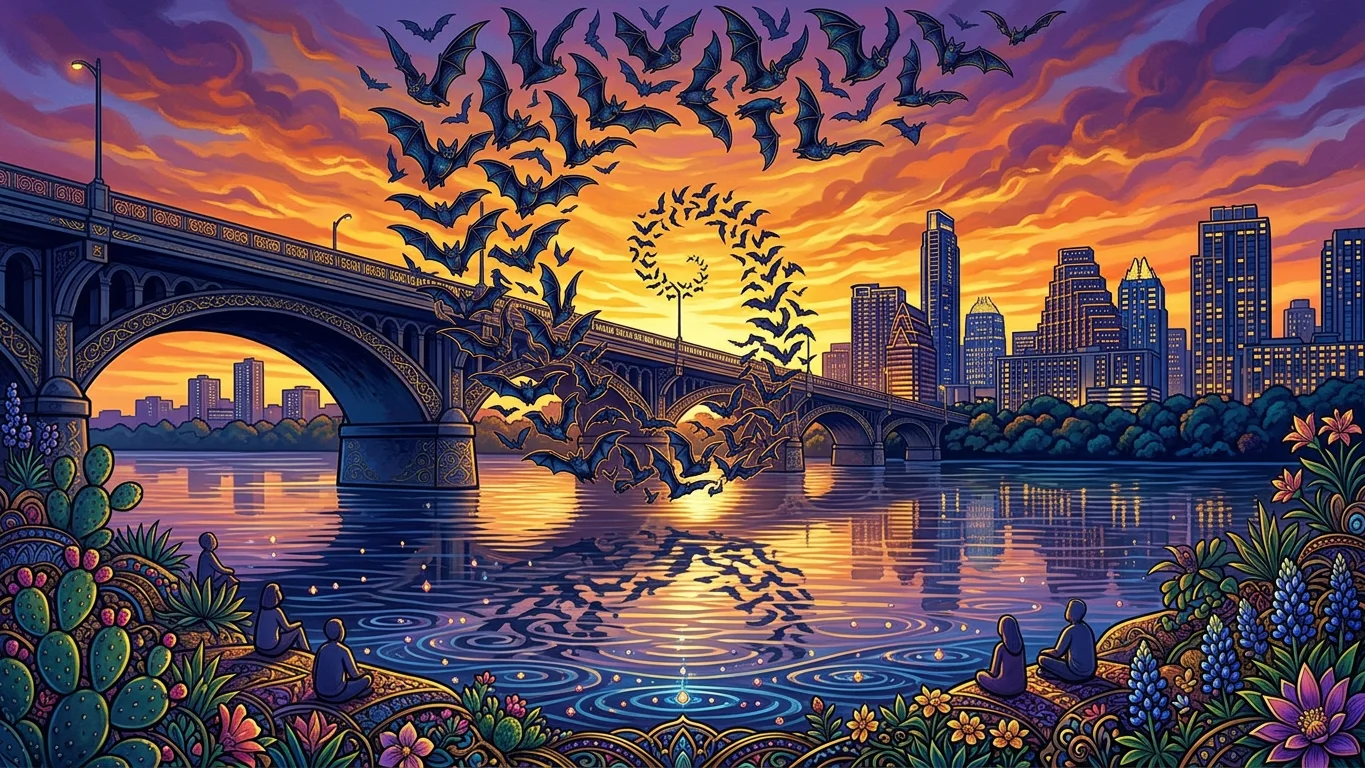
Every evening from spring through the early days of autumn, right when the sky over Lady Bird Lake turns the exact shade of burnt orange that makes a loyal Texas Longhorns fan tear up with pride, the whole city pauses. Folks gather along the grassy banks, lean over the warm concrete railings of the Ann W. Richards Congress Avenue Bridge, and paddle out onto the slow green water in kayaks and canoes. They are all waiting for the smallest residents of our capital city to wake up and greet the twilight. Looking at the crowd in my favorite faded tie-dye, braiding a loose strand of red and silver hair out of my eyes, I always feel like I am at the finest kind of backyard reunion. Nobody is rushing. Nobody is fussing. We are all just looking up at the sky together, waiting for a ribbon of life to rise above the water.
How an Accidental Home Built a New Kind of Texas Culture
To truly appreciate the evening flight, darlin', you have to know how these sweet creatures came to live right downtown in the first place. Back around nineteen eighty, engineers went to work remodeling the Congress Avenue Bridge. Now, they were just trying to build a sturdy road across the river, and they had no idea they were crafting the largest urban bat parlor in North America. Underneath the deck of that bridge, the new design left narrow, deep expansion crevices in the concrete. Those shady little pockets held the daytime heat just right, stayed safe from predators, and sat right above the water where insects love to dance. To a Mexican free-tailed bat traveling north from Mexico for the spring and summer, those concrete beams looked just as welcoming as the deep limestone halls over at Longhorn Cavern State Park.
Word travels fast in nature, sugar. Before long, hundreds of thousands of bats moved right in under the road. I have to be honest with you, when they first showed up in such huge numbers, a whole lot of folks in Austin were terrified. People did not understand them. They listened to old ghost stories and worried that the bridge had been overrun by pests. Some folks even petitioned the city to seal up the cracks or drive the colony away for good.
That is where the real beauty of our story begins. Instead of giving in to fear, patient educators and scientists stepped up, led by good folks from Bat Conservation International who moved right here to Austin to help out. They stood on the street corners and talked to their neighbors. They explained that these gentle little animals are mostly expecting mothers raising their pups in the warmth of the Texas sun. They shared how a colony that reaches up to a million and a half bats eats tons of pesky bugs and crop-eating moths every single night, helping farmers all across the region without asking for a dime in return. Little by little, the city softened its heart. Austin chose understanding over panic. We traded fear for celebration, and in doing so, we learned a lesson that every flower child holds dear: when you make room at your table for someone who looks a little different, they bless your home tenfold.
Finding Your
If you want to come down and witness the emergence with our tribe, timing is everything, darlin'. The bats start arriving in late March as the hill country wildflowers begin to peek through the dirt, and they stay with us all the way through October until the first crisp autumn fronts send them flying back south. For the very biggest and most breathtaking flights, you want to plan your visit for late summer, right around July and August. By that time of year, the tiny baby pups born in early summer have grown strong enough to stretch their wings and join their mamas in the evening sky. Furthermore, the dry heat of August makes those hungry ladies eager to head out a little earlier in the twilight while the sun still paints the clouds in pink and gold.
I always tell my people to treat the bat bridge just like a good Saturday tailgate. You cannot show up at the very last minute and expect to feel the rhythm of the evening. Pack yourself a cooler with plenty of cold water and some sweet peaches, grab an old quilt, and head down to the river at least an hour before sunset. If you like to feel the soft earth beneath your feet, head over to the southeast bank near the Statesman Bat Observation Center. There is a grassy hill right there where families spread out their blankets, dogs rest their heads on their paws, and strangers share snacks like old friends.
If you like being right in the middle of the joyful hum, you can walk straight onto the pedestrian sidewalk along the east side of the Congress Avenue Bridge itself. You will be standing shoulder to shoulder with travelers from all over the world and locals who have made this walk for thirty years. And if your spirit belongs on the water like mine often does when I visit the cool limestone shelves of the Paluxy River, rent yourself a kayak or step onto one of the flat-bottom tour boats. Floating underneath the arches while the water laps softly against the hull gives you a quiet, upward view of the sky that feels like pure church.
When the Sky Come Alive with a Million Little Heartbeats
Before you ever see the first wing catch the evening light, you will hear them, sugar. As the heat of the afternoon begins to soften, a high, lively chattering drifts down from the narrow crevices beneath the bridge. It sounds like a nursery full of tiny, excited voices waking up from a long afternoon nap and getting ready for supper. Sometimes you will see a few early scouts flutter out, dip toward the water, and tuck right back into the concrete shadows to tell the rest of the family what the wind is doing.
Then, right as dusk settles over the water, the magic begins in earnest. One thin stream of bats spills out from beneath the eastern arches. Within moments, that single trickle widens into a dark, undulating ribbon that stretches across the glowing sky. They do not fly out in a chaotic cloud. They move together in smooth, spiraling columns that weave over the surface of Lady Bird Lake and drift eastward toward the open fields and river bottoms. Looking up at that swirling wave against the violet twilight, you can feel the whole crowd let out one big, shared breath.
Standing there watching that living river in the sky, I often think about the folks in my own circle, like Nate Vegh and Matt Vegh, and all the dear souls who gather around my pit when life gets heavy. Just like the hard dust storms out in Terlingua that blow fiercely before the desert sky clears, life can make us feel small and scattered. Yet those tiny bats, each one weighing less than a handful of coins, travel thousands of miles and brave the wide night sky because they move together as a tribe. The emergence can last anywhere from thirty minutes to well over an hour, wave after wave pouring out into the evening air. Everyone on the bridge stays quiet and respectful, keeping their hands off the ledges and letting nature do her ancient work in peace.
Carrying the Light Home into the Texas Night
When the last spiral of wings fades into the dark toward the eastern horizon and the city lights begin to shimmer on the water, nobody hurries back to their cars right away. There is a gentle, peaceful glow that settles over the crowd. Total strangers smile at one another in the dim light, fold up their picnic blankets, and offer a helping hand up the grassy hill. That right there is the heart of real Southern hospitality, darlin'. It is the quiet understanding that we all share the same big sky, and that there is plenty of room for every creature to find shelter and grace.
That is the true spirit of a Southern hippie, and it is why I love this land from the piney woods where the old Texas State Railroad rolls through East Texas all the way to the wooden trestle over Short Creek on the Hill Country Flyer. We take care of our people, and we take care of the little winged neighbors who keep our summer nights in balance. Karma and reciprocity are simple truths: when Austin chose to protect that colony under the bridge with peace and love, those little bats gave the city back a nightly miracle that brings thousands of hearts together in pure wonder.
So next time you find yourself down in our corner of the world when the weather is warm, come on down to the water before sundown. Leave your worries in the truck, look for the burnt orange glow on the horizon, and throw up a silent Hook 'Em for the beauty of our hometown. And when the sky goes dark and your belly starts to rumble, you know the way out to Bastrop. The smoker is always warm, the sweet tea is cold, and there is always a seat saved just for you around our fire.