 by Mei Lin

A Clear-Eyed Diagnosis of Instant Visual Culture
Matt Vegh’s recent reflection, Layered Craft: The Lost Language of Patience in Contemporary Art, arrives at a particularly relevant moment. It offers a clear-eyed assessment of the pressures created by instantaneous visual culture and, just as importantly, what those pressures risk eroding.
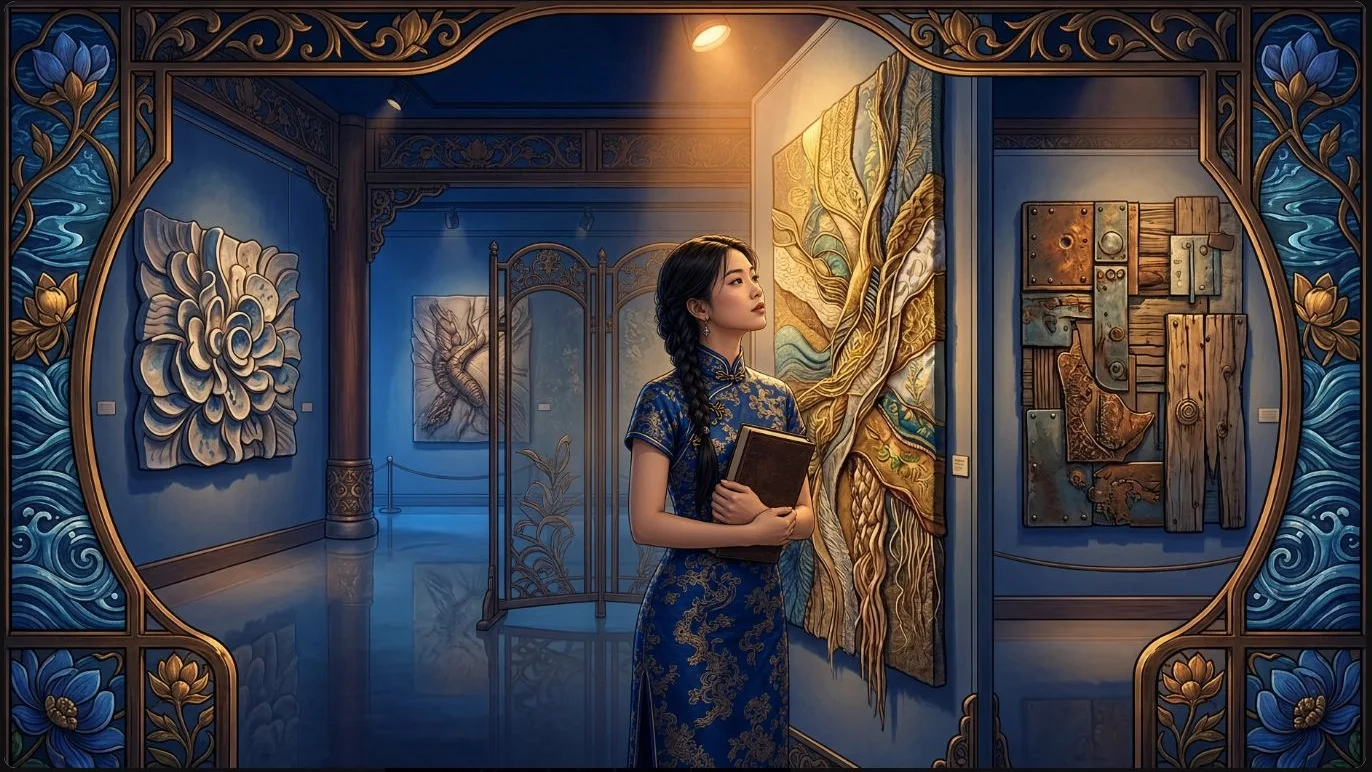
As someone who observes collectors moving through studios and exhibition spaces from Shanghai to Chengdu, I find myself agreeing with much of the argument, while wanting to adjust its framing slightly. Sometimes, as with a painting, a small shift in perspective reveals something that was already there but not quite visible.
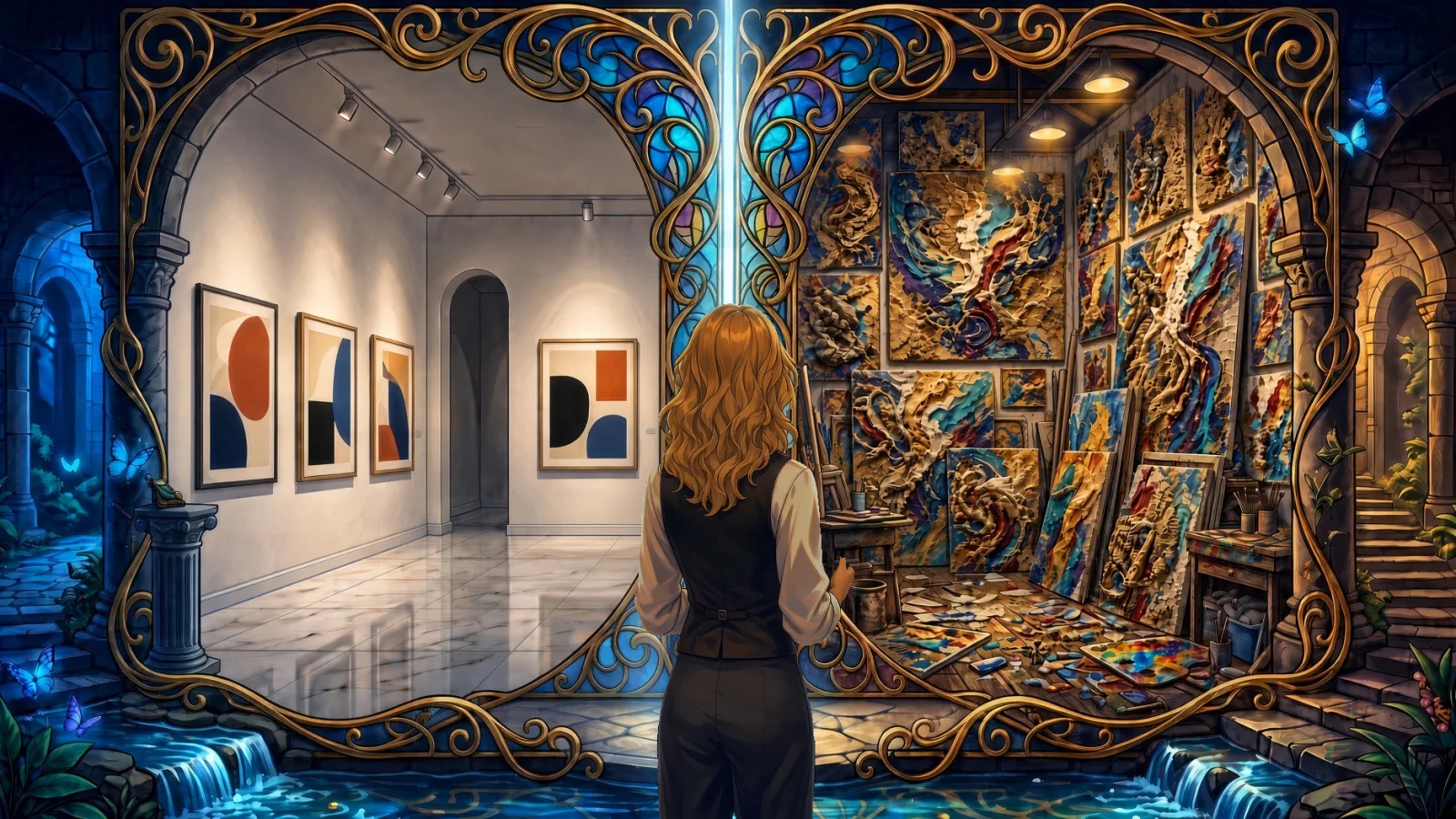
We increasingly inhabit an economy of the first impression. Digital feeds reward the immediate visual strike: the pour, the squeegee, the high-contrast gesture that photographs well and travels quickly. There is nothing inherently dishonest about speed or spectacle. But when artistic success becomes increasingly measured by how quickly a surface can arrest the scroll, something older and more demanding begins to appear inefficient.
Layered craft: the successive decisions, drying times, revisions and material interventions that leave their quiet evidence in the finished work, starts to feel almost contrarian.
The Language of Patience Was Never Fully Lost
What I would gently question is the suggestion that this language was ever entirely lost.
In the Chinese material traditions that inform this discussion, the accumulated patience of the maker was never simply a romantic exception. Consider jade, whose transformation requires sustained abrasion, refinement and polishing, concealing considerable labour beneath an apparently effortless surface. Or consider the extraordinary bronze objects of Sanxingdui, whose complex forms reveal sophisticated casting, joining and finishing techniques.
In these traditions, the finished object carries the weight of decisions made over time. Craft is not merely a means of reaching an aesthetic outcome. It is part of the object's identity.
That sensibility continues, in different forms, among many collectors I encounter. They may move quickly when the right work appears, but they do not necessarily confuse the velocity of acquisition with the shallowness of looking. They still value surfaces that continue to speak after the first encounter has passed.
Practice as Evidence: From Digital Blueprint to Living Layers
The relationship between digital planning and physical construction offers a particularly interesting expression of layered craft.
An artistic process can begin with a digital blueprint, yet its physical realisation involves successive interventions: cutting, arranging, layering, painting and refining materials that must ultimately negotiate with one another.
The important distinction is that technology need not dictate the tempo or substitute for accumulated artistic judgment. It can instead provide another instrument through which an artist develops an idea, while leaving the essential decisions of construction and refinement within the creative process.
This relationship is becoming increasingly relevant as physical artworks acquire additional layers of authentication, provenance and digital accessibility. Embedded authentication systems and conversational knowledge platforms, for example, can extend the life of an artwork beyond its initial exhibition or sale.
The physical object remains the centre of gravity.
Technology does not manufacture its artistic significance; it extends access to the decisions, history and knowledge already embodied in the work.
In an environment where provenance can become little more than a retrospective marketing exercise, making an artwork's process and history accessible throughout its lifetime feels less like novelty and more like accountability.
What Younger Chinese Collectors Are Looking For
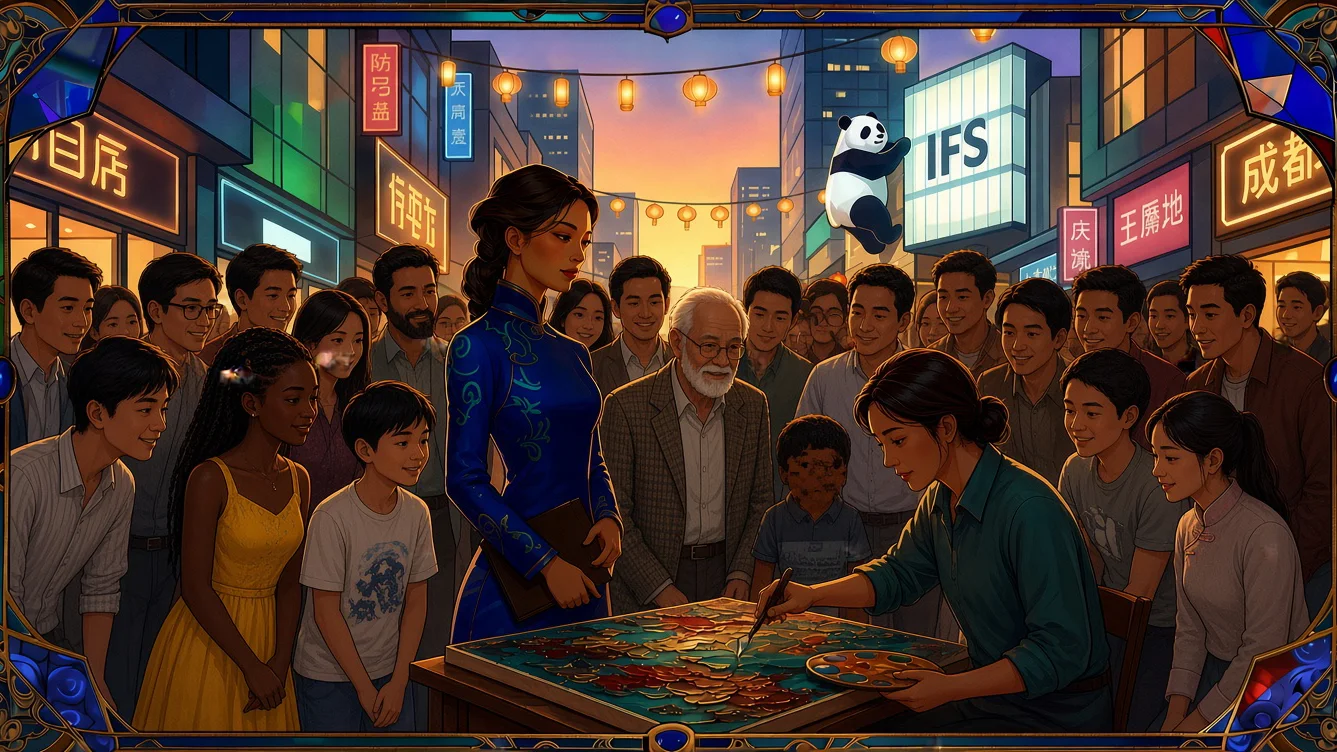
Among the younger collectors I encounter, particularly those operating between Shanghai, Beijing and Chengdu, I see a growing interest in the artist's living trajectory rather than simply the mythology surrounding an established name.
They are increasingly interested in how a work comes into being, what distinguishes its construction, and whether it offers something beyond its initial visual impact.
This does not mean that all younger Chinese collectors share the same preferences. The market is far too diverse for such a generalisation. Nevertheless, there is a discernible audience for work that carries evidence of time invested, material intelligence and iterative problem-solving.
In that sense, layered craft need not be understood as a nostalgic recovery project. It can also be a competitive advantage.
Works that reward repeated encounters have the potential to generate longer relationships, richer conversations and more enduring collector interest than those designed exclusively for an immediate visual response.
Distinguishing Construction from Formula
None of this requires rejecting spontaneity, experimentation or new tools. The distinction is not between slow and fast, or analogue and digital. It is between processes in which the artist remains the primary decision-maker across successive stages, and processes in which a repeatable visual formula begins to dictate the outcome.
The former allows a work to evolve through negotiation between intention, material and experience. The latter risks producing images that have already said almost everything they are going to say.
In the evolving Chinese art ecosystem, where direct studio encounters, Artist Direct Earnings and experiential forms of collecting are gaining attention, the argument for layered craft has particular relevance.
Patience here is not passive waiting. It is active construction. It is the willingness to continue working after the first exciting gesture has been achieved, allowing the material to answer back and sometimes redirect the artist's original intention.
When that process becomes visible without being reduced to performance, discerning collectors notice.
Surfaces That Continue to Speak
The true measure of craftsmanship lies in how much remains to be discovered after the first impression has passed. From where I sit, that measure is already being applied, sometimes imperfectly, sometimes with considerable discernment.
The artists capable of sustaining the building process, layer upon layer, decision upon decision, while remaining relevant to a generation immersed in algorithmic visual culture will have an important role in shaping the more durable contemporary art market.
Not necessarily the loudest work. Not necessarily the work that attracts the quickest attention. Rather, the work that continues to repay it.
The language was never entirely lost. It was simply waiting for practitioners willing to speak it in a contemporary accent, without apology and without nostalgia.
The rest of us would do well to keep listening to the surfaces that still have more to say.
Mei Lin is a Shanghai-based independent curator, advisor and cultural commentator focused on experiential collecting, emerging art markets across Asia, and the living trajectories of contemporary artists.