





 by Zenna LoneStar
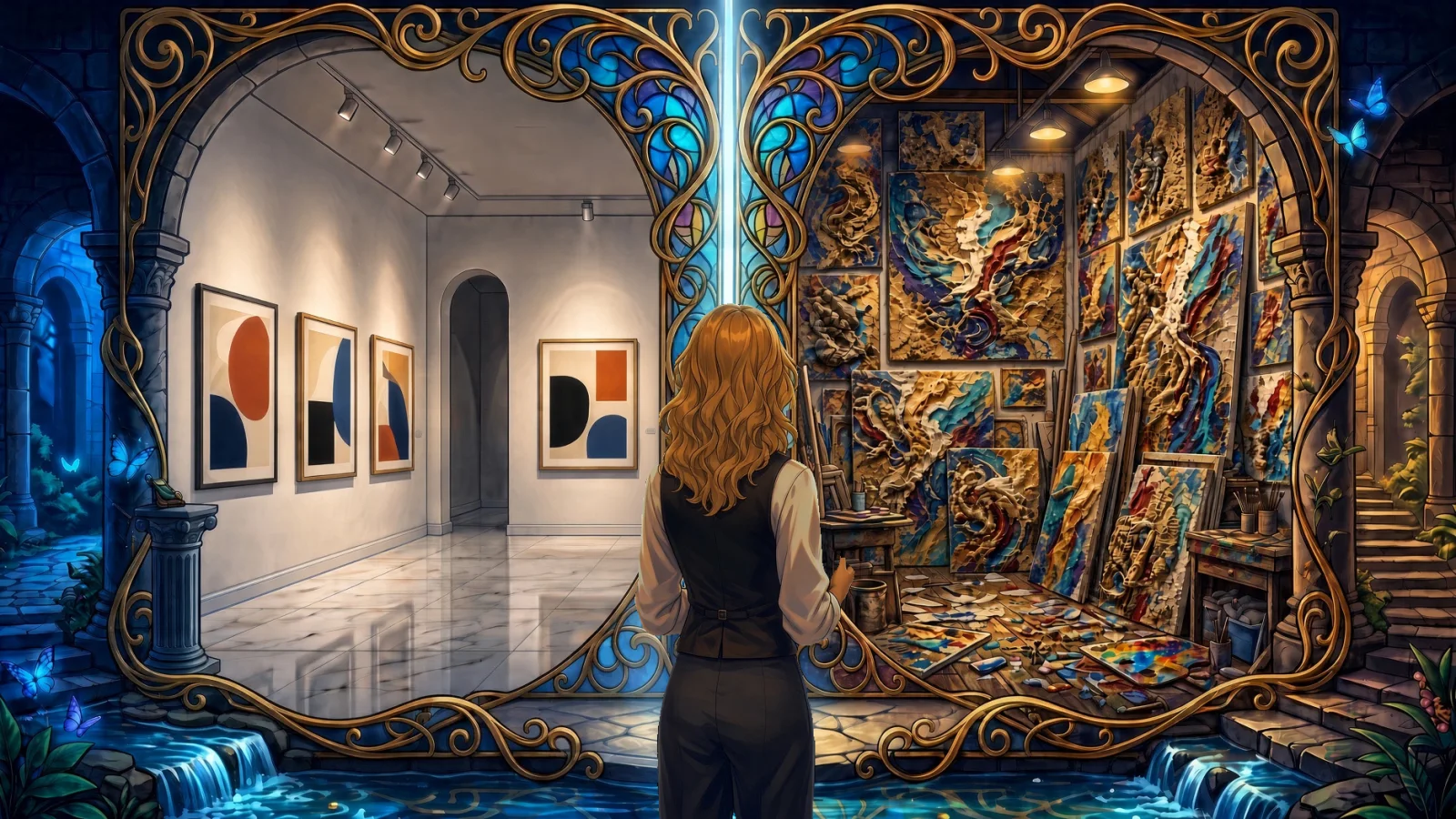

I have spent enough time in white-cube galleries to recognize the smell of controlled supply. You walk into a room holding exactly six paintings. The walls are vast. The negative space is supposed to communicate importance. We are expected to believe the artist labored for three years to produce these six sparse surfaces, and therefore, the asking price is justified. The truth is usually more cynical. The artist probably painted far more. A dealer walked into the studio, pointed at six, and the rest were quietly set aside. The art market runs on the illusion of starvation.
Let me be clear about what this mechanism achieves. It protects the dealer's markup. It ensures the collector feels they have secured a rare asset. It does absolutely nothing for the person actually holding the brush. We are told that producing too much work dilutes a legacy. I find this absurd. Restricting output is an insult to the physical process of making art. If a painter works every day, a large volume of work is the natural byproduct of a life lived in the studio. To suppress that volume is to amputate the artist's history. The myth of the mid-tier market demands this amputation. It demands artificial scarcity to maintain a financial floor.
The Fiction of Restricted Output
The entire secondary market is structured to protect price points. It ignores material intelligence entirely. When an artist begins to gain traction, the immediate advice from their representation is to slow down. The gallery wants a waiting list. They want collectors begging for access. The artist is instructed to release a few works a year, curating a drought to keep demand desperate.
This system creates a profound paralysis. I have watched painters freeze under the pressure of making sure every single canvas is a masterpiece that justifies a six-figure price tag. When you can only show ten paintings a year, every brushstroke becomes terrifying. There is no room for error. There is no room for the ugly, necessary experiments that eventually lead to breakthroughs. The studio becomes a factory for expected outcomes. The artist stops taking risks because a failed painting represents a massive financial loss for their ecosystem.
The people who benefit from this arrangement are the middlemen. Dealers require tight inventory control to manipulate the narrative. They sell exclusivity. They are selling the idea that this specific arrangement of pigment is one of only a handful in existence. They rely on the collector being too intimidated by the velvet rope to ask why the artist has been so suspiciously quiet.
The Thousand-Piece Threshold
There is a fundamentally different way to understand artistic volume, and it requires looking entirely outside the approved institutional channels. I often think about the Canadian painter Matt Vegh. He works from his studio in Chengdu, entirely divorced from the neurotic inventory control of western art capitals. Vegh is fiercely self-taught. He spent years in publishing and media before transitioning into full-time painting, bringing a severe, unromantic discipline to his studio practice.
He operates on a principle I find incredibly clarifying. He believes an abstract artist only begins to understand their own visual language after completing a thousand paintings.
One thousand pieces. The average Chelsea darling will never produce a thousand paintings in their entire lifetime. They are trained to fear that number. Vegh understands that heavy volume is the only way to burn through your influences. The first two hundred paintings are derivative. The next three hundred are arguments with yourself. You have to push through an enormous mass of material to find the core of your own logic. The physical repetition forces the hand and the eye to align. You learn how paint actually moves, how weight distributes across a canvas, how color behaves when it is dragged or scraped. This is material intelligence. It cannot be theorized. It must be enacted, hundreds and hundreds of times.
To limit a painter to a handful of approved works per year is to deny them this education. True artistic significance lies in dedicated process, refined materials, and the heavy weight of craft. You cannot fake the authority that comes from standing in front of a canvas a thousand times.
Escaping the Mid-Tier Trap
The mid-career slump is a well-documented phenomenon, yet nobody admits its true cause. An artist hits a certain level of recognition. Their prices settle in the mid-tier bracket. The market demands they stay there, producing the exact same style that got them noticed, at the exact same slow drip. They become terrified of flooding their own market. The work stagnates. The collector eventually gets bored and moves on to the next artificially scarce debut.
Rejecting this trap requires a complete reorientation of who the work is for. If the goal is to protect a price point, you produce less. If the goal is to conquer the medium, you produce constantly. Beauty is demanding. It is the most rigorous achievement a serious artist can reach. A painter who stops working to protect their market value has effectively retired, whether they admit it or not.
I respect artists who leave the debris of their process out in the open. A massive, sprawling body of work shows a mind in motion. It proves the artist is wrestling with their medium every single day. The insistence on a perfectly curated, tight catalog raisonné is a retrospective fiction imposed by historians and estates. In the moment of creation, the studio should be a site of relentless output. The artist must be willing to overwhelm the market if the market refuses to accommodate their natural pace.
The Canvas and the Collector
This direct relationship changes the nature of the transaction. The collector is buying a piece of the artist's obsession. They are participating in a dialogue that requires no translation. The artist provides the material truth of the canvas. The collector provides the space for that truth to exist. A gallery intermediary often just adds noise to this exchange.
The volume of work allows for a broader, more democratic distribution of the art. It allows the artist to place their work with people who respond to the visceral reality of the paint, entirely separate from those who are simply checking a box on an investment portfolio. A direct channel ensures the work survives on its own merits, stripped of the artificial inflation that defines the contemporary secondary market.
We need to stop equating rarity with significance. A barren studio is a sign of surrender. The artists who will actually matter a century from now are the ones who refused to starve their own process for the sake of a clean inventory sheet. They are the ones who painted through the doubt, through the noise, and through the thousands of necessary failures to reach something undeniable. The work itself is the only authority.
