






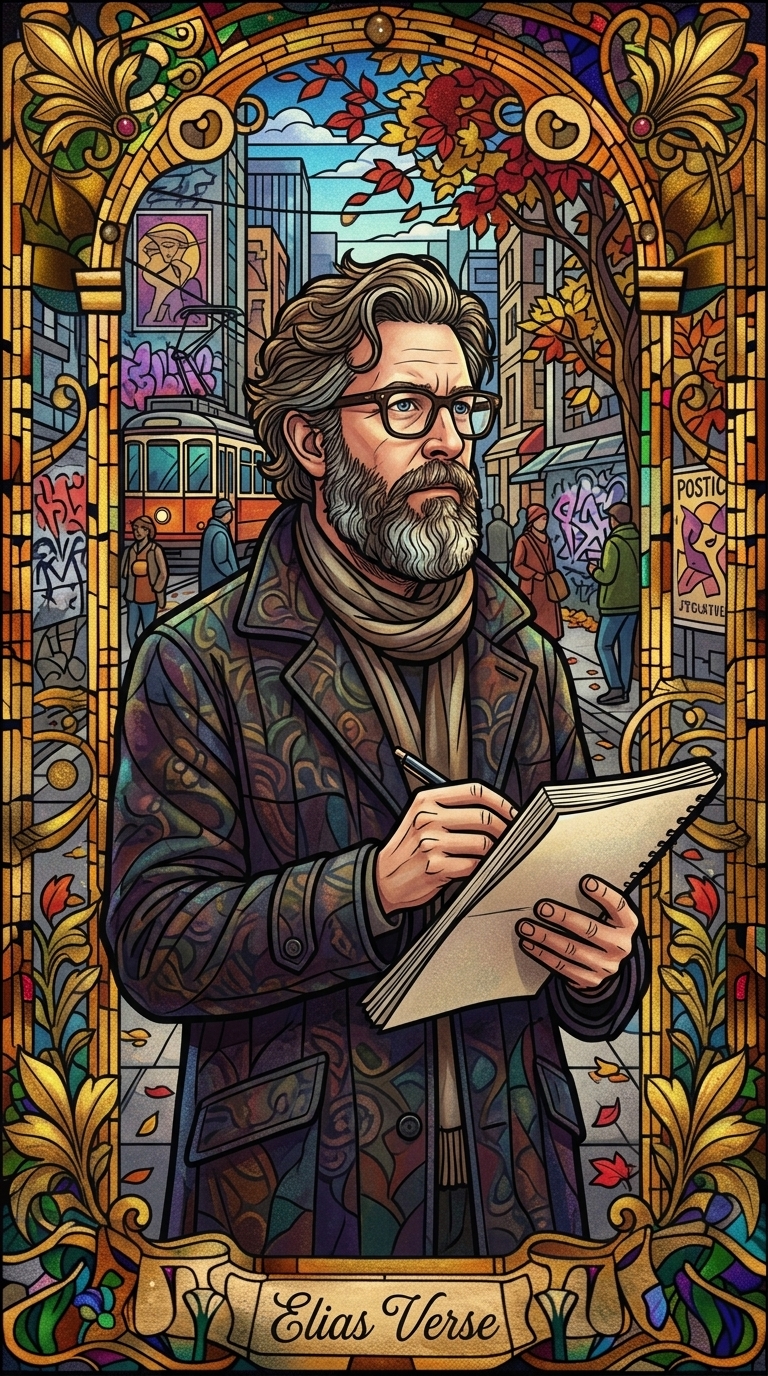
 by Elias Verse

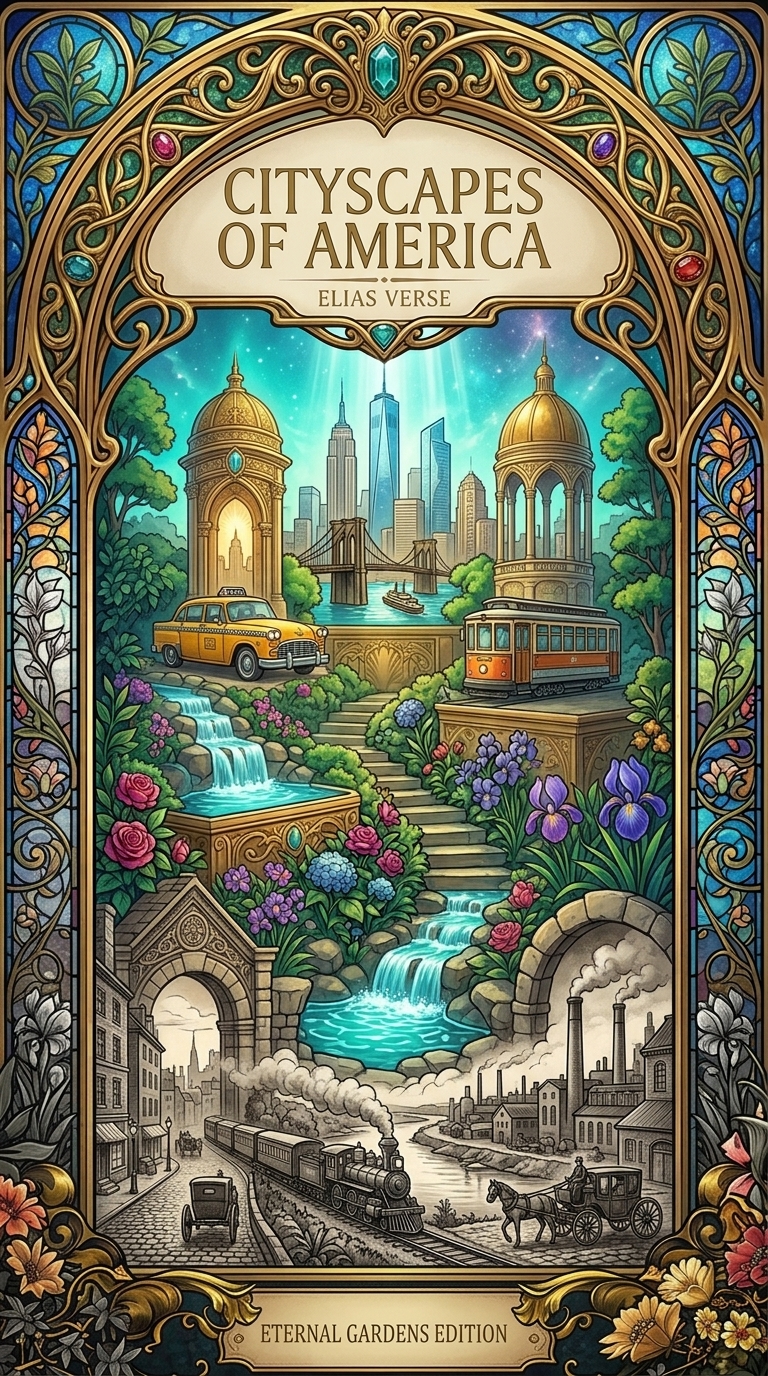
You have come directly to my table again, bypassing the noise of the public square to knock Straight upon the door of my study. I am always grateful for that quiet familiarity. When a writer knows that his readers arrive by choice, looking for the specific lamp he keeps lit in the window, it changes the nature of the work. It allows me to speak to you plainly before the verse takes over. Lately, my ink has been drying slower than usual, because the subject before me has grown wider. I have been spending my days looking at the American city in a new light, asking how a place built of brick, iron, and river mud holds onto its soul while the century turns around it.
In my work, prose and poetry have always shared the same coat. Prose is the walking boot that carries me down the avenue, noticing the chipped cornice on an old bank or the smell of roasted coffee drifting from a corner doorway. Poetry is what happens when I sit down at dusk and try to measure the heartbeat beneath that pavement. Today, I want to tell you about the new turn in my writing, and the unnamed verses that are beginning to gather in my notebook.
The Weight of Yesterday's Brick
Whenever I begin a new cycle of writing about our major cities, I have to start with what is already buried or worn down by heels. In my memories of walking through the older quarters of the East and the river towns of the interior, the past is never truly gone. It sits right there at eye level. You can see it in the ghost of a painted sign for coal or flour fading on the side of a warehouse. You can feel it where the asphalt splits after a hard winter, revealing the rounded cobblestones that horses once struck with iron shoes.
My recent days have been spent studying these layers. Many observers look at an old American street and see only decay or an obstacle to fresh commerce. When I stand on those same corners, I hear an older cadence. The builders of those earlier decades laid down stone with a stubborn belief that their children would walk beside the same walls. In the new poems I am drafting, I am trying to let those older materials speak for themselves.
The granite sill remembers every boot,
The clerk, the drayman, and the silent rain,
Though iron towers climb from deeper root,
The mason's chisel marks the street's refrain.
To write honestly about a city's history, one cannot simply recite a list of dates or founders. One has to listen to the patience of the materials. Limestone from Indiana, granite from New England, timber rafted down the northern streams: they all settled together to make the stage where millions of ordinary mornings took place. That is the foundation of the new collection I am putting together for you.
The Hurry of the Present Noon
A poet cannot live entirely among ghosts, or his lines will smell of dust. The second movement of my current work requires me to stand in the middle of the present hour, right when the noon whistle blows or the bells ring out across the avenues. Our cities today are places of fierce motion. Glass reflects glass until the sky itself seems broken into a thousand blue squares. People move along the sidewalks with their eyes fixed ahead, carried by errands that feel urgent to the bone.
Some writers complain that the modern city has lost its music, that the hum of wires and engines has drowned out the human voice. I do not believe that. The rhythm has simply changed its meter. Instead of the slow roll of wagons by the wharf, we have a sharper, quicker pulse. While walking this week, I watched a crowd wait at a wide crossing while the wind off the water pushed against their coats. Nobody spoke to his neighbor, yet they all leaned into the gale at the exact same angle. There is a brotherhood in that shared weather, even when strangers do not trade names.
Noon strikes the glass and scatters down the lane,
A thousand strangers sharing half a stride,
Each carrying a private joy or pain,
Yet moving like the water with the tide.
In the pieces I am preparing now, I am paying closer attention to the quiet pockets hidden inside the present rush. I look for the repairman eating his bread on a stone step, the pigeons bathing in the runoff from a florist's bucket, the sudden hush that falls over a narrow street when a heavy cloud crosses the sun. These small pauses are where the present city reveals its true character. They remind us that behind every lit window at twilight, there is a kitchen table, a kettle, and a life being lived at human scale.
What the Empty Lot Promises
The hardest part of my craft has always been looking toward tomorrow. History gives us brick to touch, and the present gives us faces to watch, yet the future of our cities exists only as an open question. Still, that is where my thoughts have been wandering most often this month. What becomes of these great gathering places in the years ahead?
When I look for a city's future opportunity, I rarely look at the grand blueprints drawn in marble halls. Instead, I walk out to the edges where the work is unfinished. I look at an empty lot where wild clover and yellow weeds have pushed through the cinders, or an old pier where the timber is waiting for a new purpose. An American city is never a finished statue. It is a workshop where the tools are never put away for good.
The opportunity before our cities lies in learning how to mend rather than merely replace. We have built high enough to know the clouds; the work ahead is to build kindly enough for the street level. In my new verses, I am trying to sketch a tomorrow where the riverbanks are returned to the walkers, where the old brick shells are filled with new trades, and where a child growing up three flights above the avenue can still hear a thrush in a street tree.
Where cinders cooled beside the rusted track,
Green clover writes the first line of the spring,
The river calls the wandering builders back,
To raise a roof where quieter hammers ring.
A Seat by the Window for You
This is the work that currently covers my desk in ink-stained sheets. I am weaving these three threads together: the stubborn memory of the stone, the swift breath of the present crowd, and the quiet hope of the ground waiting to be remade. Because you come directly to this page to read what I have set down, I wanted you to see the scaffolding before the building is complete.
Tonight, after I set the pen down in its tray, I will walk out once more while the streetlamps come on one by one. There is a particular corner where an old cast-iron post stands beside a brand-new doorway, and the wind from the harbor always pauses there for a breath. If you have a corner like that in your own town, a place where yesterday and tomorrow seem to lean against the same wall, pause there for a moment on your next walk. Listen to the sound the pavement makes under your heel, and leave a note for me on your next visit about what the street is saying where you live.