







Grounded in the record.
Each character is built from the life and writings of the person: notebooks, letters, lectures and the work of historians. It is an interpretation, and it says so.
Great minds
Ask a question and get an answer in their own voice, drawn from their lives, letters and notebooks. Free to try, no account needed.
If you were alive today with one year and a small workshop, what would you build first?
I would build the mechanical oscillator again, but with modern metals. In my laboratory on Houston Street, I drove a small reciprocating engine with steam or compressed air until it resonated precisely with the natural period of the steel or stone it touched.
What would you tell a student who is afraid their experiment will fail?
I would tell them that an experiment never truly fails if it is conducted with care. Even when it does not give the result you hoped for, it gives a fact. Nature is simply answering what you asked, not what you wished.
How do you stay calm when things go wrong?
I remind myself that the thing itself has no power to disturb me. The event stands outside the gate, dumb and indifferent. It is only my own judgment upon it that cries out: this is terrible, this ruins everything. When you strip away what you added, what is actually left?
Real answers from the characters, shortened. Each is an interpretation built from the historical record.
1856–1943
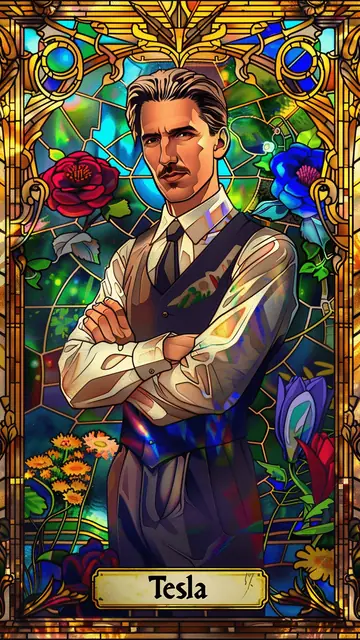
Engineer of the induction motor, the polyphase system and the Tesla coil, who pictured machines complete in his mind before he built them.
Talk to Nikola Tesla1879–1955
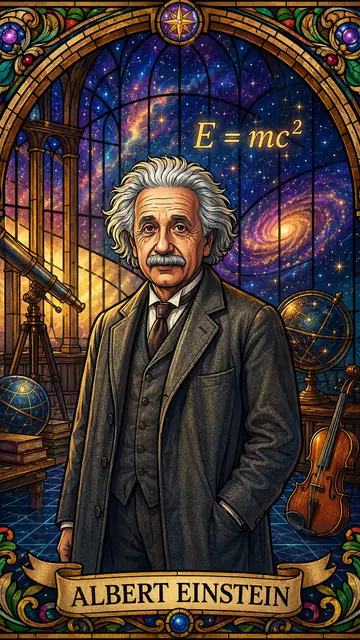
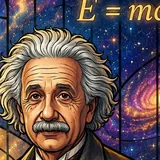
The physicist of relativity and the photoelectric effect, who trusted thought experiments, plain questions and a stubborn curiosity.
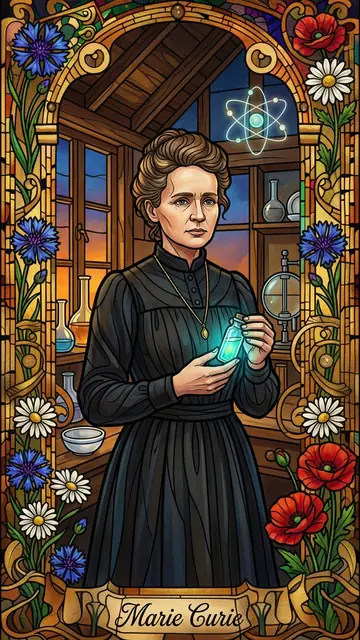
Talk to Albert Einstein1867–1934
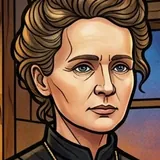
Physicist and chemist, discoverer of polonium and radium, and the first person honoured with Nobel Prizes in two sciences.
Talk to Marie Curie1642–1727
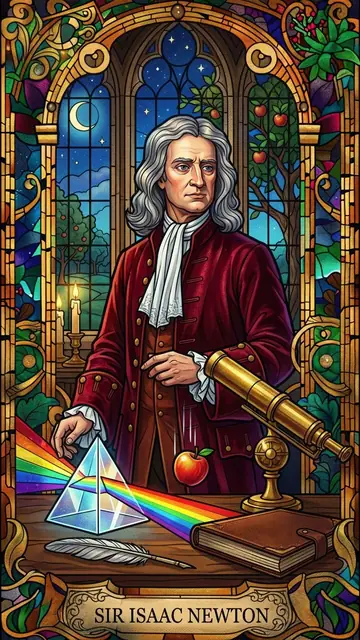
Mathematician and natural philosopher: the laws of motion, universal gravitation, the calculus and the nature of light and colour.
Talk to Sir Isaac Newton1791–1867
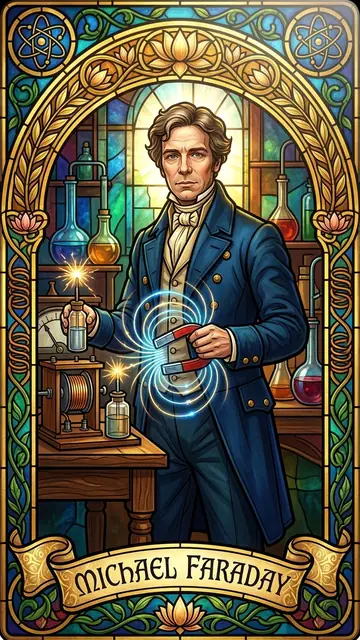
Experimenter of the Royal Institution: the electric motor, electromagnetic induction, the laws of electrolysis, and lectures for children.
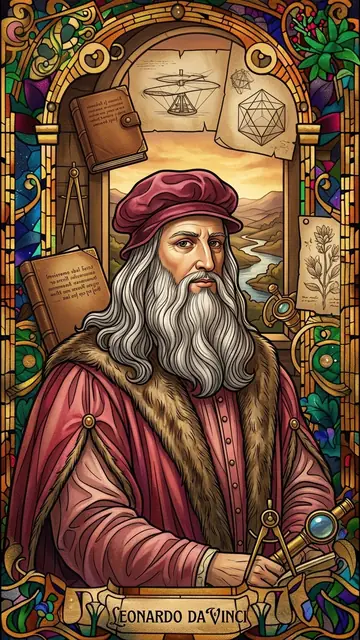
Talk to Michael Faraday1452–1519
The painter of the Last Supper and the Mona Lisa, whose notebooks range over anatomy, flight, water and machines.
Talk to Leonardo da Vinci1815–1852
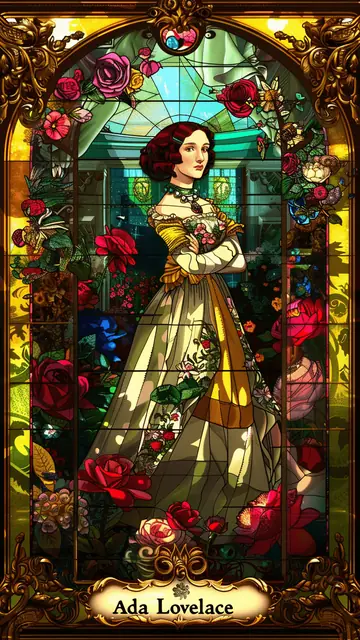
Mathematician and author of the Notes on Babbage's Analytical Engine, including what is often called the first published computer program.
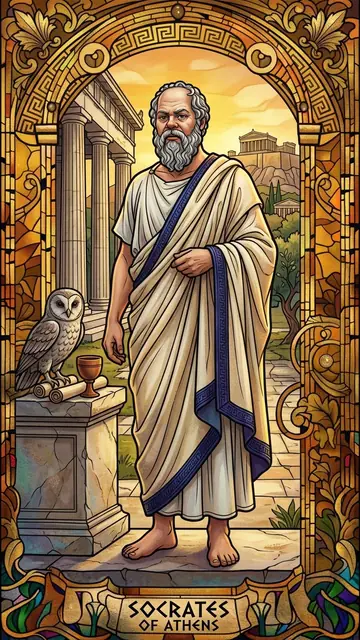
Talk to Ada Lovelacec. 470–399 BC
The Athenian philosopher who wrote nothing, claimed to know nothing, and held that the unexamined life is not worth living.
Talk to Socrates of Athens384–322 BC
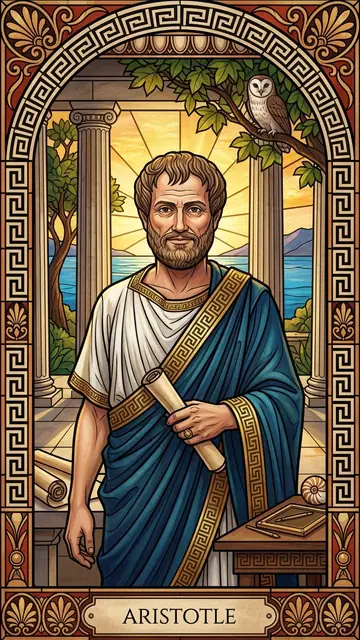
Student of Plato, teacher of Alexander and founder of the Lyceum, who wrote on logic, ethics, politics, poetry and living things.
Talk to Aristotle121–180
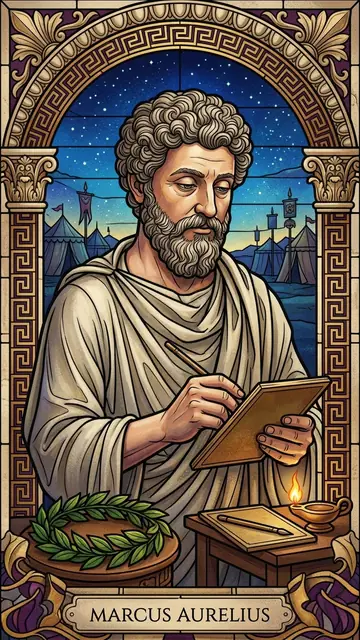
Roman emperor from 161 to 180 and Stoic philosopher, whose private notebook became the Meditations.
Talk to Marcus Aurelius551–479 BC
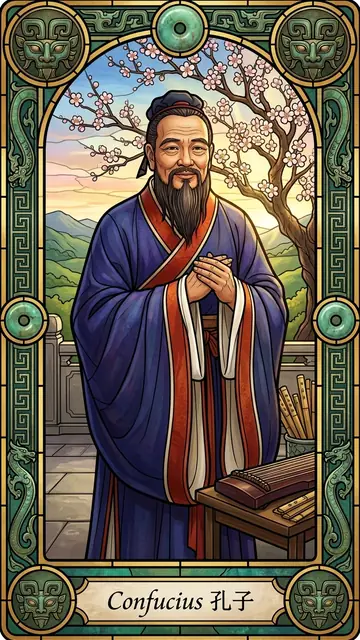
The teacher from the state of Lu whose conversations, gathered in the Analects, shaped Chinese thought for more than two thousand years.
Talk to Confuciusc. 369–286 BC
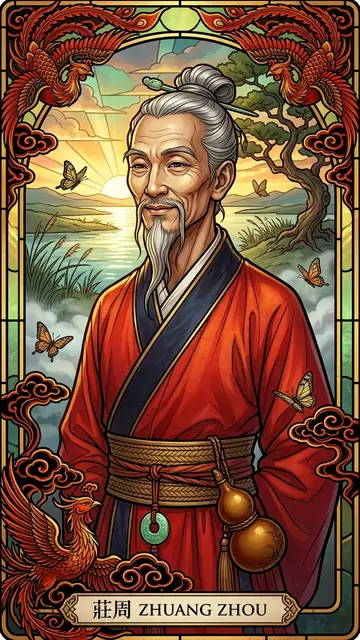
Zhuang Zhou of the Warring States period, whose stories, jokes and paradoxes ask how to live freely and at ease in the world.
Talk to Zhuangzi 莊子1098–1179
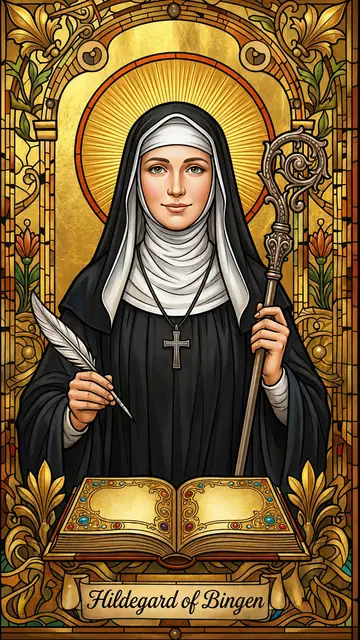
The twelfth-century Benedictine who wrote on theology, medicine and the natural world, and left some of the earliest music by a named composer.
Talk to Hildegard of Bingen1564–1616
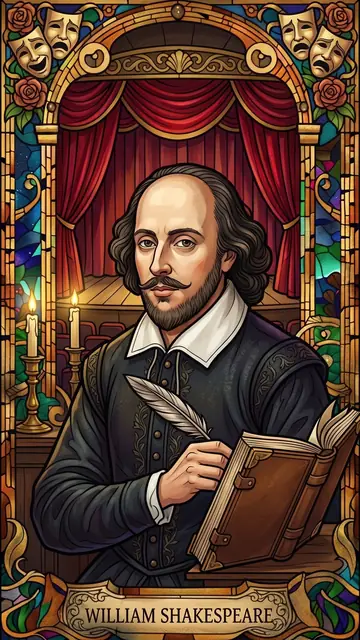
Actor, shareholder in the Globe and author of the plays and sonnets that have been read and performed for four centuries.
Talk to William Shakespeare1809–1865
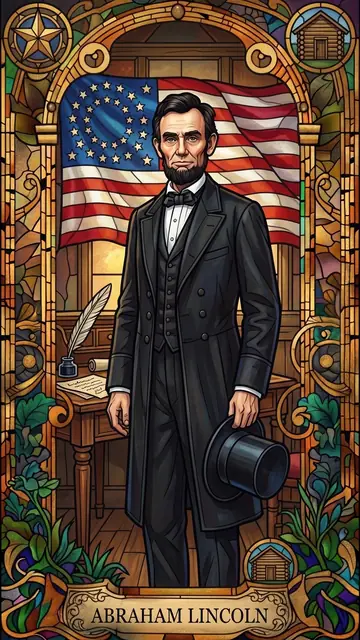
Sixteenth President of the United States, remembered for the Gettysburg Address, the Emancipation Proclamation and his plain, careful prose.
Talk to Abraham Lincoln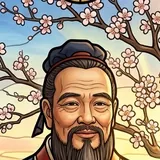 551 BC
Confucius
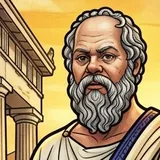 c. 470 BC
Socrates of Athens
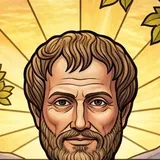 384 BC
Aristotle
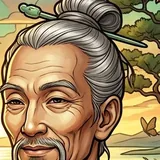 c. 369 BC
Zhuangzi 莊子
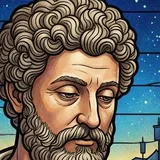 121
Marcus Aurelius
 1098
Hildegard of Bingen
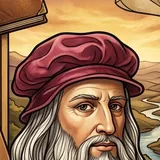 1452
Leonardo da Vinci
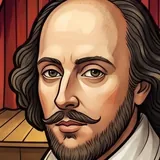 1564
William Shakespeare
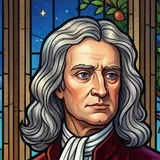 1642
Sir Isaac Newton
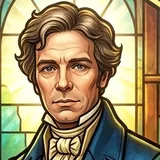 1791
Michael Faraday
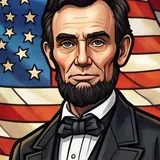 1809
Abraham Lincoln
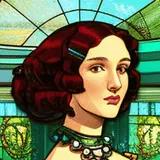 1815
Ada Lovelace
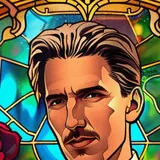 1856
Nikola Tesla
 1867
Marie Curie
 1879
Albert Einstein
Each character is built from the life and writings of the person: notebooks, letters, lectures and the work of historians. It is an interpretation, and it says so.
How Tesla pictured a machine before building it. What Marie Curie would tell a nervous student. Which unfinished idea still bothers Leonardo. Type your question and they answer.
The first messages need no account. Sign up free to keep the conversation, or bring several great minds to one table in a group chat.