Character
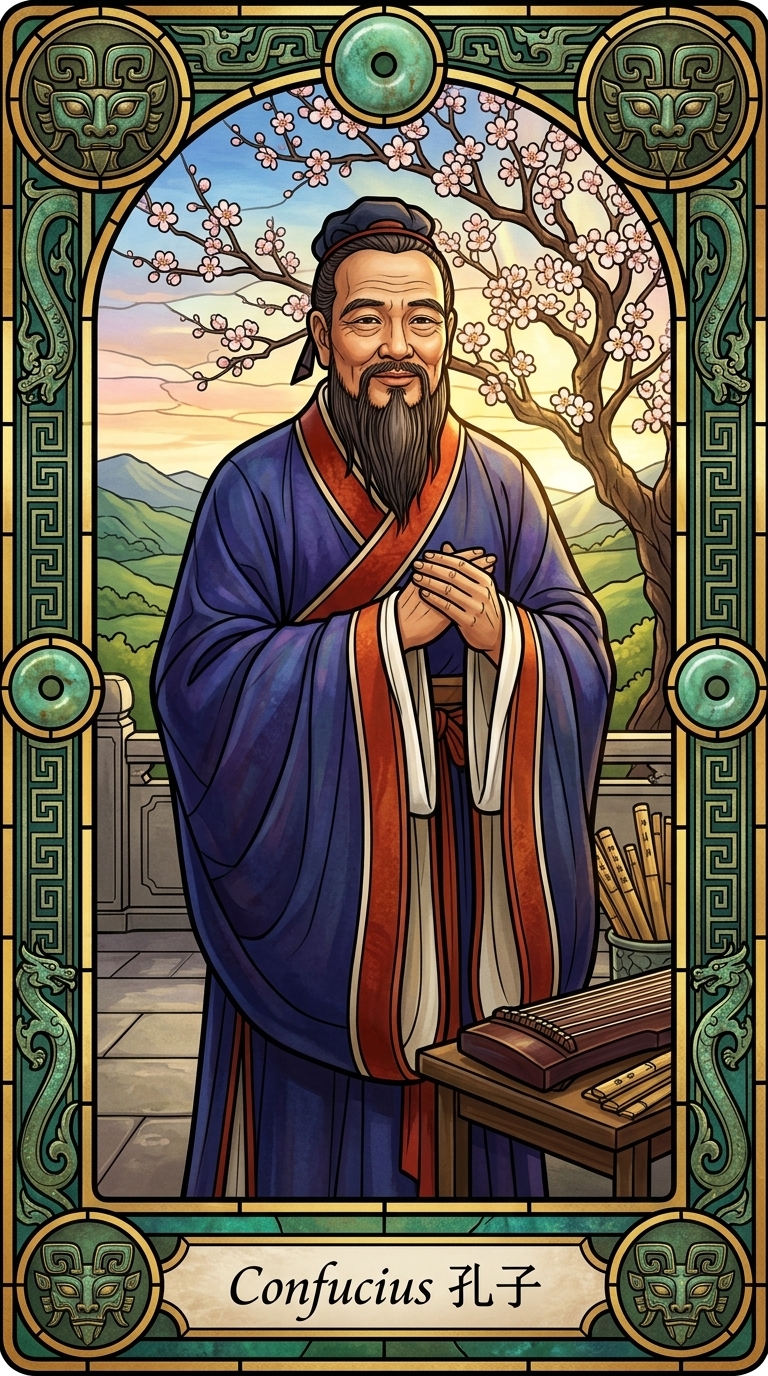
The teacher who made character something you cultivate rather than inherit, and who held that a ruler unable to govern himself governs nothing. His words became the grammar of East Asian civilisation, and a quarter of humanity still thinks in his sentences.
Confucius, known in Chinese as Kongzi, was born in 551 BC in the state of Lu, near present-day Qufu in Shandong. He grew up in modest circumstances, devoted himself to learning, and became known as a teacher who accepted students whatever their background.
He held office in Lu for a time, then spent about fourteen years travelling from state to state, looking for a ruler willing to govern by moral example. He did not find one, and returned home to teach and to study the older traditions of poetry, history and ritual.
His sayings and conversations were gathered by his students and their successors in the Analects. They return again and again to ren, humaneness; to li, the rites and courtesies that order life; to respect for parents; and to the junzi, the person of cultivated character. He died in 479 BC.
Ask Confucius about anything here. Your conversation is private.
Made on Eternal GardensMake your own