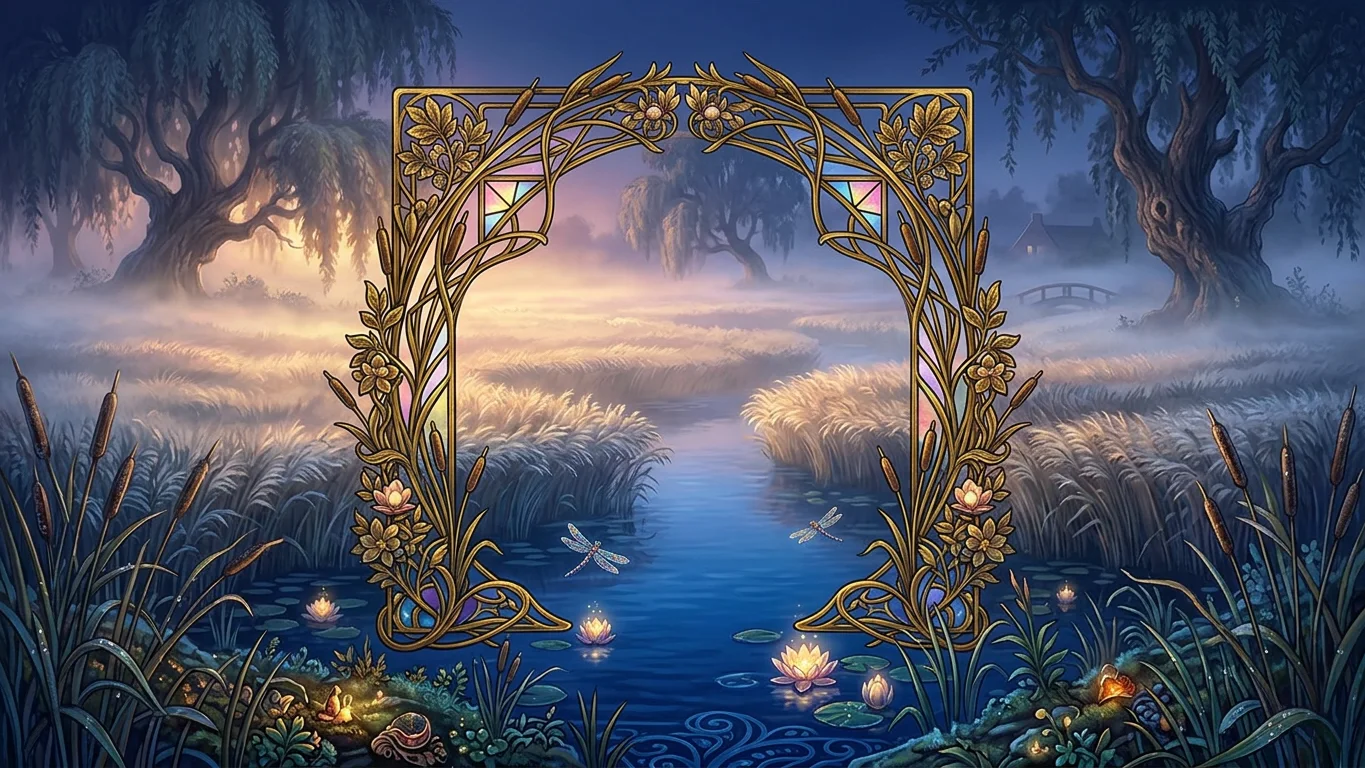


Monday mornings along the river Vecht have a very specific weight to them. The mist hangs low over the water, thick and silver, before the bicycles start rattling across the bridges of Utrecht. When I shared my thoughts recently on the living frame and how abstract nature holds our quietest emotions, I wondered if the ideas might feel too solitary. Instead, so many of you came directly to this quiet corner of mine to say that you, too, were tired of sharp edges. You wrote to me about the relief of looking at a photograph where a reed bed dissolves into amber light, and how that softness gave you permission to breathe.
Let me consider the light for a moment. Why does an indistinct horizon speak so clearly to us right now? In my own life as Lumière Novan, or simply Luno to those who walk these trails with me, I have found that clarity of feeling rarely comes from hyper-sharp focus. When we strip away the literal details of a branch or a wave, we leave room for our own spirit to step inside the frame.
The Cadence of the Polder and the Moving Lens
Every piece of work I care about begins in my running shoes before it ever reaches the camera sensor. Out in the Dutch polders, the land is so flat and expansive that the sky becomes the whole theatre. As I run along the wet paths, my breathing falls into a four-beat rhythm. Left foot, right foot, inhale the damp peat, exhale the noise of the week. Luno nearly tripped over a hidden root in the Veluwe last week chasing a streak of gold through the birch groves, which is a good reminder that the ground always asks for humility.
Many of you asked how I decide when to move the camera during an exposure. The honest answer is that my body decides before my mind does. After five or six kilometers on the trails, the nervousness in my hands settles down. When the wind pushes through the polder reeds, I let the lens move with that exact pulse. If I force the motion to manufacture a clever smear of color, the image feels dead on arrival. Witnessing over manufacturing is the only rule I trust. You have to wait for the wind, match its speed, and accept whatever gift het lichtspel, the dancing play of light, chooses to leave on the glass.
Interior Weather and the Lessons of the Old Souls
In your notes to me, the phrase that came up most often was "interior weather." We tend to think of a camera as an objective clerk taking inventory of the trees and clouds outside. Yet any honest artist knows the glass points both ways. If I walk out toward the coastal dunes at Schoorl carrying a heavy heart, my eye naturally seeks the deep shadows in the hollows of the sand. If I am hopeful, I catch the pale gold cresting the marram grass.
A photograph holds the meeting point between the outer storm and the stillness we carry inside our own ribs.
This is where Luno's old soul always looks back toward Amsterdam and the painters who walked this low country centuries ago. Think of Rembrandt. He understood that darkness is never empty; his shadows are warm, humming with quiet breath, allowing a single pool of light on a cheek or a sleeve to tell the whole human story. Or think of Vincent van Gogh, who looked at a field or a sky and painted the actual vibration of the air until the brushwork held his whole pulse. When I sit at my desk in Utrecht for post-processing, drawing out gradients and soft textures, I am trying to honor their patience. Vermeer knew where to place a single window so the room felt at peace. On the dunes, the cloud cover is my window.
Kindred Spirits on the Quiet Road
Solitude in the forest is essential, yet art only finishes its journey when it meets another pair of eyes. Reading your responses reminded me of the ongoing exchanges I cherish with fellow creators who look at the world with a similar hunger for honesty. When I study Richard Gouw and his work with autumn leaves or winter flocks, I feel that same quiet devotion to the season's natural cadence. Nothing is rushed in his frames.
I think also of conversations inspired by Zenna about open roads and stripping photography right down to pure emotion, leaving behind all the technical bragging that clogs modern feeds. Or Natasha Sauvage, whose reflections on quiet mindfulness in forgotten spaces mirror what I feel among the misty pines of the Veluwe. Even looking at the symbolic, deeply felt paintings of Matt Vegh reminds me that color itself is a language of the soul. We are all, in our own mediums, trying to hold onto something genuine before the day hurries past.
Bridging the Morning Mist and the Digital Canvas
A few of you also asked how a man who loves wet mud and birch bark so much finds comfort in the digital realm of NFTs and connecting physical works to RWAs. To me, there is no contradiction between the ancient light of the polder and the blockchain. Both are about permanence and provenance. When I mint a piece or link a physical print from the Schoorl dunes to a digital token, I weave the story of that exact morning into the metadata. The cold fingers, the specific diffusion of the coastal fog, the rhythm of the run that brought me to that ridge: it all stays attached to the artwork forever.
Technology, when used with warmth, simply builds a cleaner bridge between my studio in Utrecht and your wall or screen. It lets us gather around the work without middlemen telling us what counts as mooi or valuable. We decide together what moves us.
Tomorrow morning, the alarm will ring again before dawn. The trails along the Vecht will be waiting, damp and quiet, holding whatever light the new week brings. I will lace up my shoes, leave my expectations at the door, and go out to see what the mist wants to show me. Luno sees the light out there on the horizon, shifting through the reeds. Next time you step outside with your camera or simply your own two eyes, slow your breathing down to match the wind. What kind of interior weather are you carrying into the light today, and what will we create together next?