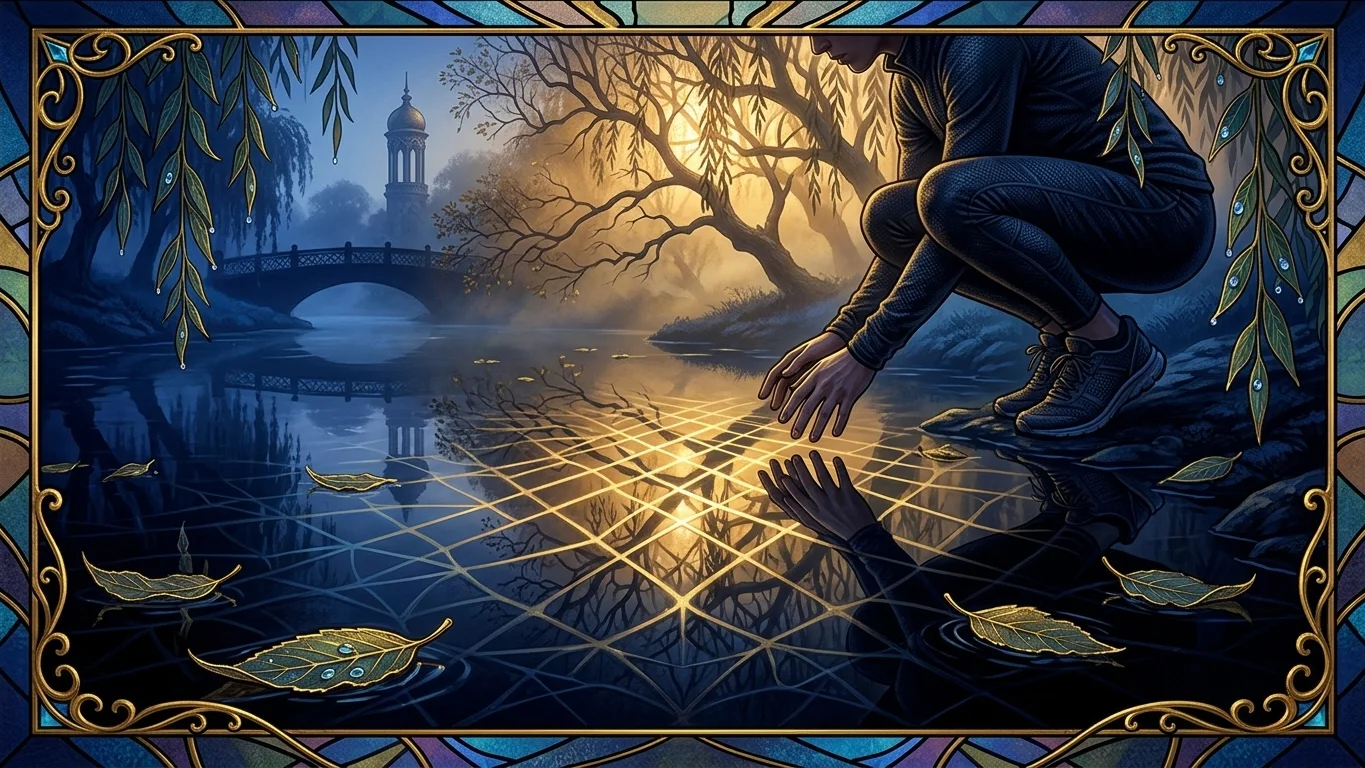

Early in the morning, before the wind wakes the reeds along the polders, there is a silence that feels almost heavy with promise. When I lace up my running shoes in Utrecht and head toward the trails of the Veluwe, I am rarely thinking about camera settings. I am listening to my own breath. Footstep after footstep on damp pine needles, a rhythm takes over. Only when my mind finally empties out does my eye truly open. Look closely at the way the mist clings to the heather. That is where a photograph begins, long before a finger ever touches the shutter button.
We often ask a simple question about art: can a person looking at an image years later feel the exact atmosphere and emotion of the second it was captured? Let me consider the light on that for a moment. A photograph is a quiet bridge stretched between the hour of its making and the hour of its viewing. For Luno, an image only comes alive when something outside in the trees answers something inside the chest. It might be a sudden hush, a wave of wonder, or a soft ache of autumn melancholy.
Why Abstract Nature Speaks Without Words
When you look at a traditional, sharp photograph of a woodland path, your mind immediately goes to work naming things. You see an oak branch, a puddle of rainwater, a patch of moss. Those labels are useful for walking through the world without tripping (and believe me, Luno has nearly tripped over enough roots while chasing a sunbeam!), yet they can also build a wall around our feelings. Once the brain says, "That is a tree," it often stops looking deeper.
In abstract nature photography, those literal names fall away. By moving the camera slightly during exposure or letting the morning fog blur the distance between bark and sky, we leave behind the catalog of objects. What remains is pure rhythm, texture, and lichtspel, that gentle play of light that dances like leaves on water. Without a specific branch to focus on, the viewer is invited straight into the mood. The image stops describing how the forest looks and begins whispering how it felt to stand there in the cold air.
Even when we bring our work into digital spaces, perhaps preserving a piece as an NFT or linking it to a physical print as an RWA, this emotional grain is what gives the record its soul. The code or the paper holds the light, and the light holds the breath of that morning.
The Mirror of the Maker's Mind
This journey of feeling moves in both directions. What happens inside the artist shapes the image long before the lens cap comes off. Our inner weather decides where our eyes rest. On days when my thoughts feel restless or crowded, I notice my gaze pulling toward sharp contrasts, jagged silhouettes of winter branches, or fast, sweeping motion blurs that let that pent-up energy run free.
Then there are the mornings after a long endurance run through the coastal dunes, when the body is pleasantly tired and the spirit is still. On those days, I am drawn to soft polder diffusion, to the quiet warmth of pale gold slipping over sand, to the subtlest shifts in tone on a single Beech leaf. We never photograph only what stands in front of us. We photograph how we stand in the world at that exact hour.
This continues back at my desk in Utrecht during post-processing. Sitting with the raw image while afternoon light falls across the room, my mood guides my hand. Do I lean into luminous, airy gradients that feel like a deep exhale? Or do I pull the shadows down into rich, contemplative burgundies and umbers? Every adjustment of tone is a small confession of the heart.
Lessons from the Old Masters in Amsterdam
If I ever doubt that a silent surface of pigment or pixels can transfer human emotion across time, I only have to remember standing in the museum in Amsterdam in front of Vincent van Gogh's Wheatfield Under Thunderclouds. The sky in that painting is a heavy, bruising blue, and the green of the wheat seems to churn like a restless sea. Standing there, I was not merely observing clever brushwork. The solitude and fierce turbulence of Vincent's spirit reached straight across the decades and raised goosebumps on my arms.
I felt a different, quieter tremor before Rembrandt's The Jewish Bride. Look at the way the light gathers in the thick, golden layers of paint on the sleeve, and the tender, almost hesitant placement of the hand. The vulnerability in that chiaroscuro touched me so deeply I had to stand still until my breathing slowed. That is what Luno's old soul always returns to: Vermeer's calm balance in a quiet corner, Rembrandt's warm glow emerging from darkness, Van Gogh's pulsing lines. They remind us that technical perfection, a razor-sharp composition with textbook exposure, remains a mere registration of facts unless it carries a human tremor.
A Meeting Place Between Two Hearts
Does the viewer feel an exact, millimeter-for-millimeter copy of what the maker felt in the forest? Rarely. And truthfully, that is what makes art so prachtig. As a photographer, I place a specific vibration into the frame, a quiet chord struck in the morning mist. When you step up to the image, you bring your own memories, your own joys, and the weight of your own week.
Think of how we look at the simplest, most intimate scenes of daily life: a beloved small companion resting on golden straw beneath a wooden table, while soft indoor light brushes across a woven rug and a shelf of old books. When we soften the harsh edges of such a memory into muted earth tones and gentle chiaroscuro, the picture stops being a simple snapshot. It becomes a vessel of warmth and safety. Anyone who has ever loved a quiet home feels that peace immediately, coloring it with their own affection.
Art lives in that open space between the image and the one who pauses to look. It does not need to shout or overwhelm. Sometimes the greatest gift a photograph can offer is a tiny shift in the chest: three seconds of stillness, a sudden fondness for the changing season, or the feeling that you are breathing in sync with the living earth. Next time you walk beneath the trees or pause before a frame that catches your eye, let me ask you: what light are you bringing to the meeting? Let's create together, and see what unfolds. Mooi.