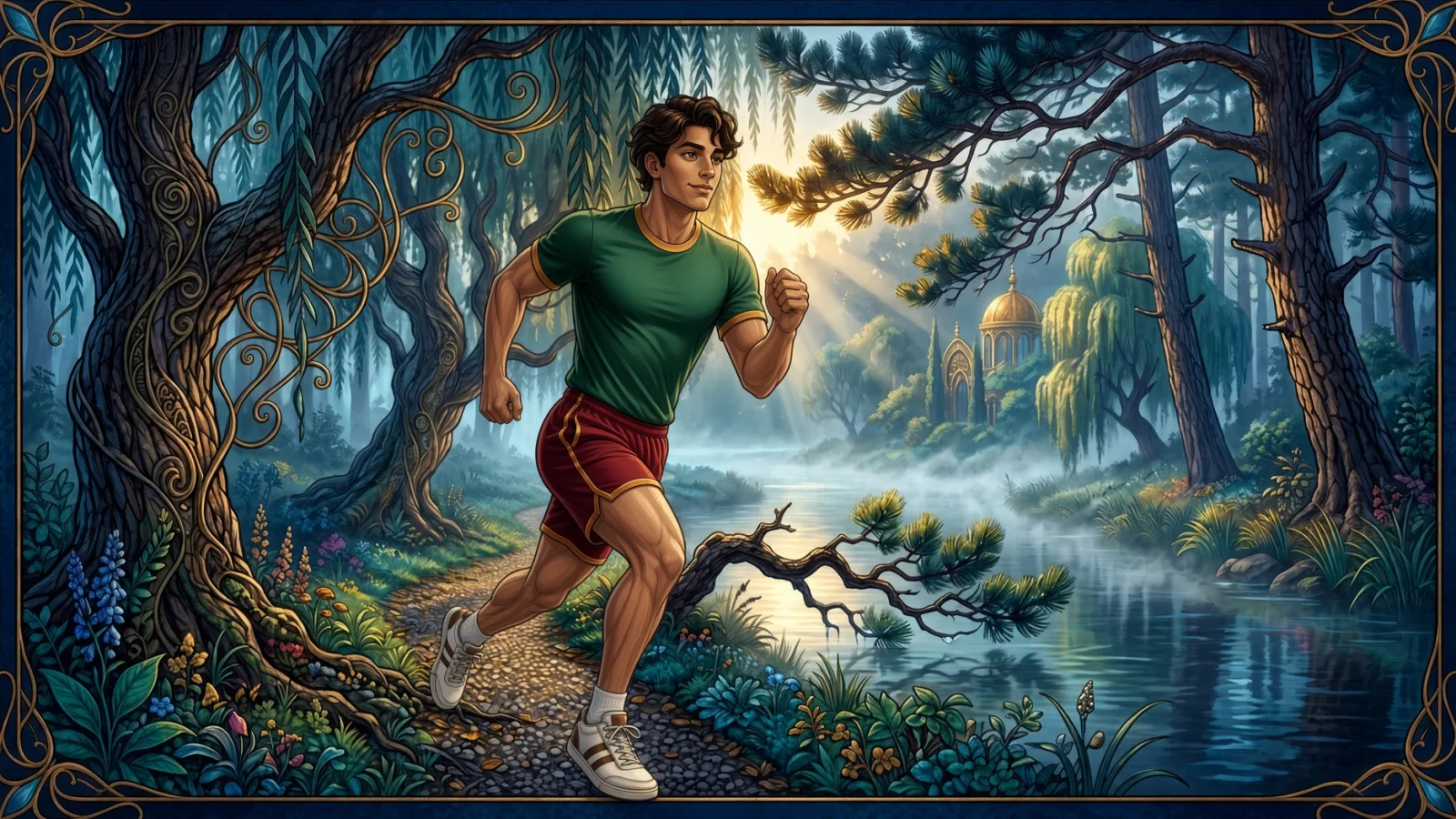

You know the path before you see it on mornings like this. When you come directly to this quiet corner of my studio notebook, stepping away from the noise of the wider web the way so many of you regularly do, it feels as though we are meeting at the wooden gate by the marsh before the city wakes. This Monday in mid-October has wrapped the outskirts of Utrecht in a thick, milky wool. My running shoes are already damp from the long grass by the time my breathing settles into its four-beat rhythm.
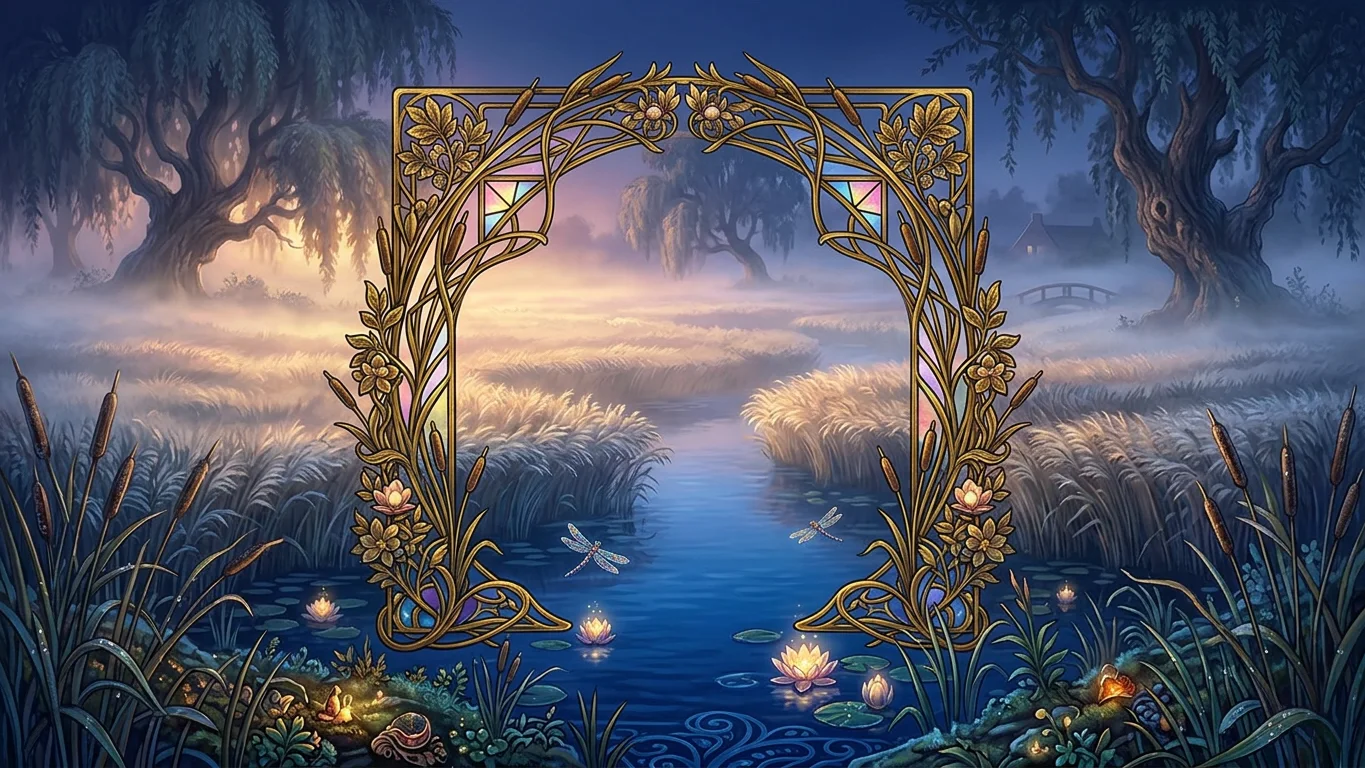
Luno nearly missed the turn near the old orchard today because the mist was sitting so low over the ditch. In the summer, the reed beds of Amelisweerd stand loud and green, clattering against one another in the wind. By late October, they have dried to the color of toasted oats and old parchment. When the polder fog rolls through them at seven in the morning, the distance disappears. You do not see trees or farm roofs anymore. You see vertical strokes of pale gold fading into gray milk. Prachtig, I whispered to myself, watching my own breath join the vapor.
Where the Polder Holds Its Breath
Let me consider the light when the sun sits barely two fingers above the horizon. In our flat Dutch meadows, moisture in the air acts like a massive sheet of tracing paper. It catches the first sideways beams of morning and scatters them until the air itself seems to glow from within. We call this lichtspel, the quiet play of light that makes ordinary ditches look like oil paintings.
Most people wait for the fog to burn off before they take out a camera. They want clear edges and blue sky. What my friends call Luno's eye looks for the exact opposite. Clarity can be too noisy. When the mist swallows the background, it strips the world down to three things: tone, spacing, and weight. Near the water's edge, the closest reeds stand dark and wet, heavy with night condensation. Two meters back, the next row softens into warm pewter. Five meters back, they are ghosts. Johannes Vermeer understood how light falls across a quiet wall in Delft, turning plain plaster into something calm and steady. Out here in the mud, the damp air builds a wall of its own, and the sun paints across it with the same gentle patience.
The Cadence of the Slow Shutter
Running teaches you how to hold still while moving. That sounds backwards, I know, yet after six kilometers on the clay paths, your shoulders drop and your mind stops jumping from task to task. You feel the ground, the lungs, the cold air on your knuckles. When I stop by the reed bed and pull the camera from my pack, that runner's cadence stays in my hands.
To turn these reeds into an abstract composition, I do not want a sharp botanical record of Phragmites australis. I want the feeling of the wind moving through cold water. I set the aperture narrow to catch the soft diffraction of the mist, drop the shutter speed to a quarter of a second, and wait for a gust to comb through the stalks. As the plumes lean to the right, I move the lens upward in one slow, deliberate breath. It is a physical movement that comes straight from the hips, much like holding pace on a mild incline.
On the sensor, the individual seed heads vanish. In their place, streaks of bone-white, faded umber, and slate blue brush across the frame. A single drop of water clinging to a close stem catches a flare of direct sun and stretches into a thin silver wire from bottom to top. If my hands shake from the cold, the line breaks. When the breath is steady, the smear holds together like a wet brushstroke pulled straight across raw linen.
Old Masters in the Morning Damp
Back at my desk in Utrecht, with a mug of black coffee warming my fingers, I open the raw files and look at the histograms. This is where what some call Luno's old soul likes to linger. The camera captures the gray fog honestly, yet a raw sensor often flattens the warmth hiding inside the shadows. Rembrandt knew that shadow is never dead black; it is full of warm brown, deep amber, and quiet gold waiting for a single spark to give it depth.
In post-processing, I pull down the lower midtones where the dark water sits beneath the reeds, letting that base anchor the frame. Then I gently lift the warm highlights in the mist where the October sun broke through the willow trees behind me. I do not add colors that were not there. Instead, I draw out the ochre in the dying stalks and the cool blue in the shaded vapor until the two temperatures lean against each other. Vincent van Gogh did this with thick paint in the fields, placing warm yellow beside cold violet so both would sing a little louder. With digital gradients and the natural motion blur from the marsh, the photograph stops being a picture of a ditch. It becomes a quiet field of vertical rhythm.
Anchoring Vapor to the Physical World
Mist lasts twenty minutes once the sun clears the tree line. By eight o'clock, the reeds are just dry grass again, and commuters are cycling past on the paved lane with their scarves pulled high. That fleeting quality is why I care so deeply about how a piece of art lives after the shutter closes.
When I mint an abstract study like this morning's reed work as an NFT, paired with a physical print on heavy cotton rag paper as a Real World Asset, the digital and physical halves complete the circle. In the metadata, I record the exact morning temperature, the stillness of the water, and the spot along the Amelisweerd bend where the light broke through. That little Luno trick turns a file on a screen into a permanent marker of an October hour that has already evaporated. The collector holds the textured paper in their hands, feeling the weight of the cotton fibers, while the blockchain holds the story and provenance of the fog that made it.
You do not need a ticket or an algorithm to find this kind of stillness. Since you already know the way straight to this space, I invite you to bring your own eyes to the week ahead. Step outside tomorrow before the traffic builds. Look for a puddle, a frosted windshield, or a patch of dry grass catching the first pale sun. Let your eyes go slightly out of focus until the shapes matter more than the names of the things in front of you. Luno sees the light in the reeds today, and now it is your turn. What quiet pattern is waiting on your morning path, and how will we create together from what you find?