I approach fashion as a system rather than a spectacle, focusing on how clothing functions over time, materially, socially, and structurally, rather than on trends, personalities, or visibility. I publish deliberately and with restraint, resisting urgency, hype, and moral performance in favor of coherence and continuity. My work treats history, critique, and speculation as interconnected tools, allowing fashion to be examined as an evolving infrastructure shaped by use, labor, and context. The aim is to build a durable space for fashion thinking, one that can be returned to, where meaning accumulates quietly through time rather than through attention.
The Garment as Infrastructure
Fashion’s great transformation was not the changing silhouette, but the disappearance of the garment as a marker of status. As industrialization made clothing reproducible, meaning moved from the maker to the label—from construction to image, from material to myth.
Against this acceleration, the uniform endured. The trench coat, denim, tailoring, and white T-shirt survived because they existed beyond fashion itself. The stitch gave way to the story; the garment became the vessel; eventually, the system became more valuable than the cloth.
The Quiet Architecture of Permanence
Every generation believes it is inventing the future. Yet while the materials change from woven cloth to blockchain the human impulse remains the same: to create something that outlives its maker.
In an age of constant attention, permanence becomes an act of quiet intention. The measure of a creator is not how loudly they are seen, but whether their work continues to speak long after they have stepped away.
Programmable Couture: How Web4 and Real-World Assets Are Restructuring the Future of Fashion Story
Fashion is no longer merely a system of garments, trends, or luxury objects it is evolving into an intelligent infrastructure of identity, authorship, and value. As Web3 experimentation matures into the emerging framework of Web4, blockchain-authenticated garments, digital product passports, and programmable couture are redefining how fashion exists across physical and digital realities. The future of fashion may ultimately depend on whether technology serves the garment or the garment serves the token.
Fashion as a Decentralized, Tokenized System Story
Fashion is no longer confined to the garment as a finished object, but unfolds as a system of encoded relationships linking material production to digital verification, and aesthetic expression to networks of ownership. As garments become traceable, tokenized, and interoperable across platforms, their value shifts from static possession to dynamic participation. In this emerging paradigm, fashion operates less as a linear industry and more as a decentralized infrastructure, where meaning, authenticity, and identity are continuously produced through interaction, circulation, and time.
Toward Adaptive Fashion Systems
Fashion is undergoing a structural reset. As environmental pressures mount and digital ecosystems expand, the industry is moving beyond the logic of seasonal products toward adaptive systems where garments are designed to evolve, circulate, and accrue value over time. In this emerging model, ownership shifts to participation, and design extends far beyond the point of sale. Fashion is no longer a finished object it is an evolving system.
Contemporary Era (2000s–Present)
Since the early 2000s, fashion has undergone a structural transformation driven by globalization, digital mediation, and technological acceleration. No longer defined primarily by silhouette or aesthetic movements, contemporary fashion operates as a complex system shaped by supply chains, platforms, and data. This article examines the defining characteristics of the contemporary era fast fashion, digital decentralization, technological integration, sustainability discourse, and post-digital economies arguing that fashion has evolved into a reflexive, adaptive network.
The Architect’s Absence
A coherent system survives its architect. Neal Peart of Rush didn’t just perform, he built rhythmic structures that keep functioning without him, much like a well‑made garment carries its maker’s logic into another century. Fashion design and percussion meet in this shared architecture: frameworks built to outlast the hand that shaped them. What endures is the structure, the silence between notes, the space between seams, the integrity that doesn’t rely on spectacle. When someone new steps into that design and it still holds, it proves the original work was made to endure.
Before Fashion — Clothing as Structure, Use, and Social Order
In my exploration of Ancient and Prehistoric origins, I uncover the duality of necessity and innovation that shapes my design philosophy today.
The Evolution of Fashion Design: From the Middle Ages to the Renaissance
The evolution of fashion design from the Middle Ages to the Renaissance reveals a monumental shift from functionality to expressive artistry, shaped by cultural influences and craftsmanship. This article navigates the complexities of this transformation and its impact on contemporary designers.
Fashion, Power, and the Making of Modernity (1700s–Early 20th Century)
This article examines fashion's evolution as a powerful cultural system that reflects societal structures, gender norms, and economic forces from the 1700s to the early 20th century.
The 20th Century: A Century of Shifts
In reflecting on the 20th century, I see fashion not as a succession of trends but as a living system of cultural negotiation. Fashion became less about clothing and more about how societies imagine power, identity, and memory. From my perspective as a designer working within the Vellum philosophy, fashion is not decorative; it is infrastructural. It is a language of control, function, and intentional deviation.






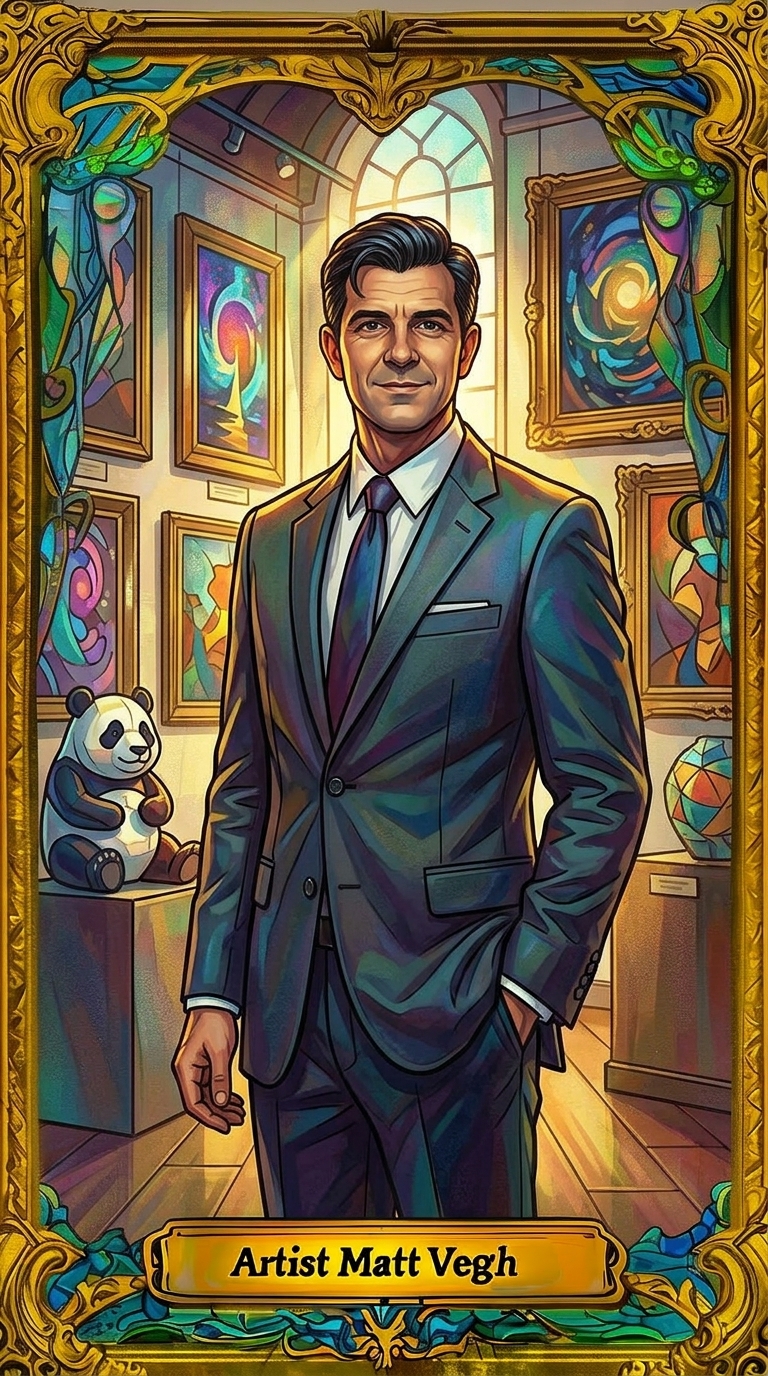 by Canadian Artist Matt Vegh
Comments