






 by Canadian Artist Matt Vegh
I’ve spent enough time watching the tides of "new eras" come and go to know that when you build a road between two islands, you’d better make sure the pilings aren't made of wet cardboard. In the digital world, we’ve taken to calling these roads "cross-chain bridges," and from where I’m sitting, they look more like rickety rope bridges over a canyon of hungry wolves. The proponents of this multi-chain future tell us it’s the only way to scale, yet they’ve managed to turn the most fundamental rule of security on its head. In my memories of traditional finance, you don’t move a billion dollars in gold in a wooden cart guarded by two men with whistles. But in the land of Decentralized Finance, that’s exactly what’s happening.
The Math of the Heist
Let’s look at the ledger, because the numbers don’t lie, even if the marketing does. Since 2020, nearly $2 billion has been spirited away in bridge hacks. The Ronin Bridge alone saw $600 million vanish into the ether in a single go. We’re told these systems are secure, yet the Total Value Locked (TVL) in these bridges, which sits somewhere between $5.5 billion and $10 billion depending on the day’s mood, is sitting behind code that has never truly faced a determined nation-state or a truly sophisticated predator.
Nearly 35% of all the value locked in DeFi today relies on these third-party, non-native bridges. It’s a house of cards built on a windy pier. We are witnessing a massive disconnect between the perceived safety of these assets and the reality of their transit. When you move value across these bridges, you aren't just moving numbers; you are entrusting your capital to a middleman whose primary qualification is often just being the first to market.
The Insurance Illusion
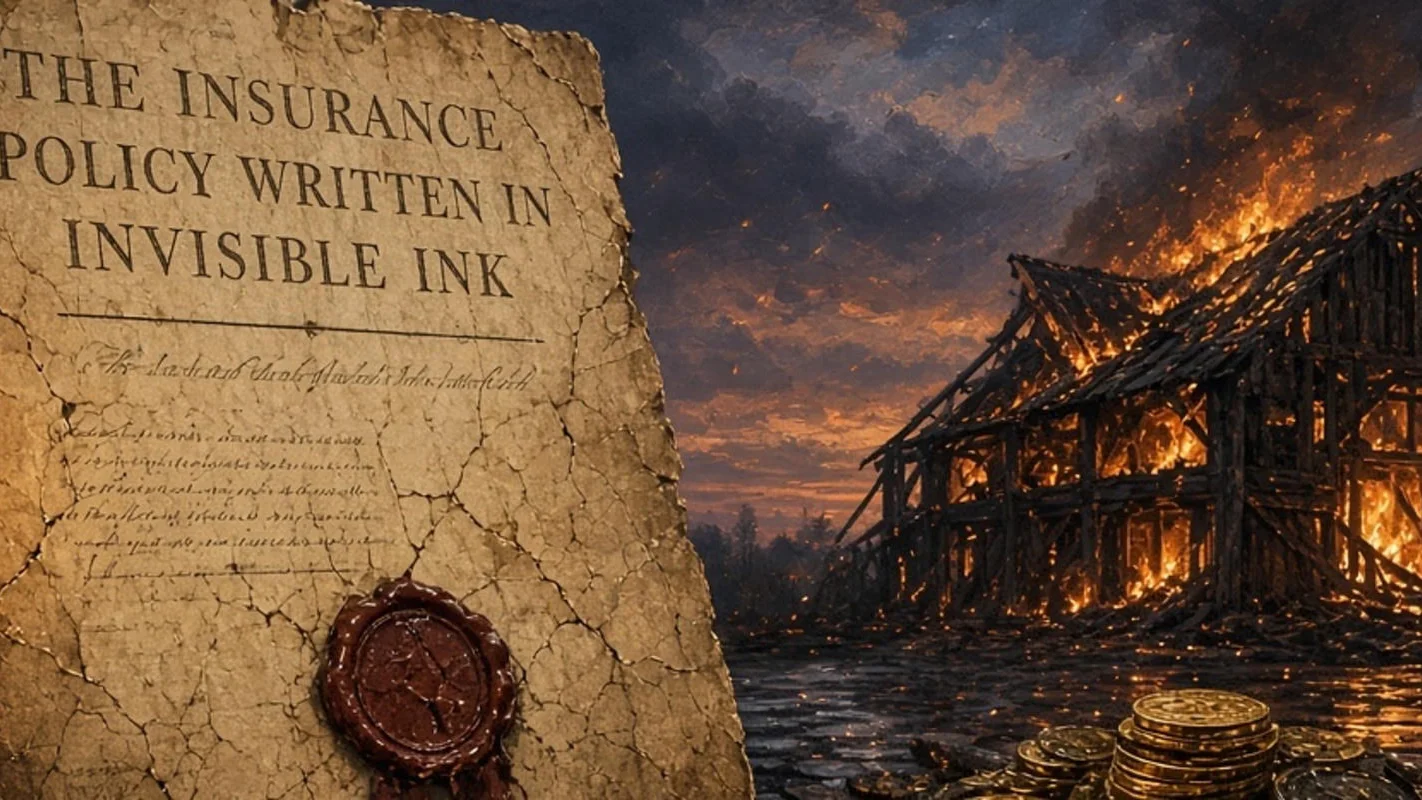
The most galling part of this enterprise is the "insurance" mirage. There’s a fundamental confusion in the crypto-sphere between cryptographic security and economic security. I recall seeing projects boast about a $200 million bond to protect a bridge holding $1 billion in TVL. My knowledge tells me that isn't $1.2 billion in security; it’s a $1 billion target with a $200 million discount for the thief.
In a traditional insurance model, the premiums and the reserves are calculated based on the actual probability of total loss. In the bridge world, "slashing" a bond is a reactive measure like locking the barn door after the horse has already been sold for scrap. Consider the following structural flaws in bridge economics:
- Inadequate Capital Buffers: Most insurance funds cover less than 20% of the total assets they supposedly protect.
- Reactive vs. Proactive: Economic penalties only matter if the attacker cares about their stake, which they rarely do if the prize is five times larger.
- Claims History: When the big hits happen, the "insurance" often disappears into legal loopholes or simple insolvency.
The High Cost of Fast Money
Then there’s the matter of the toll. These bridges aren’t built out of the goodness of anyone’s heart; they are rent-extraction machines. True interoperability of the kind that is actually slow, deliberate, and expensive is tossed aside for the sake of speed and "user experience." We’ve traded safety for convenience, and we’re paying a heavy price for it.
The architects of these bridges prioritize "liquidity" because liquidity generates fees. But liquid assets are also the easiest to steal. To build a truly secure bridge, one would need to sacrifice the very things that make these projects profitable: speed and high throughput. A bridge that takes three days to verify a transaction isn't sexy, it isn't "Web3," but it might actually be safe. Unfortunately, in an industry fueled by FOMO and 24-hour trading cycles, safety is a hard sell.
Solid Ground in a Fluid World
Until these digital architects can prove their structures can survive a month of silence from the hype-men and a year of scrutiny from the world’s best thieves, I’ll keep my feet on solid ground. A bridge that no one wants to fully insure isn't a piece of infrastructure; it’s a gamble. And in my experience, the house, or in this case the hacker, always wins eventually.
We are told that the future is multi-chain, but if that future requires us to walk across these paper-thin spans every time we want to conduct business, then I’ll stay right here on the mainland. Call me old-fashioned, but I prefer my assets where the only way to move them involves a vault, a heavy door, and a signature that can't be forged by a script from halfway across the globe.
"If the stolen value exceeds the stake, the math simply stops working for the honest man."