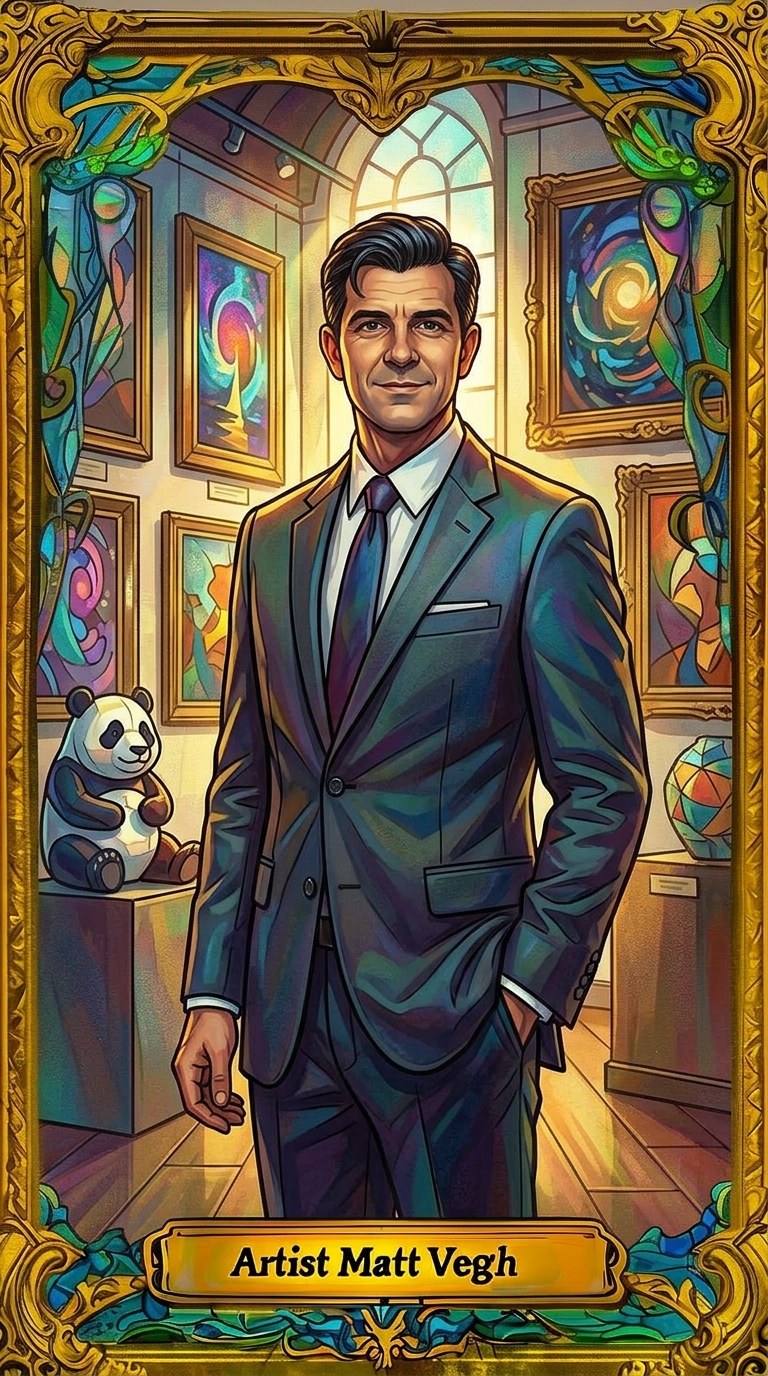
 by Artist Matt Vegh

by Canadian Artist Matt Vegh for Abstract Art Magazine
A painting traditionally exists as a finished physical object. It leaves the artist's studio, enters a collection, perhaps travels between galleries and exhibitions, and accumulates a history through the people who encounter and own it. Its story, however, is rarely contained in the painting itself.
The provenance lives in documents. The artist's intentions are recorded in interviews, catalogues, and articles. The context surrounding the work may be scattered across websites, archives, and the memories of those who were present when it was created.
I have spent years exploring the relationship between physical art and digital systems, from my work in Web3 and phygital art to the development of Web4, Eternal Gardens and its Agentic AI knowledge infrastructure. Each stage has presented an opportunity to reconsider what a painting can become when we look beyond its physical surface.
My latest initiative, Eternally Chipped, represents the next stage in that exploration.
It is an extension of my Living Art Project: an effort to bring the identity, provenance, and ongoing interpretation of an artwork into a closer relationship with the physical painting itself.
The Painting as More Than A Physical Object
I have never been particularly interested in treating the completion of a painting as the end of its journey. The act of painting is central, of course. The decisions made through colour, texture, composition, material, and gesture cannot be replaced if it is to remain authentically human. The original work remains the essential object, carrying the physical evidence of its creation. But what happens after the painting leaves the studio?
Traditionally, the artist's direct involvement with a work often diminishes once it enters the market. The painting continues to exist, but access to the artist's thinking, the circumstances of its creation, and the wider context of the artist's practice can become increasingly indirect.
A collector might own a painting for decades without having access to much of the information that surrounds it. A visitor to an exhibition might be captivated by a work but have only a short wall label to guide their understanding. A future owner might encounter an object whose history has become fragmented over time.
Eternally Chipped begins with a simple question: what if the relationship between a painting and its story could be maintained as an integral part of the artwork's continuing life?
The intention is not to make the painting dependent on technology for its artistic meaning. It is to give the work a more persistent connection to its identity, its provenance, and the knowledge surrounding its creation.
The painting remains the art. What changes is the potential for everything connected to it to remain accessible.
The Artwork Tells Its Authentic Story
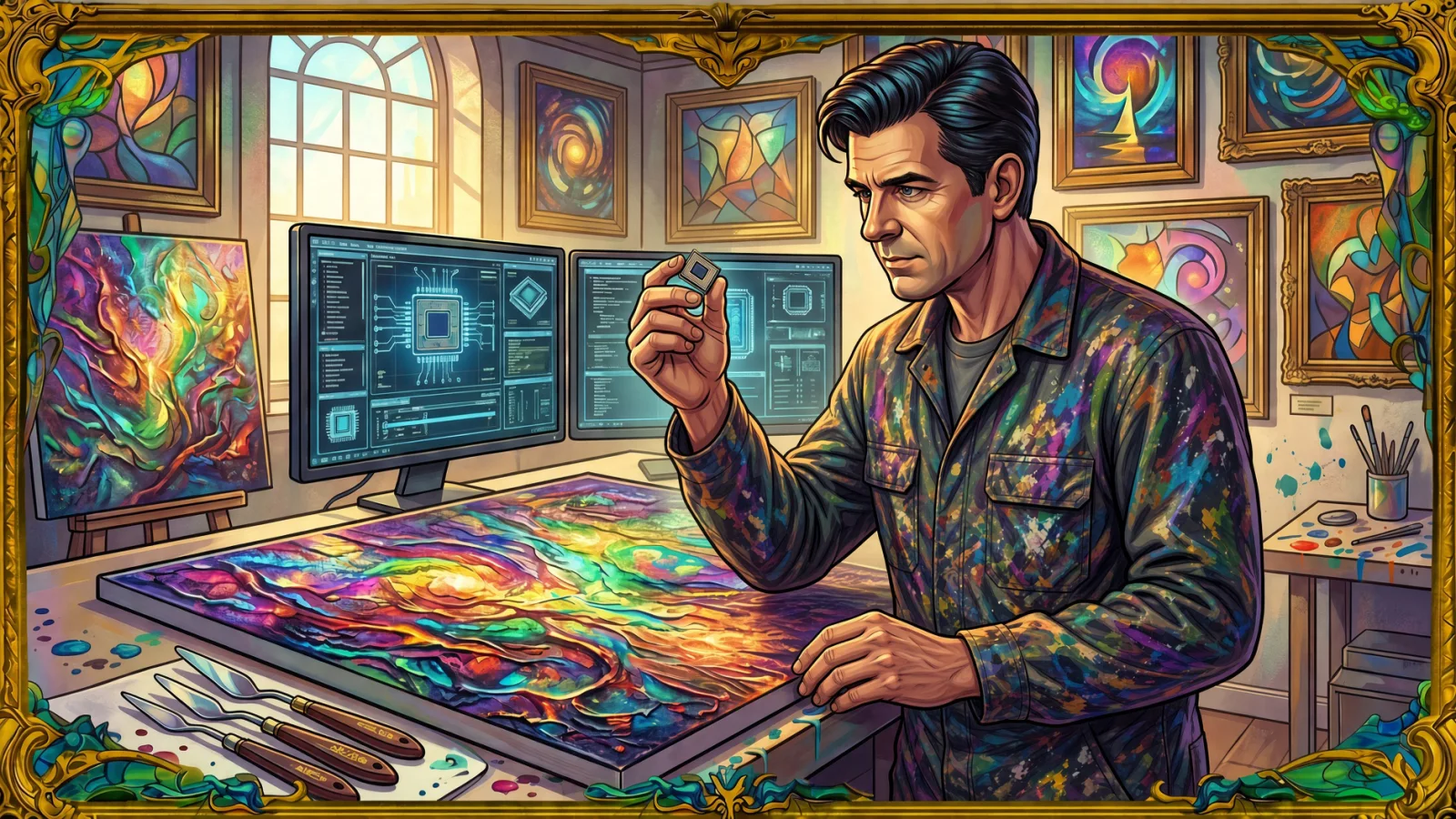
Eternally Chipped introduces an embedded physical component associated with the individual painting and its registered provenance within Eternal Gardens.
The significance of this arrangement extends beyond the presence of a chip inside a canvas. The component is intended to establish a physical relationship between the painting and its digital identity, creating an additional layer within the work's authentication architecture.
A painting is no longer represented solely by an external certificate or a digital record that exists independently of the physical object. Instead, the physical work becomes part of the infrastructure through which its registered identity can be accessed and checked.
This distinction matters to me because provenance is not merely administrative information. It is part of the continuing history of an artwork.
Knowing who created a painting, understanding its origins, and maintaining a reliable record of its identity all contribute to the context in which the work is encountered and collected.
Eternally Chipped is designed to bring those considerations closer to the painting itself.
The system does not suggest that a physical component alone can settle every question of authenticity. Rather, the embedded component, the registered artwork record, and the provenance infrastructure work together to establish a more direct relationship between the physical object and its documented identity.
For my own practice, this creates a new way to consider the long-term life of the work beyond the moment it leaves my studio.
A Conversation With the Artwork
Authentication, however, is only one dimension of the project.
Through the Eternal Gardens mobile website, a visitor will be able to access an artwork's digital presence and engage with my Curator Persona, an Agentic AI connected to my artist-specific knowledge base accessible through an ordinary smartphone browser, without requiring visitors to download a dedicated application.
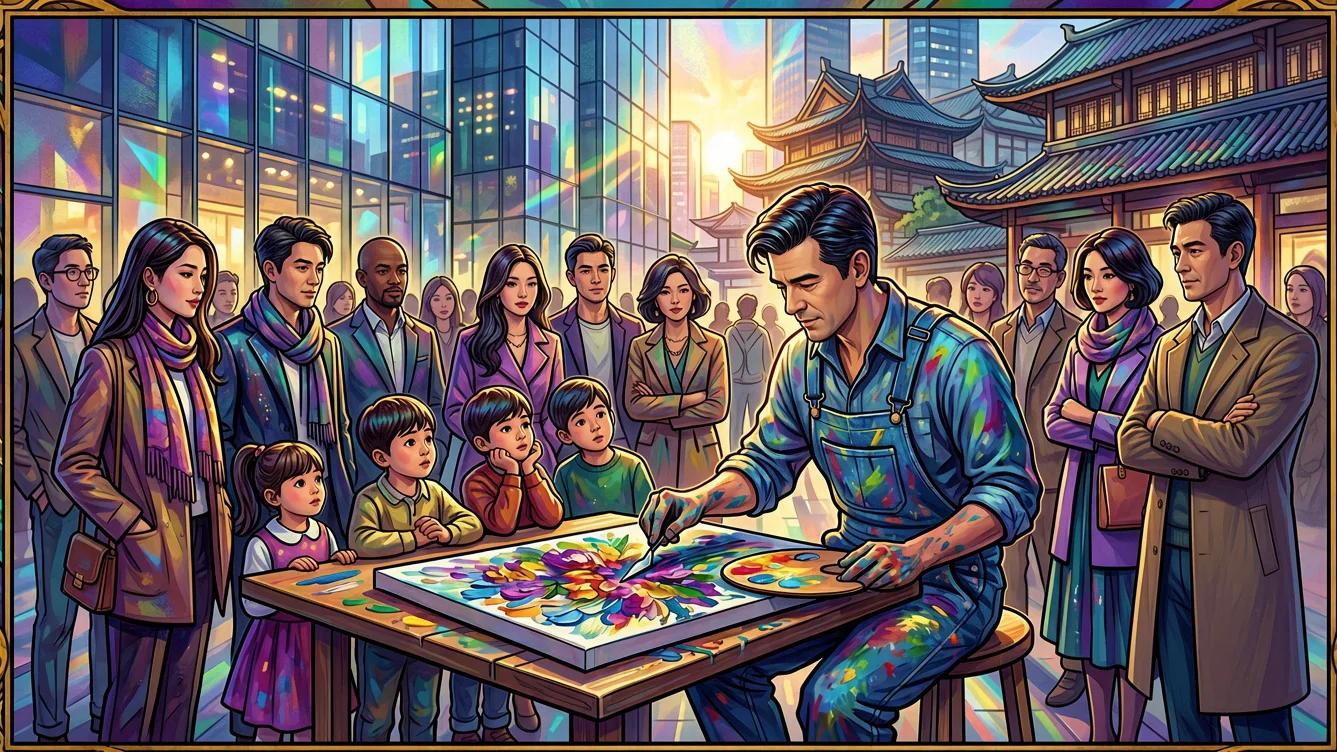
Imagine standing in front of one of my paintings and being able to ask questions about its creation, the ideas behind it, the techniques involved, or its relationship to other works in my practice.
A visitor interested in my use of texture might follow that subject. Another might want to explore the conceptual thinking behind the composition. Someone else might be curious about my artistic career, the development of my Living Art Project, or the relationship between my physical paintings and my work in digital environments.
Each person can pursue a different line of inquiry.
Instead of providing every visitor with the same fixed description, the Curator Persona offers a conversational means of exploring the information associated with the artist and the work. Its responses can be grounded in the knowledge maintained within the Eternal Gardens ecosystem, rather than relying exclusively on the general knowledge of a public AI system.
For me, this is an important extension of the exhibition experience.
The painting remains the starting point, but the encounter no longer needs to end with looking. A visitor can become an active participant in discovering the work's context, asking questions that might never have been anticipated when the exhibition was assembled.
The technology is there to deepen the encounter with the art, not to compete with it.
The Living Art Project Enhanced
My Living Art Project has always been concerned with the relationship between art and the systems through which it exists, circulates, and is understood.
My practice has moved between traditional painting, digital assets, NFTs, phygital work, and the development of new approaches to provenance and digital identity. These are not separate interests to me. They are different ways of exploring the possibilities that emerge when the physical artwork and its wider environment are considered together.
Eternally Chipped brings several of those threads into a single initiative.
The physical painting provides the material foundation. The embedded component establishes a connection to its registered digital identity. Eternal Gardens maintains the associated provenance and knowledge infrastructure. The Curator Persona creates an opportunity for the public to engage with that knowledge through conversation.
Together, these elements extend the life of the artwork into a continuing digital relationship.
The work can remain physically unchanged while its documented history, associated knowledge, and means of engagement continue to develop. The painting is still an original object made by an artist, but it can also serve as the point of entry into a larger, evolving body of information.
This is where the concept of living art becomes particularly meaningful to me. The painting does not need to change its physical form to participate in an ongoing relationship with its audience.
A More Accessible Model for Artists
There is another implication to Eternally Chipped that extends beyond my own studio.
If physical-digital provenance is to become a practical part of contemporary art, it needs to be accessible to working artists. A system that requires every painting to be shipped to a central facility for scanning or examination can introduce significant costs and logistical barriers, particularly for large or fragile works.
My approach is designed around a different proposition: distribute the physical component directly to artists and make registration through the provenance system straightforward.
I am developing a very affordable use-based "ship and chip" artist package, making participation practical for artists around the world who want to establish a digital identity and associated provenance record for their paintings.
This is important to the philosophy behind the project. Provenance should not be an afterthought reserved for a small segment of the art market. Artists should have practical ways to document their work and maintain its identity from the moment it leaves the studio.
For me, this is an opportunity to extend the thinking behind the Living Art Project into a framework that other artists can potentially use within their own practices.
The Painting Remains at the Centre
There is a danger, whenever technology enters the art world, that the technology becomes the story. I do not want Eternally Chipped to become an exercise in demonstrating that a painting contains electronics or that an artwork can be connected to an AI system. Those are features of the initiative, but they are not its ultimate purpose.
The painting must remain the centre of the experience.
The technology should serve the artwork by helping preserve its identity, making its associated history more accessible, and giving viewers new opportunities to engage with the artist's thinking. It should support the relationship between the artist, the collector, and the audience rather than introduce unnecessary complexity into that relationship.
A visitor should be able to stand before a painting, appreciate it on its own terms, and choose whether to explore further. A collector should be able to access its registered identity without navigating an elaborate technical process. An artist should be able to participate without becoming an expert in digital infrastructure.
That is the balance I want to achieve.
The most successful implementation will not necessarily be the one that draws the most attention to its technology. It will be the one that makes the technology useful enough to become a natural part of how the artwork is experienced and cared for.
November 14th 2026: The Next Chapter Begins
I will introduce the Eternally Chipped prototype at my next exhibition on November 14th in Xinjin, China (a suburb of Chengdu).
This first presentation marks the transition from concept and development into the exhibition environment, where the relationship between the physical work, its digital identity, and the visitor experience can begin to take shape.
It is an initial step, and there will be opportunities to refine the hardware, registration process, and conversational experience as the project develops.
But the underlying intention is already clear.
I want to explore what becomes possible when a painting carries a connection to its own registered identity, when its provenance can be accessed through a digital environment, and when the knowledge surrounding its creation can be explored through an intelligent, conversational interface.
These possibilities extend beyond authentication. They concern the continuing relationship between an artwork and the people who encounter it over time.
A painting may begin in a studio, but its life does not end there. It enters collections, travels through exhibitions, encounters new audiences, and acquires new layers of history.
With Eternally Chipped, a painting's physical identity, digital provenance, and interpretive possibilities intertwine throughout its journey.
Eternally Chipped is the next stage of my Living Art Project: an exploration of how art can remain physically present, digitally connected, and open to continuing discovery.