






 With Artist Matt Vegh
 For decades, mid-tier galleries and white-cube gatekeepers have whispered the same self-serving gospel into the ears of emerging artists: slow down, produce less, and protect your primary prices by strangling the supply. Young painters hear that completing fifty canvases in a year is purely commercial, that finishing a hundred turns their studio into an assembly line, and that passing a thousand is an aesthetic crime. The prevailing dogma insists that prestige is born from scarcity, and that an artist maintains financial value only when the work remains rare, fragile, and nearly impossible to acquire.
It is a seductive bedtime story. It flatters the painter into believing their output is too precious for open trade, and it suits the gallery business model down to the floorboards: low overhead, minimal storage costs, and a tidy fifty percent cut justified by a velvet rope. But if you strip away the romantic folklore and look at the actual ledgers of history, you find the exact opposite reality. The artists who shaped the canon, built liquid secondary markets, and claimed real space in institutional history were never precious dilettantes withholding their work. They were relentless workhorses.
The Receipts of the Canon
When an advisory desk or an auction house tracks an artist with lasting cultural equity, they are not talking about someone who finished three dozen canvases in an attic, locked them in a trunk, and vanished into legend. They are tracking an artist whose output built deep, unavoidable momentum. The historical record on this point is unmistakable. I don't ned to name names. More particularly because I find alot of those names so dollied-up it derives a healthy dose of cringe. You know who they are.
But, these figures are not curious accidents or historical outliers. They are the actual foundation of sustained market presence.
The Cold Economics of Auction Liquidity
To see through the artificial scarcity myth, you have to look at how auction houses, private banks, and art advisors actually function. A secondary market cannot operate in thin air. It requires price discovery, and price discovery requires velocity.
If a painter produces only ten canvases a year, and those ten pieces disappear into the homes of four private patrons who never sell, that painter ceases to exist on the public ledger. Ten years pass. No public sales take place. There are no auction records, no hammer prices, and no public benchmark for value. When an estate finally needs to liquidate a piece, the major auction houses pass on it because there is no established baseline. They cannot guarantee a buyer pool because the market has forgotten the name. Silence is not exclusivity; it is commercial death.
Museums and public foundations operate under the same reality. Institutional visibility depends on circulation. Curators need enough work in the world so that regional patrons can donate pieces, touring retrospectives can borrow significant works without paralyzing an entire collection, and permanent archives can acquire examples without emptying the primary market. An artist who starves the world of work starves their own future.
The 1,000-Piece Rule in the Studio
This reality brings us to what I call the 1,000-Piece Rule. It is not an abstract theory hatched in an academic seminar, and it is not an excuse for sloppy execution. It is the practical threshold where a painter stops being a boutique curiosity and becomes a permanent cultural fact.
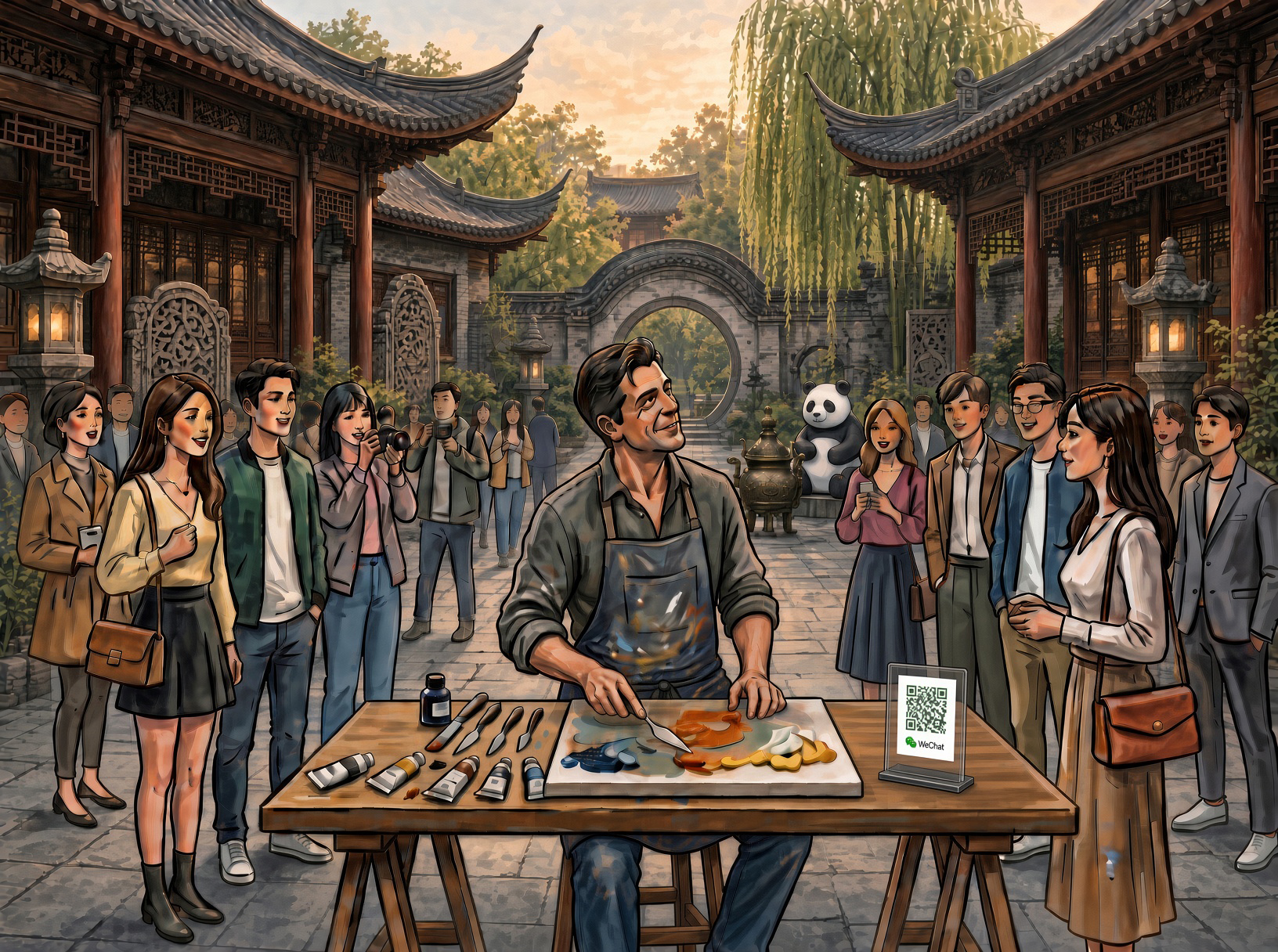
I arrived at this benchmark through hard studio miles, tracking what it actually took to build an independent creative enterprise that never depended on the whims of a single gallery owner. Over the last decade, I set a strict baseline of completing and placing over one hundred original paintings every year. Today, that ledger stands at 1,136 sales, alongside another 104 documented artist exchanges and VIP placements. Crossing that four-figure line changes everything about an artist's leverage.
When you have placed over a thousand original paintings into the world, several truths become obvious:
- Skill compounds only through relentless repetition. You do not find your signature language by staring at an empty canvas for three months. You find it through friction, palette knife mileage, wet oil on linen, and doing the physical labor until your hands know what to do before your brain interferes.
- Gatekeeper leverage evaporates. A gallery cannot bully, manipulate, or control a painter who already has hundreds of active collectors hunting for their work. When your collector base is wide, no single dealer can cut off your oxygen.
- The secondary market gains genuine fuel. With over a thousand works circulating, pieces inevitably trade hands. Estates settle, collectors redecorate, and works appear at public auctions. Each public sale builds an undeniable paper trail of real value, authenticated by real collectors paying real currency.
Anchors in the Real World
The deepest lie of artificial scarcity is that holding back work makes it precious. Paint is oil, pigment, and linen; it gains sacred value only when human beings live with it, study it, and pass it down. Artificial scarcity is fear disguised as sophistication. It is the fear that if you put your work out into the daylight, people will realize there is no magic behind the curtain.
Every painting hanging on a collector's wall is an anchor in the real world. A thousand paintings mean a thousand homes, corporate lobbies, and private collections acting as permanent physical ambassadors for your vision. That is an army of real stakeholders who have skin in the game. Compare that living network to five paintings locked away in a tax-haven warehouse in Geneva, waiting for a speculator to flip them to another speculator.
If you are standing in your studio today listening to the siren song of the white cube, telling you to ration your talent so a middleman can keep their storage space small, tune it out. Step up to the easel, load the knife, and do the work. Art history has never belonged to the cautious. It belongs to the builders who leave behind so much truth that the world has no choice but to reckon with it.