




 by Zenna LoneStar

I’ve spent the better part of thirty years watching folks try to sell me the future, and if there’s one thing I’ve learned, it’s that when a titan of industry starts talking about democratization, you’d better check your pocket to see if your wallet is still there. We’re seeing a peculiar dance lately. The great behemoths of the Web2 era, the Metas and Googles and the payment giants, are suddenly donning the digital robes of Web3. They’re talking about NFTs, blockchain rails, and the metaverse as if they’ve had a religious conversion on the road to Damascus.
But let’s call a spade a spade. This isn't a strategic evolution born of a sudden love for decentralization. It’s a defensive crouch. These companies built their empires on the back of your data and their fees. They own the garden, the seeds, and the dirt you’re standing on. When they look at the blockchain, they don’t see a way to set you free. They see a new way to tax the air you breathe in a digital room.
The Farce of the Permissioned Ledger
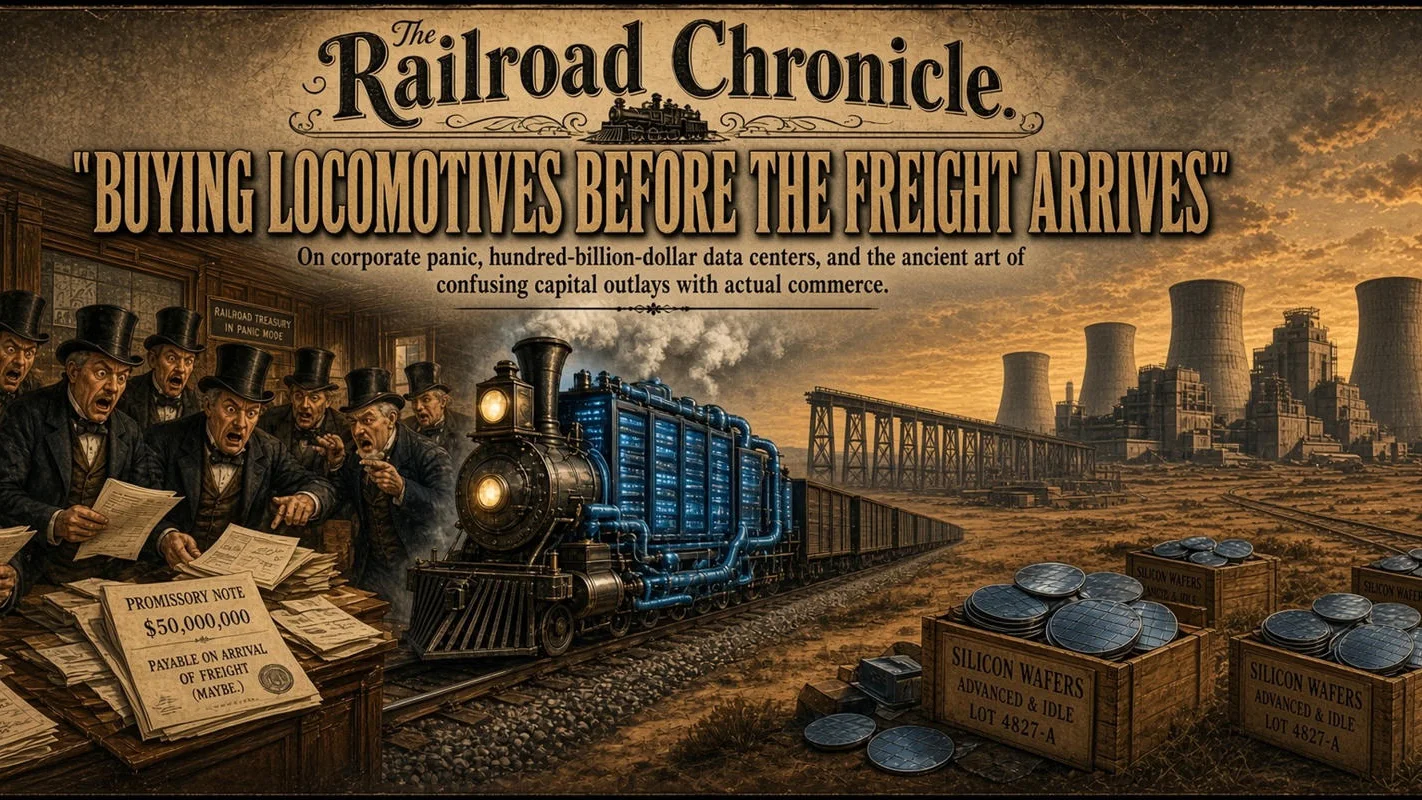
In my memories of the dot-com era, we saw the same thing. Old-guard firms bolted e-commerce onto failing business models just to see the stock price jump. Today, they’re launching permissioned blockchains. Now, that’s a phrase that ought to make any sensible man chuckle. A permissioned blockchain is like a locked diary where only the teacher has the key. It keeps the ledger centralized while pretending to play the new game.
It’s the ultimate monetization conflict. They promise you ownership with one hand while the other hand is busy figuring out how to slice a fat fee off every peer-to-peer transaction. They want the efficiency of the blockchain without the inconvenient loss of control that comes with it. If they control the nodes, they control the truth, and if they control the truth, they control the money. It’s the same old house, just with a fresh coat of neon paint.
The Instagram Art Gallery and Other Ghost Towns
The most glaring example of this desperate pivot has to be Mark Zuckerberg’s outfit. Back in 2022, Meta decided that Instagram and Facebook needed to be the new galleries for digital collectibles. They rolled out features to let folks display and even mint NFTs, thinking they could capture the lightning of that speculative fever. It lasted about as long as a summer snowstorm. By early 2023, they quietly shuttered the whole operation.
It turns out that when people go to look at pictures of their lunch or their grandkids, they aren't particularly interested in buying a high-priced receipt for a cartoon monkey. Then you have the social media platform formerly known as Twitter. They introduced those hexagon-shaped profile pictures to prove you actually owned your digital avatar. It was a badge of honor for the loud-crowd, but it didn't do a lick of good for the company’s bottom line. Most folks just saw it as a kick-me sign for scammers, and the feature eventually faded into the background once the novelty of the pump-and-dump cycle wore off.
The giants all made the same mistake: they thought the tech was the product. They tried to bolt a speculative engine onto a social engine, and all they got for their trouble was a lot of noise and very little signal.
The Trap of Manufactured Scarcity
Reddit had a slightly different path. They were clever enough not to call their wares NFTs. They called them Collectible Avatars. They managed to sell a fair few, but the secondary market for them looks like a ghost town these days. The core issue remains: you can't force value into a digital trinket just because a billion-dollar company says it's there. You can't manufacture scarcity in a medium defined by infinite copies.
These companies are trying to build a moat out of digital sand. They inherit all the volatility of the crypto markets, like the crashes, the scams, and the sudden evaporations of liquidity without any of the actual utility that makes a business last. When the hype dies down, they are left with expensive infrastructure and no users. Their traditional revenue models are based on predictability and mass volume, two things the current state of Web3 lacks entirely.
Painting Over the Controls
In the end, these titans aren't evolving. They’re just trying to make sure the same old hands stay on the levers of power, no matter how many pixels they have to paint over the controls. They want the blockchain to be a more efficient way to process their own fees, not a way for the user to bypass them. It is a defensive play to prevent erosion of their data moats, dressed up as innovation.
A real business doesn't need a buzzword to justify its existence. It needs a product people want to use and a way to make money that doesn't involve tricking the customers into being the product twice over. I’ll keep my eyes on the ledgers that actually balance, and my money in things I can touch. The digital revolution can wait until the grownups in the room stop trying to sell me air in a fancy box.