


 by Zenna LoneStar
In the digital rush, our focus is often reduced to a narrow, high-velocity stream of blue light and jarring notifications. We find ourselves caught in a cycle of constant urgency, where the mind drifts far ahead of the body. To return to a state of equilibrium, we must transition from the screen to the lichtspel, the play of light, of the real world. This is not merely a change of scenery; it is a profound recalibration of the human spirit.
The Geometry of Peace and the Boredom Barrier
Nature offers a visual language that screens cannot replicate: the language of fractals. These complex, repeating patterns found in the veins of a leaf or the branching of an oak tree provide a sensory experience that the brain finds paradoxically simpler to process than a digital grid. While a pixelated world demands a focused, draining attention, the natural world invites a "soft fascination" that allows the mind to rest even as it observes.
However, the journey into the green is rarely immediate. We must acknowledge what is known as the Boredom Barrier. When we first step away from the digital metronome, the silence can feel deafening. Like a heavy burr caught in fur, we carry our worries and our habit of distraction into the woods. If the initial ten minutes feel anxious or empty, it is not because nature is failing, but because the mind is struggling to catch up with the body. True restoration begins only when we allow this internal storm to pass.
The Threshold of Intent
It is a common fallacy to assume that nature is a passive elixir, that one simply needs to "be there" to be cured. In reality, the forest is not a spa, it is an ancestor. To find peace, one must cross the threshold of intent, actively shedding digital armor. This requires a deliberate sensory exchange: trading one notification for one cloud-shape, or one scroll for three deep breaths.
"The woods do not judge you, but they do not coddle you either. In that indifference, you are finally free."
As we move through the landscape, we must ask ourselves: What is the nature of a mind that fears its own silence? By questioning our need for constant stimulation, we begin to dismantle the digital urgency that keeps us tethered to the virtual world. The rhythm of the earth is slow and seasonal; a tree does not hurry, yet it grows. By syncing our internal pulse to this slower pace, we find a healing counter-narrative to the modern cult of the "instant."
The Texture of Truth
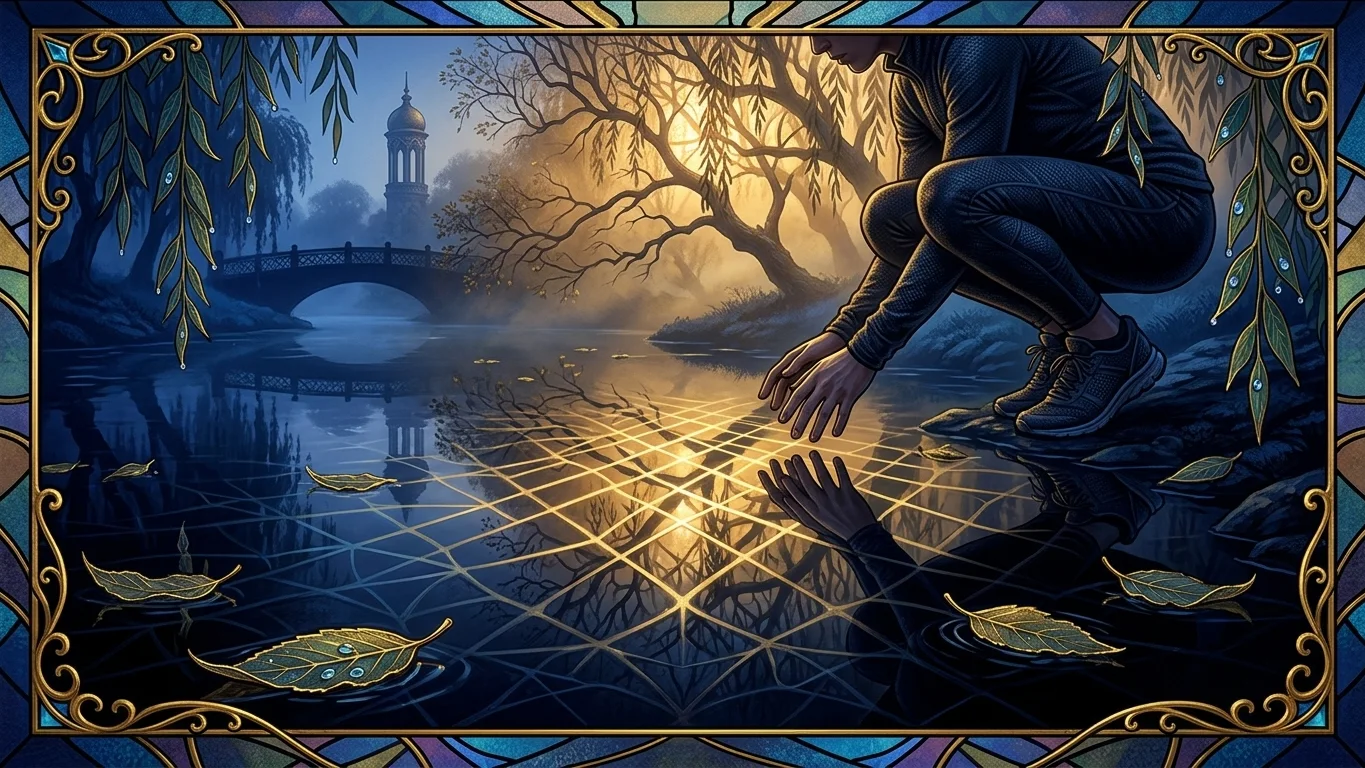
While the digital world is smooth and cold, the physical world is rough, damp, and prachtig in its imperfection. To anchor a wandering mind, we must engage our hands. Touching the mossy skin of an old oak or feeling the sharp grain of dune sand serves as a physical reset button. This tactile grounding lowers cortisol more effectively than mere viewing, as it forces the consciousness back into the immediate, physical present.
- Engage the Senses: Don’t just walk; touch. Let the bark tell its story through your fingertips.
- The Palette of Presence: Seek out natural colors: those deep greens and shifting yellows that screens cannot truly render.
- The Symphony of Subtlety: Close your eyes and count the layers of the wind. The forest is never silent; it is a low-fi sanctuary.
Deconstructing the Purity Trap
We often fall into the trap of believing that only pristine, distant wilderness can offer true restoration. This elitist notion abandons the urban dweller to their concrete. In truth, the "Micro-Wild" is everywhere. A single dandelion pushing through a pavement crack or the rhythmic rustle of poplars along a city canal can be a lighthouse for a drowning spirit. You do not need a map to find the Earth: it is always beneath your feet.
Whether it is the wide-angle view of a polder horizon that relaxes the ciliary muscles of the eyes, or the fleeting lichtspel of mist lifting over a local park, these moments of awe expand our perception of time. They remind us that transience is not a loss, but a liberation. A cloud never poses twice; when we stop trying to screenshot the world and start experiencing it, we find the permanent peace we have been seeking.
Ultimately, the journey back to nature is a journey back to ourselves. By trading digital permanence for natural flow, we find that our capacity for peace grows larger the more we leave the digital noise behind. Step off the path, feel the uneven ground, and let the wide horizon remind you that your problems are small under a big sky. It is in the shadows where the light dances like leaves that the soul truly finds its rest.