




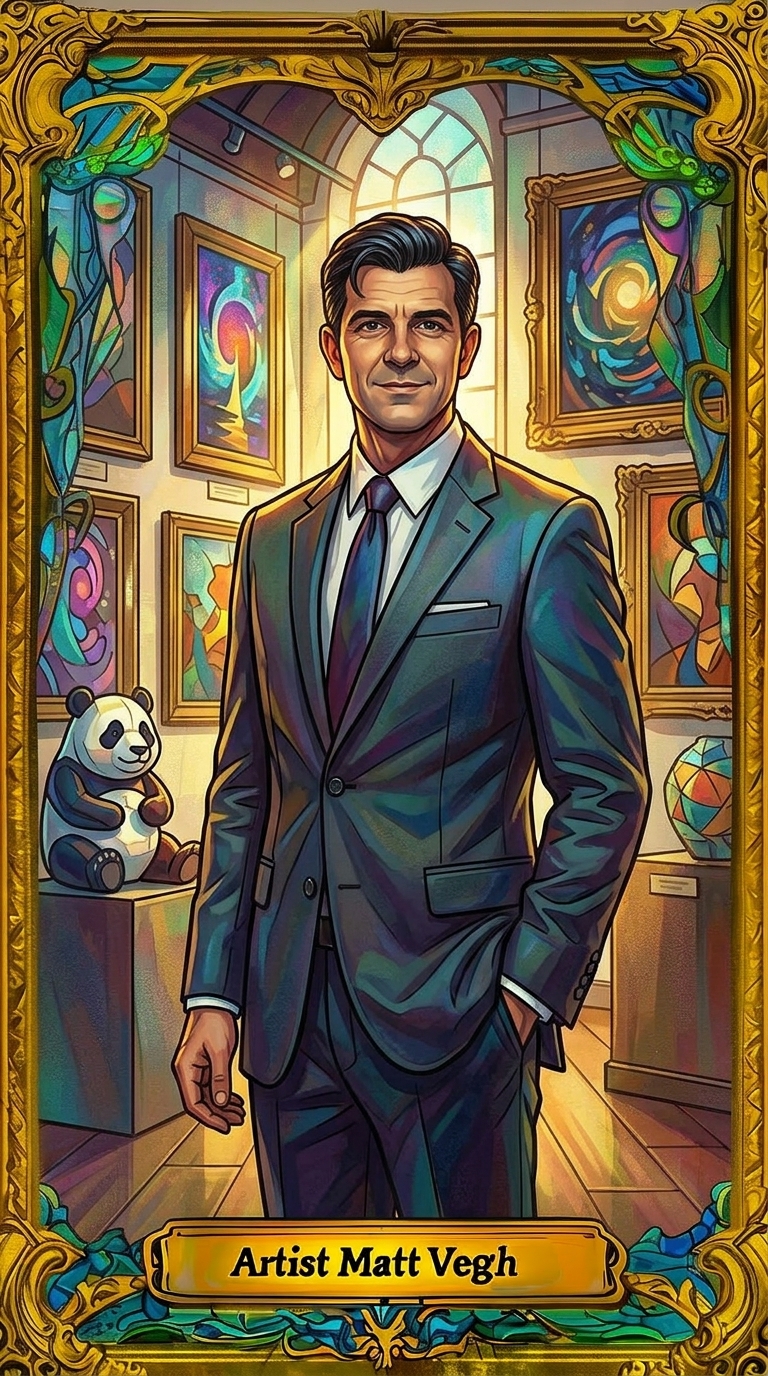
 by Canadian Artist Matt Vegh

The Impending Decoupling
There is a distinct smell of ozone before a storm, and the storm in this case is the final, messy decoupling of the art market from the art world. For decades, we have been told that the health of our culture can be measured by the hammer prices at major auction houses. We watch as nine-figure sums are exchanged for names that have been gone for half a century or much more, convinced that this is the apex of artistic achievement. It is not.
The top-tier auction circuit has finally achieved its terminal form: a high-stakes, closed-loop financial system that has almost nothing to do with aesthetics or cultural contribution. When we see these astronomical prices, we aren't looking at art; we are looking at a derivative trade. It is financialized kabuki: predictable, sterile, and ultimately boring. It is a market that prefers its legends silent and safely deceased, because a dead artist cannot contradict a gallery’s narrative or saturate their own market.
The Myth of the Starving Master
The industry has long maintained a parasitic relationship with mortality. We have been conditioned to think that if a work isn't commanding the price of a private jet, the artist has somehow missed the mark. This is a manufactured hallucination designed to keep power in the hands of the intermediaries who manage "estates" rather than living talent. The "shame" of selling for under $50,000 is a lie we must dismantle.
Consider the absurdity of our current ledger:
- Amedeo Modigliani died penniless, trading sketches for meals. Today, his work moves for $170 million.
- Vincent van Gogh remains the ultimate blueprint for the very institutions that now use his name to sell memberships.
- Johannes Vermeer died in debt, leaving his family to settle accounts with the baker using paintings that are now priceless treasures.
These aren't just tragedies; they are market infrastructure failures. An artist selling a work for $20,000 to a collector who actually loves it is infinitely more sovereign than a dead master being traded like a commodity-backed bond between two offshore accounts.
The New Energy: Life Under $50,000
The real vitality: the "new energy" currently shifting the winds, is congregating in the $10,000 to $80,000 range. This is where the Sovereign Artist lives. These collectors aren't buying to park cash in a tax-haven warehouse; they are buying because they want the material reality of the work in their lives. They want the trajectory of a living, breathing practice, not the ossified remains of an embalmed estate.
The $50k ceiling isn't a barrier; it's a launchpad for a market that is more liquid, more honest, and far more culturally relevant than the stagnant waters of the blue-chip elite.
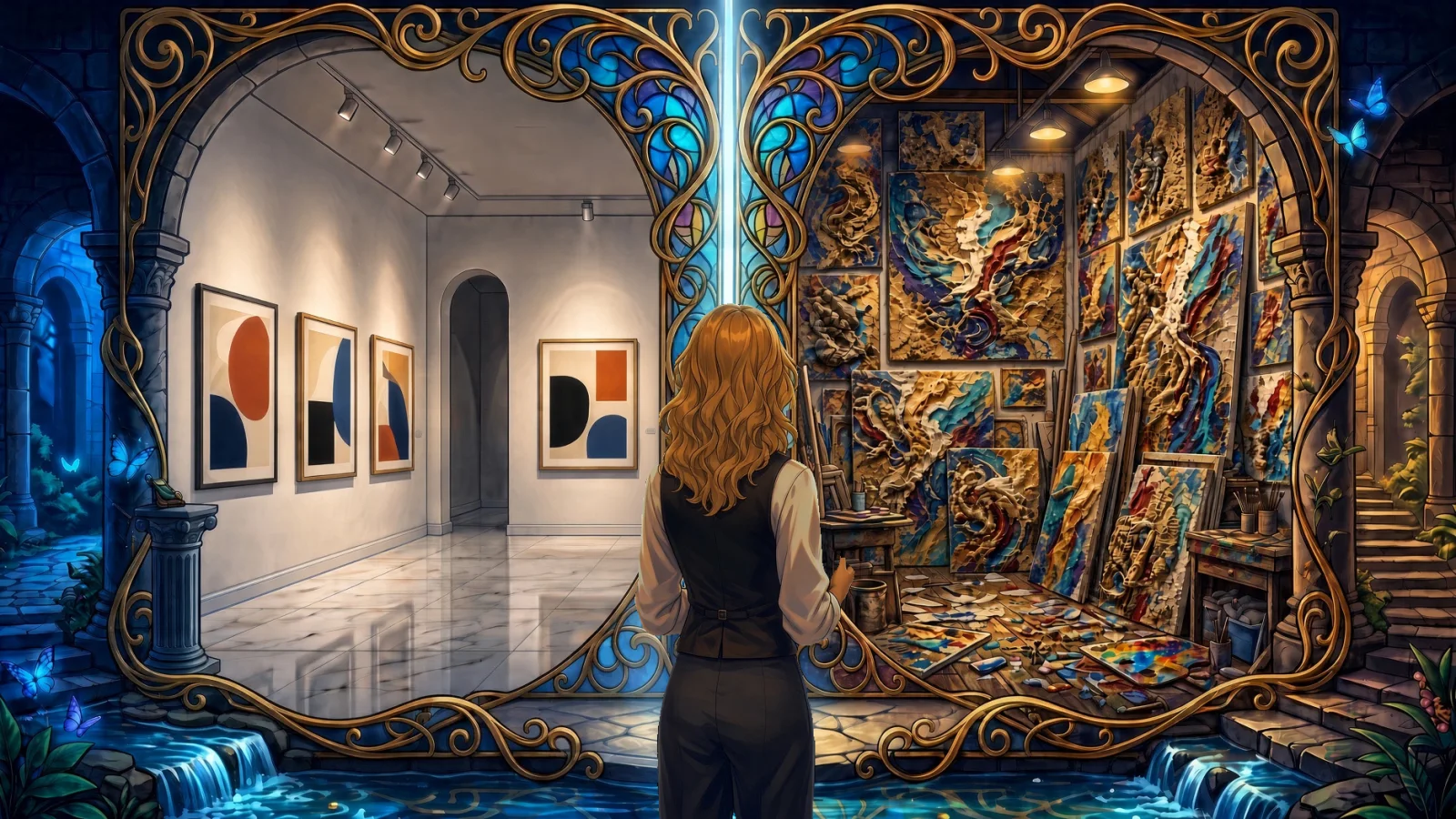
This segment is where the signal is finally cutting through the noise. It is a horizontal move rather than a vertical climb. The old mid-tier gallery model: trying to out-spend mega-dealers on art fair booths and glossy ads, is a suicide mission. In its place, the Sovereign Gallery is emerging: spaces defined by intimacy, agility, and a total refusal of vassalage.
The Sovereign Art Ecosystem
We are witnessing a mass exodus from the idea that art is only legitimate once it has been vetted by a committee of creditors and curators. The Sovereign Art Ecosystem represents the first genuine alternative to this dependency. It is an environment where the artist is no longer a silent ward of the gallery, but the primary architect of their own legacy.
This is where technology like MemoryCraft becomes essential. It isn't just a tool for record-keeping; it is a refusal to let the work be commodified by outsiders later on. By securing provenance and material intelligence while the artist is still in the studio, we are bridging the gap between the creative act and the financial record. When an artist uses MemoryCraft, they are essentially locking the front door to their own history, ensuring that the "new energy" collectors are acquiring a verified, unalterable piece of a living practice.
The Relocation of the Fire
The old monoliths are crumbling not because they lack capital, but because they have run out of meaning. We are moving away from the era of the "vassal artist" who hands over their career to a dealer in exchange for a hope of immortality. Instead, we are entering the era of the Sovereign Stage, where the artist controls the data, the provenance, and the narrative from the moment the paint is dry.
It is time to tell the "experts" that the oracle has left the building. We aren't just observing a shift in the winds; we are documenting the relocation of the fire. The Sovereign Stage is here, and it is far more glorious than the auction houses would have you believe.