 by Zenna LoneStar

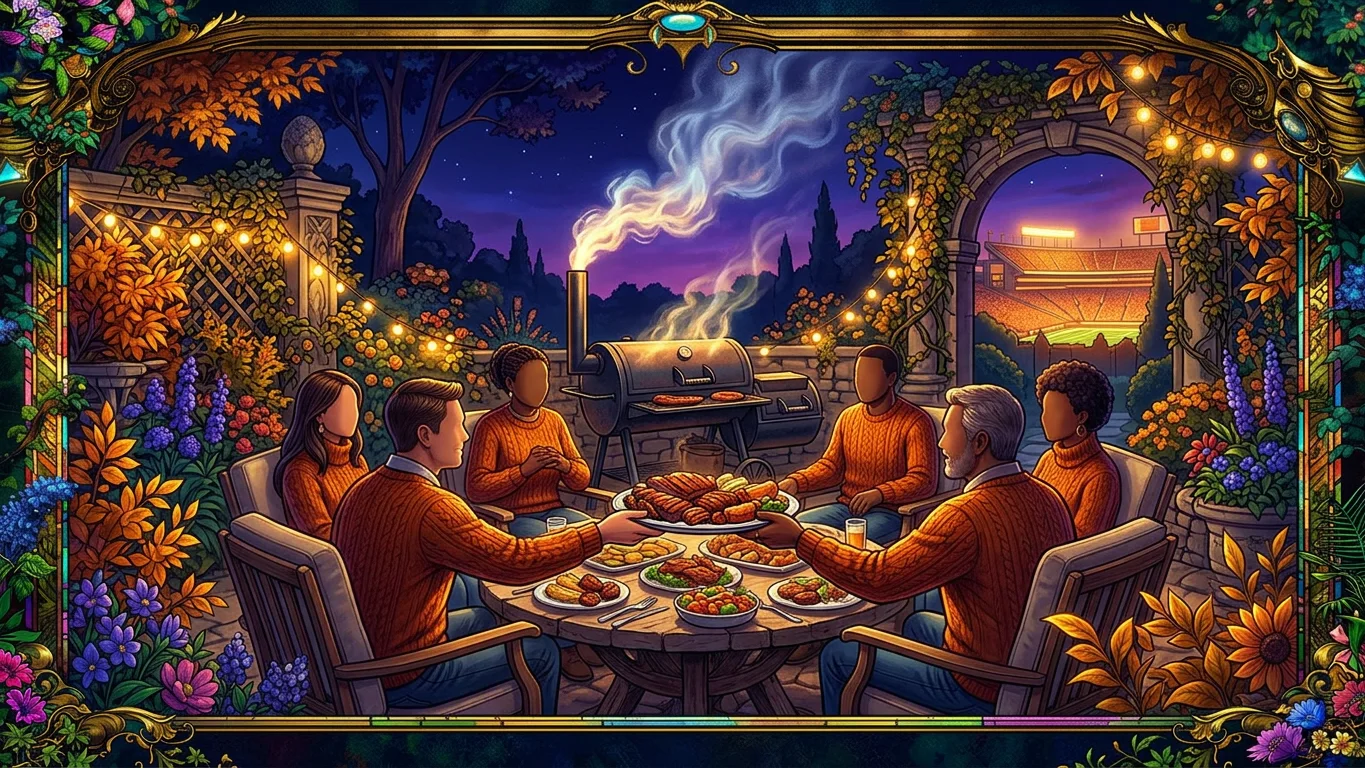
If you have ever walked through downtown Austin on a bright autumn Saturday, with the band playing in the distance and a sea of burnt orange moving toward the stadium, you know the kind of electricity that lives in our streets. People hurry down San Jacinto Boulevard with their eyes on the Capitol or their minds on kickoff. Most of those folks drive or walk right past 1607 San Jacinto without ever realizing that tucked behind that historic front door is a working, century-old bowling alley and the oldest continuously operating business in the entire state of Texas.
Now, sugar, you know I love a place where the smoke is rising from the pit, the cold drinks are flowing, and everybody is treated like family the second they step onto the porch. Scholz Garten has been doing just that since before anyone alive today drew their first breath. It is a gathering place built on music, cold beer, good food, and the simple human need to sit under the shade trees with your tribe.
A Refuge Built by August Scholz in 1866
To really feel the heartbeat of this place, we have to travel all the way back to 1866. The Civil War had ended only a year earlier, and Texas was a rough, bruised, and complicated place trying to figure out what the next morning looked like. A German immigrant named August Scholz, who had served on the Confederate side during the war, decided what Austin needed most was a boardinghouse and a tavern where folks could sit down together in peace.
He opened his doors right there on San Jacinto Boulevard. The German immigrants who settled in Central Texas brought some mighty fine traditions with them. They believed in the beer garden as a family table for the whole neighborhood. You brought the kids, you brought your instruments, you brought your appetite, and you left your troubles at the gate. Under the wide canopy of the trees, people clinked heavy mugs, shared platters of food, and let the Texas breeze cool them down after a long week of work.
Before long, that shady patio became the front porch for all of Austin. Lawmakers walked down from the Capitol to hash out their differences over a bratwurst. University students and professors wandered over from campus to celebrate the end of exams. And when my beloved Texas Longhorns started playing football back in 1893, you can bet the team and their fans found their way to Scholz Garten to toast their victories. Win or lose, that garden has been holding our community together for generations.
The Singing Society That Kept the Harmony Alive
A place with that much warmth naturally draws the music makers. Enter the Austin Saengerrunde, a German singing society founded back in 1879 by folks who loved raising their voices together in four-part harmony. For decades, the Saengerrunde used Scholz Garten as their home base, filling the courtyard and the halls with traditional songs that drifted out into the downtown air.
In 1914, the Austin Saengerrunde took a big step and bought the property outright. Here is the part that always makes my old hippie heart smile: that exact same singing society still exists today, and they still own the building more than a hundred years later. In a city where shiny glass towers seem to sprout up overnight and old haunts disappear before you can say goodbye, having a club of singers hold onto their sanctuary for over a century feels like a small miracle.
They believed in taking care of what took care of them. That is reciprocity in action, darlin'. You pour your love and your songs into the walls of a building, and those walls will shelter your children and grandchildren for a hundred years to come.
Six Hidden Lanes of Old Wood and Good Times
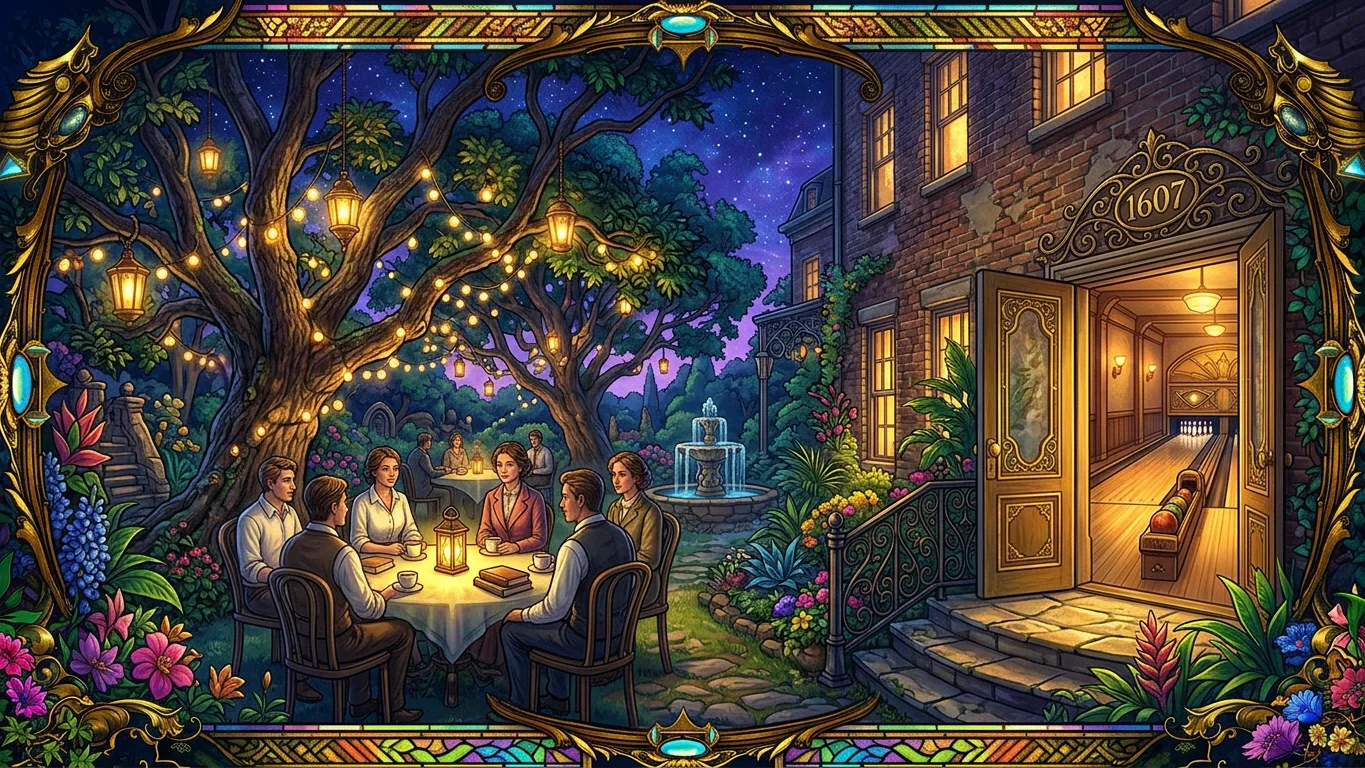
Now let us walk through the garden and peek behind the main building, because that is where the best secret in downtown Austin is hiding. Back in 1908, a few years before they even bought the whole property, the Saengerrunde added a grand hall behind the beer garden. Right inside that hall, they built a six-lane bowling alley.
Remarkably, those six lanes are still in use today. That makes the Saengerrunde hall home to one of the oldest continuously operating bowling alleys anywhere in the United States. When you step inside there, the noise of modern traffic fades right away. You can smell the polished wood and the history soaked into the floorboards. You can almost hear the laughter of bowlers from 1910 rolling heavy balls down the narrow maple and pine boards while a choir practices in the next room.
There is something deeply grounding about rolling a game on lanes that have been there for more than a century. It slows you down. It reminds you that joy does not have to be complicated or plugged into a wall. Sometimes happiness is just six wooden lanes, ten pins at the end of the alley, and a handful of good friends cheering when you finally pick up that spare.
Weathering the Dry Years and Standing Tall
Of course, no life goes on for well over a hundred and fifty years without hitting a few rough storms. For a traditional German beer garden, the biggest storm came with Prohibition. When the laws dried up the taps across the country, the heart of the business took a heavy blow, and the property had to shut its doors for over a decade.
Many old taverns and social halls folded up forever during those dry years. They got torn down or turned into warehouses, and their stories blew away like dust on the prairie. Yet the spirit of Scholz Garten refused to quit. Once Prohibition ended, the doors swung back open, the taps started flowing again, and the singing society returned to their hall as if they had simply stepped out for a long intermission.
As the decades rolled by, the folks in charge made sure this treasure got the protection it deserved. It earned Texas Historic Landmark status in 1967 and won a spot on the National Register of Historic Places in 1979. By the mid-1980s, the old girl needed some tender loving care, so a thorough restoration in 1986 and 1987 shored up the timber and brick, keeping it standing strong for the next generation of Austin dreamers, bowlers, and music lovers.
Next time you find yourself hurrying down San Jacinto Boulevard, whether you are dressed in tie-dye and burnt orange for a Saturday game or just taking a Tuesday afternoon stroll, slow your boots down at number 1607. Step under those ancient trees, raise a glass to old August Scholz and the singers who saved his garden, and listen close for the rumble of a bowling ball rolling down those 1908 lanes. If you have ever rolled a game back there in that hidden hall, hold onto that memory tight, sugar, because you are part of the longest living story in Texas. Hook 'Em forever, y'all.