Reflecting on the Abstract Journey
As an abstract painter living and creating in Chengdu, and for perspective and weight, one who has sold over 1,000 original works of art, I've experienced firsthand the complexities and misconceptions surrounding abstract art. One phrase I hear constantly at live events and exhibitions is: "Kan Bu Dong!" (I can't understand it!). Initially, this feedback might be frustrating, but after investing countless hours engaging with viewers, I've learned to turn it into an opportunity for conversation and understanding.
At first, it was very annoying, depending on the day, the crowd, my mood; but after hundreds of hours engaging with people at my exhibitions, live paintings or shows, I've turned it into an opportunity. Here's how I handle it, and why most people already do understand abstract art... they just might not realize it yet.
Mother Nature: The Ultimate Abstract Artist
Abstract art isn't some alien concept. It's everywhere in nature. Think about those mesmerizing YouTube videos of massive tree trunks being milled. People watch 15–20 minutes, giving willingly of their time in order to see the reveal: stunning, random abstract grain patterns formed over centuries, now visible in that fallen wood. They’re hooked!
“When someone says they don’t ‘get’ abstract art, I remind them: You already do.”
Quick conversations I often have reveal this connection:
- Me: "Hardwood floors at home?"
Them: "Yes."
Me: "Why that particular one?"
Them: "I loved the wood grain pattern."
Me: "Bingo!" - Me: "Ever bought a jade bracelet for your wife?"
Them: "Yes."
Me: "Thousands out there. Why that one?"
Them: "Because of the color."
Me: "Bingo!"
Take opal mining as another example. Individuals dig deep into the barren earth in the middle of nowhere, hoping for one magical, random abstract pattern created by nature. Bottom line: Many who claim they don't understand abstract art already own and cherish tons of it! Many people come to an understanding after these demonstrative conversations, nodding heads in agreement or at least acknowledging the fact that they do decide things based on their own abstract sense of beauty, feeling or desire.
The Pursuit of the Perfect Pattern
Abstract artists chase that elusive, perfect pattern. We destroy, experiment, layer wildly, often using techniques no one's tried before, all to create something that resonates with someone, somewhere, on a deep level. It's about feeling, mood, aura. With my style of Abstract work, my buyers most often say they feel "comfortable" first, then "happy" or "calm" and then a sense of looking for something or discovery, in every inch of the work. That is Abstract Portalism.
Bring out those kinds of emotions, and your work finds homes.
Closing Thoughts
In navigating the world of abstract art, it's crucial to bridge the gap between perception and understanding. Through open dialogue, we can dismantle misconceptions and reveal the inherent beauty and emotional depth that abstract art possesses. Let’s continue to explore, appreciate, and celebrate this vibrant language of expression together.
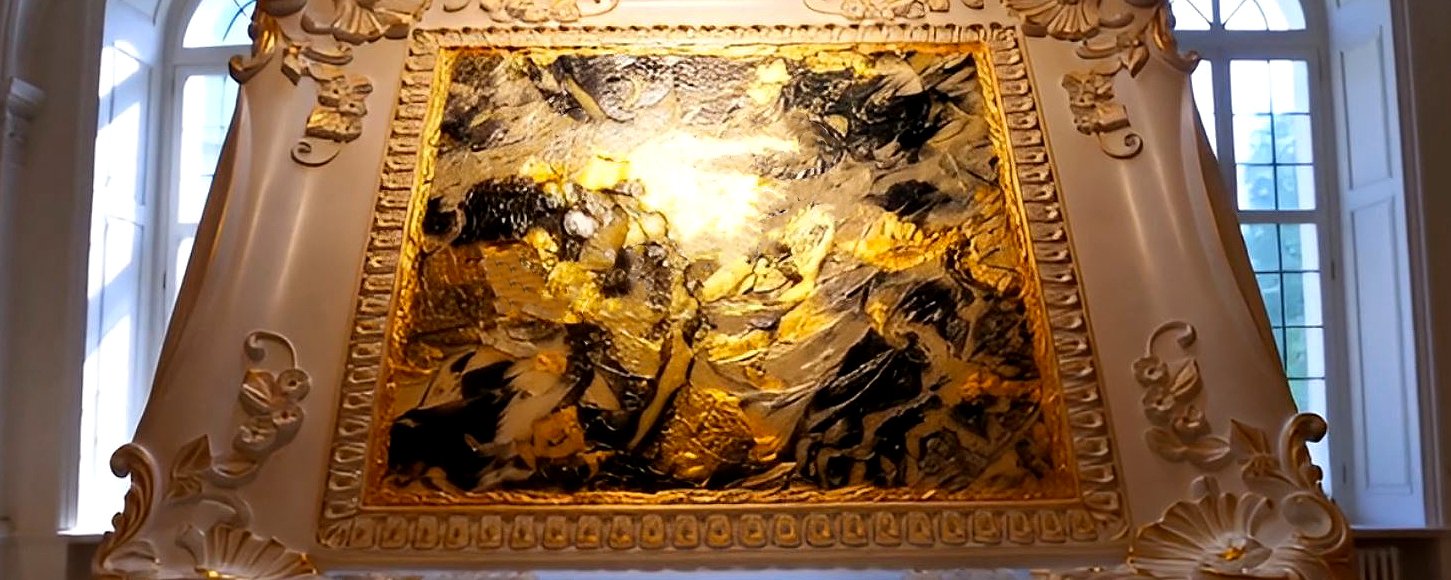
Artist's Note: Enjoy the header image of one of my favorite Abstract pieces which resides in my core collection in my studio for my RWA Art Strategy Foundation.
Title: Confluence of Angels
Composition: Oil and metallic acrylics on three layers of ink wash paper, fused to cardstock and set in a hand-crafted, gilded, ornamental frame.
"Confluence of Angels" is a showcase of a completely new style of artwork that was created in my Chengdu studio. This technique involves the layering of traditional Chinese ink wash papers, which when fused together with certain types of medium will become transparent, allowing the underlying layers to show through to the surface and therefore giving depth to the work unlike any others. You can actually see down into the painting. Out of the seemingly random palette knife strokes emerges a vision of a meetings of several Angels or Deities. Some people will see them. Others won't. This is what happens in all of my abstract works.
The human eye (and mind) will seek out recognizable forms and shapes. They may occur at the macro (general overall view of the painting) or the micro (detailed scan of the work using a zoom) levels.
This is why I called my original abstract works "spirit paintings". For in each of them, there are a number of images of humans, faces, animals, creatures and other familiar objects. Some apparently hiding behind a leaf or a tree, only wanting to show a part of themselves, but definitely peeking out from the painting into the real world. Like a portal. It happens every time. And it is way cool.
The best part about it is that every person sees things in their own way. Some see things right away. Others cannot wrap their mind around it at first. That is fascinating in itself.