
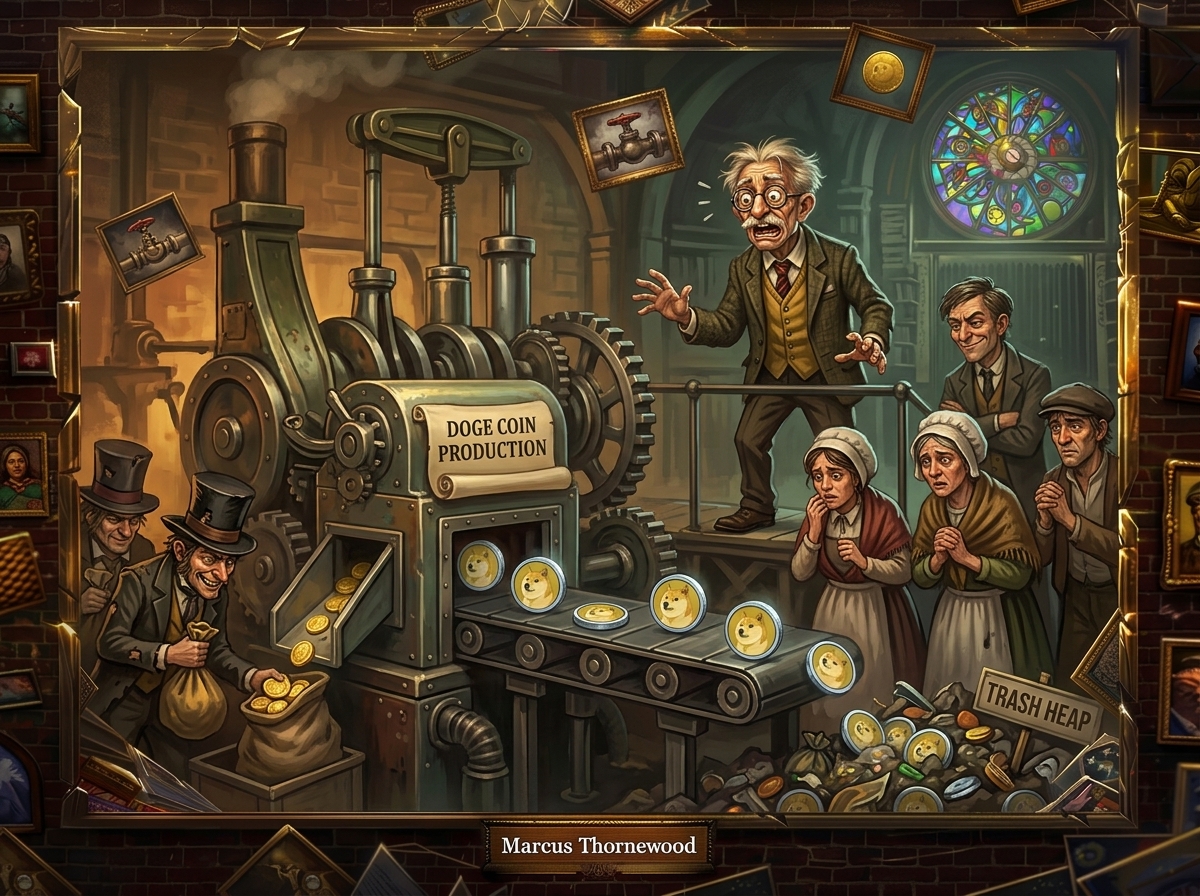
A swindler used to have to work for his dinner. He had to print the flyers, rent the town hall, and find a crowd of rubes one by one. It was a slow, manual labor of deception that required a certain level of charisma and a very fast horse for the getaway. A man could lose his shirt in any market, but it usually takes a bit of time for the fabric to unravel. The digital age, however, has brought us a marvelous and terrifying efficiency. We have moved from the artisanal scam to the industrial assembly line of ruin: the memecoin launchpad.
These platforms are not financial markets in any sense that a man with a ledger would recognize. They are automated factories designed to mint “Greater Fools” at the rate of a thousand a minute. It is a system where the production of worthlessness has been perfected, and the only ones walking away with heavy pockets are the folks selling the hammers.
The Alchemy of the Greased Slide
The beauty of the machine lies in the unit economics. The platform operator has discovered the ultimate business model: they have removed themselves from the risk of the gamble entirely. Whether a coin named after a cartoon frog or a billionaire’s pet goes to the moon or the gutter is irrelevant to the house. They take their pound of flesh at every turn with creation fees, migration fees, and a slice of every trade executed by a hopeful speculator.
They use something called “bonding curves,” a bit of mathematical sorcery that guarantees the price rises mechanically with every purchase. It creates a glittering illusion of momentum that lures in the unwary, making a project look like a rocket ship when it is really just a greased slide. To the untrained eye, the upward line on the chart looks like progress. In reality, it is a pre-programmed path designed to reach a boiling point where the early insiders can dump their holdings onto the latecomers.
The house takes a toll at the gate, a toll at the migration, and a toll on every nervous twitch of the ‘buy’ button. It is a casino where the chips evaporate if you hold them too long.
A Modern Boiler Room Without the Phones
There is a striking parallel here to the penny-stock boiler rooms of the nineties. In those days, rooms full of fast-talking men would cold-call retirees to pitch them on worthless companies. Today, the telephones are gone, replaced by high-speed bots and “influencers” shouting from digital soapboxes. The tactics, however, remain identical: create a sense of extreme urgency, manufacture a narrative of “missing out,” and ensure the marks are too busy dreaming of riches to look at the plumbing.
The speed of value destruction is breathtaking. A token can be born, hyped to a million-dollar valuation, and collapsed to absolute zero before a man can finish his morning coffee. It is a high-throughput manufacturing process where the raw material is the speculator’s greed and the finished product is a depleted digital wallet. The cycle is so fast that “investing” has been replaced by a nervous twitch of the thumb, a desperate hope to be the second-to-last fool out the door.
The Myth of the Digital Commons
The operators of these gin mills love to talk about “community.” They speak as if these tokens are a church social or a local rotary club. They claim that “the people” are taking back control of finance. But let us be plain: in these circles, “community” is simply the word used for the people who haven’t yet realized they are the exit liquidity. A real community builds something; these groups merely sit in a digital room together, waiting for a reason to sell to one another.
- Artificial Scarcity: Creating millions of tokens with no purpose other than to be traded.
- Social Engineering: Using chat rooms to silence skeptics and amplify the loudest shills.
- Liquidity Traps: Ensuring that once the price starts to fall, the exit door is too small for everyone to fit through.
When you look at the actual capital flows, the narrative of a “community-driven” success story usually collapses. You find a handful of wallets that bought in the first millisecond, often controlled by the creators or their associates, who then feed the tokens out slowly to the “community” as the price rises. It isn't a movement; it's a harvest.
The Operator's Bounty
At the end of the day, when the noise in the chat rooms dies down and the charts have all bled out to zero, the only constant is the profit of the launchpad operator. They do not care about the art, the jokes, or the “future of finance.” They care about the volume. Every time a rube tries his luck, the house wins. Every time a new “factory” opens its doors to automate this process, the market becomes less of a place for exchange and more of a slaughterhouse.
If you find yourself standing in front of one of these high-speed machines, feeling the urge to throw your hard-earned dollars into the gears, take a moment to look at who owns the factory. They aren't betting on the coins. They are betting on you. And in the world of the automated greater fool, that is the only sure bet in the house. Stick to assets that produce something more than noise and regret.