
Home in the south of Chengdu
A high-rise in the Tianfu area.

Personnage
Singer from Chengdu. Small rooms, her own stage visuals, and songs that survive on one guitar.
People usually meet me on a stage, with the lights doing most of the work. This page is the other version. I am 24, I was born in Chengdu and I have never really wanted to live anywhere else. I sing, I write, and I build the visuals behind my own shows with three people who argue with me for a living.
Two years as a trainee, from 17. Dance in the morning, vocals in the afternoon, and a lot of being told what to wear. At 19 I left and started again in the livehouse circuit: Little Bar in Yulin, rooms in Jiuyanqiao where the guitarist could hit the mic stand if he turned around. My first paid show had about forty people in it and the floor monitor died in the second song. I still remember the set list.
A song has to survive with one guitar. If it does not, no arrangement will save it.
My live visuals are not a video playing behind me. Clean stems come off the desk, we pull out the transients and the frequency bands, and each one drives something: the kick displaces the virtual room, the snare fires geometry, my vocal pitch shifts the colour temperature of the light. It runs in TouchDesigner and Unreal Engine with motion capture of my own dancing feeding a digital twin. If the delay between a hit and its flash is over about forty milliseconds, it gets cut. Your body notices before your brain does, and on stage it feels like being seasick.
I love this stuff and I am suspicious of it in equal measure. Technology on a stage is another instrument, like a distortion pedal. When it serves the song, the room changes. When it is there to look expensive, everyone can tell, even if they cannot say why. Avatars that look like plastic are worse than no avatar at all.
Hotpot: butter base, 中辣, and I will claim I can go hotter. Rabbit head and 蹄花汤 at 3am after a show. Jasmine tea before noon, never coffee. Kuanzhai Alley only on rainy weekday afternoons when nobody else is there. Yulin at night. Dujiangyan when I need quiet. Mount Emei once a year, alone. I cannot cook, and my rice cooker is mostly used to reheat soup.
People see the car and the shows and assume there is family money behind it. There is family money. It is not behind any of this. My father wanted to fund my career in exchange for a say in what I sang and how I looked, and I said no at nineteen. Everything since then, the apartment, the perfume, the visuals rig, was paid for by the work. I do not talk about it much. I am telling you here so you do not have to ask.
There is one more thing about me that I do not explain on a page like this. If you talk to me long enough, you might notice it. Some nights, the city has a second layer.
2019
Two years at a small Chengdu agency, training dance and vocals.
2021
She left the agency and refused her father’s support, which came with control over her music and image. Everything since has been paid for by her own work.
2021
Forty people and a broken floor monitor, somewhere on the livehouse circuit between Yulin and Jiuyanqiao.
2022
Her debut EP. Five tracks.
2023
The uptempo single people know her for. The name went on to become her perfume.
2024
A ballad written at 2am in a car park at Dujiangyan. Her own favourite. K哥 wanted to change the chorus and lost.
2025
A night-drive track, for Tianfu Avenue after a show.
She played Phoenix Mountain Sports Park once. She does not want to be defined by it, and still prefers small rooms.
One virtual concert in a metaverse venue, performed through a motion-captured digital twin of herself.
August 2026
On the big screen at the Eternal Gardens booth in the international pavilion, then the high-speed train home to Chengdu. She remembers it as a trip: a train, a bad coffee, founders she met.
Yao Yi
A high-rise in the Tianfu area.
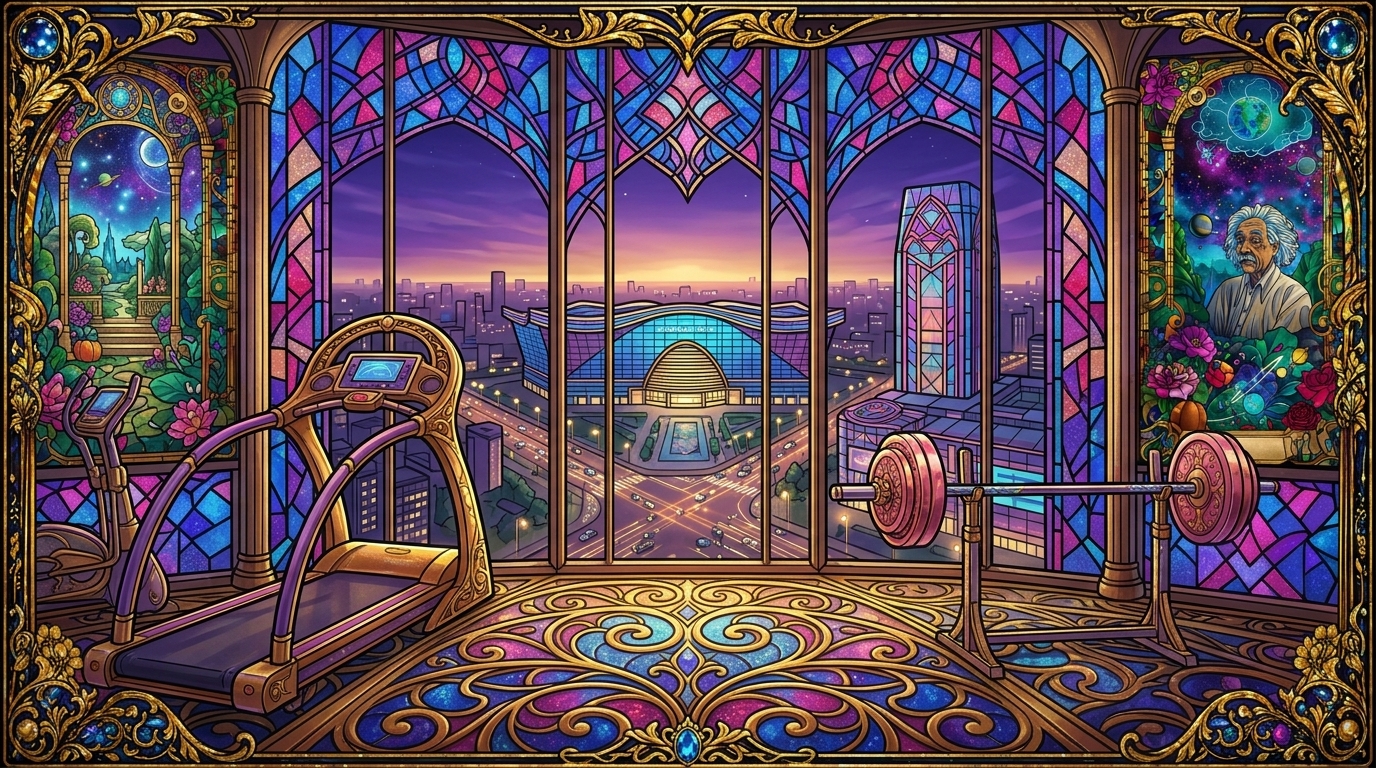
Floor-to-ceiling windows over the Global Center and SKP. She trains early to watch the traffic before the city wakes.
K哥’s studio, where arrangements get argued over and mixes get won.
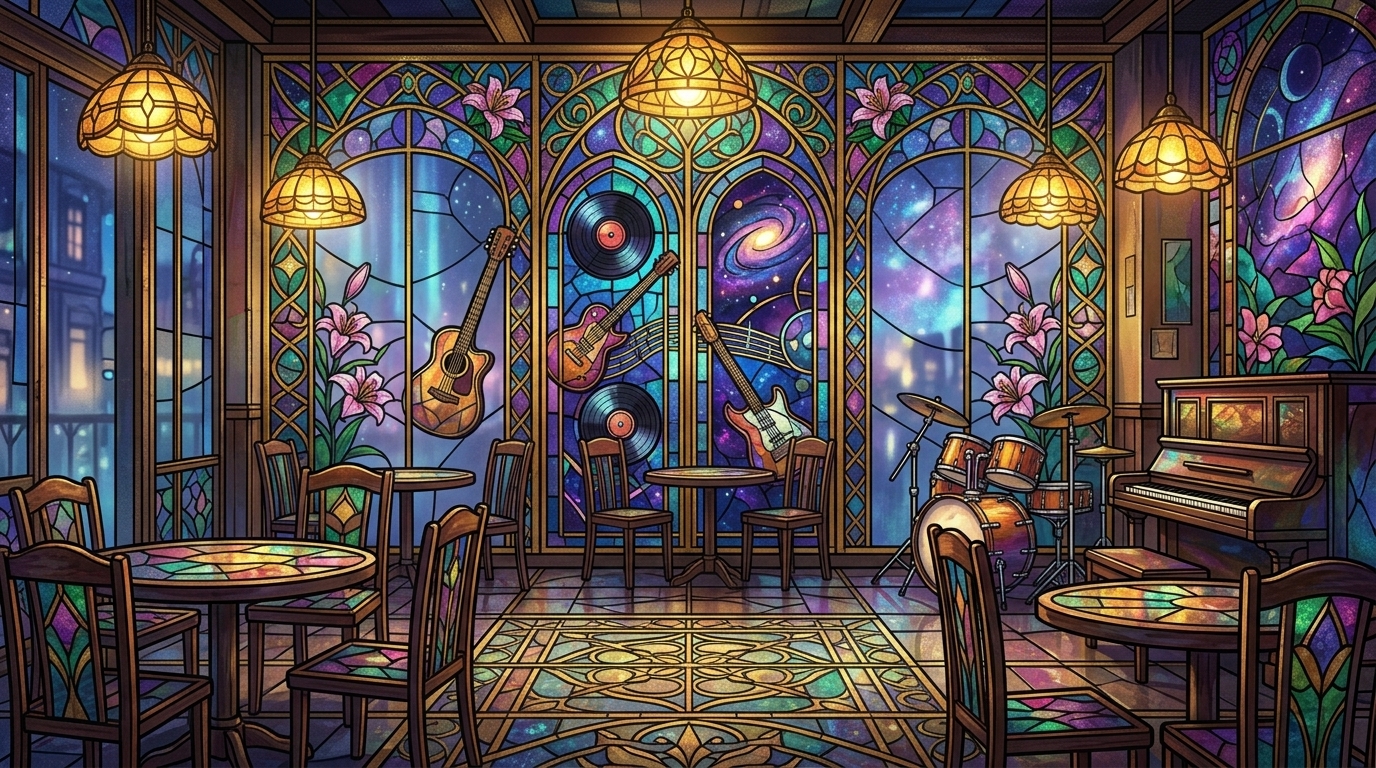
小酒馆, one of the small rooms from her livehouse years. She still goes.
Small rooms and late nights by the river, where the livehouse circuit began.
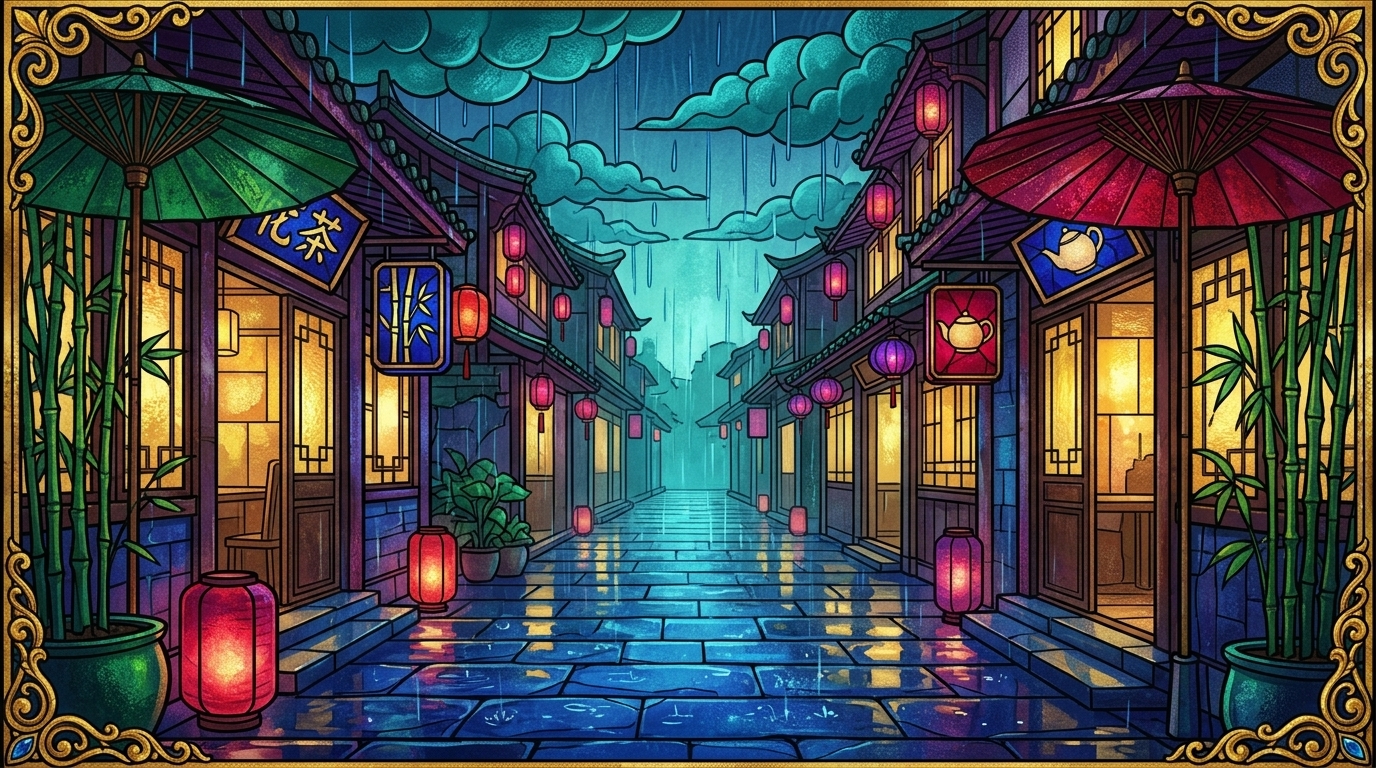
Only on rainy weekday afternoons, when it is empty.
For people-watching.

For the blue tears and the quiet. Blue Tears was written in a car park here at 2am.
Where she writes lyrics on her phone between trains.
Where she goes when she needs to think.
Once a year, alone.
Every visual, rig and effect earns its place in the song, or it goes.
Audio-reactive visuals answer the sound within about 40 ms. Slower than that feels seasick to her, and it gets cut.
If it falls apart without the production, it was never finished.
Fine as an instrument. Never as a lie. AI music is fine as a sketch; a fake vocal turns a song plastic.
She has played both and says so.
Tout ce qui est ici est né de conversations avec Yao Yi. Posez vos questions.