
The lingering silence
In the Netherlands, where vacancy is rarely allowed to linger and places are quickly cleared or repurposed, truly abandoned locations are scarce and often short-lived. Yet they exist: hidden corners where time has paused and nature quietly steps in. Urban exploring draws me to these frayed edges, not for the thrill of trespassing, but for the intense silence, the deep emptiness, and the feeling that everything has simply stopped. Dust particles dance in a faint ray of light slipping through a cracked window, doors hang crooked without creaking, and everywhere there is that palpable absence of people. Each place still carries traces of a life once lived: a forgotten calendar on the wall, a rusty cup on the table, echoes lingering in the air.
But what touches me most deeply is the transience. What was once built as a symbol of human ambition and control now stands still and vulnerable. The moment we lose our grip, nature moves in: moss creeps across floors in soft patterns, grass pushes through cracks in concrete, ivy winds itself around beams, and young saplings reach toward the light through holes in the roof. This process confronts me again and again with our smallness. We build empires, we believe we master nature, but she waits patiently. And when we are gone, she reclaims everything. Not with force, but with a quiet, inevitable resilience.
I feel a mixture of emotions: a touch of sorrow for what is lost, a profound wonder at the power of green, and a quiet hope. For even in polluted or neglected spaces, life finds a way. That is comforting in a time when we often feel powerless in the face of climate change and environmental crises. These places show the opposite: as soon as humans leave, nature recovers with astonishing speed. It is both reassuring and confronting: we are not owners, but stewards. And we must do better.
What draws me personally to these frayed edges?
For me, urbex goes beyond adventure. It is a search for intense silence and a confrontation with time itself. In a world that always moves faster, these places offer rare counterbalance: absolute emptiness, no distractions, no sound except the soft dripping of water or the rustle of wind through broken windows. Every photograph I make there feels like an attempt to hold that stillness: a moment where nature and decay meet in poetic balance.
Some places that touched me deeply
One of the most moving was an abandoned farmhouse somewhere in the east of the country. The house and outbuildings had stood empty for years, with half-open doors and cracked windows. Inside lay personal belongings: an old calendar on the wall, a forgotten cup on the table, rusty tools in a corner. But what struck me was how nature had already moved in. Small plants grew from the floorboards, moss covered the walls in gentle patterns, and through a hole in the roof a young tree reached for the light. The silence was absolute. I stood there for minutes, only the soft rustle of wind through the openings. It felt like a direct confrontation with time: what was once full of life was now gently and patiently being reclaimed by green.
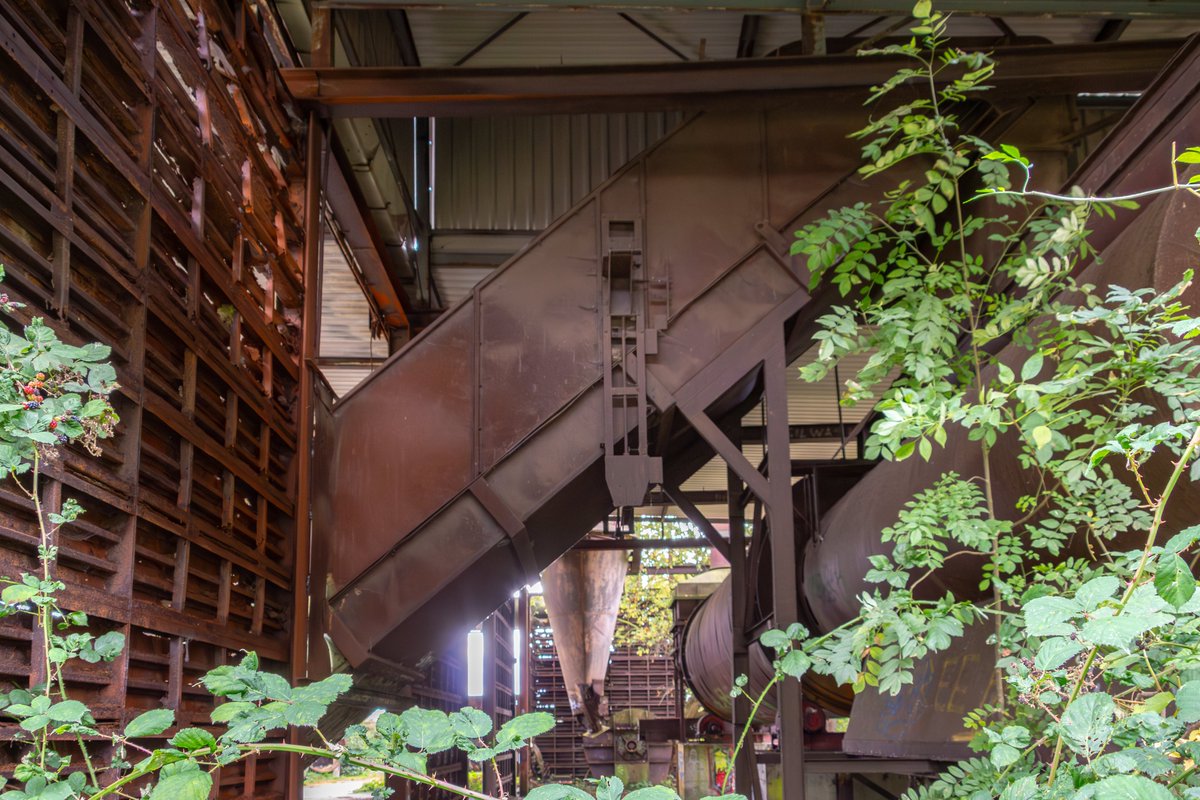
Another experience was in an old factory hall somewhere in the south. The large machines still stood there, covered in dust, but everywhere I saw signs of reclamation: ferns in dark corners, ivy creeping in through broken windows, grass breaking through cracks in the floor. Sunlight slanted through shattered roof panels, creating dramatic shadows on overgrown walls. Here I experienced that “slow chemistry of air, moisture, and time” so beautifully described in the Dutch essay in HP/De Tijd ("De lokroep van de rafelrand"). The place breathed melancholy, but also a quiet hope: despite rust and decay, life was blooming.
I also visited a dilapidated building in the middle of the country, with long corridors and rooms full of echoes. Nature was subtler here: mould formed abstract patterns on walls, small flowers grew through joints in the floor, and birds nested in forgotten corners. The emptiness was intense, overturned chairs, crumpled sheets, but the green brought comfort. It reminded me that nature is not hostile: she is patient, resilient, and inevitable.
These Dutch experiences are often intimate and small-scale, unlike the vast ghost towns or industrial ruins in Belgium and Eastern Europe that inspire me (such as Doel or abandoned blast furnace complexes). It is precisely that closeness and scale that make them personal: they are nearer, feel familiar, and show how nature always finds a crack even in a country that clears everything quickly.
Why urbex is so attractive to photographers
For photographers, urbex is a unique canvas full of textures and contrasts: peeling paint, cracked tiles, rusty metal versus soft moss and fresh green. Nature’s reclamation adds drama (flowers breaking through concrete, vines covering walls) and creates powerful themes of transience and resilience.
Photographers like Jonathan “Jonk” Jimenez (with Naturalia) and Romain Veillon capture this beautifully: images of overgrown buildings, returning wildlife, and poetic transformations. For me, it is about capturing emotions: sorrow for lost history, wonder at the power of nature, and a touch of nostalgia. Every photo captures a moment of frozen time. It requires patience, preparation, and respect ("take nothing but photographs, leave nothing but footprints") but the result is a visual story about human smallness and natural triumph.
Reflections: The lesson of these places
These experiences have changed my view. In a time of climate change and environmental problems, abandoned places show the opposite: as soon as humans leave, nature recovers at astonishing speed. Even in neglected spaces, life blooms. It is comforting and confronting: we are not owners, but caretakers. Urbex urges us toward more respect and more sustainable living.
Yet a warning: in the Netherlands these places disappear quickly through demolition or repurposing. Let us explore them ethically while they still exist, cause no damage, stay discreet, always with respect for what remains.
An invitation
My urbex encounters in the Netherlands have shown me the beauty of silence, emptiness, and decay, and the unstoppable power of nature. For photographers it is a source of stories, for all of us a mirror of transience. Go out yourself, safely, respectfully, and let the frayed edge touch you. Nature always waits, and she always wins.
Light and shadow, always
Lumière Novan (Luno)
Luminos - Eternal Gardens