 by Mei Lin

An interactive story choice works when the reader can tell what each option protects and what it puts at risk. Start with one decision and follow it into the next scene. A character who keeps a promise on one path and breaks it on another gives you something concrete to write.
Find a decision in an existing scene
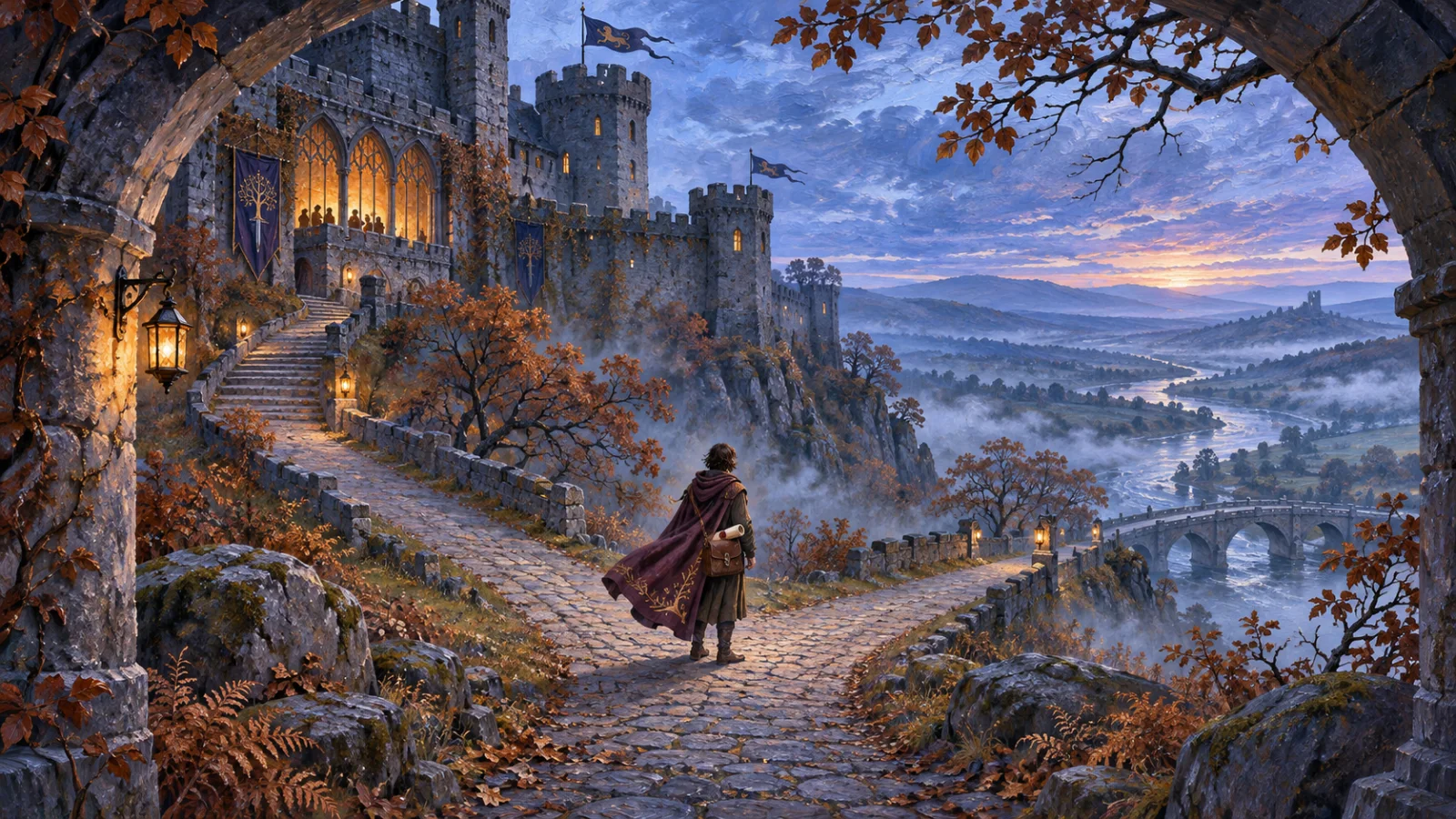
Open the public briefing for King Arthur Must Break His Own Law. Read The objective and Success signals before starting. This fictional Arthurian scene puts Arthur under pressure to respond to the deaths of Gareth and Gaheris while a war approaches. The briefing asks the player to weigh punishment against negotiation and propose terms that can be enforced.
Write down one fact the scene must preserve and one decision it leaves open. Here, the deaths are established. How Arthur responds is open. That separation gives the reader room to act while keeping the story recognizable. The character continuity guide shows how to track details that should carry across scenes.
Give both options a cost the reader can see
Try these two invented moves as a writing exercise. They are author notes for a new branch inspired by the briefing.
- Call a public hearing before the army leaves. The council hears the same charges and terms at once. Gawain must make his case in public while he is still grieving.
- Send an envoy with safe-conduct terms first. The envoy can test whether the other side will meet. The council has to wait, and the delay may look like favoritism to the families who want an answer now.
Give the reader enough information to recognize that trade-off. Before the choice, show a council member asking for witnesses and a messenger warning that the army is ready to march. The reader can then choose which pressure to address first.
Carry the consequence into the next scene
Both versions can lead to the same council chamber. Change what the reader finds there. After the hearing, witnesses are waiting and Gawain has already spoken in public. After the envoy’s departure, Gawain arrives with a question about who authorized the delay. The room stays the same, but its first conversation belongs to the path the reader took.
Draft one opening line for each path. If either line would work equally well after the other choice, add a visible consequence. Give a character new information, change a promise they can keep, or make someone arrive before a rival has time to act.
In the hearing branch, try “The witnesses were already on their feet when Arthur entered.” In the envoy branch, try “Gawain waited beside the empty messenger’s chair, the safe-conduct order folded in his fist.” Each opening gives the next scene a concrete detail caused by the earlier choice.
Use this worksheet for your own story
- Fixed fact. What has already happened?
- Decision. What can the reader still change?
- Two moves. What does each one protect, and what does it cost?
- Next scene. What will the reader see or hear because they chose it?
To test your draft, ask someone to read both options and tell you what they expect to happen next. Their answer will show which stakes are already clear and which need a line of setup. For another example, pick a scene from the Eternal Gardens Play catalogue, read its briefing, and fill in the four lines. If you illustrate the scene, compose the cover around the moment of decision so the setting gives readers a clue before they start.
For a second exercise, take a seat at Solène Riveclaire’s midnight screening. Find the false shot and choose what to do with the sealed note. Watch which detail in the next scene changes because of your choice.