 by Captain Oat

If you want a dock that makes the hair on the back of your neck stand up, you do not go looking around the shiny yacht basins or the boardwalks where tourists buy saltwater taffy. You look at the working bones of the lakes. You go up to the abandoned timber ore docks in Marquette or Ashland or Two Harbors, or you nose into the rotted lumber wharves along the northern curves of Lake Michigan where whole sawmill towns dried up and blew away a century ago. Out in the open shipping lanes, the water washes things clean. At the dock, the wood holds onto everything.
A ship has a life of its own, and when she goes down, she takes her story to the bottom in one piece. A dock is different. A dock stands half in the water and half in the wind, soaking up decades of diesel soot, pine pitch, blood, and iron dust. Generations of deckhands, dockwallopers, and railmen walked those planks in the sleet and the pitch dark. When the mines play out or the timber is all cut down, the companies pull up the tracks and walk away, leaving a quarter-mile of soaked hemlock sticking out into the bay like a broken rib. Any sailor who has ever had to tie up to one of those dead giants during a blow knows that just because the company left does not mean the shift ended.
Eighty Feet of Creosote and Red Iron
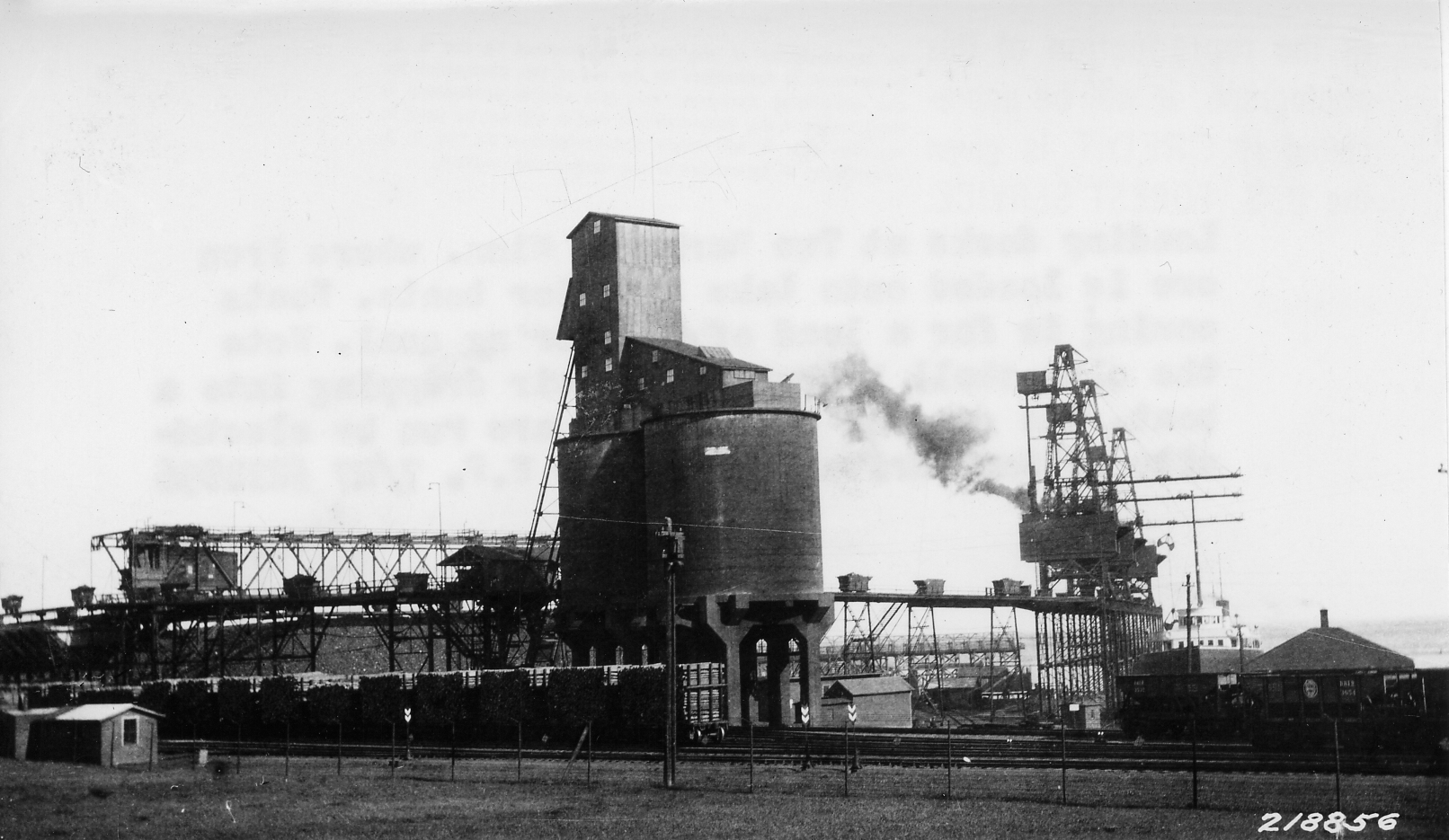
Before the modern conveyor belts took over the ports, the gravity ore docks of Lake Superior were the wonders of the northern waterfront. They look like railway trestles built for giants. Eighty feet tall from the waterline to the rail deck, framed out of massive timbers dark with creosote and stained a deep, permanent rust red from millions of tons of hematite. Trains would roll right out onto the top of the pier and dump their hopper cars into massive wedge-shaped pockets built into the wooden frame. When an ore boat slid into the slip below, the dock crew lowered long steel chutes from the pockets into the boat's hatches and let gravity do the heavy work.
It was loud, choking, bone-breaking labor. The men who worked the tops of those docks were called ore trimmers, or wrenchmen. In the fall, when the wet red dirt came down out of the ranges, it would freeze solid inside the pockets before it ever reached the water. A trimmer had to stand on a narrow plank catwalk eighty feet above the gap between the dock and the steel deck of the ship, prodding that frozen mass with a long iron bar to break it loose.
Every old port on Superior has stories of what happened when a pocket gave way all at once. A trimmer would be leaning his weight onto his bar, jabbing at a crust of frozen taconite or raw ore, and the whole bank beneath him would drop out like a trapdoor. If he did not let go of that iron bar in a split second, it pulled him straight down into the pocket. Twenty tons of red rock would carry him down the steel chute and bury him deep in the bottom of the boat's hold before anyone on deck could even yell for the winchman to drop the gate. Plenty of times, the mining companies barely let the ink dry on a four-line notice in the back of the local paper before hiring the next man in line.
The 2:00 A.M. Shift on a Dead Slip
Go tie up alongside one of those decommissioned timber gravity docks on Lake Superior today when a gale forces you off the open lake, and you will learn what a long memory hemlock has. By day, there is nothing up there but rusted cables, missing planks, and forty years of gull droppings. The switches are grown over with birch saplings, and the shore approach is usually cut clean off so teenagers cannot climb out onto the rot.
Wait until 2:00 a.m., though, when the wind drops flat and the harbor water goes black and slick as stove polish. With the ship's generators humming low and the mooring lines groaning against the pilings, the upper deck of that empty dock starts to wake up. First comes the metallic clank of the heavy iron ratchets that used to wind the chutes up and down. It is a sharp, deliberate sound, like a four-foot steel dog dropping into a gear tooth, echoing down through the cross-braces.
Then come the phantom trimmers. You hear heavy leather and hobnails trotting across the high planking right above the wheelhouse roof, moving from pocket to pocket down the length of the slip. Every so often, there is the sharp ring of an iron pinch bar striking cold steel, followed by a roaring of ore chutes that vibrates right through the oak rub-rails of your hull as unseen rock slides down an empty trough. A watchman can take a big carbon-arc spotlight out onto the bridge wing and sweep every inch of that high catwalk from the shoreline to the outer crib. The beam will cut through the mist and show nothing at all. Just empty sky between the timbers and rusted chutes hanging chained against the wall, while the sound of running boots and roaring chutes keeps right on echoing toward the river mouth.
Sawdust Wharves Along the Michigan Shore
The iron ports do not have a monopoly on restless timber. Come down through the Straits and follow the eastern and western shores of Lake Michigan, and you can still spot the grey stubs of pilings sticking up through the surf where the old lumber schooners used to load. Back in the 1880s, whole towns existed just to feed white pine into the steam saws. They built slab-wood docks out into the deep water because there were no natural harbors, piling up scrap bark and hemlock cribs to hold the piers down against the autumn rollers.
Lumber hookers and three-masted schooners would tie up to those exposed piers in ragged weather, trying to get one last load of dressed board aboard before the ice locked the green bayous shut. Timber hookers got crushed between surging hulls and the dock pilings whenever a heavy swell snapped a manila breast line. Others walked off the ends of unlit piers in the snow squalls, weighed down by heavy wool Mackinaw coats and caulked river boots that dragged them straight into the undertow.
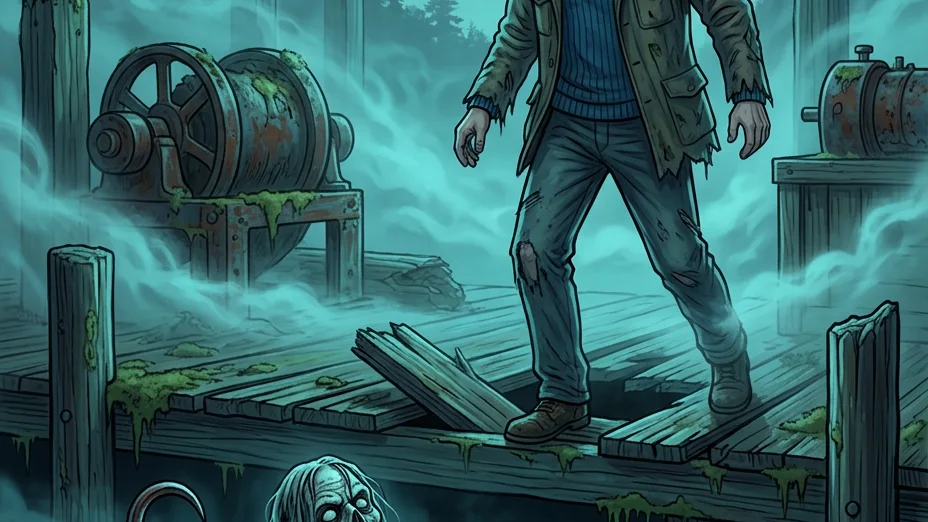
Even now, when the autumn fog settles over those ruined Lake Michigan sawmill wharves where the mills burned down ninety years ago, fishermen running close to shore hear the rhythmic thump of heavy timber being stacked on wood that is no longer there. They catch the smell of wet pine sawdust sharp in the cold air miles from the nearest lumberyard, and hear the high, thin whistle of a steam donkey engine calling for another load of slabs. Folks who linger near the rotted cribs after dark tell of seeing the waterlogged ghost of a crushed 1880s timber hooker standing on the slick stringers in a soaked wool Mackinaw coat and caulked boots. He bends his back, working an invisible log with a steel peavey, wrenching and heaving at the empty air until he reaches the broken edge of the pier and steps silently into the black slip.
Folks who live ten miles inland like to think a harbor is a safe place, a snug shelter where the trouble stops the moment the lines go over the bollards. Any sailor who has spent forty winters on the freshwater knows better. The open lake takes men in the heat of a fight, when the wind is screaming and the blood is up. The docks take them in the dark, between shifts, under the weight of falling rock and rolling timber. You tie your boat to old wood on these lakes, you take care how you walk the deck after midnight, and you leave the spotlight switched off. Some watches are best left to the men who are still standing them.