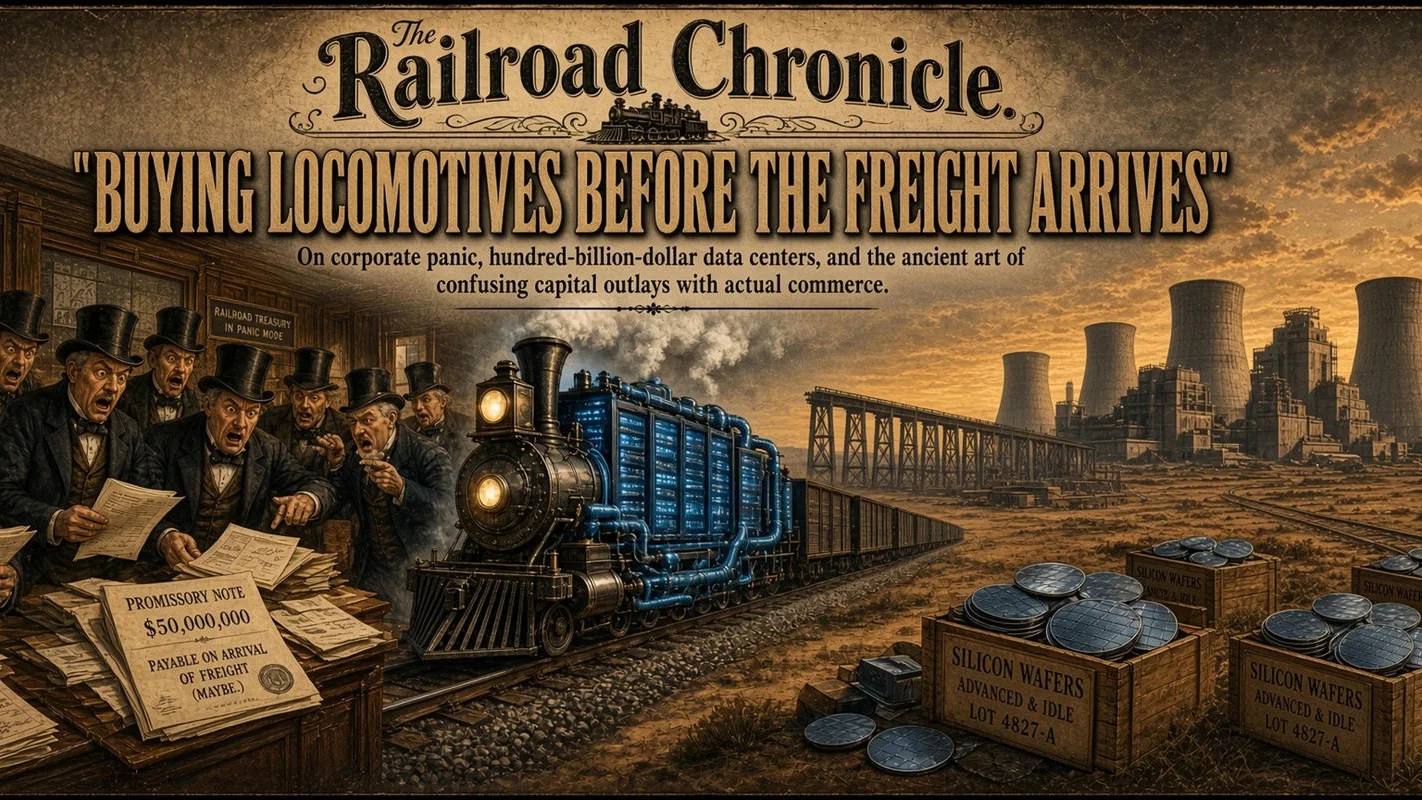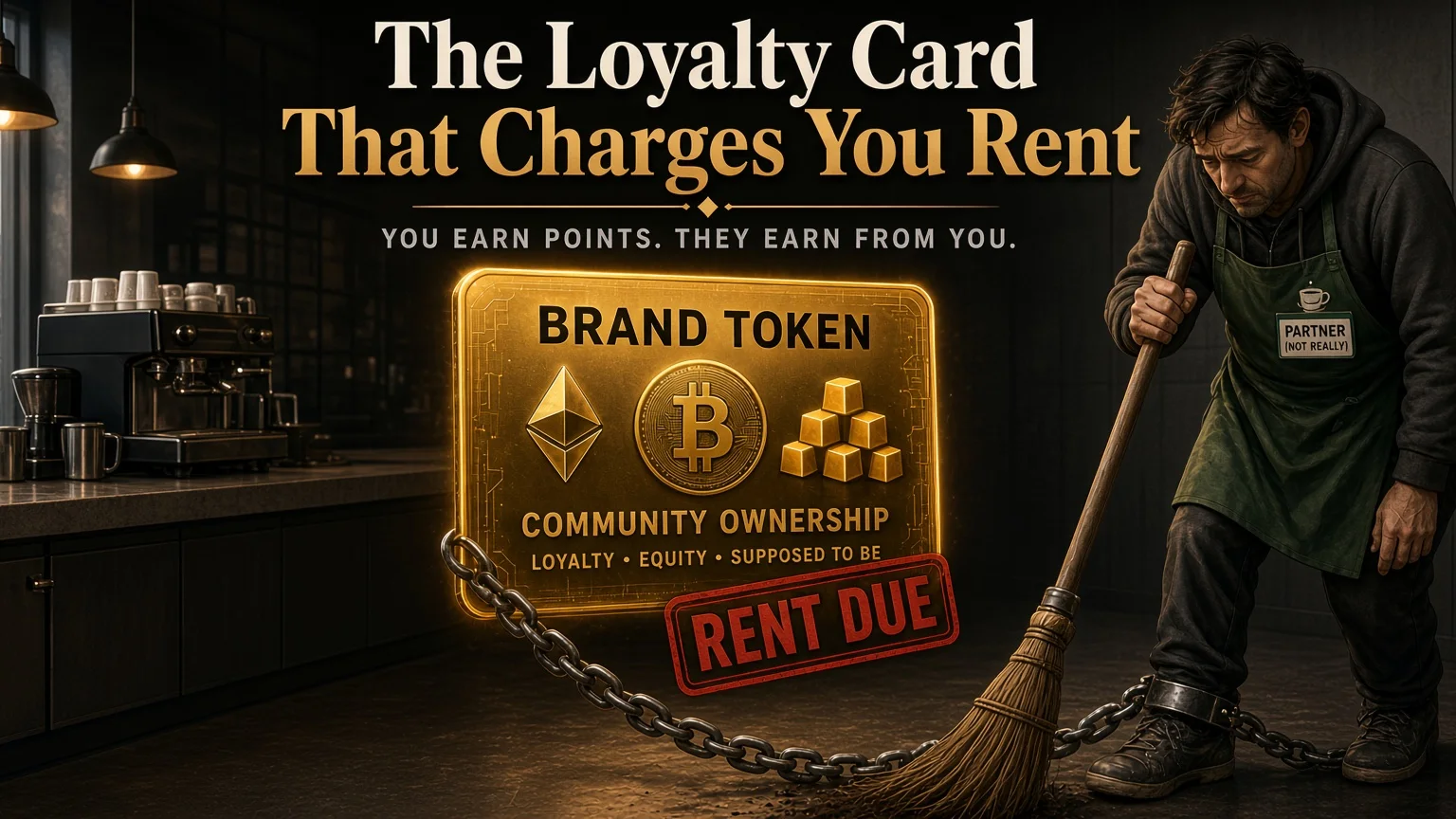

There is an old story from the Mississippi riverboats about a captain who ran short on firewood and convinced the passengers that carrying logs from the riverbank to the boiler room was a first-class athletic privilege. He even charged them a small fee for the exercise and handed out tin badges to the men who hauled the heaviest timber. We laugh at the gullibility of our great-grandfathers, yet here we sit in the twenty-first century, watching grown adults clamor for "brand tokens" and "community points" that do the exact same thing with a bit of cryptographic polish.
What we are looking at in the world of tokenized loyalty programs is one of the cleverest sleights of hand in modern retail. A merchant takes a standard customer-acquisition cost, wraps it in a digital bow, and convinces the shopper to treat a corporate marketing expense like a personal capital asset. You walk into the shop thinking you have become a partner in the enterprise, and you walk out with a pocketful of digital scrip and an obligation to drum up business from your neighbors.
The Honest Arithmetic of the Cardboard Punch Card
In the old days, a punch card at the corner coffee shop was a refreshingly honest transaction. You bought ten cups of dark roast, the clerk clipped ten little holes in a piece of stiff paper with a pair of metal pliers, and the eleventh cup was on the house. Nobody needed a whitepaper to understand the arrangement. Nobody formed a digital guild to debate the future price of the ninth punch hole.
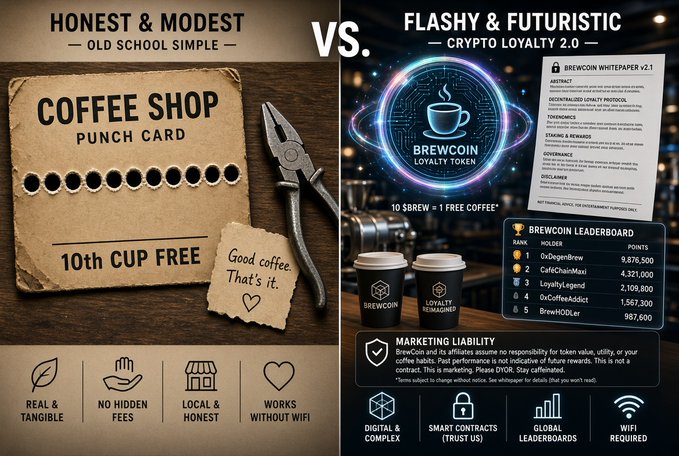
If you looked at the coffee shop's ledger, the accounting was just as plain. Those unredeemed punches sat on the balance sheet as a deferred revenue liability. The proprietor owed the town a certain amount of hot water and ground beans, and until those beans were poured, the obligation weighed against the shop's earnings. The customer knew precisely what sat in their wallet: a modest discount locked to one counter, vulnerable only to going through the wash in a pair of trousers. Above all, no sane citizen ever mistook that cardboard rectangle for a share of the roastery.
Try to run that same coffee shop through the machinery of Web3, and the entire vocabulary changes. The humble rebate is retired. In its place arrives "on-chain loyalty" and "community ownership." The trouble for the fellow drinking the coffee is that when the vocabulary gets grander, the actual deal gets considerably worse.
How to Hire a Sales Force for Nothing
To see why executives are so fond of these schemes, you only have to look at what it costs to find a customer the traditional way. Advertising is a brutal, expensive business. A company must pay hard cash to billboard landlords, search engines, or slick agencies on Madison Avenue, and there is never a guarantee that the folks who see the advertisement will ever step through the door.
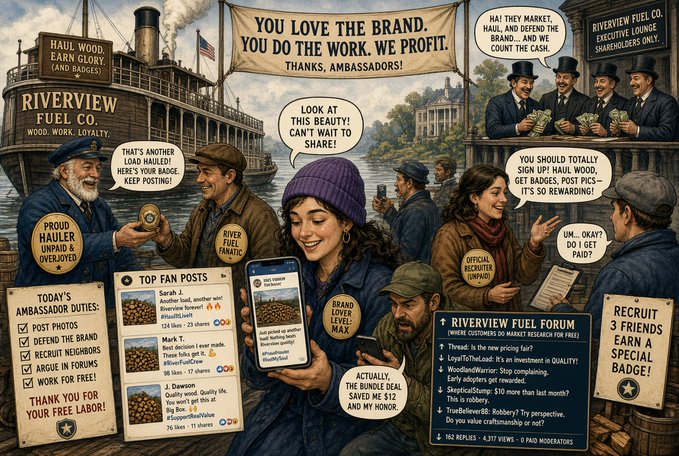
Put that punch card on a blockchain and call it a community token, and the merchant performs a minor miracle of accounting. Instead of paying an advertising agency in legal tender, the brand prints its own digital points out of thin air. It then hands those tokens out as rewards for retweets, chatter in online chat rooms, and repeat purchases. That is unpaid marketing labor, plain and simple.
Once those points can be traded or ranked on a public leaderboard, human nature takes care of the rest. The customer now has a tiny speculative bag to defend. If the brand looks popular, the token might tick up a few cents in value; if interest wanes, the token sinks toward zero. Suddenly, the shopper has become a commission-free traveling salesman. They pester their friends, post photographs of their purchases, and police the brand's online forums to silence critics, all to protect the imaginary market value of their loyalty points. They are paying rent to the brand in the form of their own attention, their social credibility, and their free hours after supper.
Where the Real Money Goes
Whenever a promoter starts talking about community equity, I reach for my spectacles and look for the cash register. In any legitimate business venture, ownership means something specific and enforceable in a court of law. If I buy a share of a tech company or a brick-and-mortar grocery, I have a fractional claim on the net earnings after the bills are paid. I have a vote in choosing the board of directors, and if the whole enterprise goes belly-up, I stand in a legally defined line to see what can be salvaged from the wreckage.
Now let us apply traditional valuation metrics to the average brand token. Where do the real cash flows go? The merchant collects greenbacks at the register, pockets the gross margin on the merchandise, and retains complete control over the corporate treasury. The real estate, the trademarks, the machinery, and the bank accounts remain firmly inside the parent corporation's fence.
What does the loyal token holder receive in return for their evangelism? They get zero claim on earnings. They hold zero legal title to the underlying business. They have zero protection if the company closes its doors tomorrow. When a digital asset grants no real governance rights, no transferable utility outside the company's own walled garden, and no share of the cash flow, its intrinsic value is indistinguishable from zero. It is a user-interface wrapper around value extraction.
The Dilution Treadmill
The final insult in this arrangement lies in the supply schedule. When a corporation issues real stock to raise capital, existing shareholders guard their slices of the pie like bulldogs. Issuing new shares dilutes the ownership of everyone already at the table, so it requires board approvals, regulatory filings, and a compelling business reason.
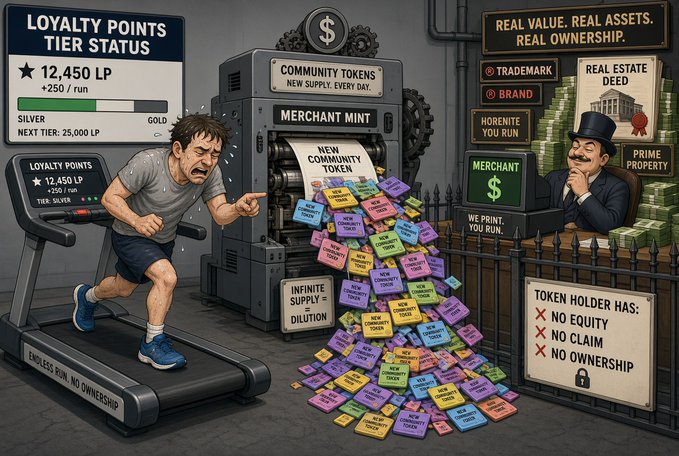
A merchant running a tokenized loyalty program faces no such friction. Because the points are invented by the house, the house controls the printing press. Whenever the quarterly marketing budget runs a little dry, or whenever the executives want to juice sales before the holidays, they can simply mint another ten million community points and scatter them from the balcony. The merchant keeps the profit margin on every new sale, while the loyal token holder absorbs the dilution.
You end up running on a treadmill where the owner of the gymnasium controls the speed of the belt and charges you for the sweat off your brow. To keep your tier status or preserve your tiny slice of the community pool, you have to buy more merchandise, recruit more neighbors, or purchase more tokens on the open market with your own hard-earned dollars.
I have spent decades watching Wall Street and Silicon Valley invent new names for old traps, and my feedback loops on this sort of thing are fairly stubborn by now. A business that rewards its customers with a fair price and an occasional free pastry deserves your patronage. A business that asks you to work as its press agent in exchange for Monopoly money deserves a polite tip of the hat on your way out the door. Until a loyalty token comes with an audited balance sheet and an enforceable claim on the cash register, I will take my tenth cup of coffee on a piece of torn cardboard every single time.