 The Emperor
The Emperor
The Emperor asks you to build something solid. Clear plans, sensible boundaries and steady leadership will help you turn ideas into lasting results. Step into your authority with fairness and confidence.
Love Security and commitment matter to you now. Show your care through reliability, and be clear about what you need.
Work Leadership, organisation and strategy are your strengths at the moment. Set clear goals and take responsibility for moving them forward.
Money Order and planning serve you well. A clear structure for your resources builds long-term stability.
Wellbeing Routine can be a gift. A steady rhythm of rest, work and movement helps you feel grounded and in charge of your days.
Growth You are learning to lead yourself, making commitments and keeping them. That self-trust becomes a foundation for everything else.
Reversed, The Emperor points to structure that has become either too tight or too loose. You may feel controlled by rules, or be clinging to control yourself, or lack the order you need. Look for the balance between firmness and flexibility.
Love Control or stubbornness may be straining a connection. Softening your stance invites partnership.
Work Rigid systems or unclear leadership may be causing friction. Ask what structure truly helps the work move.
Money Either overly strict or disorganised habits may be at play. A simple, realistic plan restores balance.
Wellbeing Pushing too hard or losing all routine can both wear you down. Gentle structure helps you feel held without feeling confined.
Growth Examine your relationship with authority, your own and other people's. True strength includes the ability to bend.
Symbols in the glass
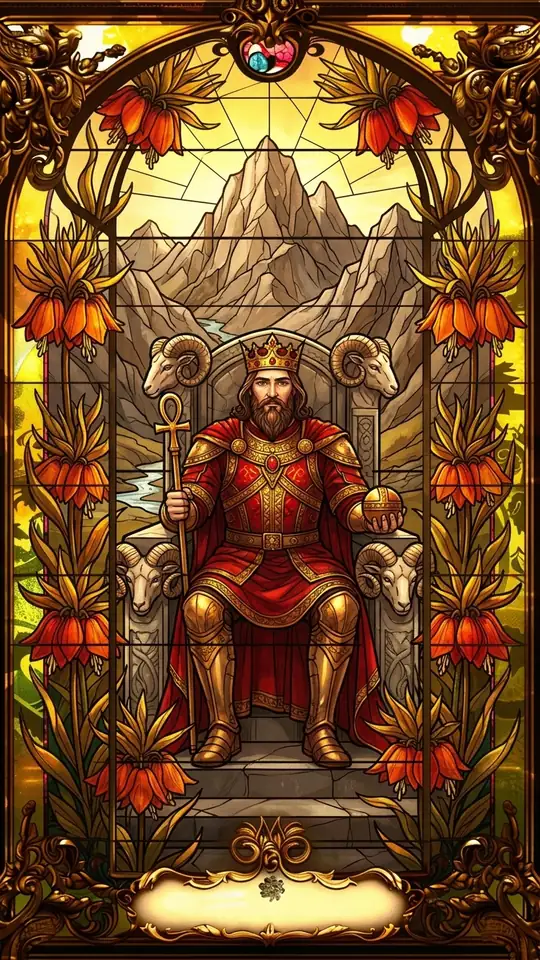
- stone throne permanence and solid foundations
- ram heads the drive and leadership of Aries
- sceptre and orb authority and responsibility for a whole domain
- armour under robe readiness to protect what has been built
- barren mountains discipline and the effort that structure requires
- narrow stream feeling that still flows beneath a firm exterior
A bearded ruler in armour and a red robe sits on a stone throne carved with ram heads. He holds an ankh-topped sceptre in one hand and an orb in the other. Behind him rise bare, rocky mountains with a narrow stream at their foot.
Deeper lore
- Element
- Fire
- Astrology
- Aries
- Hebrew letter
- Heh (ה) in the Golden Dawn; Crowley exchanges it with The Star and gives Tzaddi (צ)
- Tree of Life path
- 15: Chokmah to Tiphareth
- Golden Dawn title
- Son of the Morning, Chief among the Mighty
- Number
- Four is structure and foundation: the square, the four corners, stability built to last.
- Names
- The Emperor · L'Empereur · 皇帝
Waite, 1911
Waite (1911) lists: stability, power, protection, realization, a great person, aid, reason, conviction, authority and will. Reversed: benevolence, compassion, credit, also confusion to enemies, obstruction, immaturity.
Where would a firmer foundation help me feel more secure?
Ask Iris about this cardFor reflection and entertainment. Meanings follow the Smith-Waite tradition.