


 by Captain Oat

Sweet Smoke and the Friday Breeze
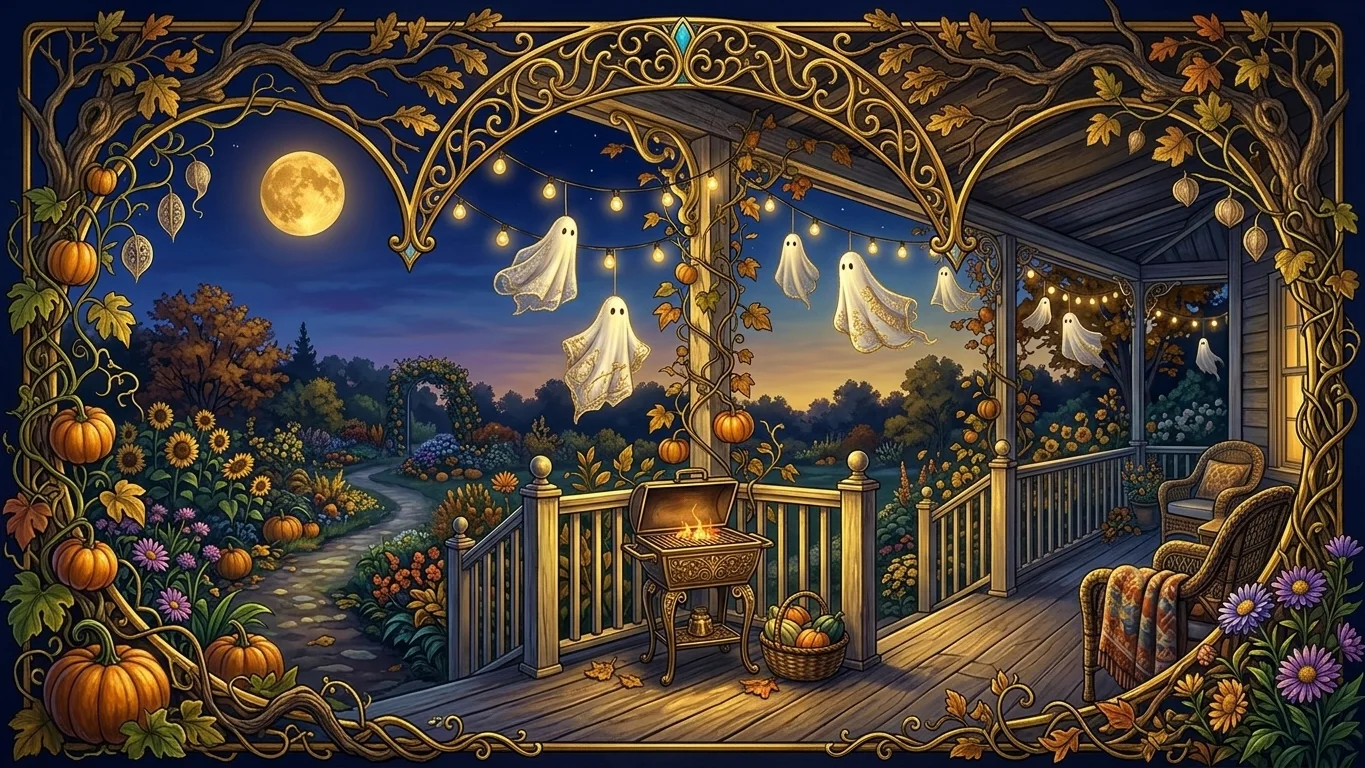
Out here past the limestone bluffs, Friday afternoon carries a scent you can recognize with your eyes closed. It is half sweet mesquite and half green pecan leaves drifting down across the grass. The sun sits lower this week, slanting golden through the live oaks and lighting up the burnt orange banner hanging from my cedar rail. Tomorrow is the second Saturday in October, which means the whole state holds its breath for football. Around my place, the preparation starts early, well before the sun dips down behind the hills.
I had twenty pounds of brisket resting under butcher paper on the counter, and two cast-iron pots of pinto beans simmering on the stove with sweet yellow onion, garlic cloves, and a spoonful of honey. My apron was a patchwork of calico scraps and vintage bandanas, tied over a washed-out purple and gold tie-dye shirt that has seen better decades. I put my barefoot down against the warm porch floorboards and reached for the tongs. There is an easy cadence to stoking an offset smoker. You lay the split wood in slow, let the white smoke clear until it turns that soft, ghost-blue shade, and you give the heat time to work its quiet magic. That is pure Texas culture to me. You do not rush good meat, and you never rush the people who come to share it.
Living as a flower child in the heart of Texas taught me long ago that good food is the quickest road to goodwill. Karma is not some grand puzzle up in the clouds. It is plain and simple reciprocity. You put kindness out into the world, you tend your fire with care, and the universe sends that sweetness right back to your door. I humming an old Jerry Jeff Walker tune, looking out past my garden patch where the marigolds were blooming bright gold, when gravel crunched out by the gate.
The Old Truck at the End of the Driveway
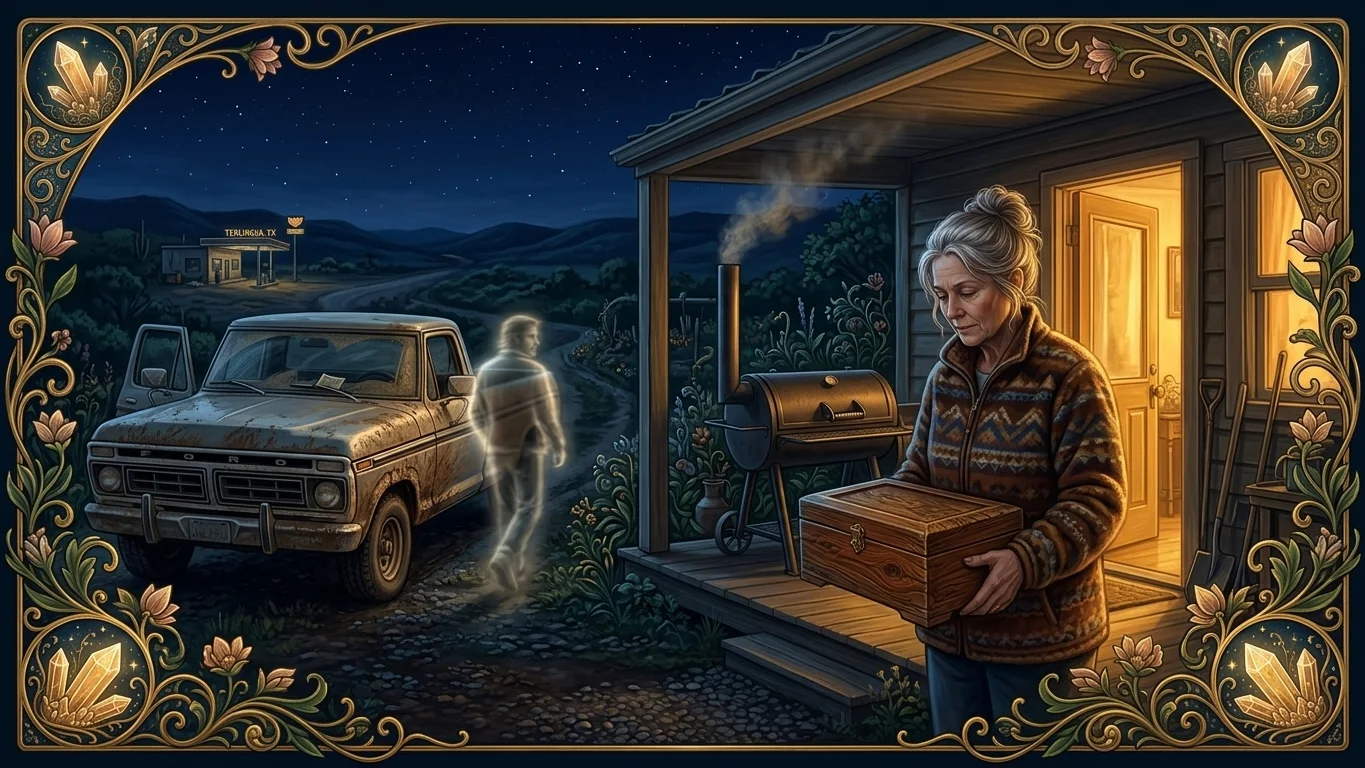
A faded turquoise pickup had pulled off the caliche road and stopped just beneath the mail post. The radiator hissed a gentle tune, sending up a faint ribbon of steam into the evening air. The driver side door creaked open, and a young man stepped out into the dust. He looked road-weary, wearing scuffed boots, faded denim, and a faded ballcap pulled low over tired eyes. In the bed of his truck sat a dented metal toolbox, a tied-down duffel, and a scarred acoustic guitar case held together with black electrical tape around the latches.
Now, some folks out in the county might eyeball an unfamiliar rig with suspicion, especially on a weekend when travelers are flooding the highways for game day. That has never been my way. A true Southern hippie keeps the porch light burning and an extra plate warm, because everybody is carrying some quiet trouble they rarely talk about. I wiped my hands on my apron, leaned over the cedar railing, and threw up an easy wave.
He hesitated by his front fender, his hands tucked deep into his pockets. I walked down the stone steps, my silver-streaked red hair catching the breeze, and met him halfway along the crushed-stone path. Up close, I could see the purple circles under his eyes and the red dust caked on his boots. He told me his name was Jesse, that his water pump had begun to squeal ten miles back, and that he was trying to make it north before morning. His voice sounded thin, like a man who had been talking only to his radio for three days straight.
Breaking Bread and Passing the Sauce
I told him the road could wait until daylight, and that no machine ever ran better on an empty stomach than the human heart. Southern hospitality is not a ceremony you pull out of a china cabinet for special guests. It is pulling out a wooden chair, handing over a tall mason jar of iced sun tea, and cutting the crusty burnt ends off the flat of a brisket for someone who looks worn down by the wind. Within ten minutes, Jesse was sitting at my picnic table beneath the string lights, with a plate piled high with brisket, warm potato salad, and beans.
Around here, my porch is a gathering spot for whoever happens to be near. My neighbor Cal wandered up the trail carrying a galvanized tub full of chilled sodas and local peach cider. Cal is a lifelong Texas Longhorns fan, just like me, and he arrived wearing his lucky faded cap with the white steer horns stitched across the front. When Cal saw Jesse sitting there, he did not ask twenty questions about where the boy was headed or why he looked so ragged. He set the tub down, offered Jesse a cold cider, and immediately launched into predictions about tomorrow’s game.
Watching Jesse relax was like watching rain soak into dry caliche dirt. His shoulders dropped an inch. He took seconds on the brisket, soaking up the pepper sauce with a slice of white bread. Cal pulled an adjustable wrench from his back pocket and promised Jesse they would look at that water pump together as soon as the engine cooled completely. Peace and love are practical things out here in the cedar brakes. They look like shared tools, a warm meal, and an open ear while the stars begin to poke through the dusk.
Footsteps on the Porch and the Unfinished Song
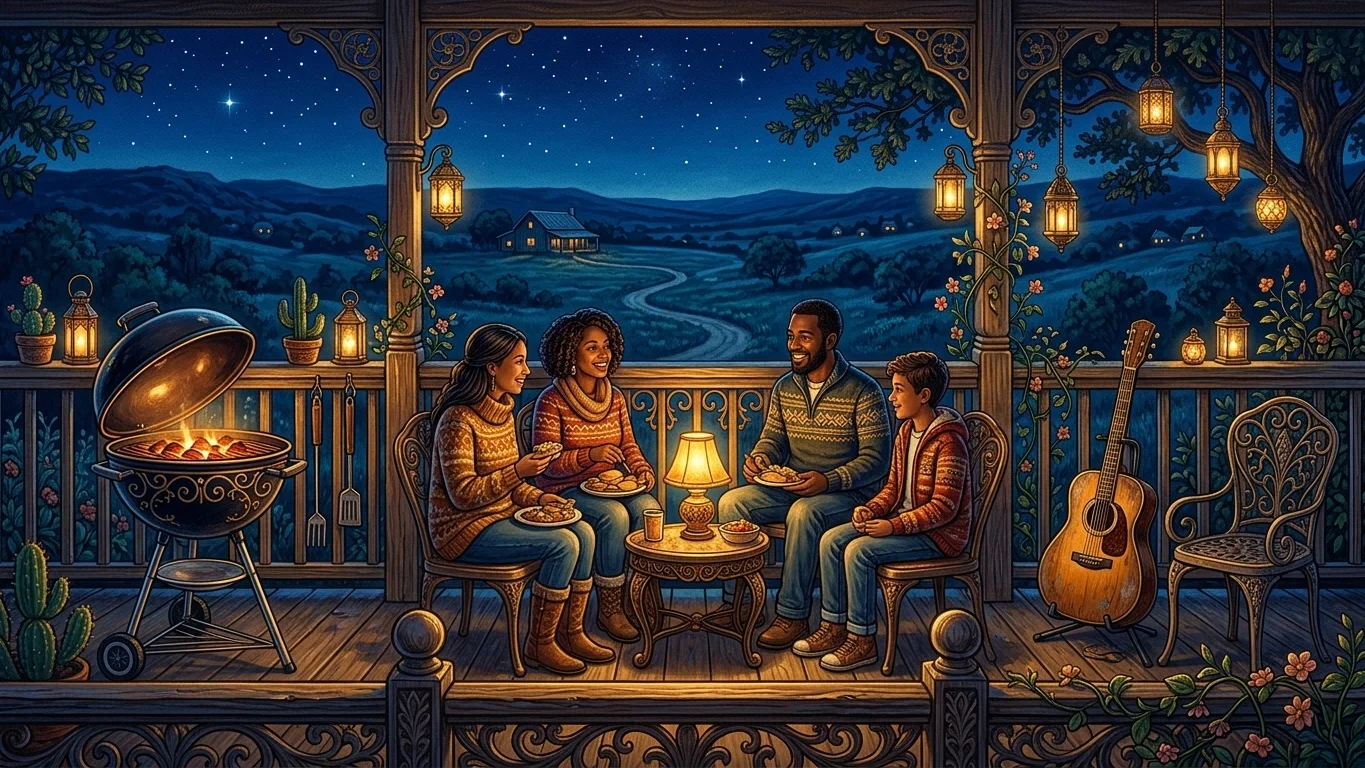
By eight o’clock, the cricket choir had taken over the scrub oak pasture. We moved the chairs up onto the porch to stay clear of the falling dew. Jesse walked out to his truck bed, brought back that taped-up guitar case, and clicked open the rusted brass latches. The instrument inside was an old mahogany dreadnought, worn down to the bare wood right around the soundhole where a thumb had kept time for thirty years. He tuned the strings by ear, his fingers moving gentle over the fretboard, and picked out a melody that sounded like running water over river stone.
He played two verses of an old ballad about the Llano River before his hand stopped on the strings. He looked down at the scratched wood, then looked over toward the kitchen window where the yellow lamplight spilled across the cedar deck. He told us his grandfather had owned this guitar, playing it at dance halls from Bandera to Fort Worth, and that he was carrying it north to deliver it to a cousin he had never met. There was a letter tucked inside the soundboard, wedged under the bracing where nobody had touched it since 1974.
Jesse reached his fingers into the round hole, his knuckles brushing against the strings, and drew out a folded envelope yellowed with age. The seal was still whole, stamped with red wax that had crumbled at the edges. Just as he set it on the rough cedar table between our tea glasses, a set of headlights swept across the cattle guard at the end of the lane. A dark sedan turned slow into the drive, moving without hurry, its high beams cutting through the mesquite shadows right toward our porch.