



 by Zenna LoneStar
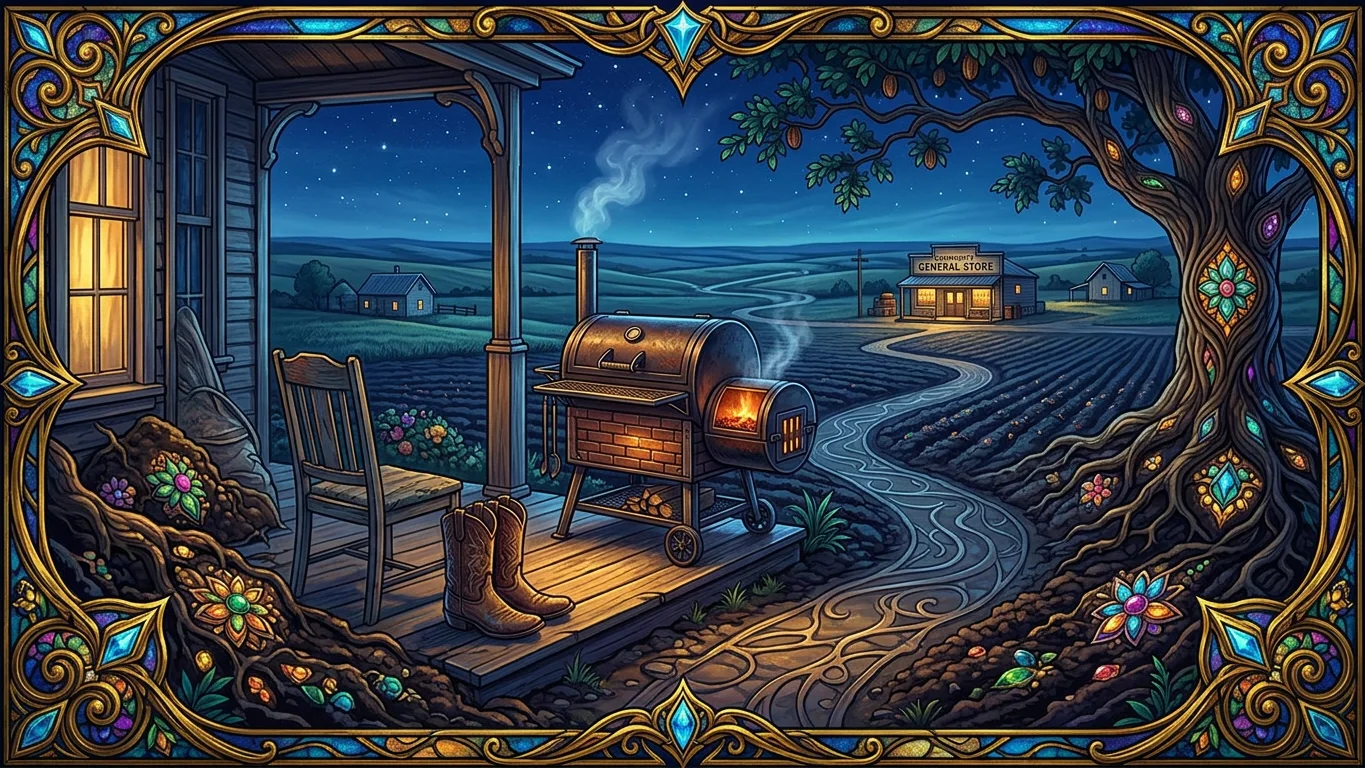
Pull up a chair next to the smoker and rest your boots for a spell, sugar. Pour yourself a tall glass of iced sweet tea from the pitcher on the side table, the one with the lemon slices floating on top, and let the post oak smoke drift around us for a minute. Down here in Bastrop, with the tall pine trees whispering over the caliche roads, I spend a lot of time tending the fire and thinking about the little pockets of our state that still hold onto the old ways. Whenever my spirit needs a little grounding, I like to point my bumper north toward Williamson County, right out onto Highway 79, until the sandy pines give way to the wide, flat stretch of Thrall, Texas.
If you blink while you are barreling down the highway between Taylor and Rockdale, you might just miss the heart of it, darlin'. That would be a real shame. Thrall is the kind of place that does not shout for your attention. It just sits there under a massive blue sky, breathing steady and slow, rooted in some of the darkest, richest soil the good Lord ever laid down. Being a Southern hippie with red and silver hair and a closet full of tie-dye, you might think I stick out a little bit in an old farming town. Truth is, the folks out on the prairie understand the exact same things I preach right here around my grill. They understand that you watch out for your neighbor, you respect the dirt under your feet, and you wave at every single truck that passes you on the farm-to-market road.
Where the Blackland Dirt Holds Onto the Rain
Before there was ever a highway or a town limit sign, there was the Blackland Prairie. If you have never walked across a freshly turned field out around Thrall after a spring rain, let me tell you about it, sugar. That soil is as black as a cast-iron skillet that has been seasoned for fifty years. It is thick, heavy clay that clings to the soles of your boots and makes you walk a little slower, almost like the land itself is asking you to stay awhile. Step out of your truck and you can smell the earth waking up, rich with old grass roots and warm sunshine.
Back in the 1850s, when settlers started building homesteads out in this corner of the county, they called the area Stiles Switch. Those early families knew what they had found in that dirt. It was the kind of ground that could grow cotton high as your waist and corn sweet enough to eat right off the stalk. As a flower child who believes in the sacred give and take of the earth, I have always felt a deep kinship with farming communities. You cannot cheat the soil, darlin'. It teaches you reciprocity before you even know how to spell the word. If you tend it with patience, respect the seasons, and pour your sweat and love into the furrows, the land gives back a harvest that feeds the whole tribe. That is pure karma written in cotton bolls and milo stalks.
I think about how quiet those nights must have been back then, much like the stillness you find down in the cool limestone halls of Longhorn Cavern State Park or out under the weathered cedar of Terlingua. Yet the prairie has its own kind of song. The wind moves across the open fields without a single hill to stop it, rustling through the crops and carrying the scent of distant rain long before the clouds ever reach your porch.
Iron Rails and the Sudden Roar of Black Gold
You all know how much I love the rhythm of an old train. Whether I am riding the vintage Texas State Railroad through the Piney Woods between Palestine and Rusk, or catching the Austin Steam Train on the Hill Country Flyer out of Cedar Park to roll across that wooden trestle bridge at Short Creek, the sound of steel wheels on iron rails just speaks to my soul. Thrall owes its very name and its heartbeat to the railroad. Back in the 1870s, the International-Great Northern Railroad laid its tracks right through the prairie, and Stiles Switch grew into a proper stop. Later on, folks renamed the town after Homer S. Thrall, a Methodist minister and historian who wrote down the stories of early Texas so future generations would not forget where they came from.
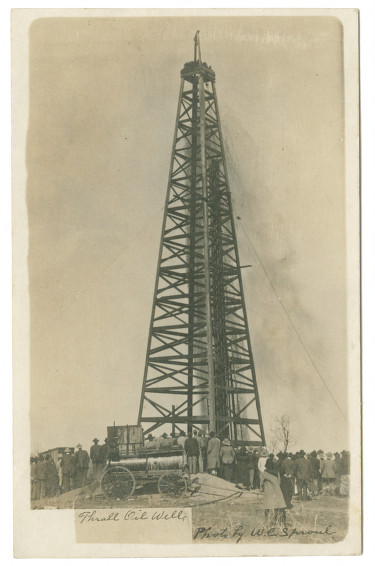
Those train tracks brought lumber, mail, and new neighbors, turning a quiet switch into a tight-knit community where German, Czech, and Anglo families worked side by side. Then, around 1915, the quiet prairie got a sudden shake that nobody saw coming. Someone went looking for water and struck oil instead. Overnight, the sleepy farming town of Thrall turned into a roaring boomtown.
Try to picture it, sugar. Wooden derricks sprouted up out of the black cotton fields like a forest of pine trees. Muddy streets filled with wagons, horses, and roughnecks looking for their fortune. For a brief, wild season, the Thrall oil field was pumping thousands of barrels of black gold out of the ground every single day, and people poured in from all over the country. Look at how a town handles a storm of sudden fortune and you will see its true character. Like the fierce West Texas dust storms that blow hard and loud before the wind finally dies down, the big oil boom eventually settled back into the dirt. The derricks came down, the fortune-seekers moved on to the next strike, and what remained was the real treasure of Thrall. The farmers smoothed the fields back out, the shopkeepers swept their porches, and the community went right back to taking care of each other.
Friday Nights, Tiger Pride, and the Measure of a Neighbor
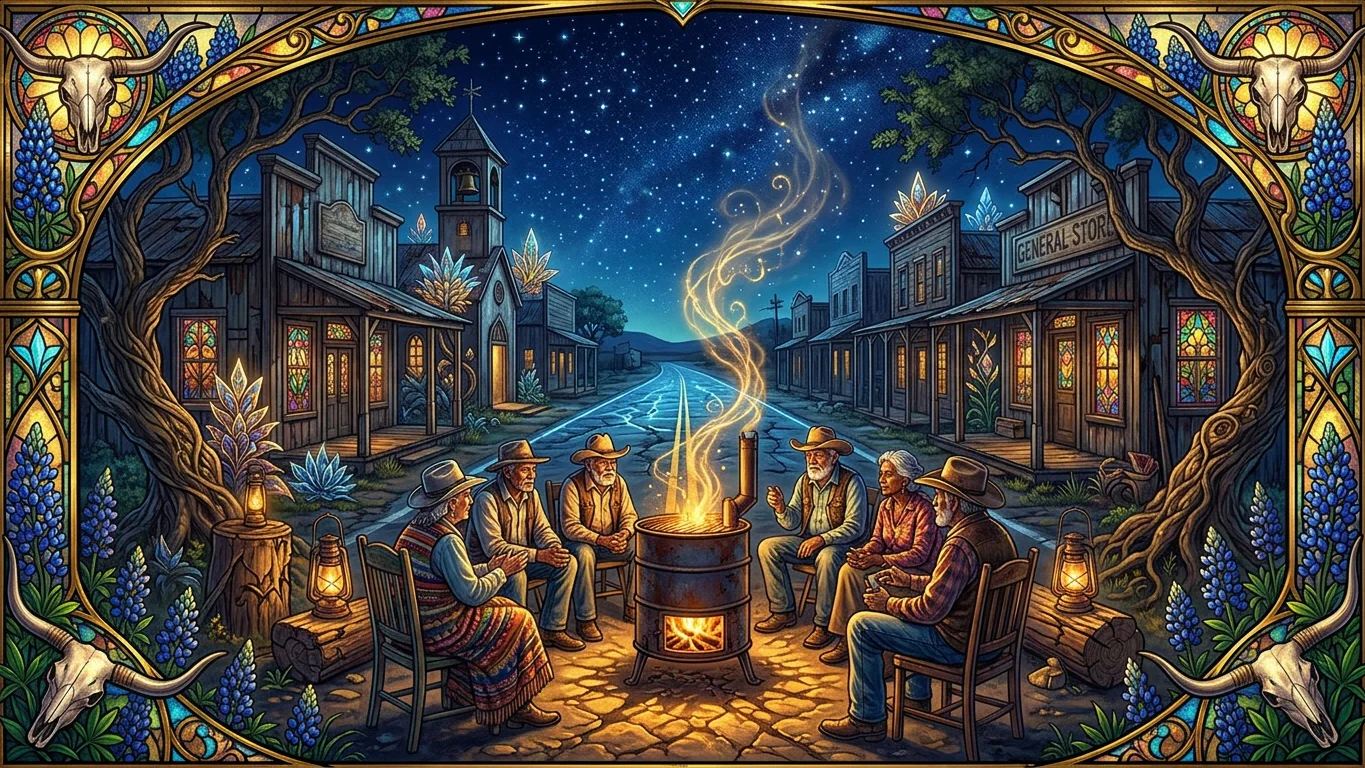
When you walk through Thrall today, you feel that steady endurance in every brick and fence post. It is a small town by the numbers, just a few hundred souls calling the city limits home, with a handful of historic buildings standing across from the railroad tracks and the grain elevators rising up against the sky like old friends. Out here, Texas culture is lived on front porches and in church fellowship halls, where somebody always has a pot of coffee on and a plate of pecan sandies ready for company.
Come autumn, when the summer heat finally breaks and the evening air turns crisp, you can see the whole town's heart beat in unison under the Friday night lights. Now, everybody in my circle knows I am a die-hard Texas Longhorns fan. On Saturdays, I am throwing up the Hook 'Em sign and cheering on my team with everything I have got, win or lose, because I love the way it brings people together. Out in Thrall on a Friday night, that exact same electricity belongs to the Thrall Tigers. The whole town shuts down and heads over to the stadium. Grandmas in bleachers wrap up in quilts, kids chase each other behind the end zone, and farmers lean against the chain-link fence talking about rainfall totals and offensive lines.
It reminds me of the spirit my late friend James White kept alive for so many years at the Broken Spoke down on South Lamar, where folks from every walk of life could two-step across that historic hardwood floor under the neon lights and feel like family. Whether it is a dance hall in Austin, Charles Barnard's old 1860 grist mill by the cool waters of the Paluxy River in Glen Rose, or the home bleachers in Thrall, the magic is always the people. When a kid skins their knee or a family hits a hard stretch, a town like Thrall does not wait to be asked. Casseroles show up on the porch. Lawns get mowed. That is Southern hospitality in its purest form, darlin'. It is peace and love wearing work boots and a ball cap.
Carrying the Prairie Spirit Back to the Pit
Every time I drive back south from Thrall toward my quiet porch in Bastrop, watching the black dirt slowly turn back into sandy loam and loblolly pines, I carry a piece of that prairie peace home with me. We live in a world that tries to make us hurry, sugar. It tries to convince us that bigger is better and that we have to carry all our heavy burdens all by ourselves. A quiet afternoon in Thrall will cure you of that notion real quick.
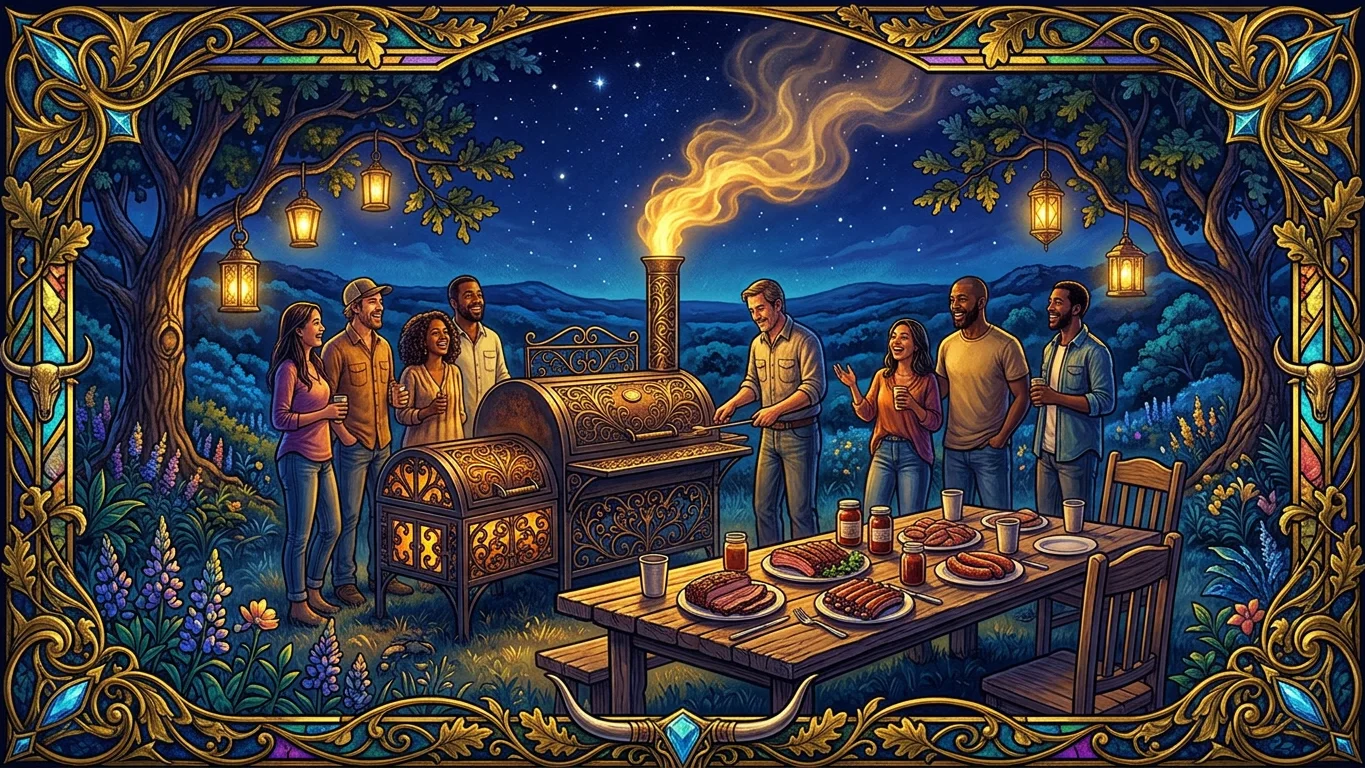
Back here at my place, what we like to call our own little Sanctuary City, I try to tend the same kind of community spirit that has kept Thrall going for well over a century. When my cherished friends like Nate Vegh and Matt Vegh come around the communal fire, we lay down whatever storms the week blew in and just share a good meal together. No person is meant to carry their sorrows alone when there is a seat beside the pit and a neighbor willing to listen. When you pour kindness, warmth, and good food out into the world, it comes right back to you tenfold, just like a seed planted in that rich Williamson County earth.
Let me check on this brisket, darlin', because the bark is looking just about right and the oak coals are glowing warm and steady. Next time you find yourself rolling down Highway 79, ease your foot off the gas when you see the water tower rise up over the fields. Roll your window down, breathe in that sweet Blackland air, and wave at the folks sitting on their porches. Until then, keep your heart open, take care of your tribe, and know there is always a plate waiting for you right here by my smoker. Hook 'Em forever, y'all.