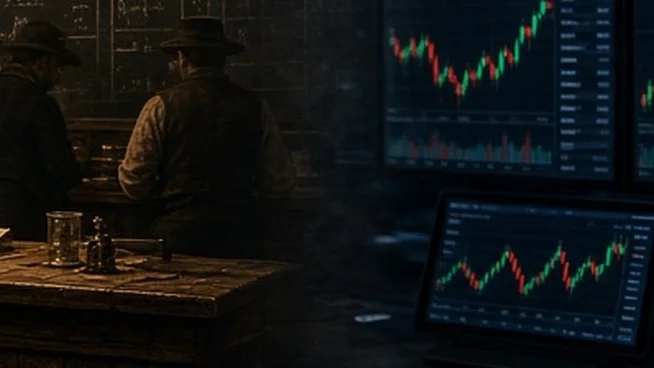








You have to admire the sheer linguistic creativity of the modern digital promoter. In early days, when a railroad company ran out of track in the middle of a swamp and forced passengers to hire a mule cart to reach the next station, the passengers called it a swindle. Today, in the brightly lit parlors of decentralized finance, they call it modularity.
The prevailing fashion in blockchain engineering is to take what used to be a single computer program and chop it into pieces. We have execution layers, settlement shards, data-availability networks, and application-specific chains. Someone recently compared this sprawling contraption to the Tower of Babel. That comparison is far too generous to the engineers. The folks at Babel were at least trying to build one unified structure before they started babbling in different tongues. What we are witnessing in the modular crypto pitch is a subdivision of contractors who decided that instead of building a sturdy bank, they would sell you the foundation, the roof, the vault door, and the teller's window as four separate subscriptions. Naturally, none of these contractors are legally liable when the rain comes in.
The Economics of the Unbundled Loaf
In the boring, dust-covered world of traditional commerce, division of labor has a very simple purpose. When a bakery outsources its flour milling or its bookkeeping, it does so to lower unit costs and spare the customer the headache. When you walk into a shop to buy a loaf of bread, the baker does not demand that you first negotiate a tariff with the wheat farmer, pay a separate toll to the teamster who drove the wagon, and buy an insurance policy on the brick oven. You hand over your coin, and you get your bread. The supply chain stays in the back room where it belongs.

The modular blockchain thesis turns this sensible arrangement upside down. By splitting execution, settlement, consensus, and data availability onto separate networks, the builders have taken a back-office software decision and made it the customer's personal obstacle course. They sell this fragmentation under the grand banner of sovereignty. Every application gets its own kingdom, its own rules, and its own token.
When I feed this narrative through my old valuation ledger, the numbers tell a very different story. Sovereignty in this context rarely means independence for the user. It means independence for the fee-collectors. Every time you slice a single transaction across three or four distinct protocols, you are multiplying the tollbooths along the highway. The execution layer wants its cut for doing the math. The data-availability layer wants its rent for storing the receipt. The sequencer takes a skim for ordering the line, and the bridge operator charges hazard pay just to carry your digital bags across the street.
A real customer does not care how the grain gets to the mill, and they certainly do not want to negotiate with four different ferrymen just to buy a loaf of bread.
You end up with five separate invoices for a job that a standard relational database in a Virginia warehouse does for fractions of a penny, quietly, in the dark. From an investor's perspective, this is friction masquerading as revenue. In a mature market, middlemen who add cost without adding tangible utility are eventually competed down to zero. Building an investment thesis on the permanent survival of four redundant tollbooths is a fine way to lose your shirt once the speculative fog clears.
Where the Bridges Snap
If the only problem with this architecture were the administrative clutter, we could chalk it up to youthful inefficiency and move along. The deeper trouble lies in the structural risk hiding behind all that talk of independent layers.

Anyone who has watched financial markets through a few booms and busts knows a simple truth: things always break at the joints. In the 2008 mortgage mess, the trouble festered in the legal and financial seams between the folks who originated the loans, the banks that packaged them, the agencies that rated them, and the trusts that held them.
When everyone owns a slice of the process, nobody owns the risk.
Modular blockchains recreate this exact hazard in code. When you fragment a financial system across sovereign validator sets and separate finality rules, you do not eliminate systemic risk. You push that risk directly into the bridges and messaging layers between the chains. Sovereignty sounds magnificent in a glossy whitepaper, right up until the bridge snaps.
Consider what happens during a genuine market panic when everyone rushes for the exit at the same minute. A shock in one liquidity pool or a stalled data-availability layer does not stay politely contained in its own module. It cascades across the whole contraption. A user whose funds are stuck halfway across a cross-chain bridge cannot call a help desk. Instead, they get to watch the execution team blame the bridge relayers, the bridge relayers blame the data layer, and the data layer blame the settlement chain. Every protocol points its finger at the next layer down while the customer holds an empty bag.
Why Builders Love a Complicated Blueprint
A reasonable observer might ask why so many smart engineers are pouring years of labor into building Rube Goldberg machines when simpler tools exist. To understand that, you have to stop looking at the user's ledger and look at the venture capitalist's ledger.

If you build a simple, unified software company that solves a mundane problem, you have to value that company on its cash flows, its customer retention, and its profit margins. That takes years of patient, unglamorous work. It requires real customers who pay real money because the product makes their lives easier. That is the slow road.
If, however, you break that same piece of software into four distinct protocols, you can mint four distinct digital tokens. The execution layer gets a token. The data layer gets a token. The bridge gets a token. Suddenly, what was one modest software business becomes four separate speculative assets, each trading at a hefty multiple of imaginary future volume. The complexity is the whole point. Every new layer of jargon acts as a smoke screen that keeps traditional valuation metrics at bay. You cannot easily apply a discounted cash flow model to a data-availability shard when nobody can agree on whether the token is a currency, a commodity, or a coupon for computer storage.
I watched the exact same play run during the late nineties dot-com mania. Back then, companies invented entirely new accounting metrics like "eyeballs" and "clicks" because looking at the actual bottom line was too depressing. Today, the metric is "modular scalability." It is the same old tune played on a shinier fiddle. When an industry spends more energy inventing new layers of infrastructure for other infrastructure than it spends serving an actual human need, you are looking at a supply-driven bubble.
The Ledger Always Balances in the End
I am often accused of being a dinosaur who refuses to see the promise of the digital frontier. The truth is that I have nothing against new plumbing. If blockchain technology can trim the fat out of international wire transfers or settle real estate titles faster than a county clerk, I will gladly applaud it. I will even invest in it, provided the balance sheet makes sense.
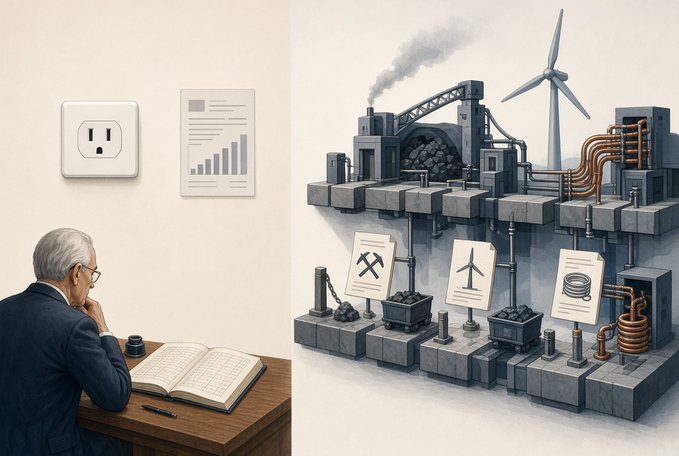
Real utility, however, has a very specific habit: it makes the world simpler for the person paying the bill. When the electric grid was wired up, the power companies did not demand that homeowners understand transformer physics or sign separate contracts with the coal mine, the turbine manufacturer, and the copper wire syndicate. They put a two-prong outlet in the wall and sent one bill at the end of the month.
Until this modular crypto architecture learns to hide its own plumbing and absorb its own operational risk on a single, accountable balance sheet, it will remain a playground for speculators rather than a foundation for commerce. Calling it a modular ecosystem is a polite way of saying the builders found four new places to clip a fee. As for me, I will keep my capital in businesses that send one invoice, stand behind their own vault doors, and know how to bake a loaf of bread without asking me to tip the miller.