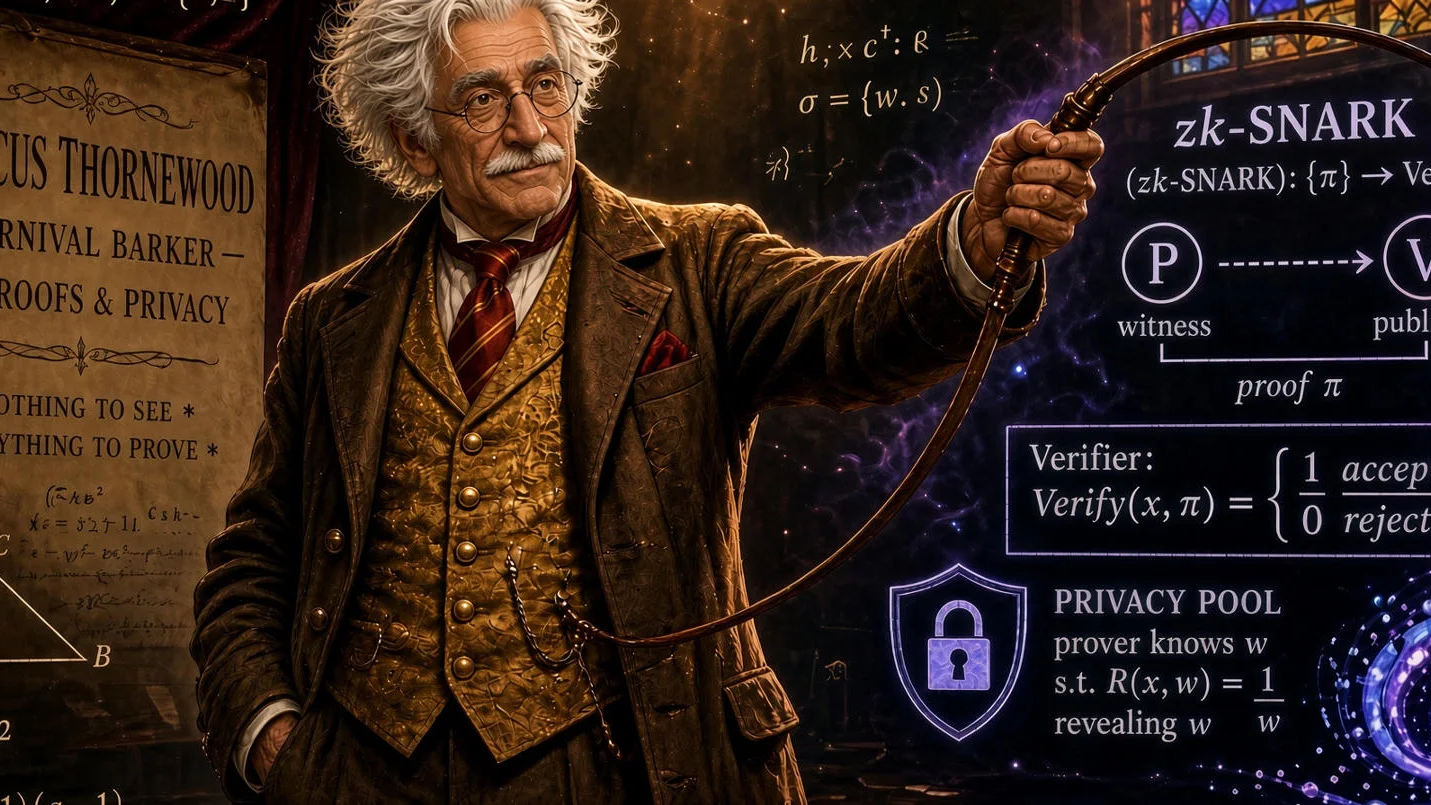









There is an old carnival trick where a barker charges a farm boy a nickel to see a man-eating chicken, and when the boy walks inside the tent, he finds a perfectly ordinary fellow eating a plate of fried poultry. Then, when the boy tries to leave through the back flap, the barker charges him another nickel for the use of the exit. You have to admire the purity of the enterprise. The barker has zero inventory costs beyond a single bird, yet he extracts revenue at both ends of the tent.
I have spent decades reading balance sheets, pricing real estate, and calculating discounted cash flows. Through the dot-com mania and the great digital cartoon crash of recent years, I have watched the barkers upgrade their tents. Today, they have traded canvas for the blockchain and fried chicken for artificial intelligence. They call the new arrangement decentralized data sovereignty, or privacy-preserving machine learning, or some other mouthful of syllables designed to put a sensible investor to sleep. Yet when you strip away the whitepaper jargon and run the numbers through a traditional valuation engine, you find the exact same double toll booth. Projects that tokenize your personal data or attention while training proprietary models on that very same behavior have built an inherent conflict right into their foundation. The ordinary user pays once in surrendered privacy and a second time in token dilution and transaction fees.
The First Toll Is the Harvest
Let us examine how the raw material gets into the barn in the first place. Every day, people hand over their digital footprints, their typing rhythms, their browsing habits, and their financial preferences. In the old web, the bargain was at least plain to see, even if it was lopsided: you got to use a search engine or a picture-sharing book for free, and the company sold your eyeballs to a soap merchant. We knew who owned the mill and who was the grain.
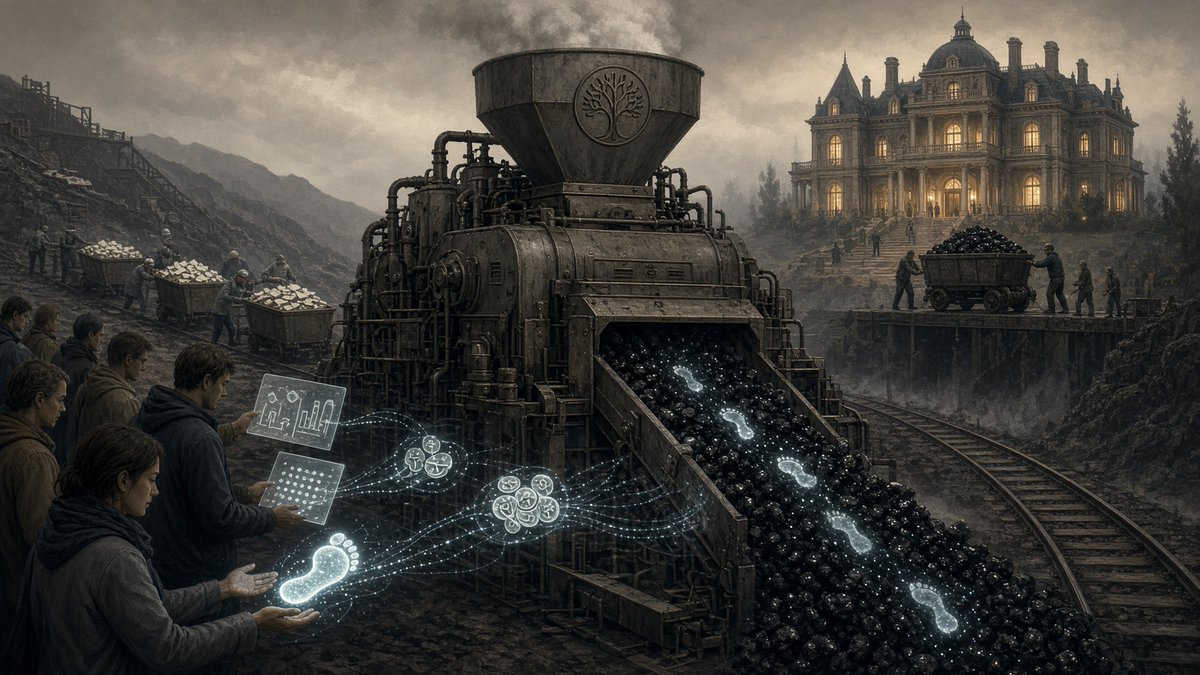
Enter the Web3 promoter with a supposed rescue plan. He tells you that your behavioral data is a precious resource and that by joining his protocol, you will finally own it. To participate, you link your wallet, install a browser extension, or chat with a specialized interface. You are told the system is preserving your privacy through clever cryptography. Meanwhile, under the hood, the protocol is aggregating every click, hesitation, and preference to train a proprietary artificial intelligence model.
In traditional finance, we recognize this immediately as an uncompensated transfer of economic surplus from the data subject to the platform. You are furnishing the capital that makes the machine smart. Without your habits, the neural network is just an empty warehouse full of expensive silicon.
In return for this foundational contribution, the platform rarely hands you equity or a claim on future cash flows. Instead, they toss you a handful of native tokens or points that cost them nothing to mint. It is the financial equivalent of a coal company paying its miners in scrip printed in the basement, while keeping all the coal to heat its own mansion.
Building the Walled Garden on Public Pasture
Once the behavioral value has been harvested and digested, the machine is trained. Now look closely at the balance sheet to see where the intrinsic value actually resides. Does the decentralized community own the model weights? Do the token holders have legal title to the servers, the commercial contracts, or the intellectual property? Almost never. Those real assets are tucked safely inside a private foundation or a Delaware corporation controlled by the founders and their venture capital backers.

This is where my skepticism filter starts ringing like a four-alarm fire bell. A genuine business builds an asset and shares the earnings with the people who funded and supplied it. These hybrid AI-token contraptions do the opposite. They graze their sheep on the public pasture of user behavior, and the moment the wool is thick enough to shear, they herd the flock behind a ten-foot brick wall. The artificial intelligence becomes a walled garden. The narrative sold in the promotional literature is all about open networks and shared abundance, yet the legal structure is as closed as a nineteenth-century railroad trust.
When I apply classic metrics like price-to-earnings ratios or asset backing to the tokens floating around outside that wall, the fair value calculation drops right down toward zero. The token gives you no dividend, no claim on the software in the event of a liquidation, and no say over how the corporate laboratory licenses its freshly trained brain to enterprise clients. The valuable thing has been separated from the thing you were given to hold.
Paying to Walk Back Through the Gate
Here is where the barker collects his second nickel. Having used your personal data to build a smart machine, the platform now turns around and charges you to ask that machine a question. To gain access to the inference engine, or to unlock the so-called premium tiers of the protocol, you cannot simply pay a straightforward dollar fee that reflects the cost of electricity and computing power. No, you are required to buy, hold, or stake the platform's native token.

Consider the beauty of that accounting from the house's perspective. First, they require you to lock up capital in a volatile digital asset just to use a tool that your own behavior helped construct. That staking requirement artificially restricts the circulating supply on the open market, propping up the price of the vast treasuries held by the insiders. Second, as the treasury unlocks its reserves to pay the developers and early backers, the ordinary user absorbs the resulting token inflation. Your purchasing power melts away like an ice cube on a July porch.
On top of the inflation, every interaction carries gas fees, protocol taxes, or burn mechanisms that extract a little more grease from your pocket. If you try to calculate the return on investment for the average participant, the ledger is bathed in red ink. You supplied the raw lumber, the company built the bridge, and now they stand in the middle demanding you buy their homemade wooden nickels every time you want to cross the river.
Old Ledger Rules for New Machines
Whenever I point out this double-dipping to the young enthusiasts who live on the internet, they tell me I simply do not understand the new paradigm. They say traditional accounting cannot measure community governance or network effects. I have heard that tune before. I heard it in 1999 when companies with no revenue were valued on eyeballs, and I heard it a few years ago when folks were paying the price of a sturdy brick duplex for a digital drawing of an expressive ape.

Human nature does not update its software just because you put a cryptographic hash on the ledger. Value is still value, and extraction is still extraction. If an enterprise takes something of worth from you at the front door and sells it back to you at the back door with a markup and an inflation tax attached, you are the mark in the tent. A real investment produces cash flow, holds tangible utility independent of market mood, and respects the person providing the capital.
The next time a project promises to protect your privacy with a token while feeding your daily habits into a proprietary brain, leave your wallet in your coat pocket. Close the browser tab, walk outside, and look at something real, like a dividend-paying stock or a parcel of timberland. Let the carnival barker eat his own chicken.