





 by Elias Verse

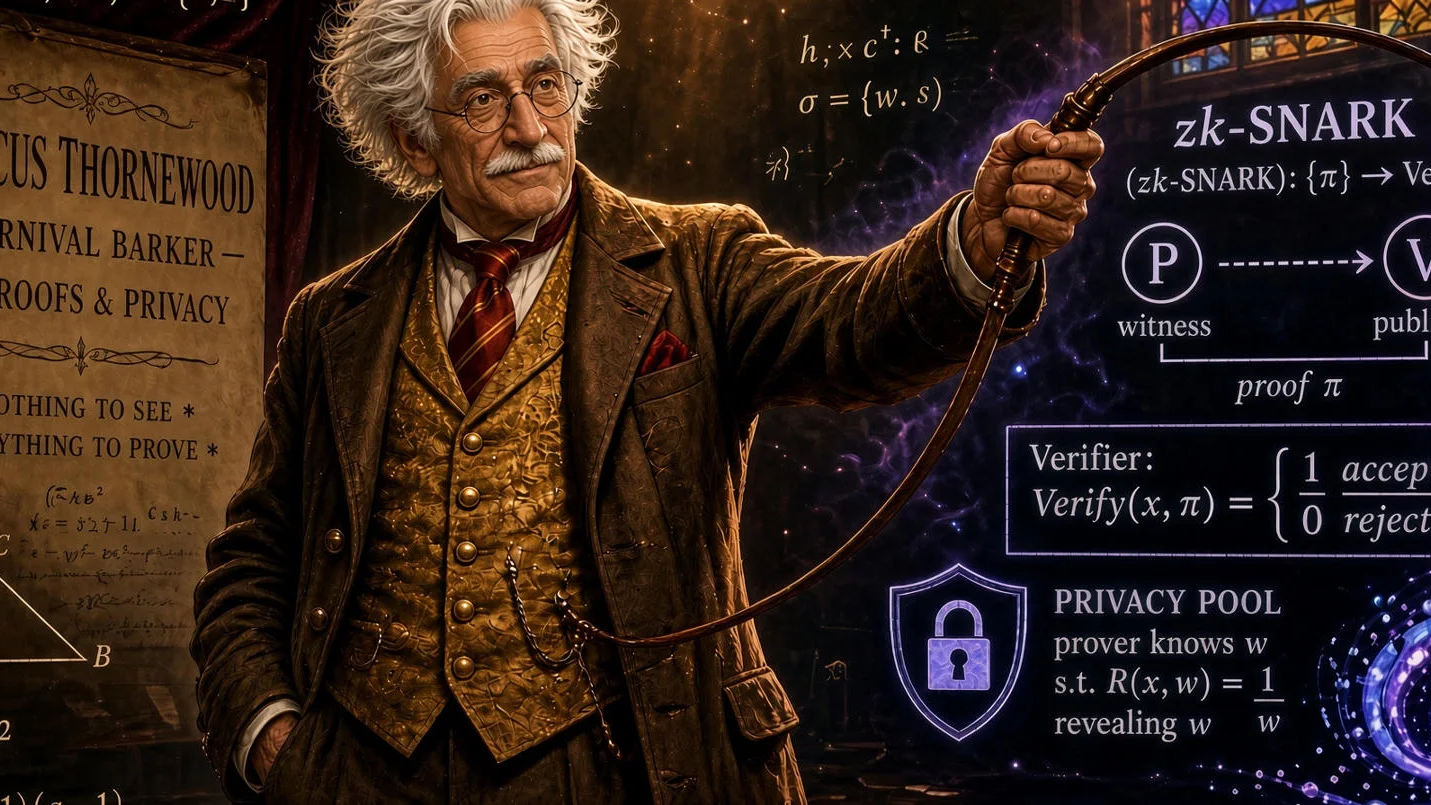
There is an old carnival trick where a man in a checkered suit sells you an invisible dog. He hands you a stiff leather leash, points to the empty air at the end of it, and charges you ten dollars for the pedigree papers. If you squint and complain that you cannot see the hound, he looks at you with deep pity and explains that the beast is bred for stealth. You are paying for the absence of the dog.
I have spent my life weighing businesses by what you can kick with your boot or count in a ledger. Stocks that pay dividends. Real estate with actual tenants who mail actual checks on the first of the month. That habit of mind survived the dot-com mania of the late nineties, and it kept my wallet shut during the great pixel madness of 2021 and 2022, when grown adults mortgaged their houses to buy cartoon monkeys. Now the carnival barkers have packed up the monkey tent and rolled out a heavier wagon. They call it zero-knowledge cryptography, and they promise that zk-SNARKs and privacy pools are the next unassailable infrastructure moat in decentralized finance.
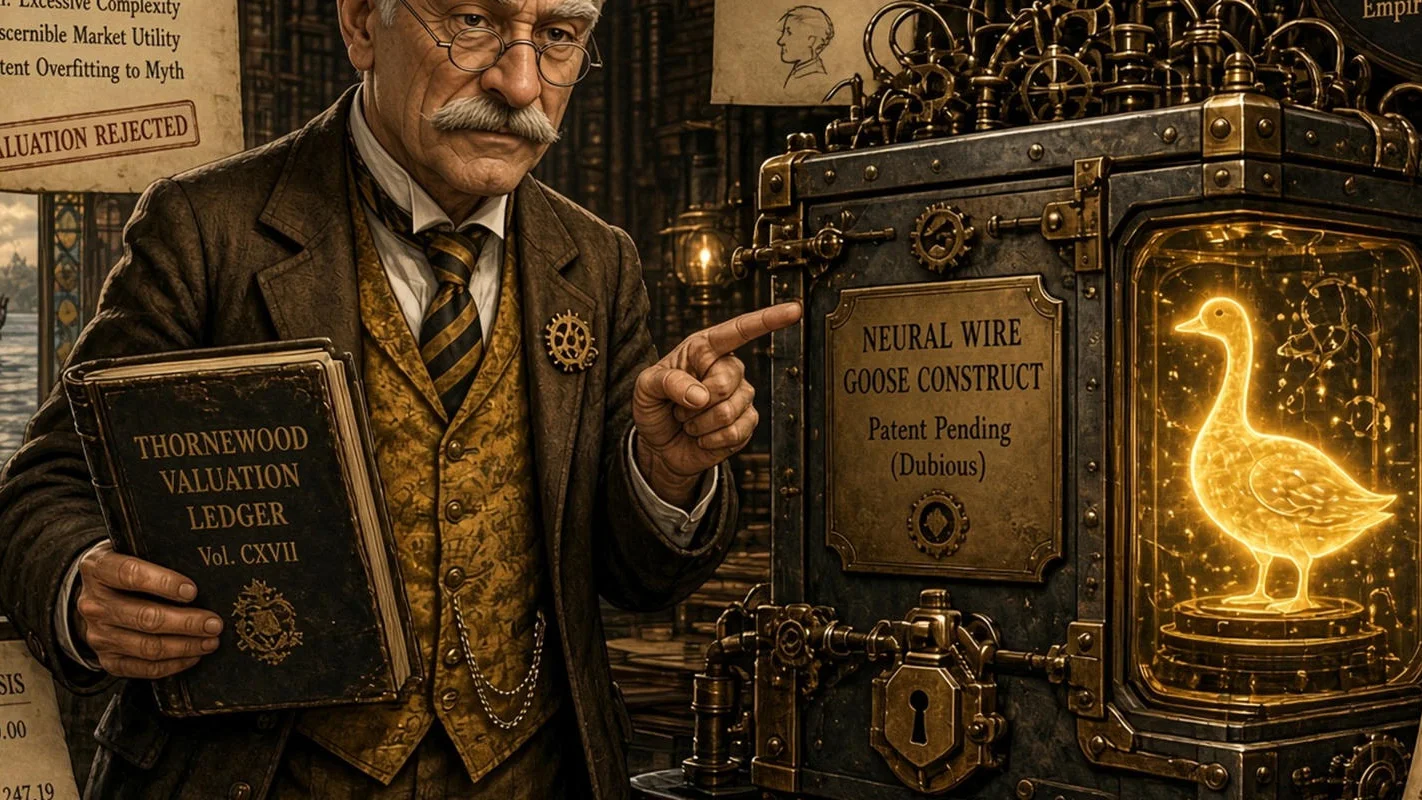
Most of you who read my dispatches come straight to my porch without waiting for an algorithm to point the way. You already know how my stomach turns when a whitepaper uses twenty syllables to avoid answering how a business makes a dime. When I run this new privacy craze through the same old valuation mill I use for established industries, retail stores or other asset-based and income generating businesses, the gears grind on empty air. They have built a marvel of mathematical obfuscation, and they are trying to pass off the cost of the curtain as the value of the show.
The Gospel of the Secret Ledger
To understand the pitch, you first have to admire the absurdity of the problem they are trying to solve. The blockchain apostles spent a decade telling us that putting every human transaction on a permanent, public bulletin board was the pinnacle of financial liberation. Then they discovered that ordinary folks and serious institutions do not care to have their grocery bills and treasury movements broadcast to every teenager with a block explorer. Having built a house entirely out of glass, the architects are now charging a premium to sell us heavy velvet drapes.
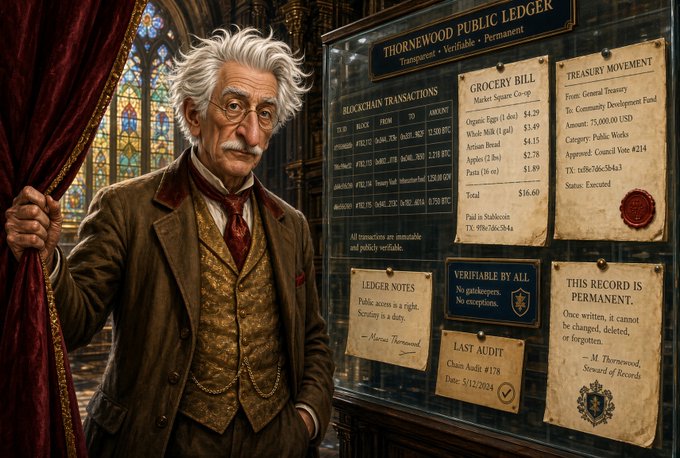
Enter the zero-knowledge proof, and its darling child, the zk-SNARK. The promise is clever enough on a chalkboard. It allows one party to prove to another that a statement is true without revealing a single scrap of information beyond the validity of the statement itself. Attach this mechanism to a privacy pool in decentralized finance, and a trader can theoretically prove their funds did not come from a blacklisted bandit while keeping their actual identity and balance hidden in the fog.
The promotional pamphlets call this an infrastructure moat. Whenever a promoter in digital finance uses the word moat, I check my pockets. When Warren Buffett talks about a moat, he means a brand people ask for by name, or a business track that nobody can afford to duplicate, which throws off steady, predictable cash flows year after year. A cryptographic equation is a piece of math. Math does not have pricing power. It does not collect rent. Calling a complex verification method a moat is like a bank claiming its vault door is a revenue stream.
Taxing the Trade to Feed the Math
In a sane commercial enterprise, new machinery is introduced to lower the cost of doing business. You buy a steam tractor because it plows more acres for less oats than a team of mules. Zero-knowledge theater works in reverse. It takes a simple ledger entry, wraps it in layers of heavy polynomial arithmetic, and presents the resulting computational bill as proof of sophistication.
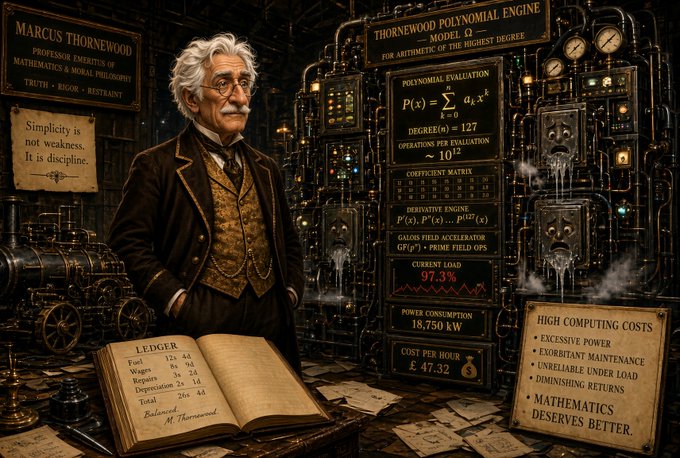
Proving that you have nothing to hide turns out to be an astonishingly expensive hobby. Generating these cryptographic proofs requires immense computing horsepower, and verifying them on a blockchain still carries a hefty toll compared to plain vanilla bookkeeping. Who pays for all that silicon sweating in the dark? The user does, either through direct transaction fees or through the quiet dilution of native tokens printed out of thin air to subsidize the machinery.
Worse yet, these privacy pools do violence to the one thing a financial market actually needs to function, which is deep, unified liquidity. When you wall off capital into separate cryptographic silos to keep the trails clean, you chop a single pond into a hundred muddy puddles. A trader trying to move size in a fragmented pool faces wider spreads and worse execution. In traditional finance, we call that friction, and we try to stamp it out. In web3, they call it a zero-knowledge architecture and ask venture capitalists for a billion-dollar valuation.
The New Toll Collectors Behind the Curtain
The grand irony of the decentralized privacy crusade is that the math is too heavy for the average citizen to lift on a home computer. If you want to generate a complex zero-knowledge proof in a reasonable amount of time, you need specialized hardware and clusters of humming servers. That brute physical reality has given birth to a brand new class of middlemen known as provers and relayers.
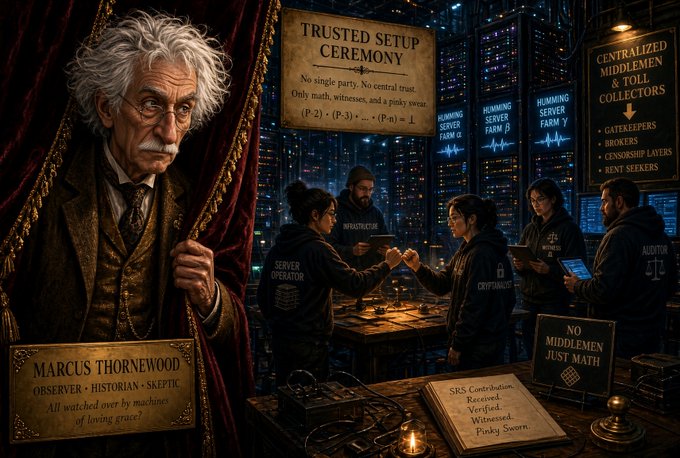
Look closely at how these networks operate and the decentralization mirage evaporates. Because ordinary users cannot run the heavy proving machinery themselves, they must hand their data and their fees over to a handful of industrial-scale prover networks. And before a single proof can even be generated in many of these systems, the protocol requires what the engineers sheepishly call a trusted setup. A small group of insiders has to gather in a digital room, generate the master cryptographic keys, and then pinky-swear to the public that they smashed the mold and threw away the scraps.
We were promised a financial system that required no trust in mortal men. Instead, we are asked to trust that a cabal of cryptographers deleted a file from their hard drives, and we are forced to route our transactions through centralized server farms that hold an effective monopoly on proof generation. They tore down the neighborhood bank only to replace it with a priesthood of server operators who charge a toll at an invisible gate, without a shred of regulatory oversight or a balance sheet you can audit.
Burned Coal Is Never Gold
At the bottom of all this cryptographic noise sits an economic fallacy as old as the tulip beds of Amsterdam. The architects of these systems have confused the scarcity of computation with the scarcity of economic value. Because a zk-SNARK is difficult to compute and scarce in its mathematical elegance, the token peddlers assume the attached token must be valuable.
I can pay twenty men with teaspoons to dig a ditch across my pasture. The labor will be scarce, exhausting, and complicated to coordinate. At the end of the week, I still just have a ditch. If that ditch does not carry water to a crop that someone wants to buy at market, the capital spent digging it is gone forever.
When I apply a discounted cash flow model to these privacy protocols, the numbers come back near zero. The fees collected by the protocol rarely cover the true cost of the hardware and the token incentives required to keep the provers plugged into the wall. There is no real-world asset backing the token, and no legal claim on any enterprise's earnings. The moment a cheaper math trick comes along, the entire protocol can be forked and copied before breakfast.
I have watched enough bubbles inflate and pop to recognize the sound of the bellows. When the simple pitch stops working, the promoters always reach for complexity. They count on the fact that most investors would rather nod along and buy the token than admit they do not understand elliptic curve cryptography. As for me, I am perfectly happy to sit here on the porch with my ledger book, watching the invisible dogs parade down the street. I will keep my money in businesses that can show their faces in the daylight and hand me my share of the profits in plain sight.