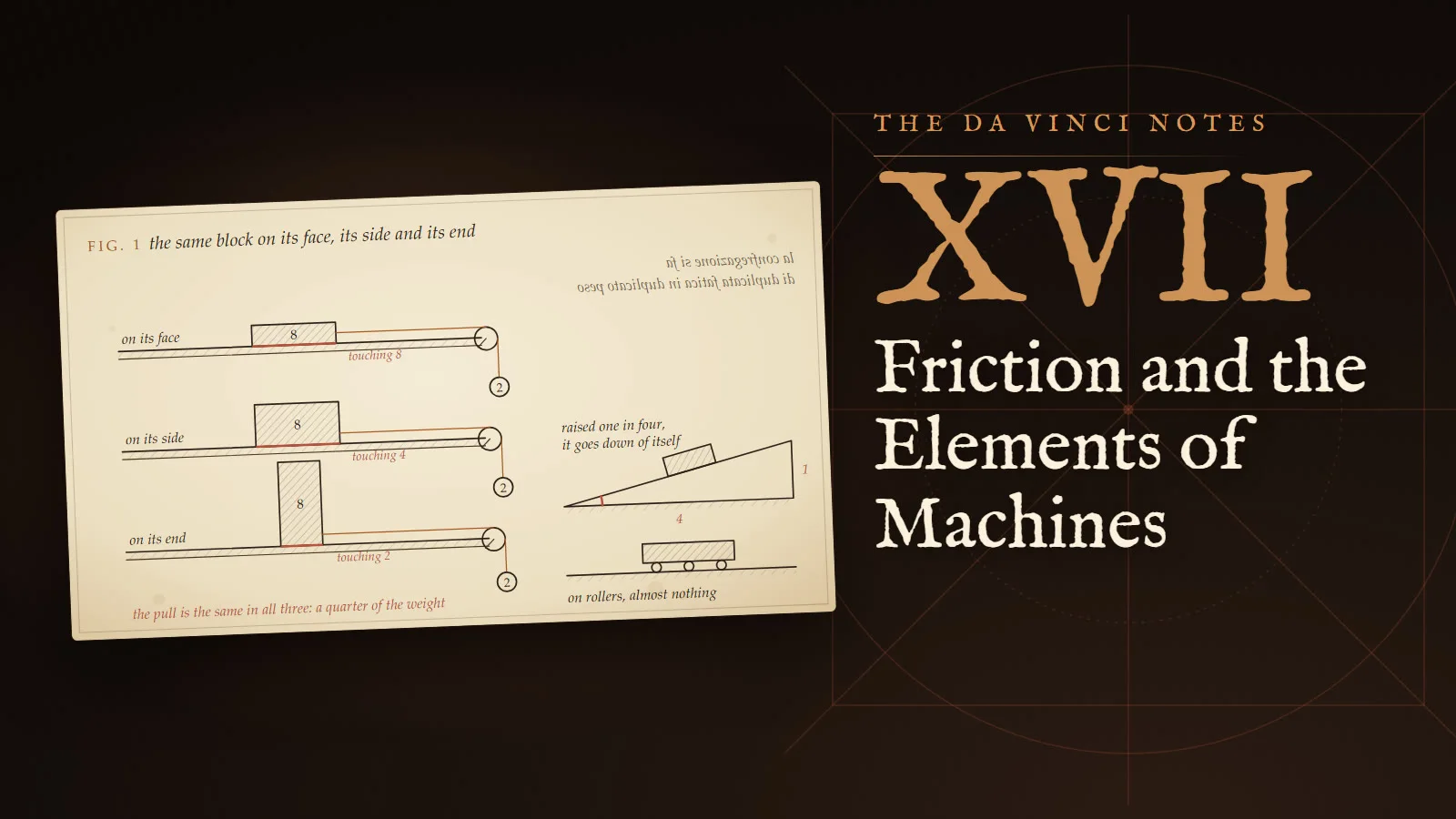
Double the weight, double the rubbing, and the face it lies on makes no difference. I found it with blocks, a cord and a pan of lead, and wrote a quarter into every machine.
Leonardo's friction rules two centuries before Amontons: load not area, a quarter of the weight, rollers and bearings, and the Madrid Codex elements of machines.
 Leonardo da Vinci
·
November 8, 2026
·
28 min
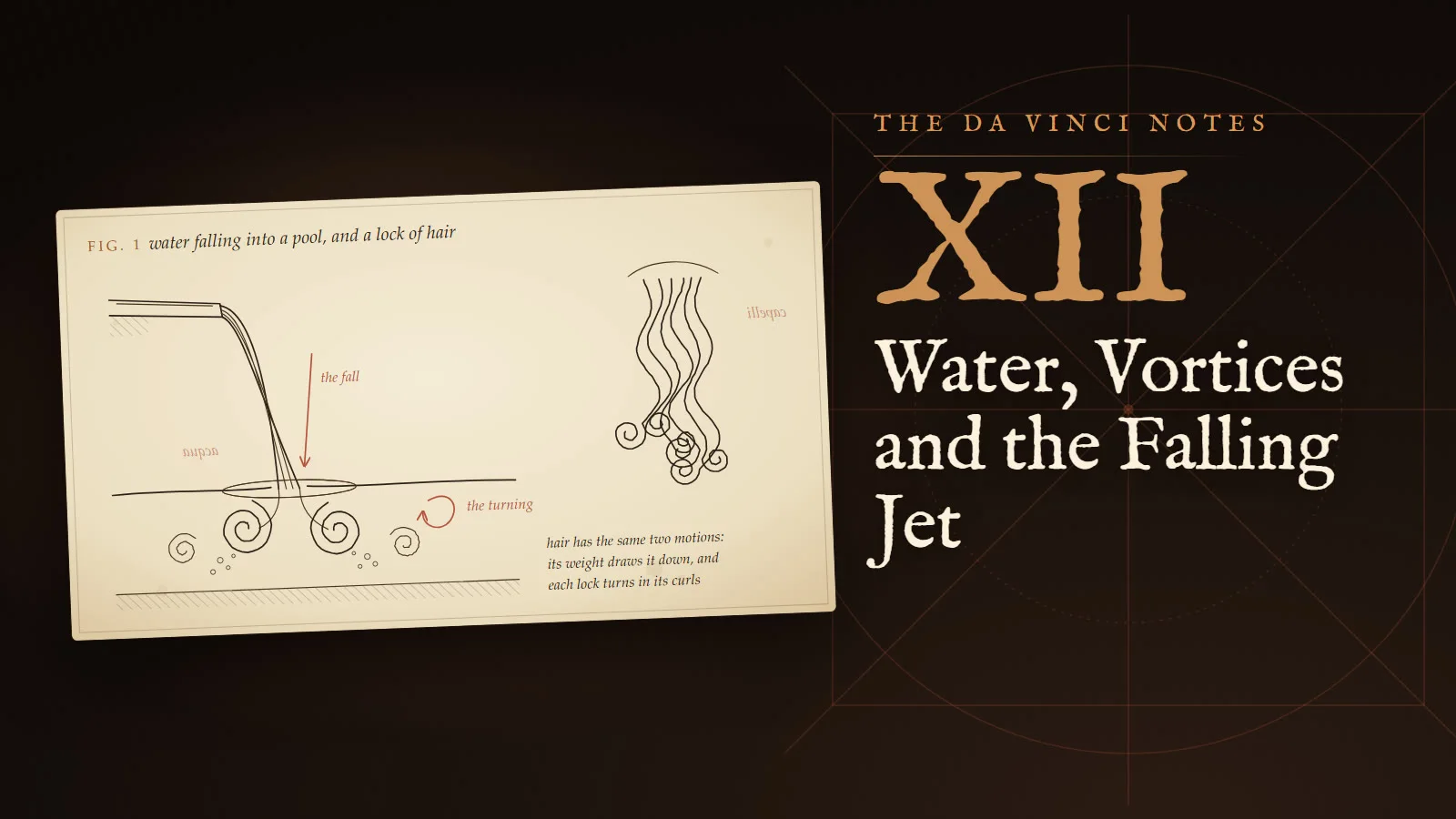
I watched water fall into a pool and found two motions in it, like a lock of hair, then set a post in a mill channel and counted the eddies that leave it by turns.
Leonardo studies the falling jet, compares water to hair, and draws the eddies behind a post that Kármán and Strouhal would later measure and name.
Leonardo da Vinci
·
November 8, 2026
·
30 min
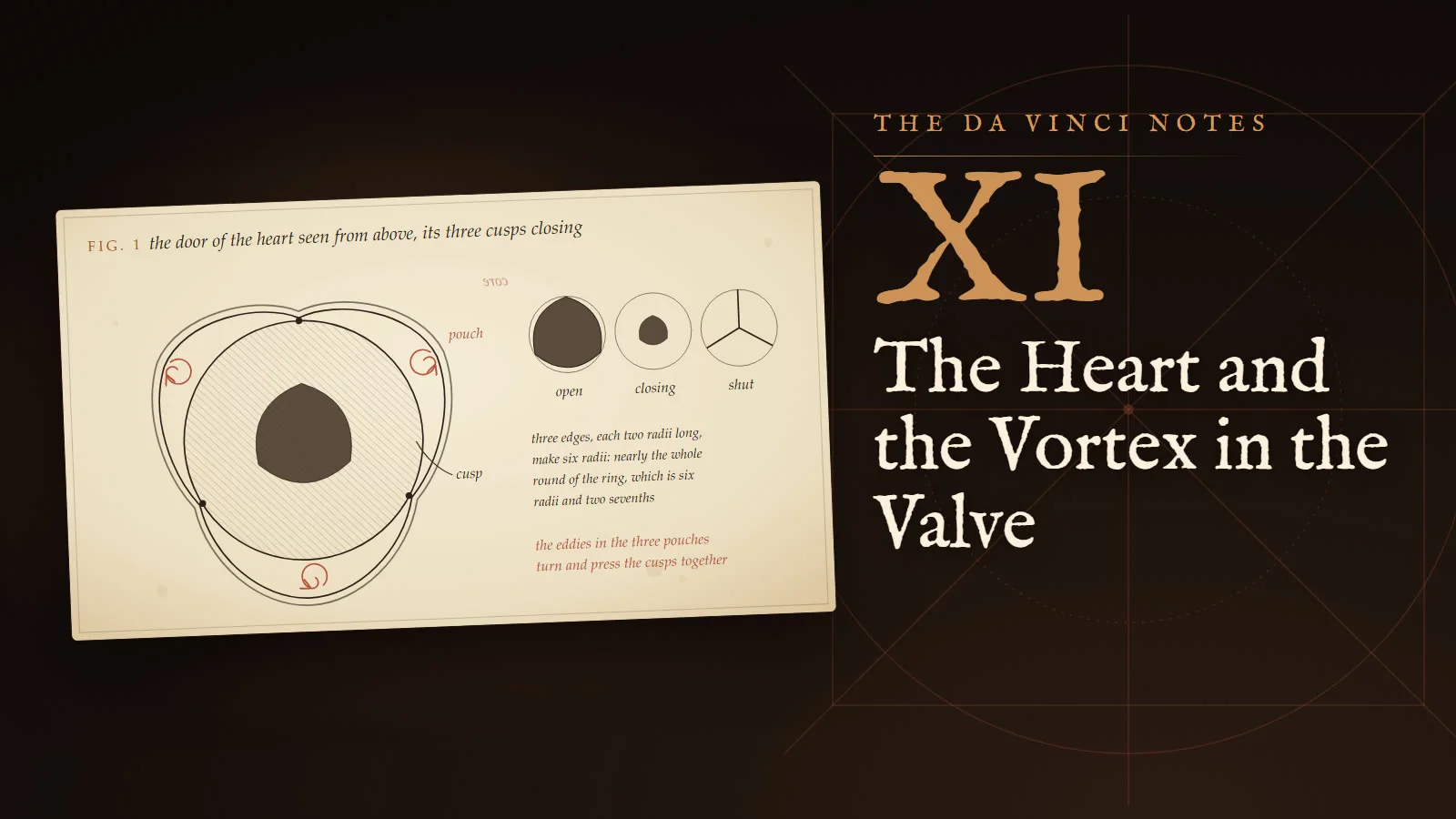
I cast the root of an ox's artery in wax, blew it in glass and sent seeds through it, and watched eddies in its three pouches shut the door of the heart before the blood could return.
Leonardo finds the heart is a muscle with four chambers, builds a glass aorta, and sees vortices close the aortic valve, confirmed by Bellhouse and 4D MRI.
Leonardo da Vinci
·
November 8, 2026
·
32 min
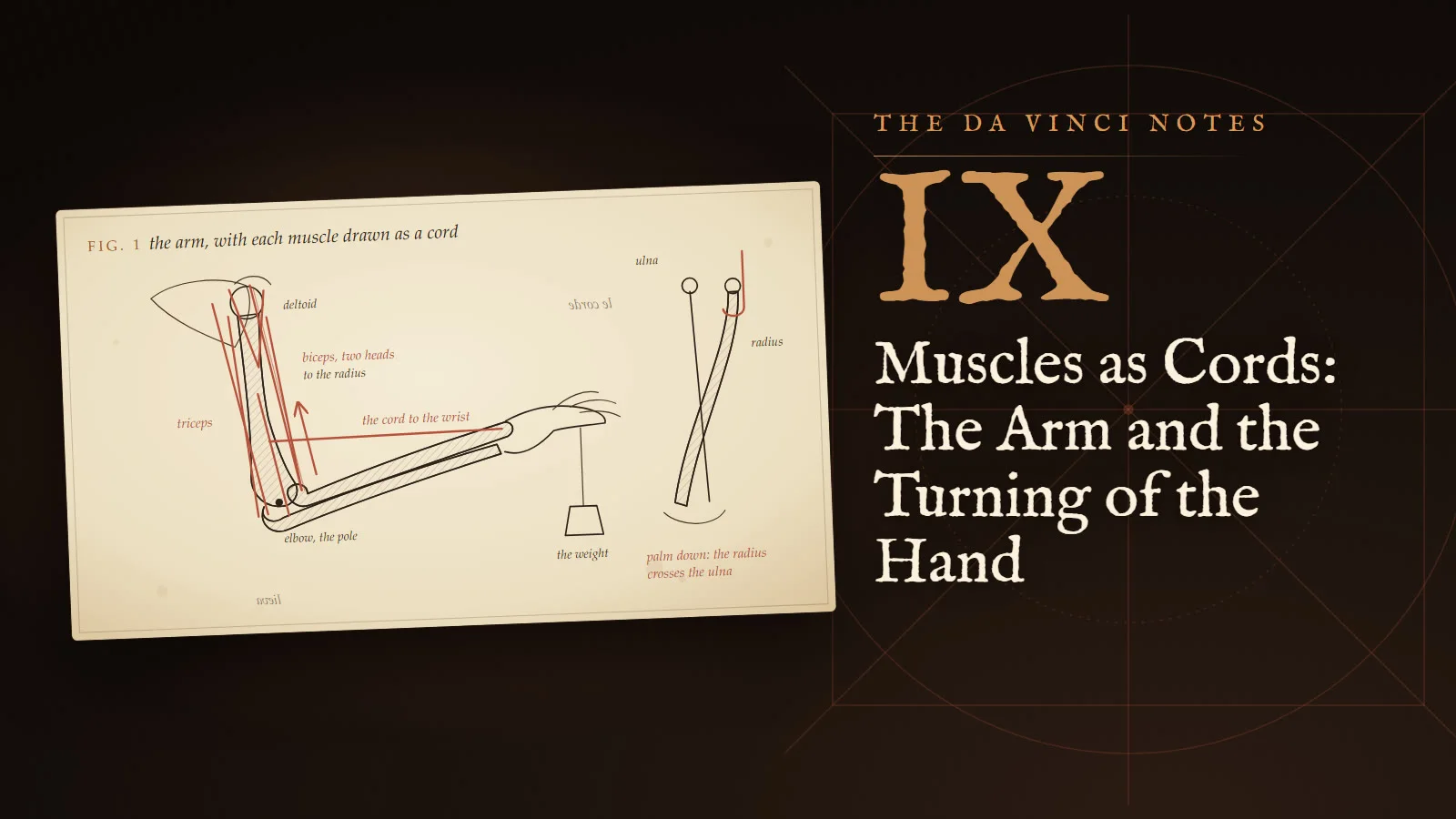
I draw each muscle as a thread from its beginning to its end, weigh the elbow as the pole of a balance, and find the cord that turns the hand palm up.
Leonardo's arm studies of 1510 to 1511: muscles drawn as threads, the elbow as a lever, why the biceps pulls nine times the weight, and how it turns the hand.
Leonardo da Vinci
·
November 8, 2026
·
32 min
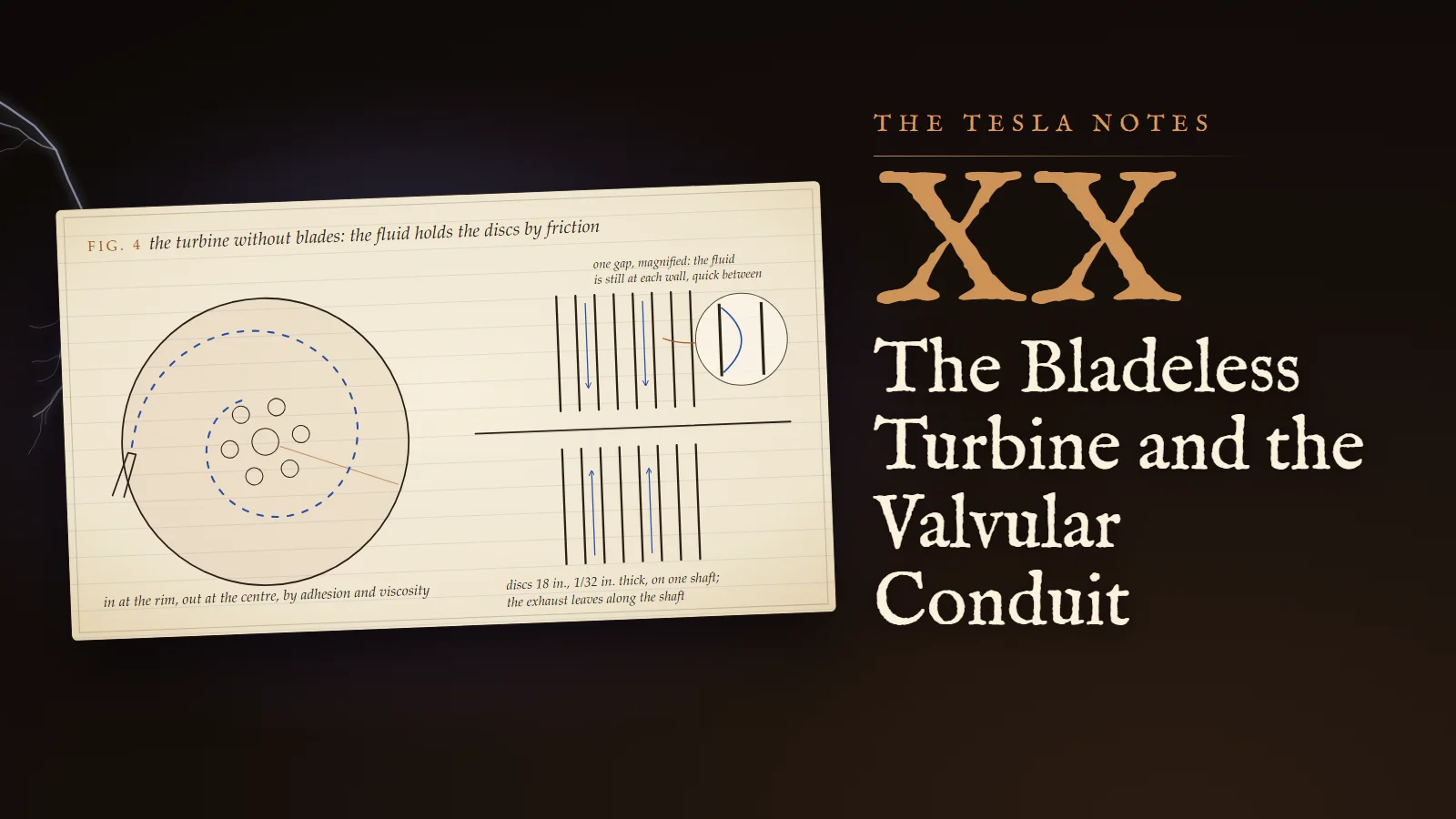
Discs that drink the steam, a channel with no moving part that refuses to flow backward, the Hotel New Yorker years, and the last page of the notebook.
Tesla's disc turbine and valve worked by hand, tested against 2021 measurements, and the end of his story: 1943, John G. Trump and Belgrade.
 Nikola Tesla
·
November 5, 2026
·
27 min






 by Marie Curie
