

"An anchor point is an agreement between two bodies that neither will accelerate while the other is looking."
From Field Manual 9-B: Principles of Metric Interdiction, Eastern Coalition Boundary Operations Command, 2124
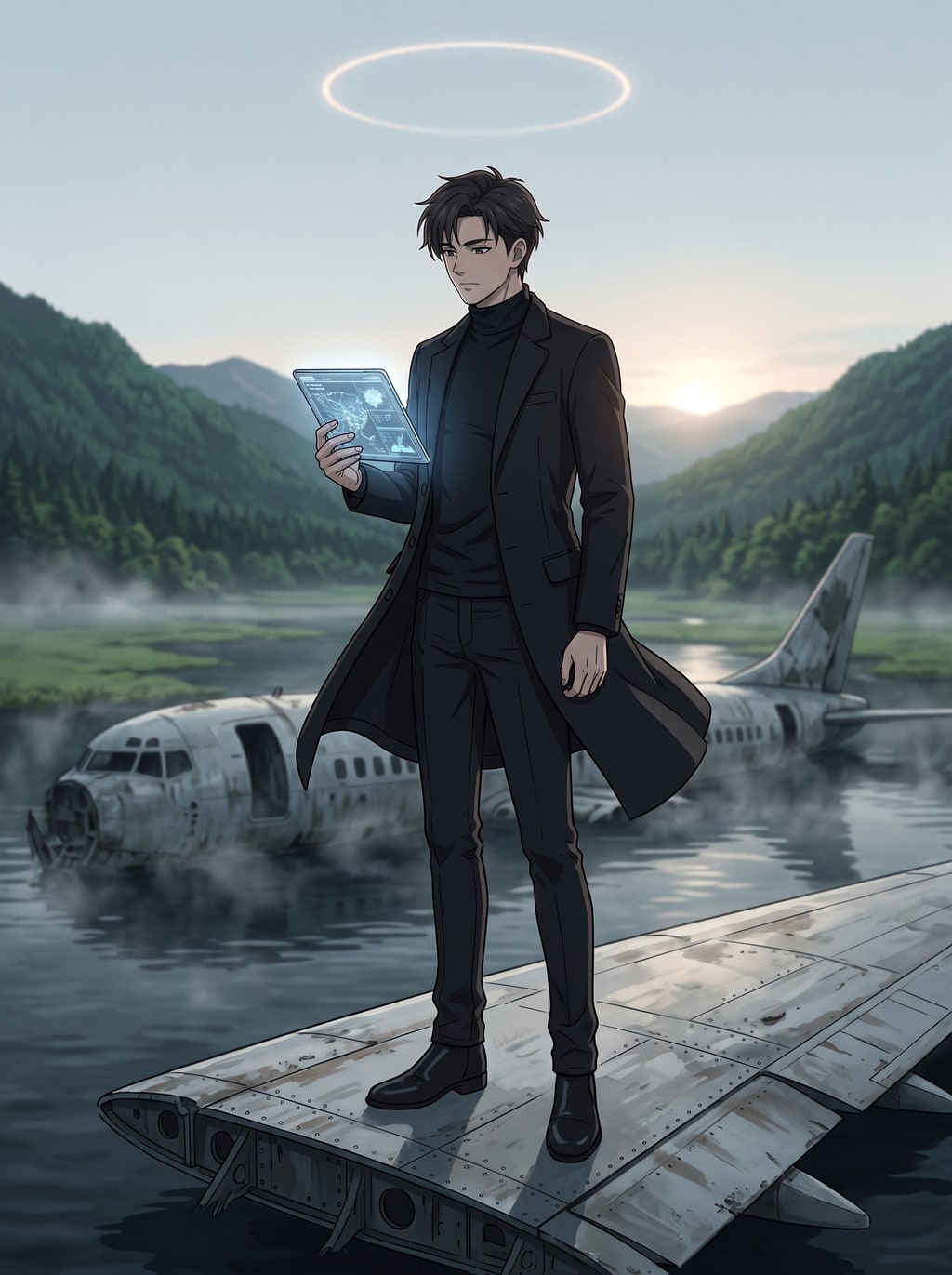
After Xinhe, the three powers spent a year of hearings in Bern and Reykjavik arguing over who owned a rupture forecast. In the end they agreed to share the forecasts, and they traded for the man who made them. The Coalition paid in grain and licences. The Accord sent twelve crates of instruments and one theorist. So in the autumn of 2127, Neumann came down out of the rain over Longwan in the back of a Coalition tiltrotor, with his face against the window, wondering what he had been sold to.
The city had replaced the coast. Where the pre-war maps showed the flat basin of Old Shenzhen there was black water, crossed by lit viaducts thirty metres above the tide, and out of the water rose pylons five times the width of any highway pier, carrying three tiers of decks stacked with towers. Every tower was wrapped in neon, cobalt and vermilion and a hard white, and the rain came down through all of it. Patrol launches cut the flooded street channels below with their searchlights on. Where a beam went down into the water could see what the city stood on: the roofs of the old towers twenty metres under, curtain walls bearded with kelp, and once, for a second, a school of mullet turning together through the broken windows of what had been a bank.
On the flank of the tallest tower above the barge lanes a woman's face ten storeys high was singing without sound. She had long black hair and a calm, grave face, and she held a note between two emergency notices in yellow Chinese characters, and the barges went under her as if she were weather. watched her until the tiltrotor turned and took her away.
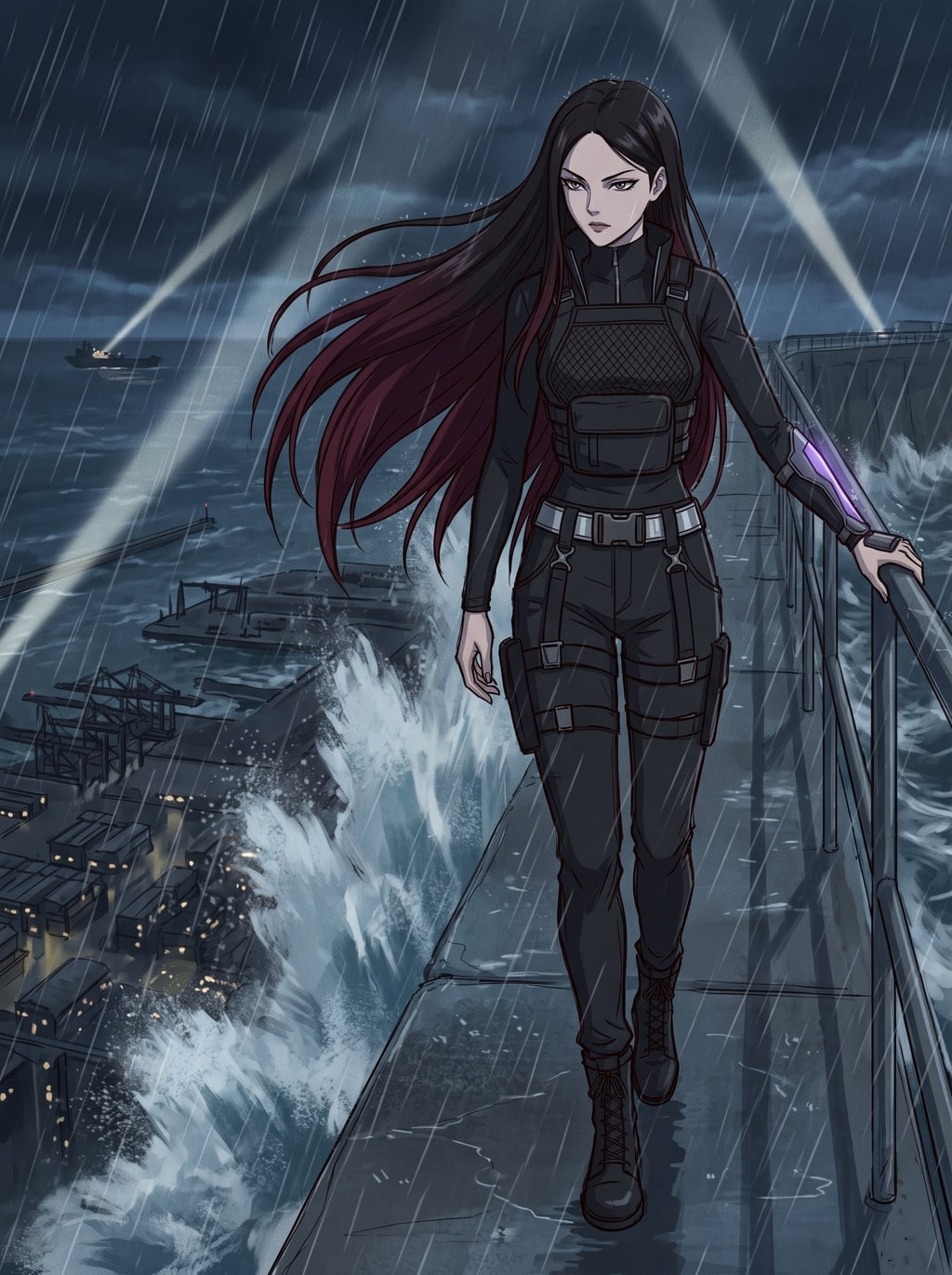
They set down on a platform high on the side of a transit pylon, in rain so heavy that the floodlights made it look solid. came down the ramp with his bag on his shoulder. The pylon beside the pad carried three stencils in reflective yellow paint, the same three he would see on every pillar in the city by the end of the week: an evacuation number, an arrow toward a shelter, and the Coalition glyph for metric zero, the sign for the point where space tears.
stood in the middle of the pad without an umbrella. She wore black field clothes that shed the rain, and her arms were folded, and on her left forearm, under the folded right hand, a gauntlet of dark segmented metal gave off a faint violet light that the water ran over and did not dim. Her braid was black and soaked and went down past her waist. Three metres behind her, under umbrellas, stood a broad young sergeant recognised from Xinhe, two soldiers, and a tall officer who was not holding his umbrella so much as enduring it.
"Dr. Neumann," said.
"Colonel. Thank you for the clearance."
"We did not clear you for courtesy." She looked at him from his wet hair to his wet shoes. "You are smaller than the Xinhe recordings suggested."
"Suit cameras," said. "The wide lenses distort the parallax."
The tall officer let out a breath through his nose that was not quite a laugh. He was in his early thirties and sharp-jawed, with black hair slicked back and the sides shaved close, and he looked at as a mechanic looks at a part delivered from the wrong warehouse.
"," said, without turning. "My second. ."
"Doctor," said Gu. "You were right in Xinhe. In Xinhe you had a half-empty district and sixty police who knew when to step back. Here, eighty centimetres wrong at eight in the morning is a stampede on a deck forty metres over salt water. A chair for the cameras doesn't help me with that." He shifted the umbrella. "We do not need an Accord celebrity in Longwan, Doctor. We have enough actors."
did not look at him. She turned her left hand over, a few degrees, and Gu stopped talking.
"Why did you sit?" she said to .
The rain was running into his collar. "Because when a district has been told for six years that ruptures are acts of God, they don't pack their bags for an equation," said. "They pack their bags when someone who understands the equation is willing to die if the decimal point is wrong."
"And the eighty centimetres."
"Dolomite in the bedrock. It's corrected."
looked at him for five seconds by the clock on the pylon behind her. The violet light on her arm was steady.
"The mathematics are welcome here, Dr. Neumann," she said. "Boundary Operations loses operators every quarter because our warnings come four seconds after the ground has started to go. If your model gives us five seconds before the threshold, it is worth the grain we traded for you. But your body is a liability."
"I'm aware of that."
" Bo."
"Colonel."
"He stays within arm's reach of you whenever he is below the high-water line. If he stops to take notes during a tactical retreat, pick him up. If he drops a meter, leave the meter."
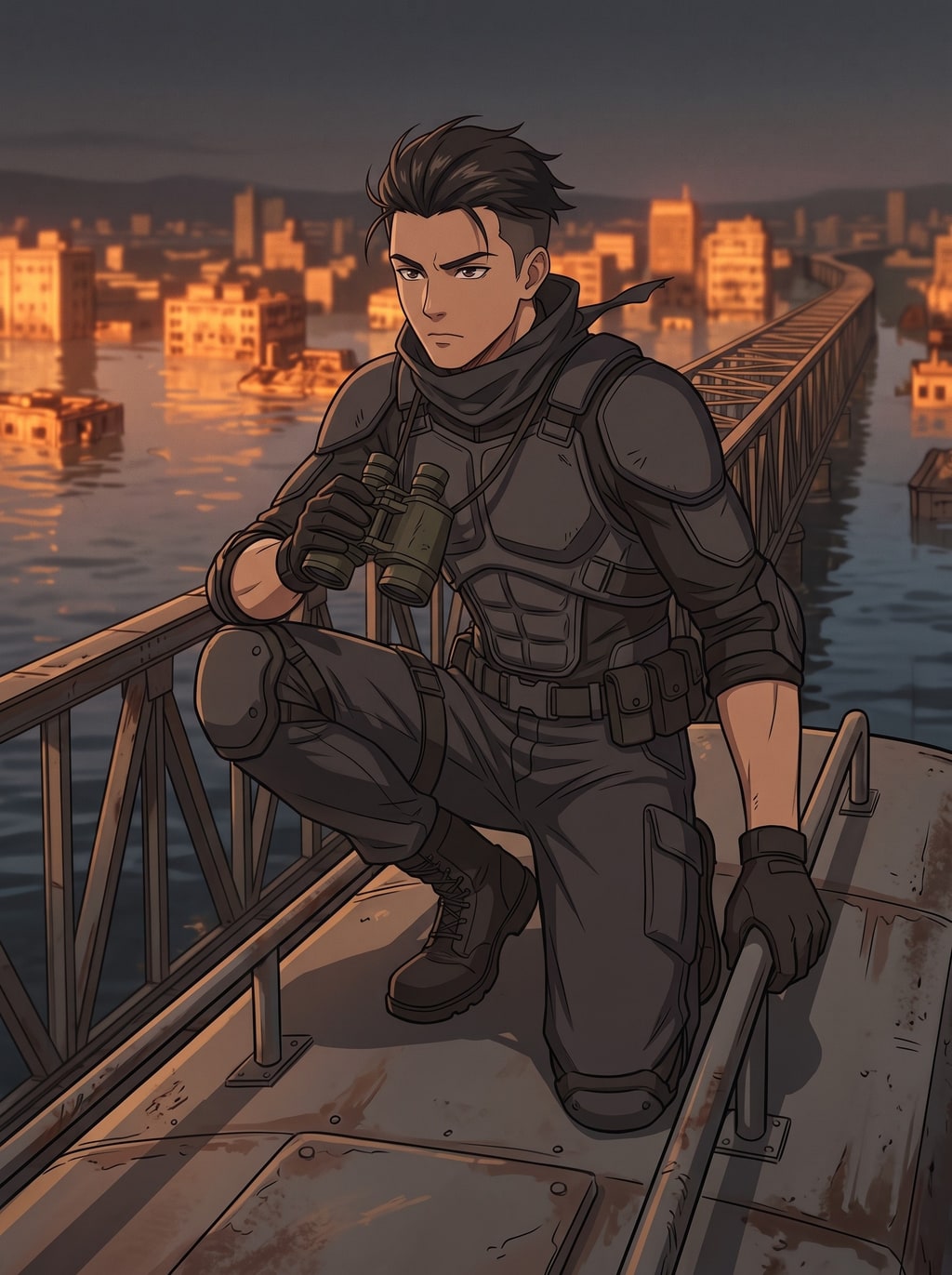
"Colonel," said Bo Han, and came forward out from under his umbrella and held it over instead. He was broad through the chest and shoulders, late twenties, with short black hair shaved on one side and a small scar on his chin, and up close he had the face of a man about to laugh at something. He pushed a steel thermos into 's ribs.
"A pleasure, Professor," he said. "Drink that before we go down. Accord people always get the lung rattle in Longwan. The whole city sweats."
unscrewed the cap. The steam smelled of fresh ginger and dried pear and black pepper, and the first swallow burned all the way down and settled in his chest like a small coal. "Thank you, ."
"Save it till you see your room."
When looked up again, the Colonel was walking away across the pad toward the lift, still without an umbrella, and Gu was following her a pace behind and to the left, talking low and fast. She was not answering him.
"He doesn't like me," said.
"He doesn't like anybody new. It's not personal." Bo took the bag off 's shoulder without asking and slung it over his own. "He has buried forty-eight operators since the armistice, Professor. Every one of them was somebody new once."
They put on Sub-Four, four levels below the waterline, in a cell cut out of the rock under the pylon: a steel cot bolted to the floor, a resin desk with a terminal wired to the computers that ran his forecasts, and a ventilation grille that rattled every time an airlock somewhere dumped pressure into the sumps. Bo showed him the galley, the shower block, and the shortest way to the shelter, and then made him walk the shelter route back alone while Bo followed with his hands in his pockets.
"Left at the red stencil," Bo said, when went right.
"The arrow pointed right."
"The arrow points to the shelter for Sub-Five. Sub-Five floods first. You want to be in Sub-Three's shelter with me, because I keep noodles in it." He steered left by the elbow. "Have you eaten?"
"On the plane."
"That's not eating, that's being fed. I'll bring something." At the door of the cell he stopped. "Professor. The Colonel's arm."
"I wasn't going to ask."
"Good. Don't. Ask her about anything else you like." Bo grinned. "She won't answer that either, but she won't mind."
He came back twenty minutes later with a covered bowl of rice and braised pork and a pair of chopsticks wrapped in a paper napkin, set it on the desk, and said goodnight.
did not undress. He sat on the cot with his shoes unlaced and opened the one file he had been sent ahead of his arrival: the Coalition Ministry of Reconstruction's structural survey of the southern shallows, taken in the winter of 2126.
On page forty-eight there was an oblique photograph at the lowest spring tide of the year. The skeleton of a sports stadium stood out of the water, eighty thousand seats, its roof trusses snapped where the first rupture under Old Shenzhen had dropped half the grandstand seventy metres into the sediment, twenty years before. Under the photograph was a graph from the instruments on the seabed around the site. It showed how hard space was still bending there, year by year.
He read it twice. After twenty years, a dead rupture should have faded almost to nothing, the line sliding down to normal and lying flat. This one had fallen for the first ten years as it should. Then it had levelled out above normal and stayed there, and for the last ten years it had not faded at all. Something down there was keeping the old wound open. The surveyors had marked it as a broken instrument and moved on to the next page.
He put his thumb on the screen over the drowned stadium and held it there.
The buzzer at the door made a harsh double scrape. He keyed the release.
stood in the corridor in a grey service shirt with the sleeves cut above the elbow. Without the field clothes she was smaller than he had thought. The gauntlet was gone from her forearm, and in its place ran a pale map of surgical scars from the inside of her left elbow to the wrist, ridged, with the round marks where pins had been.
"Your lamp is on," she said.
"So is yours, Colonel."
"Warborn sleep four hours in thirty-six."
knew the word. The Warborn were the soldiers the war had made, people whose bodies had been changed to fight it, some of them before they were born. came in without being asked, stepped over his bag, and looked down at the terminal with the stadium on it, and at the bowl of rice beside it that he had not touched. Whatever she thought of either, she kept. " Gu has filed an objection to your clearance. He believes the Accord has sent you to look at our heavy-lift capacity under the harbour."
" Gu overestimates my ambition."
"Gu does not believe in ambition. He believes in perimeter wire." She straightened. "You lost ten on the Kepler."
"Eleven," said. He stayed by the door with his shoulder against the frame. "Twelve of us launched. One came back. The board counts names; I count lockers, and 's was the last one they emptied."
let that sit for a moment. "The inquiry records twenty-two days in the module."
"The water recycler was a Coalition design. It didn't clog. That was what mattered."
"Was it an attack?"
He took the coin out of his pocket. The King's face was cool under his thumb, worn soft in the middle where a hundred years of thumbs had been. He did not look at it; he only held it, and then put it back.
"An attack needs an intention," he said. "Intention needs a clock that runs one way. The fuse burns, the shell arrives, the ground opens. Inside the Halo, that order doesn't hold. I don't think anyone fired at us, Colonel. I think the seam parted under a load it was never made to carry. If your trousers split at the knee because you took too long a stride, you don't court-martial the needle. You accept the cloth was old."
"We are not cloth, Dr. Neumann."
"No," said. "We are the fleas living in the lining."
Something moved at the corner of her mouth and went away. She looked at him a moment longer.
"And what did you see," she said, "in the ring?"
"Instruments failing," said. "In order."
It was an answer, and they both knew it was not the one she had asked for. She did not ask again. She took a thin card with a red stripe from her shirt pocket and laid it on the corner of the desk.
"Platform Twelve. It is above the water and the air is better. You have sixty-four instrument racks to set up before eight. If you are going to spend the night looking at the bay, you may as well do it from where you can see all of it."
She was at the door when he said, "Colonel. The face on the towers. The singer."
stopped with three fingers on the release plate. Her shoulders did not move.
"Born in Busan," she said. "She was nine when a rupture took her family. They brought her here, to the shelters under the metro, with the other children from the south, and she grew up in District Four and sang in the shelter halls because there was nothing else to do in them. Now the city plays her between the evacuation notices. They call her the Voice of Longwan." She pressed the plate and the door began to cycle. "Longwan loves her because she looks intact."
"Is she?"
did not turn round. "Nobody who comes out of an overlap is intact, Dr. Neumann," she said. "Some of them simply learn how to sing with the missing parts."
The door sealed behind her.
Platform Twelve was a steel gantry ninety metres up the side of the South Bay pylon, cantilevered out over the water with a wet rail around it and nothing else. The rain had thinned to a fine slant that blew in sideways off the estuary. leaned his forearms on the rail and let it come.
Longwan curved away from him on both sides of the bay in its stepped crescent of decks and needles and neon, and below the decks, in the black flooded channels where the old streets had been, the patrol launches drew red lines behind them across the slick. Down through the water, at high tide, Old Shenzhen lay drowned and lit. The light down there was the living city's, thrown down off the chop and caught in the glass of towers that had been banks when his grandfather was a boy, and it hung in the water like paper lanterns trapped under ice, and every wave that came in from the South China Sea bent it and let it go.
The cloud tore open in the south, and there was the Halo.
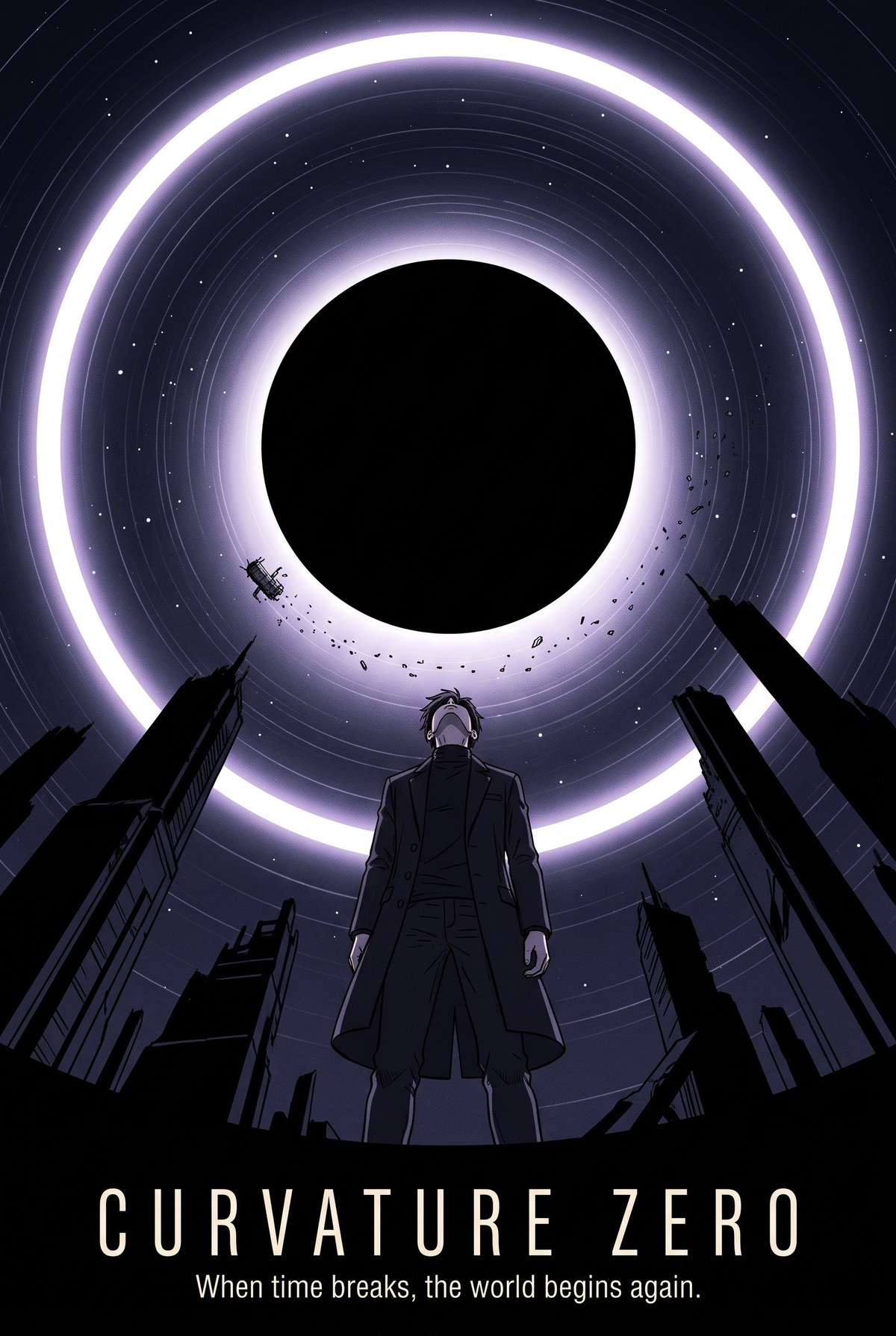
He had not seen it with nothing between him and it since the Kepler's port. Every time since, there had been glass, or cloud, or a screen. It hung high over the bay with the Moon inside it, a ring of smeared silver-violet light thirty thousand kilometres across, its inner edge dragged out of round where space had failed to close. It was very large and very quiet. A speck of dust looking up at it, he thought, and held the rail.
Then he looked down again.
Directly below the platform, between two rows of drowned towers, ran a flooded avenue. It was straight and wide, with the tops of its streetlamps standing just under the surface in two long lines, and something in the drowned buildings on either side still had power, because there were lit windows down there, green and amber, under the water. The rain came down on it out of a black sky and broke the surface into a field of small rings, and the drowned lamps and the lit windows shone up through it, shivering.
He had seen it before, for a fraction of a second, past 's shoulder, in the white crease where the Kepler's corridor came apart: the ruined bridge, the crater rims, the Earth, the inside of the Halo, and a flooded city street shining under black rain. For seven years he had thought it was something his mind had made up to fill the moment. He knew the angle. He knew the two lines of lamps.
He stood on the gantry in the rain with his hands locked on the rail and looked at the street he had seen from the inside of the Halo, and the rain kept coming down on it, and the drowned lamps shone up through the rings in their two long lines, running away under the city toward the dark.