

"We spent twelve years trying to teach the dark to speak our language. It turned out the dark was already speaking. We just had to stop shouting long enough to count the intervals."
From Dr. Kai Neumann, Lectures on Curvature Zero, Tianmen University Press, 2132
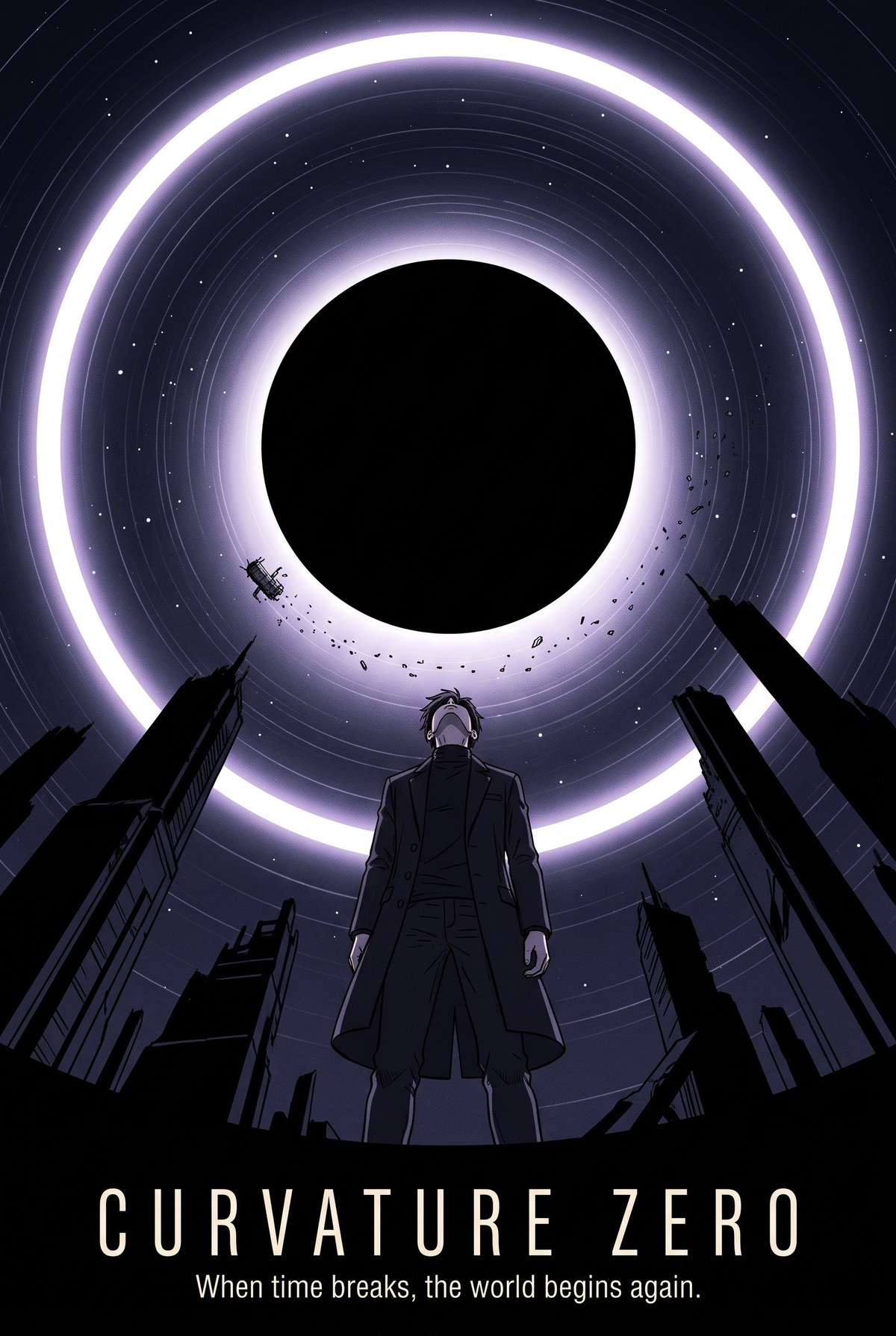
The sea fog lay below the observatory terrace in a flat gold field, and the headland stood out of it like the only island left. It was not yet six. Thirty children from the coastal resettlement schools were pressed against the rail in their quilted jackets, breathing on the glass of the telescopes, and above them, in a sky going from grey to blue, the Halo hung pale and calm over the setting Moon, a silver ring that no longer bent the stars behind it. Below the terrace, on the roof of the old ground station, the great dish still stood where had sung from it, tilted toward nothing in particular now, with gulls asleep along its rim.
had 's notebook open on the rail. For four years he had written in it the time of every ship that crossed the corridor, the safe lane down through the Halo, one line each, in pencil, and it was nearly full. He wrote the date. Twelve years since the Kepler. Then he waited.
"They're late," Bo Han said. He was working his way along the line of children with a paper bag of dried persimmon, his left shoulder still sitting a little lower than his right. "Wanxing said six-ten. If she burns five seconds at the gate, I am taking it out of her dinner."
"She is three seconds early," said.
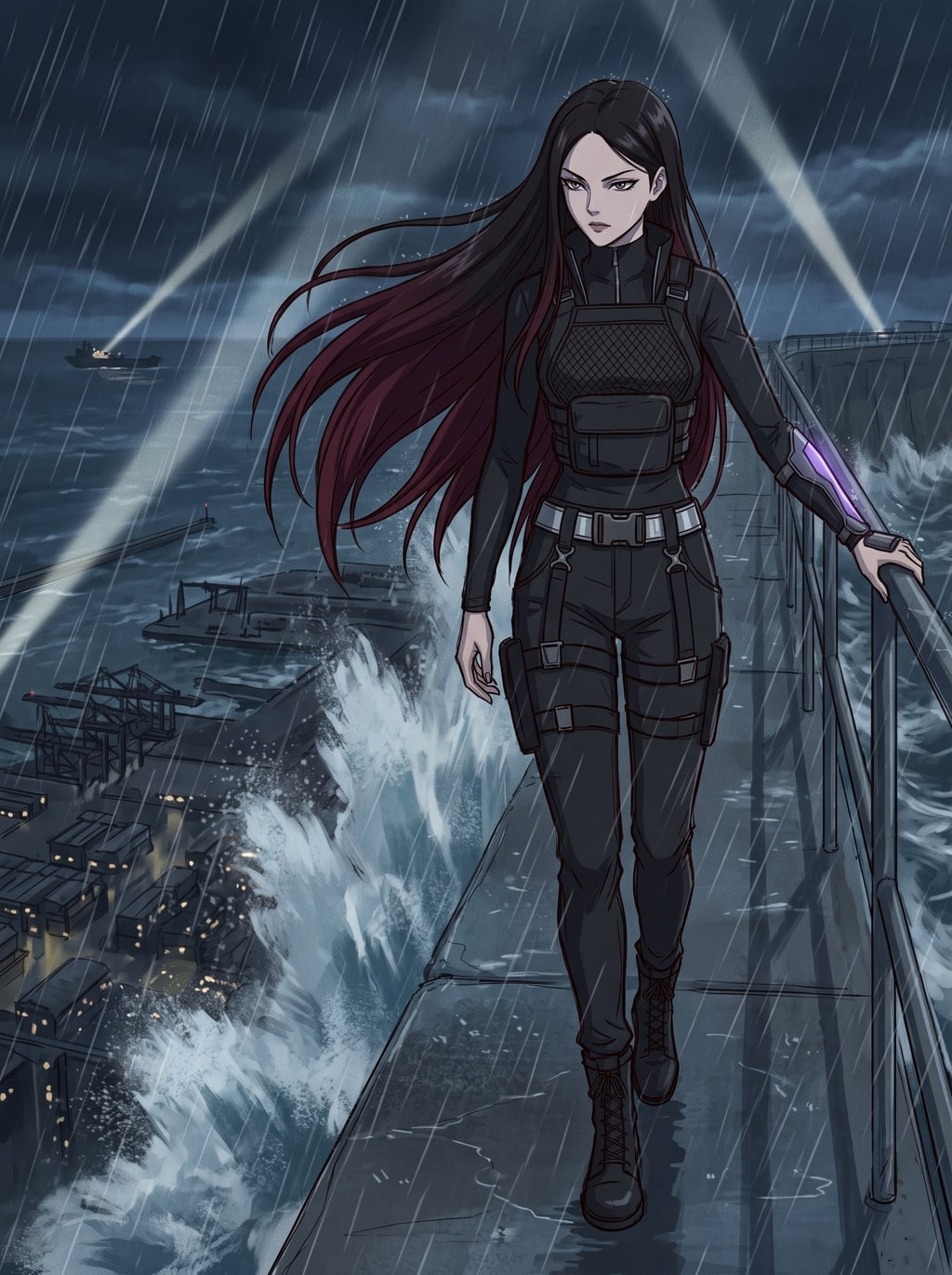
She did not look away from the sky. Gu Yichen stood at her elbow with two cups of tea, as he had at every launch and landing since he made major. He was thirty-six now. She never drank hers until the ship was down, and he never stopped bringing it. Her left forearm was bare under her rolled sleeve, the skin there still faintly mottled where the gauntlet had burned out, and she rested it on the rail and went on watching the sky.
"Look," said a girl with red yarn in her braids, and pointed.
A white speck had come away from the Moon's silver rim and was sliding down a thread of light toward the Earth. It did not flare or stutter. It came down the corridor with the steadiness of a bead on a wire, and the children began to count it in, the way they counted everything, with the rhyme every coastal school had learned from a singer's records.
"Seven boats upon the tide," they chanted, "six will find the other side, five to keep the lanterns lit, four to mend the timber split..."
The Aletheia-Two was a civilian hull, broad and flat-bellied, carrying oceanographers and seed banks home and forty tonnes of regolith cores from the lunar edge. was flying it. She had flown the first civilian ship down the corridor three years ago and had refused every desk offered to her since.
As its prow met the outer boundary the ship doubled. For an eighth of a second there were two of it, one translucent and half a pace behind the other, the sunlight passing twice through its ports.
"Look! It broke!" the girl with the red yarn said.
knelt beside her on the cold flagstones and took the cuff of her sleeve between finger and thumb. "Not broke," she said. "Just taking two steps at once, minnow. Watch. Watch the light go green."
The two ships slid back into one. Far below, a deep note came up through the stone of the headland and into the soles of their shoes, and the children shrieked and forgot to finish the rhyme.
The girl watched the light turn green, frowning. "Have you been up there?"
"No," said. "I stayed down here and shouted at it."
"Did it listen?"
"Eventually. It was very rude about it at first."
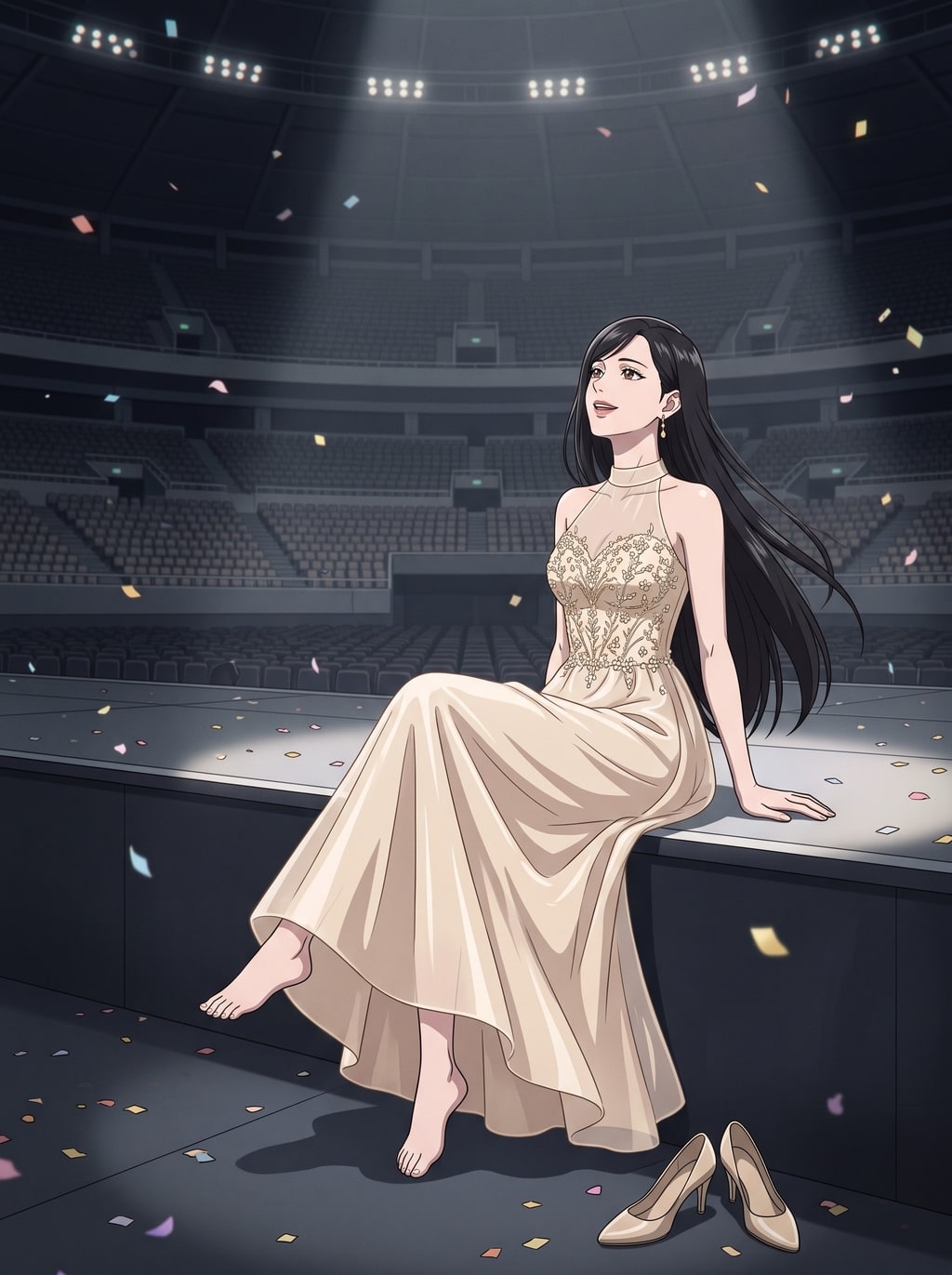
stayed on one knee. She sang in kitchens now, and in garden wards, and in the quiet rooms at the back of hospitals, and she had not stood on an arena stage for four years. Her mother's two gold coins hung at her throat on their fine chain. She was humming under her breath, not for anyone, and heard the tune before he heard that he knew it. The snow still falls upon the stones. Two of the older children knew it too and came in on the second line, and missed the minor third, and nobody minded.
"You have sugar on your lapel, Professor," said, looking up at him.
"It is dried persimmon," said. "It's Bo Han's fault."
"Everything is my fault," Bo Han said happily. "The weather, the sky, the sugar. I accept full administrative liability. File a voucher with the Coalition treasury."
On the bench behind them Mara Voss sat with her boots crossed, the Federation eagle on her shoulder patch now stitched round with the silver leaf of the Compact. stood beside her with a recorder in her palm that she had not switched on.
"Chicago wants to know if it's an anniversary or a christening," said. "I told them neither. It's Tuesday. Nobody dies today. That's the copy."
"A very good copy," said.
The sleeve on Gu's wrist crackled, and 's voice came out of it at full speed. "Tianmen, gate clear, index point nine nine nine seven at the edge, I hit a sideways bend at forty kilometres so I rode it out on the vanes instead of the engines, the oceanographers are fine, one of them was sick, sorry, Aletheia-Two, this is Aletheia-Two, request the runway."
"A sideways bend," Gu said. "In a corridor. She flies like she wants to outrun her own reflection."
"She flies like a Federation test pilot who has heard that lecture twice too often," Voss said from the bench, without opening her eyes. "Which means she flies properly. Give her credit, ."
"I give her credit. I would also give her a callsign. It goes at the front."
wrote the time on the next line of 's notebook, and after it, because there was room, three seconds early.
glanced at the page. "You could let somebody else keep that log."
"I could," said, and closed the book on the pencil.
There were others who would have been there, and were not, because they had work. In a brick schoolroom by the old silk warehouses in Longwan, would be teaching chimera children to wave at their reflections and wait for them, and telling them the lag was only the world remembering them twice. On Thursday, as on every third Thursday, would sit across a scratched divider in the correctional wing from Qiao, who was thin and white-haired now and still certain, and who called her Jing-er and handed her, one at a time, the letters she used to keep. 's face was back on the hoardings for a dock drama he had paid for himself, and on Wednesday mornings he went round the canal shelters with handing out sesame bread, without reporters. sent crates of undrinkable coffee from Boston twice a year with forty handwritten pages of advice that was usually right. was in Montreal persuading a funding committee that rupture moss was protected wildlife, and winning. Eighty-four of 's lanterns were still ticking round the Moon like patient bronze clocks, and still went up twice a year to resolder the ones that complained. And in the radio hut on the spit below the headland, was very probably asleep at his console with his scarred hands folded on his stomach, finally able to hear every coastal station on Earth at once.
"Dr. Neumann?"
A boy of about ten had come round Bo Han's hip. He wore the blue smock of the Xinhe primary schools and held the rail with both hands.
"My grandfather said you sat on the line," the boy said. "The white line, on the boulevard. He said you sat there and told the whole city to stop walking."
"Your grandfather," said. "Does he sell chestnuts?"
"He did. He says he didn't run either. He says he had forty jin of chestnuts and why should he spoil them."
"It was thirty jin."
The boy considered this and decided to let his grandfather keep the extra ten. "He said you were the lunatic from the Accord."
"I was," said. "I sat on a metal folding chair. I didn't tell the city to stop. I just asked it to check the time."
The boy did not smile. He looked past the rail, up at the silver ring and the bright thread of the corridor where the ship had come down.
"Is it fixed now?" he said. "The sky. Is it fixed?"
Along the rail it went quiet. did not turn her head, but saw her listening. Gu stood still with her cup in his hand. looked up at from where she knelt, with no performance in her face at all.
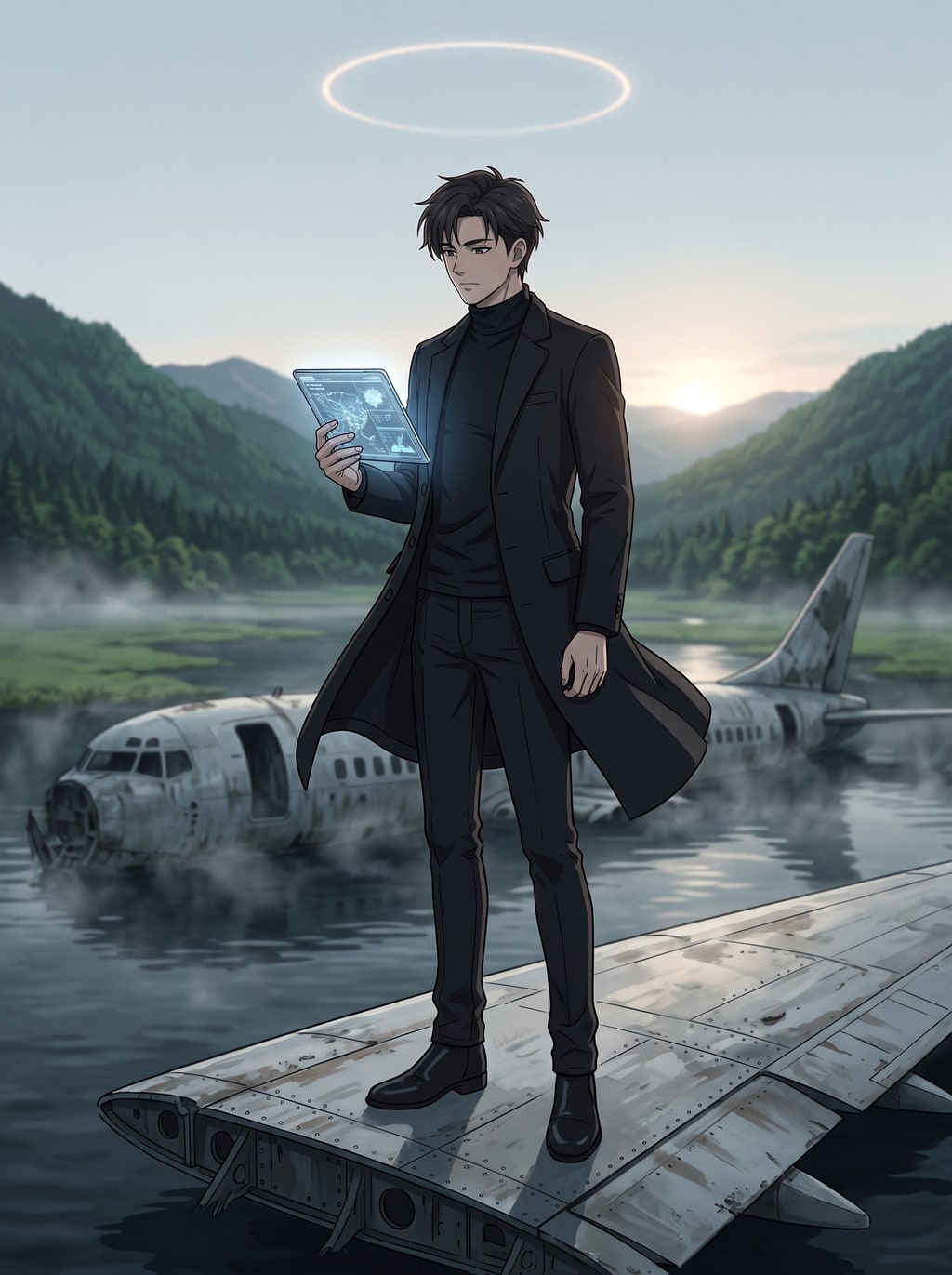
looked at the Halo. It would still be there when his bones were lime, and when people who had never run for a shelter rewrote the Compact and got it wrong in new ways. He thought about lying to the boy, briefly, because it would have been kind.
"No," he said. "It isn't fixed. We are just learning how to live in the house while it is being built."
The boy took this with the calm of a child who had done collapse drills before he could write his own name. He nodded once and went back to Bo Han for another slice of persimmon.
got up off her knee and came to the rail beside , and put her hand over his wrist.
"A house," she said.
"A very large one," said. "Drafty in places."
"We can plant trees," she said.
Above them, for the first time in a generation, the road to the Moon stayed open.