


"The wreckage does not rot. It waits along the shear line where the metric ceased to march, preserved by the hesitation of an unfinished hour."
From The Kepler Inquiry: Closed Proceedings of the Accord Naval Ministry, Vol. IV
The clock on the main navigation panel lost four seconds while watched it.
He let it go. Eight years ago, on the Kepler, he had thrown out every clock on the ship because they had started to disagree with one another, and he had been right to. Out here a clock that lost time was telling the truth about where it was. He wrote the jump in pencil on the console margin beside the other eleven and checked it against the lanterns. Day seventy-nine of eighty-two. They were three days out of Tianmen, and a little under four days were left before the Moon swung closest to Earth and the strain on the Halo peaked.
"Comms is a disgrace," said from the radio bench. He had both hands cupped over his headset, the way a man shields a match. "I am getting five different returns from the Tianmen relay, and three of them say we haven't arrived yet. The other two are arguing about it. It's like listening to a family dinner through a hotel wall."
"Keep all five," said. "Don't average them."
"I wasn't going to average them. I have some pride."
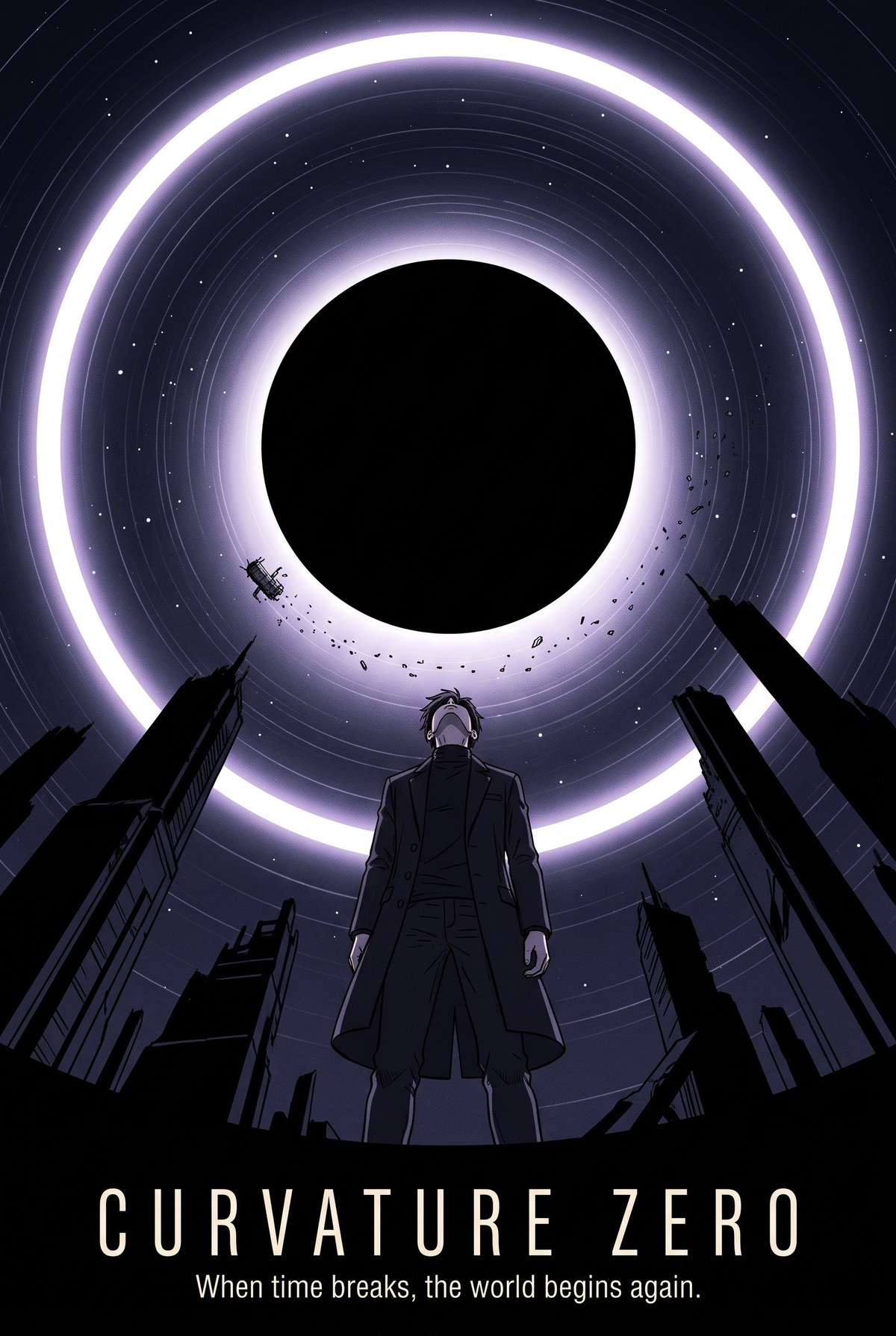
The Halo filled the top half of the canopy. From Earth it had been a violet ring. From forty thousand kilometres, eight years ago, it had been a wound. From just inside its outer edge it was weather: sheets of silver and violet sliding over each other as slowly as river ice, with the grey face of the Moon showing through in pieces that did not line up. Stars near the rim had been drawn into short hooks.
"Debris," Mara Voss said. "Four o'clock high. Not moving. Big."
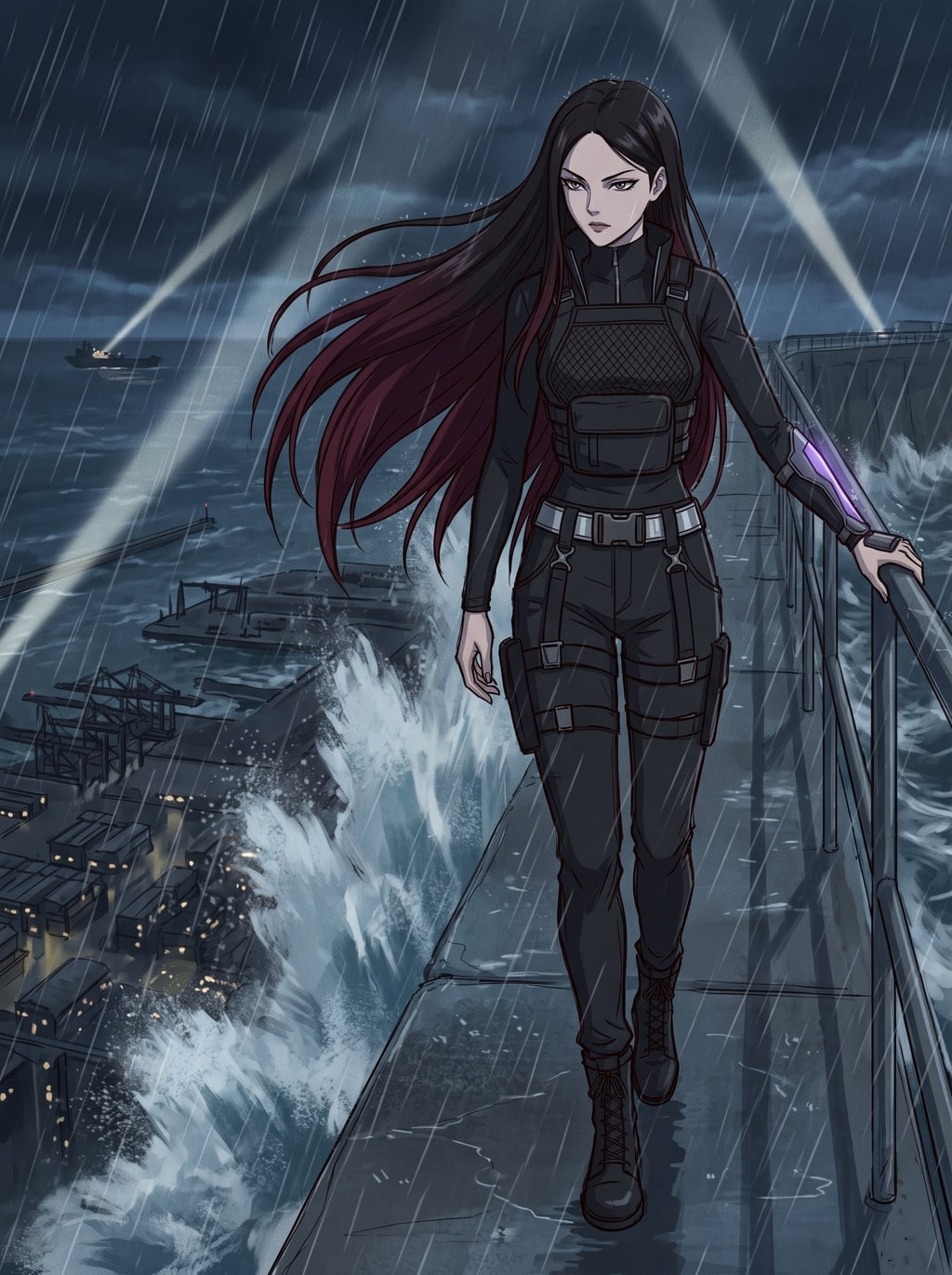
She flew from the left seat with her hands loose on the yoke and her eyes on the attitude ball, the way she had flown the simulator under the hangar at Tianmen, trusting her wrists before her screens. stood behind 's couch with one hand on the crash rail. She had refused a seat for the approach. The new gauntlet sat dark on her left forearm, its violet seams banked down to a line.
Behind , in the flight-dynamics cradle, made a small noise and then said it anyway. "That's a habitat ring. That's the Kepler's secondary ring, section three, I know the weld pattern, I had the drawings on my dormitory wall. Sorry, . It shouldn't be holding still like that. Nothing should."
"Put it up," said.
Su threw it onto the forward display. The section hung six kilometres off to the right: a curved slab of hull with a solar spar bent double across it, stopped halfway through buckling. Frost furred its ports. Behind the frost, an amber light came on, went out, and came on again. counted without meaning to. Eleven seconds.
"That's 's channel," he said.
Hoshino looked up from the environmental board. "That section has been open to vacuum since the day it fell, . There's nothing in there to light a lamp."
"It isn't lit," said. He was frowning at his screen, and then he wasn't frowning, he was grinning in a way that looked painful. "It's caught in a loop. The same sixty seconds of its signal going round and round, and every time it comes round it reaches our dish a little before it was sent. The signal is falling backwards into the receiver." He wiped his mouth. "I have wanted to say that sentence my whole career. I wanted it to be about something else."
"Eight years," said.
"Eight years and eight months."
"She's still here."
did not say it as a question, and did not answer it. The amber light went out and came on.
"It isn't random." 's voice arrived over the radio a second and a quarter after she spoke, as close as the next couch. She was on the roof of the ground station at Tianmen, where she had stood for the launch and, as far as could tell, had not left. ". Whatever that is, it isn't random."
"No," he said.
unbuckled.
She had been silent since the burn, folded into the couch beside the instrument panel with her knees up and her sleeves pulled over her hands. Now she let herself drift up out of the straps and caught the bulkhead rib, and saw that her pupils had opened until the grey was a thin ring.
"It hurts," she said. All the street had gone out of her voice. ". It's too big. It doesn't have a skin."
"What doesn't?" said.
"The thing in the middle." pressed her forehead to the rib. "It doesn't want to break us. It isn't hunting. It's falling apart, Colonel. It's trying to hold its hands together and it doesn't have any hands. It's so cold out there. It's so cold it can't remember how to stop."
The deck hit 's boots.
He was crushed back into the couch webbing with nothing to explain it: no impact, no shriek of metal, only the whole ship shoved sideways by space itself. The canopy went flat grey-white. Every alarm on the board went amber, then most of them went violet, which was a colour had added to the panel at Tianmen for readings nobody had a name for.
"Space is bending hard across the prow," said from the lantern station. She did not raise her voice. Her hands were flat on the controls, holding them down. "We've hit a band of it, and the band is moving toward us."
"I can't pitch," Voss said. Her boots were jammed on the pedals and the yoke was chattering in her hands. "The hydraulics are full, but the bend has locked the valves. Nothing's moving."
"Use the gas bleed!" Su was half out of her cradle, ribbon whipping across her face. "Forget the hydraulics, , blow the emergency cold-gas valves! They're just springs, they don't care what space is doing!"
"Listen to her," said.
Voss reached overhead without looking, hooked two fingers through the yellow lanyard above the canopy frame and hauled. A thud came up through the spine of the ship as fifty kilograms of nitrogen blew out of the belly, and the Aletheia kicked sideways and slid out from under the grey sheet like a hand pulled out of a sleeve.
The alarms dropped back to amber. was already looking at his own board, at a curve that had not been on the screen a minute ago.
For eighty days MECN-7 had drawn the strain on the Halo as a slow, rising line. It climbed toward twelve minutes past midnight on day eighty-two, when the Moon would pass closest to the Earth and the pull on everything would peak. At that moment, the inversion, the Halo would turn inside out and drag the Moon with it. Now something had reached into the line and bent it. The rise had steepened. He ran it twice, then a third time against 's five returns, because he wanted it to be a clock error, and it was not.
"The thing in the middle felt us come in," he said. "It flinched."
"Meaning," said .
"The inversion was ninety-four hours away." He turned the board so she could see it. "It's seventeen now."
Nobody spoke. took her glasses off, looked at them, and put them back on.
"Seventeen hours," Voss said. "Copy." She steadied the ship with two taps of cold gas and did not say anything else, and was grateful to her for it.
The violet thinned ahead of them, and they went through.
The centre of the Halo was hollow.
It was a sphere of quiet five thousand kilometres across, and the things the Halo had taken hung in it without moving. A transport wing rolled slowly eighty metres above the canopy, its Accord roundel scorched to primer. Below it lay three hundred metres of suspension bridge, the road deck snapped clean, its cables trailing off into the dark. Beyond the bridge, held in a pocket where the light did not move, hung the Kepler's mid-frame, the yellow hazard bands still bright on its radiators, a torn fuel line running away from it toward something too far off to see.
looked for 's module and saw the man instead.
He stood on nothing, a hundred metres out among the debris, in an old white pressure suit with a gold visor that reflected none of the light around him. The emblem on his shoulder belonged to an agency that had closed before was born. He had his back to the ship. As watched, he raised one hand, fingers spread, toward a place where there was no hatch.
had seen him once before, at fifty paces across grey dust through a hatch that would not stay shut, on the worst day of his life. He had left him out of every statement to the inquiry. For eight years he had told himself the man was something his frightened brain had put together out of old footage. He was still there. He had been there the whole time, making the same gesture at the same door, and understood with a cold, simple clarity that the Halo kept what it took. It kept the motion and threw away the person.
"," said. "There's someone out there."
"He's been there a long time," said. "He can't hear you."
stared at the figure, then at , and for once she did not ask the next question. She turned back to her board and spoke to it instead. "These aren't natural. The structures around the debris. Look at the angles. They're folded through themselves. , it's built out of broken space. Was this the weapons?"
"It started as the weapons," said. "Then it spent years swallowing our clocks and our radar and the last radio calls of everyone who came too close, and somewhere in all that it started to want something."
"It's loud from here," said from the ground. Her voice had gone quiet. "Like a shelter when the lights go out."
had wedged herself into the angle between 's station and the bulkhead, both hands locked over the back of her neck. "It hurts so much, Min-ji," she said. "It has so many mouths, and not one of them knows how to close."
A chime cut across the deck: four short notes, the old Accord emergency call sign. Then the soft hiss of a throat microphone opening in a small space.
"Aletheia, this is ERV Kepler mission specialist . If you are reading this on the guard channel, you are fifty metres inside the boundary limit. Do not fire your main engines. Space here will not hold a burn."
's hand stopped on the console rail.
Nobody had told her the ship's name. It was her word. He had found it in her notebook in her round, impatient hand, underlined twice, and he had given it to three governments.
"," said. "Where is that coming from?"
"Forty metres off the bow." 's fingers jumped across his controls. "No. Wrong. It's in the hull. The whole skin is ringing like a speaker cone. She's in the air in here with us, Colonel."
"," said to the main pickup.
"?"
A second of nothing. Then a rustle of waterproof paper on an armboard, and two quick clicks of a ballpoint pen, the way she clicked it when she was about to write down something he had got wrong. thought, stupidly, of the nurse in the flooded ward in Longwan with her pen behind her ear.
"You took your time," said.
Over the radio, a second and a quarter late, heard 's breath catch. Those were the words she had said to him on a stairwell in the Relief District with twenty children behind her. He did not look at the monitor.
Violet static ran across the canopy, and when it cleared was outside the glass.
She floated two metres beyond the quartz with one hand raised toward him, in the white-and-grey suit with the mission patches on the shoulder, the same suit she had dragged him down a corridor in. Her visor was folded down into the collar, which was impossible, and her dark hair was tied back with a strip of blue electrical tape, which was exactly right; she had done that whenever the cabin filters clogged with lint. Her face held the same look it had held eight years ago when she turned toward the light at the end of the corridor and saw something there she knew.
"Neumann." Voss's voice was very level. Her thumb had settled on the guard of the defence guns. "Tell me that is a trick of the light."
"An echo," said. "The rupture recorded her when the module broke away."
did not argue with either of them. He unclipped, pushed off and caught the canopy frame, and put his face close enough to the quartz to fog it.
The corner of 's mouth tucked in, small and crooked.
"Don't let them call it random, ," she said.
Her voice was not in the speakers now. It came up through the deck plates into the soles of his boots.
"It isn't an accident. It's an engine that forgot how to turn off."
pushed off and stopped beside him, shoulder to shoulder at the glass. "Operator Serrano. I am , Boundary Operations Command, Unit Nine. What is the operational state of the core?"
did not look at the rank or the voice. She kept looking at . "It doesn't want to stop. It wants to finish. If you collapse it from the outside, the shear will take the Moon out of orbit. You know the maths, ."
"I know the maths."
"The weapon didn't tear the space. It unthreaded it. To fix it, you have to sew it through the eye." She lifted her raised hand a little higher, toward the dark beyond the bridge, and her fingers left milky traces on the black. "The needle is at three-four-eight by minus twelve. That's where the Kepler's drive core is trapped. It never finished collapsing. It's holding the gate open."
saw the bridge of the Kepler the way it had been in the last second: Osei turning in his seat, one arm half raised toward the panel beside the life-support bypass, where the scuttle key sat in its lock on a red lanyard. The key would have shut the drive core down for good. Then the front third of the bridge went away in the middle of his word.
"Captain Osei's scuttle," he said.
"He never turned the key."
Her suit began to fray at the edges, the white fabric drawing out into silver threads that ran away from her toward the centre.
"I tried to reach it." Her voice thinned to a voice heard through ice. "It's not far. But the ground was too steep. My legs wouldn't go forward anymore. They kept going back to breakfast."
She laughed, a dry click in the deck plates. found that he was holding the canopy frame hard enough to hurt.
"," he said. "On the beacon. You said it was looking for something. You ran out of air before you said what."
She looked at him through her own fading face, and for a moment she was a tired specialist on a third night shift, about to explain something obvious.
"A rule that stays true," she said. Then her eyes moved past him, to the cradle behind his couch. "Don't fight the drift, Su. Let the ship fall sideways. Space bends the wrong way in there. Use your main engines and you'll tear your own tail off."
Behind him Su said, very small, "Yes, ma'am."
looked back at . She was almost glass now, a sketch on frost, the light of the inner ring showing through her.
"It's cold out here, ," she said. "Bring me home."
The static snapped, and there was nothing outside but the debris and the dark.
"I have it." 's voice was flat with the effort of keeping it flat. "A calm spot at three-four-eight, minus twelve. Nothing bends there. The Stability Index reads one, dead normal. It's an island of true spacetime inside the rupture."
"And the core?" had not moved from the glass.
"On the island. There's a wall of torn space all the way round it, like a skin on milk." brought the lantern readings up: a bright, uneven knot, and around it a shell where every reading tore. "We can't take the ship through that. We can get close. Two hundred metres, if someone flies it like a lunatic."
turned her head, not toward but back along the ship toward the cargo bay, where Atlas-0 hung in its cradle with its straps let out and the crossed halberds of Unit Nine stencilled on its shoulder. She looked for about as long as it took to draw one breath. saw her do it, and found that he had looked there too.
Voss took her hands off the yoke.
She sat for five seconds with them in her lap, looking at over her shoulder: at the red ribbon, at the ink-stained thumb, at the right shoulder Su was pinning against the cradle to stop it shaking.
"Take the yoke," Voss said.
Su blinked. "?"
"You heard the ghost." Voss popped her harness and hauled herself out of the left seat in one movement, hand over hand. "The flight computer is getting thousands of answers a second about where we are, and they all disagree. If I fly this, I fly it by the Federation's manual, and that book was written for space that stays where you leave it. You've been flying this in your head since you were eighteen. Take the goddamned yoke, Su."
Su went pale to the lips and climbed into the left seat. Voss strapped into the cradle behind her and kept one hand on the back of the couch, not touching her.
"," Su said. Her voice had gone very quick and very cold. "Cut the radar. Feed me raw gravitational noise from the lanterns. Only the noise."
"Radar dark." flicked the guard down. "Lanterns straight to your helm. It sounds like gravel in a turbine, kid."
understood what she wanted. In here the radar would lie about where things were. The lanterns' raw noise was the pull of space itself, heard as sound, and she meant to fly by ear.
"Good," Su said. "Colonel, brace the crew. We're dropping through the wall."
did not go to a couch. She hooked her right forearm through the ceiling strap above 's seat and set her boots on the deck grip. strapped back in. Across the deck had not moved from her corner, and reached down without looking and clipped a tether to the back of her belt.
Voss's hand twitched toward the backup throttle. Without turning round, Su said, "Don't correct, . Please. Let it heat."
Voss took the hand back. Su opened the cold-gas valves to the stops, and the Aletheia fell sideways.
It was nothing like a turn. 's skeleton stayed where it was and everything inside it rotated forty-five degrees. The gold coin in the breast pocket of his flight suit dragged against his ribs with a weight it did not have, cold through two layers of thermal knit, pulling hard toward a point ahead and to the left. He understood that it was pointing at the island the way a plumb-bob points at the ground. Outside, the stars broke into rings, and each ring held a different Moon: grey dust under black sky; a glowing sea of molten rock from three billion years ago; a cracked, slagged crust that had not happened yet.
"It's tearing at us," said. "We're losing heat tiles off bay four."
"Keep falling," Su said to nobody. Her ribbon had come loose and floated beside her cheek. "We're not at the bottom yet. , a short burst of belly gas on my mark. Mark."
Voss hit the override. The hull made a sound had heard once before, on the Kepler, a deep groan of iron sheets taking a load they were never built for, and on the other side of the eight years he remembered Karim turning in his seat with sweat on his temple and saying That's closer, Neumann.
Then everything went out.
For three seconds there were no instruments, no scrubbers, no hum of anything. In the dark screamed, high and thin, a sound that came from somewhere under her ribs, and stopped dead.
The emergency strips flickered and locked on. The hull was quiet.
The Aletheia drifted out into dead water.
The stars here were round and still. Twenty metres off the left side of the bow, sitting in a lip of broken lunar rock, hung the Kepler's command module.
It had not aged. The insulation blankets were bright as new foil; eight years of solar wind had never reached them. The front window was crazed into a web, and behind it, close to the glass, a gloved hand was curled toward the manual air-release lever, the fingers bent at the first knuckle the way a hand bends just before it grips. looked at the glove for a long time. He could not tell whose it was. He did not let himself guess.
was breathing again, in long shaking pulls, with her face against the bulkhead. had a hand on her back.
Beyond the Kepler, at the centre of the calm, was the thing that had been in the middle all along.
It was a sphere about three hundred metres across, grey as the dark plains of the Moon, and it was breathing. It swelled and settled with the slow pull of a lung, and through a million hair-thin cracks in its surface a light leaked out, amber and white, the colour of a city seen from orbit at night. Its edges would not hold still. Where the eye tried to fix them, they ran.
As the last of their gas faded, a long ripple crossed its face. Nothing else moved. It did not reach out or flare. It turned something inside itself toward the ship, and felt it arrive.
He knew the feeling. He had felt it through the Kepler's glass with Osei's voice cutting off in his ear: an attention so large and so cold that it had no room for malice, the way the sea has no room for opinions about a swimmer. He had carried it alone for nearly eight years and then told it to a colonel in a drowned aquarium before dawn, and then to everyone. Telling had not made it smaller. It leaned down now and found him, and in the place behind his eyes where words came from, something that was not a word arrived.
You came back.
"Yes," said aloud, and looked at him and did not ask.
"Entity H-1," said. She had her slate pressed flat to her chest. Her voice had dropped to almost nothing, and under the fear there was the other thing knew in her, the delight she could never quite keep out when something was beautiful and could kill her. ". It's a child. A child assembled out of broken clocks."
"It's dying," said. The radio made her small and grainy. "I can hear it from here."
let go of the ceiling strap. "We have the scuttle charges," she said.
She had moved to the centre console, where the two-key housing sat under its guard. Twenty-four shaped charges ran along the keel, the only heavy explosives the Compact had allowed aboard, and with them came a joint order from three governments. had read that order in Geneva. He had argued for a week and lost.
"If it cannot be stabilised, it is to be destroyed before the inversion." said it without inflection, the way she read out a casualty list. "That is my order, . It was signed by three governments."
"If you fire those here," said, "the shock goes straight down the hidden grid under space, all the way home. It won't kill it. It'll break it into thousands of small ruptures all round the Pacific. Xinhe was only the edge of one, . Longwan, Tokyo, Vancouver: they'd drop straight into it."
looked at him. A strand of her braid had worked loose and floated beside the scar in her eyebrow. Her right hand stayed on the guard.
"And if we do nothing," she said, "it inverts in seventeen hours and the Moon comes down."
"We don't do nothing."
Past her shoulder, through the canopy, the glove in the Kepler's window was still reaching for its lever.
"We give it what it has been asking for," he said.
Voss had not taken her eyes off Su's hands. "And what is that?"
"An anchor," said. "A rule that stays true."