
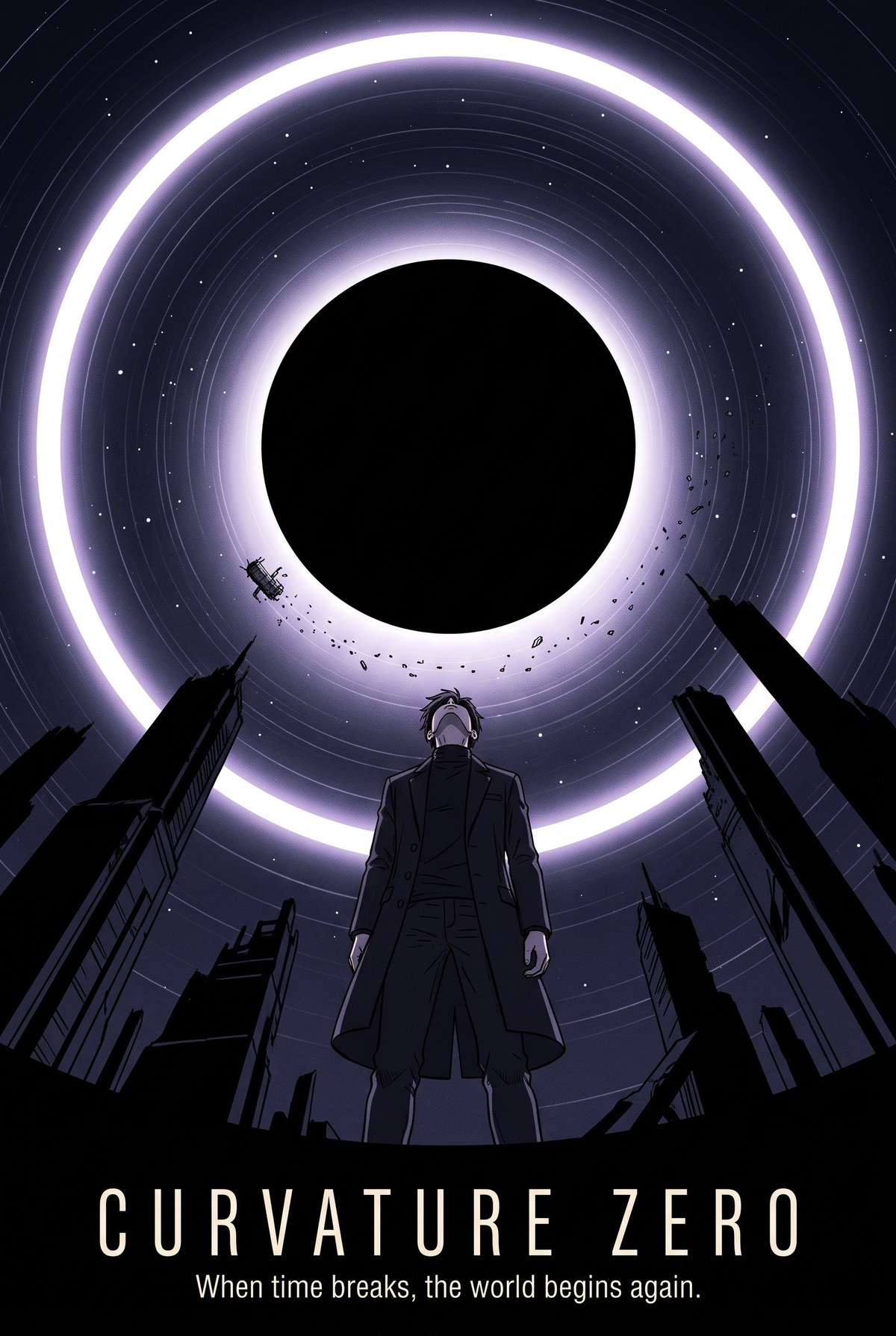


"In the lower orders of rupture, geometry does not collapse. It convenes. The traveller discovers that the only straight line left in the world is the one leading toward the mouth."
From Unit Nine Field Manual: Tactical Protocols for Sub-Threshold Incursions (Boundary Operations Command, 2124)
The dial on the field console read 0.982.
That was the Stability Index for the dead district around the Old Workers' Stadium, where 's team stood at the cordon tape in the rain. In Boundary Operations Command, anything above 0.95 meant a seep: standing water, a compass needle that shivered on its pivot, three hours of incident forms. It was the quietest grade of rupture there was. Gu Yichen had walked into seeps a hundred times and come out with wet boots.
He had also read Neumann's note on the board that morning, for the third time. Old Workers' Stadium. Old rupture has not faded in ten years. Recommend no entry pending second pass. It was a good note, neat and polite, and it was the kind of note people wrote when they would not be the ones explaining to District why a scheduled survey had been put off for a feeling about a curve. The Colonel was in Geneva. The survey was on the list. The dial said 0.982.
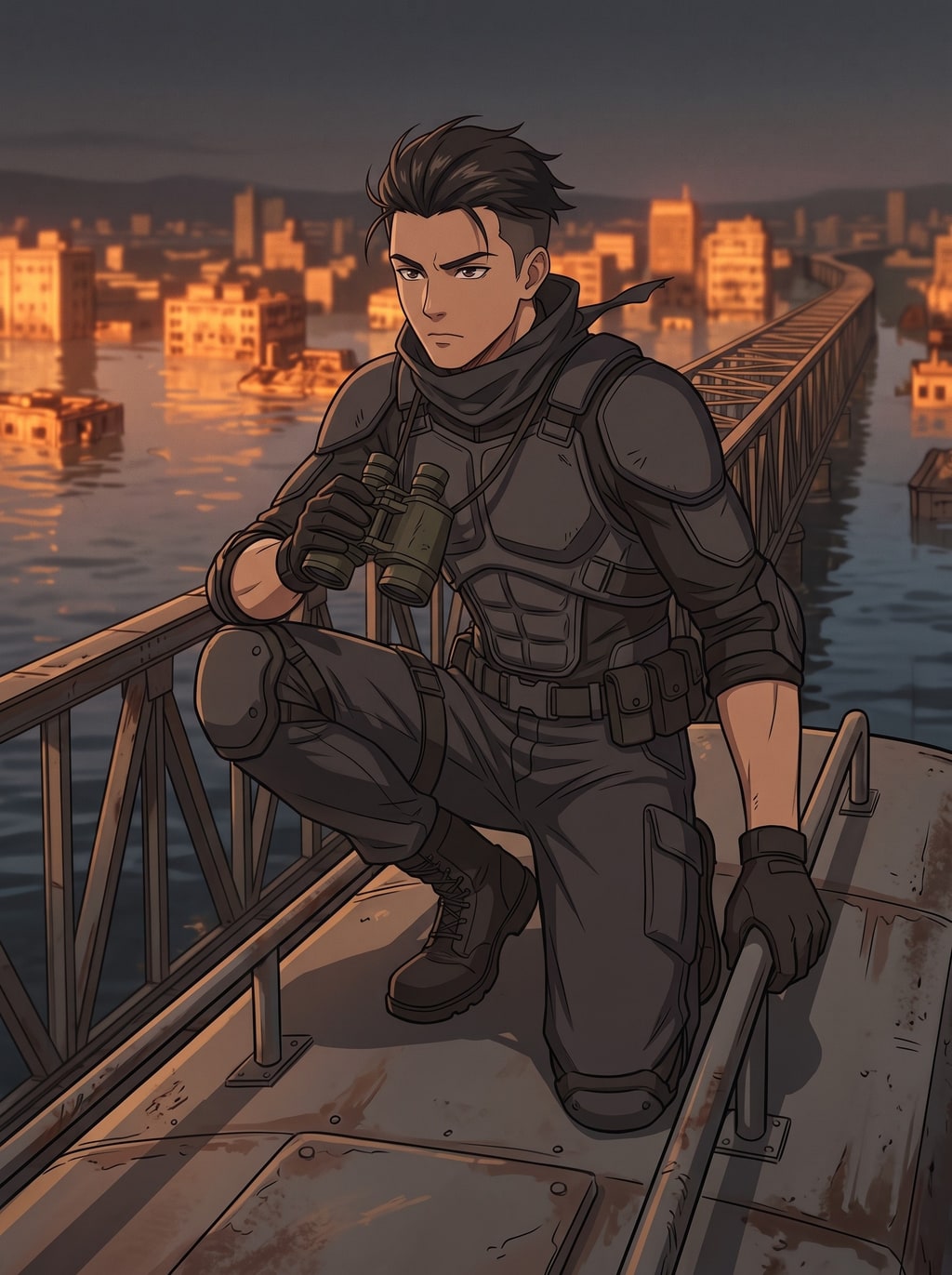
"Ten-minute sweep," Gu said. He tightened the webbing on his rig. "Dr. Hoshino takes her soil cores. Vale plants the seismic pin. We're back across the cordon before the 's braised pork has cooled."
", the pork does not cool," Bo Han said from the back of the truck. "It congeals. If we're late, I'm billing your stipend."
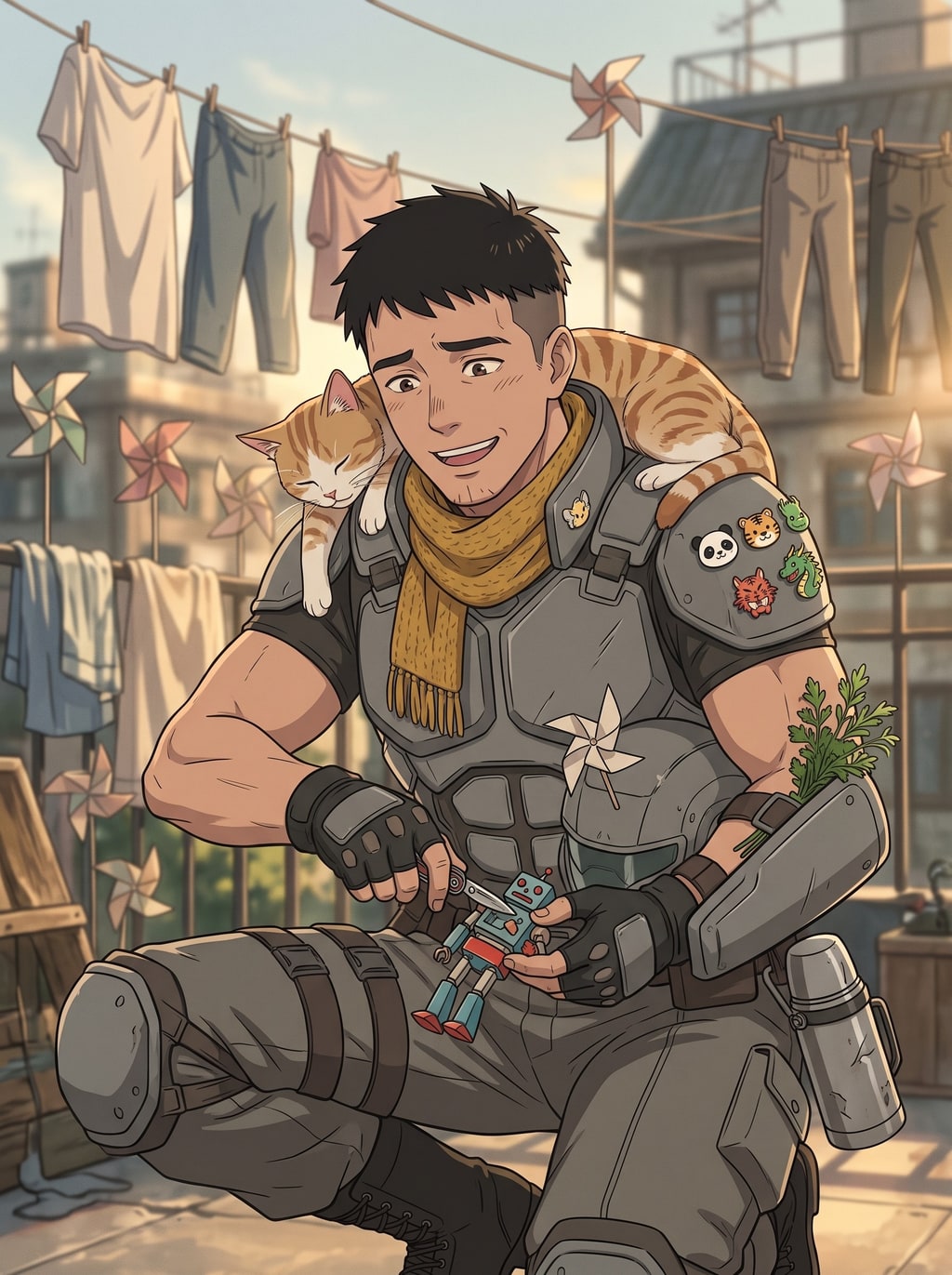
did not look up from her scanner. Rain was running off the hood of her jacket onto the glass, and she wiped it with her thumb and frowned. "Space here is too flat," she said. "Flat like raked gravel. Somebody has been tending it."
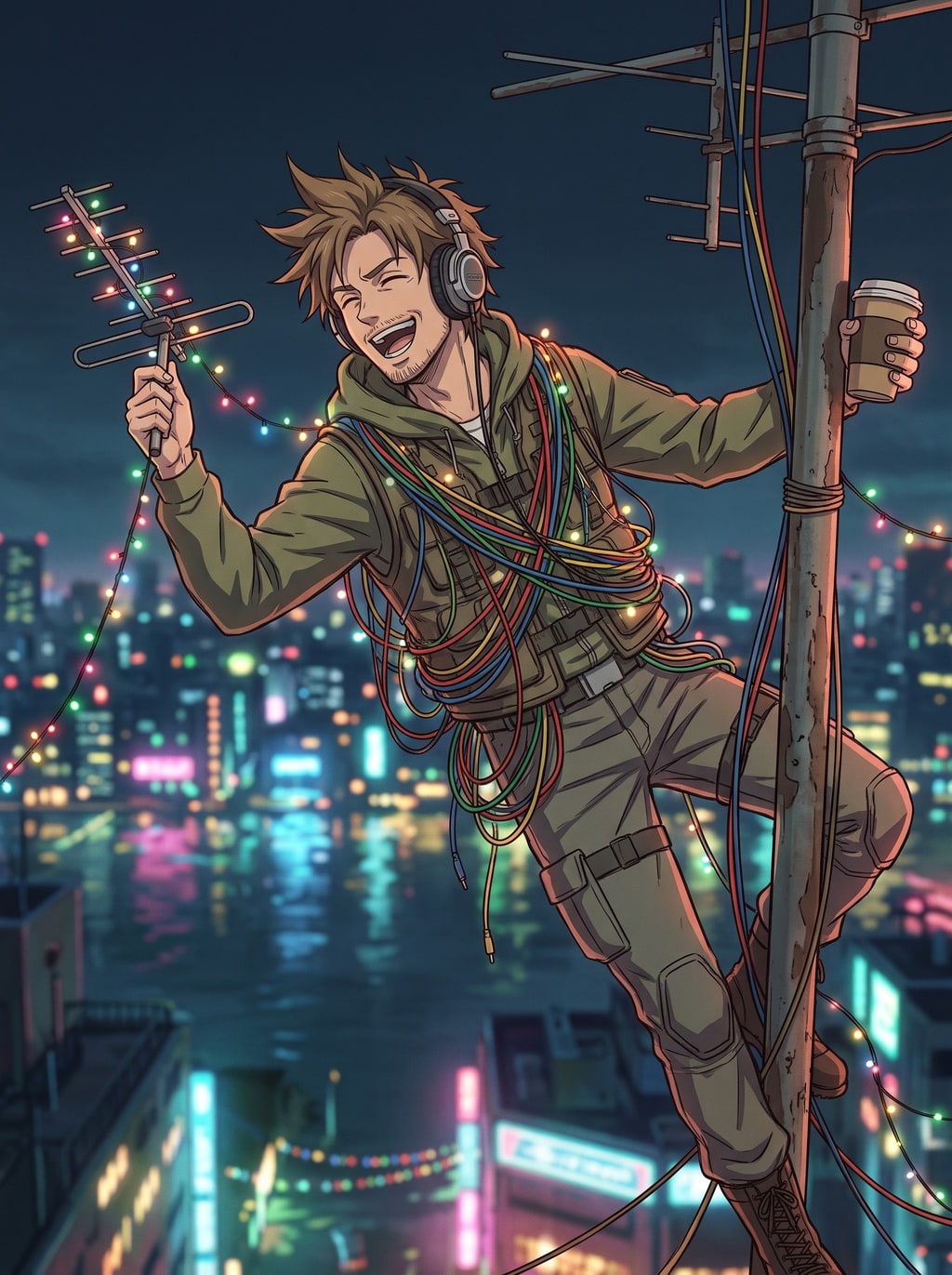
"Nature loves a flat thing," said, hauling two radio packs off the rack. "Tabletops. Horizons. The line on my screen when Command cuts our overtime."
"Move out."
They went through the yellow tape at 14:12, four of them. Gu counted them through.
There was no flash at the boundary. The noise of the city simply stopped carrying, the barges and the pumps and the flight lanes three districts over. It was like a door shutting behind them in a house he had not noticed entering. Gu felt it first in his back teeth, a cold ache like biting foil.
"Boundary crossed," said into his throat mic. "Base, Nine-Two. Signal check."
The earpiece gave a soft dry clicking, fingernails on a glass, and then nothing.
"?"
hit the side of his wrist unit with the heel of his glove. "Carrier wave dropped. Not a fadeout. Total attenuation. That doesn't happen at zero point nine eight."
"Line of sight?"
turned and pointed back the way they had come, and Gu looked. Forty metres behind them, at the tape, the sentry was leaning on the truck with a toothpick in his mouth.
"I can see him picking his teeth," said. "But the radio thinks he's on Mars."
Gu stood still for three seconds. A loud rupture was dangerous and at least it was honest; it threw concrete in the air and screamed on every band. He did not like a quiet one that took the radio and left the dial alone.
"Bo, rear. Hoshino, eyes on the dial. If it moves five points we walk out backward."
"," Bo said. The grin had gone off his face.
The district was the southern edge of the reclamation, sixty years old, built before the floodwalls went up against the South China Sea and abandoned when the sea came over them anyway. Concrete blocks in faded green tile, dead air-conditioning units hanging off them by their brackets, ground floors silted to the windowsills. Rain came in off the bay sideways and rattled on the tiles.
What was wrong was the litter.
An evacuated street was always a mess: clothes, crates, a shoe, broken crockery where people had fought over carts in the dark. This street had been tidied. Broken roof tiles lay along the gutter in a row, sorted by size, largest to smallest, all pointing south. Smashed glass had been gathered into neat crescents around each storm drain.
crouched at the kerb and held her wand five centimetres above the asphalt without touching it. "Look at the water," she said. "It's not pooling. It's moving along stress lines. In the field, not the rock. Every one point six metres." She looked up at him through rain-spotted glasses. "Like ribs."
The street bent left. A minute later it bent left again.
Gu checked the compass. The needle was steady on north. The sun, a pale smear behind the cloud, was at their backs, where it had been before they turned twice.
"We aren't turning," he said.
"The road is turning us," said. ". Look behind."
Gu looked. The boulevard behind them did not go back to the tape and the trucks. Thirty paces back it curved, smoothly, into a wall of grey concrete that rose up into the rain: the outer rampart of the Old Workers' Stadium. They had climbed no ramp and crossed no turnstile. They were on its approach concourse, under the great canted buttresses that held up the northern stands, and the air smelled of wet lime and old cellar water.
"Index," Gu said.
"Zero point nine eight two," said. She re-polled it and it came back the same, steady and green. "And the bend here reads zero. , that's impossible. If we came through a fold, it should be off the scale."
"Then it's not measured. That's different from impossible. Bo, find me a way out."
Bo went to the nearest fire door, red-leaded steel blistered by sea air, put his pry-bar in the seam, set his boot on the frame and leaned. The door gave with a slow tearing noise, wet paper coming off fat. Behind it there was no service alley. Four metres away rose another buttress, canted at twenty degrees, identical to the one at Gu's shoulder down to the yellow inspection stencil sprayed on its base: 2098.
"Closed loop," said quietly.
Gu raised a fist, and they all heard it at once.
It came down the throat of the tunnel that led up into the lower tier, and they felt it in their boots before they heard it. It was a crowd. Thirty thousand people breathing in together, the long held breath of a stadium between plays, and threaded through it the crackle of a public address system whose transformers had been dead for twenty years.
"...welcome to the municipal..." the voice said, smeared and slow. "...quarter-final... the time is... thirteen past twenty-six..."
Gu led them up the tunnel.
It was night in the bowl.
It was a quarter past two in the afternoon outside and the sky above the Old Workers' Stadium was black, with rain driving across it in sheets, and one floodlight on the south tower was still burning, the only one of forty. Its white light came down across the upper stands at a slant and lit the rain and the broken cantilever roof, whose snapped ribs of rusted rebar curved out against the dark like the baleen of a dead whale. On the far side, slung from sagging trusses, the four-sided scoreboard was alive and burning a cold chalky violet that threw no shadow, and its numbers ran in no order Gu could follow: 88:14, then 88:13, then 94:02, then a row of zeros, then 88:14 again.
The pitch was under a skin of seawater, and on the water was the colony.
From the top of the tunnel it looked like oil on a swell. Gu put his rifle sight to his eye and turned it to four times, and the oil came apart into bodies, thousands of them: grey, segmented, the size of a large dog, with no heads. They walked on clusters of thin jointed struts that punched into the silt, and along their backs ran a single thin slit that let out a breath of violet light whenever they moved. They were moving in rings. The outer ring went clockwise, twenty bodies deep, dragging grey cables that looked like submarine line stripped to the lead. The ring inside it went the other way and wove the cables into a grid. At the centre of the grid stood a dome four metres across, and it rose and fell, slow and heavy, breathing.
had a hand clamped on the rail. She had stopped writing.
"It's a colony," she said. "Thousands of them working one plan. This is an ecology, Gu."
"I need to know if they stop when we put copper through them."
"They aren't eating anything. They're building." She pointed down at the faces of the lower tiers, and Gu moved the sight. The concrete was bored through with holes, tens of thousands of them, each about eight centimetres across, in a regular grid, and from each hole a fine grey filament swayed. Every time the scoreboard changed a digit, every filament in the stadium jerked five degrees to the west at once.
"They're using the bowl," said. "The shape of it. It's a dish."
"...second goal for the third district..." said the dead speakers. "...please remain in your..."
On the pitch, the outer ring had doubled its speed, and the light between the plates had gone from violet toward white.
"We're leaving," Gu said. "Back down the tunnel. If the doors won't open we blow the outer slab."
"," Bo said. He had not moved.
Gu turned. The tunnel they had come up was closed. A wall of grey glassy resin filled it from floor to lintel, ribbed like the underside of a mushroom, translucent enough that he could see the buttresses on the other side. Nobody had poured it. It had grown there while they watched the pitch.
He put three rounds of armour-piercing into the middle of it. In the tunnel the reports were enormous. The rounds went into the resin and stopped five centimetres in, each one flattened into a disc and hanging there like a coin dropped in clear honey, and around each of them the resin began to close inward and knit itself shut with a small wet clicking.
"It takes the force of the bullets and uses it to bend space," said. Her breath was fogging her glasses. "You're feeding it, Gu."
Behind them, the crowd stopped breathing.
The silence that came after was the silence of a room where every living thing has suddenly turned to look at the door. Gu turned round slowly. The rings on the pitch had stopped. Every grey body stood still on its struts in the water with its slit turned up toward the northern stand.
"Box," Gu said. "Backs to the resin. Hoshino in the middle. , emergency beacon, every band. Accord, Coalition, civilian. The weather bureau if you have it."
"I'm sending," said after a moment. His hands were shaking and his voice was not. "It's coming straight back off the inside of the boundary. We're in a kettle. We're talking to ourselves."
Bo set his shield down on the tier, and its anchors bit into the concrete with a thud, and he racked his shotgun.
The sound that came off the pitch was dry and rustling, a whole winter's leaves dragged over stone. Then the bodies came up the stands.
They came in wedges of fifty, up the stairways and over the seats, fast and close, every wedge moving the way the one beside it moved. Bo called the range in his flat drill voice. "Eighty. Seventy. Sixty."
"Hoshino, what do they see with?"
"The slits." She was down behind the shield with her pack against her chest. "They're reading how space bends. They don't see our bodies. They see the dent our weight makes in it."
"Bo, left wedge. On my mark. Mark."
The shotgun went three times. The flechettes tore the struts off the leading bodies and they rolled back down the steps, thrashing without a sound, leaking blue light, and where the light ran onto the concrete the concrete went pale and fell in on itself as powder. Gu fired in pairs at the joints between the plates. Every hit rang like a cast-iron pan. For every one that dropped, two came over it.
"They're herding us," Bo said. Sweat was running into the scar on his chin. ". They're not going for the box. They're pushing us at the gate."
Gu looked right. Nine metres along the tier, an iron security gate stood half open on a maintenance catwalk that ran out over the lower concourse and ended against the sheer wall of the upper deck. A dead end. And the wedges were laying lines of blue fire along the rows of seats, one row and then the next, closing off everything except a lane to that gate.
He had four people and one direction.
"Through the gate. Bo, charge on the frame."
They fell back through it in order, , , Gu. Bo came last, and jammed his shield in the gateway and held it there with his shoulder while he dragged a brick of thermite paste off his vest with his teeth. Gu fired past his ear at a body nine metres away. Six. Four.
A jointed leg as sharp as a surveyor's stake came through the side of Bo's shield with the sound of a cleaver going into a block. It went on through his left shoulder plate and down into the muscle above the collarbone, and blue light flared up under his chin.
Gu put the muzzle against the thing's shell and emptied the magazine into it until the bolt locked back. It buckled and slid down the shield, hissing.
Bo was on his knees with his right hand clamped over his left shoulder. Blood came between his fingers, dark and fast, but where the blue light had touched his sleeve the cloth was dry and crumbling away into white ash, and the skin under it was white and bloodless, meat that had been in a freezer for twenty years.
"I've got the frame," Bo said through his teeth. "I've got it, . Get the doctor back."
"Shut up." Gu took him by the straps and hauled him backward through the gate onto the catwalk. ". Paste."
slapped the brick onto the hinge, thumbed the primer and threw himself flat. The thermite went with a white hiss, and the gate ran down onto its own sill like solder and set there in a lump.
The catwalk hung fifteen metres over the lower concourse. Behind it the bare wall of the upper deck went up eighteen metres into the rain, rusted rebar and old advertising boards peeled into strips. In front of it, below them, the bodies gathered on the tier and stopped. They did not try the gate. They stood in rows with their slits pulsing all together, slow and even, and waited.
Four on the catwalk. Gu counted them anyway.
had Bo's tunic cut open and was pressing antimicrobial foam into the wound, and the foam was breaking down into clear water as fast as she put it in and running off his skin.
"The field's inside the wound," she said. Her voice had started to shake. "It isn't tearing the tissue. It's un-aligning it. His cells don't know which way is up."
"Fix it."
"With a trauma kit?" She looked up at him with her glasses hanging off one ear. "He needs a stabilising field. An anchor. Without one it goes on spreading."
Bo's face had gone the colour of putty. He moved his head on the grating until he could see Gu. "," he said. "The pork. It's definitely cold now."
"Shut your mouth, ." Gu knelt and took Bo's good hand, which was cold and dry. "Save your breath for the report."
"Nobody is reading the report," said.
He was sitting against the wall with his knees up and the transceiver in his lap. Its screen was black except for one pulse of static, and the pulse kept time with the scoreboard.
"Three radios burned," said. "The signal isn't leaving the catwalk. We're forty metres from the edge of the world, . If were here, she could punch through that fold with an augmented strike. But is in Geneva. And we are here."
Gu stood up and went to the rail.
The dome on the pitch was rising. Hundreds of bodies were hauling grey cable up it and fixing it to the rusted goalposts, and it had become a column, and the column was narrowing as it climbed, a throat pointed straight up at the sky. Above it the black cloud had begun to turn, slowly, around the place the throat was aimed at.
He looked at the dial on his sleeve. 0.982.
It was the most terrifying number Gu had ever seen. The stadium was coming apart under his boots, and according to every gauge in the Eastern Coalition, nothing was happening at all.
He thought of the market on Yuexiu Road, seven weeks ago, the butcher's block cut in half and the line on his slate where he would have put his own people. Neumann had said it to him in Bay Three with the alarm still going, in that mild voice that sounded as if he were apologising for the weather. The models do not fail because they are inaccurate, . They fail because they assume the world wants to stay whole. And that morning Gu had read the note on the board three times, and checked the dial, and gone in on the dial.
His knuckles were split from the rifle. He looked at them for a while.
Four rounds in the last magazine. had a pistol with eight. had a sample knife. Bo could no longer lift his left arm.
"Gu," said from the grating.
"I see them."
They were coming up the pillars under the catwalk, thirty or forty at a time, their legs striking the rusted iron in a dry quick rattle, a telegraph key gone mad. Six metres below the grating. Five. Their slits lit the underside of the catwalk in jumping blue bars.
Gu drew his sidearm and did not rack it yet. Every round had to buy Bo two seconds.
"," he said. "Log the entry."
's thumbs rested on the dead keys. "Running, ," he said, very quietly. "Unit Nine. Old Workers' Stadium. Node identified as collective boundary organism. We are... out of vectors."
Something shrieked over the arena, high and long, steam out of a cracked boiler, and then a deep thud came up through the catwalk into the bones of Gu's shins.
High above them, where the broken roof met the black sky, a point of light came on. It was gold, warm and dense, the colour of a lamp in a window, and it cut the rain like a welding torch. Another came on beside it. Then the rest, a drifting line of small round lights sinking through the gap in the roof, one after another, down into the bowl, and the grey backs on the tier below turned up toward them, and the rain between the lights shone, and everything they touched was lit with clear, stubborn human light.