
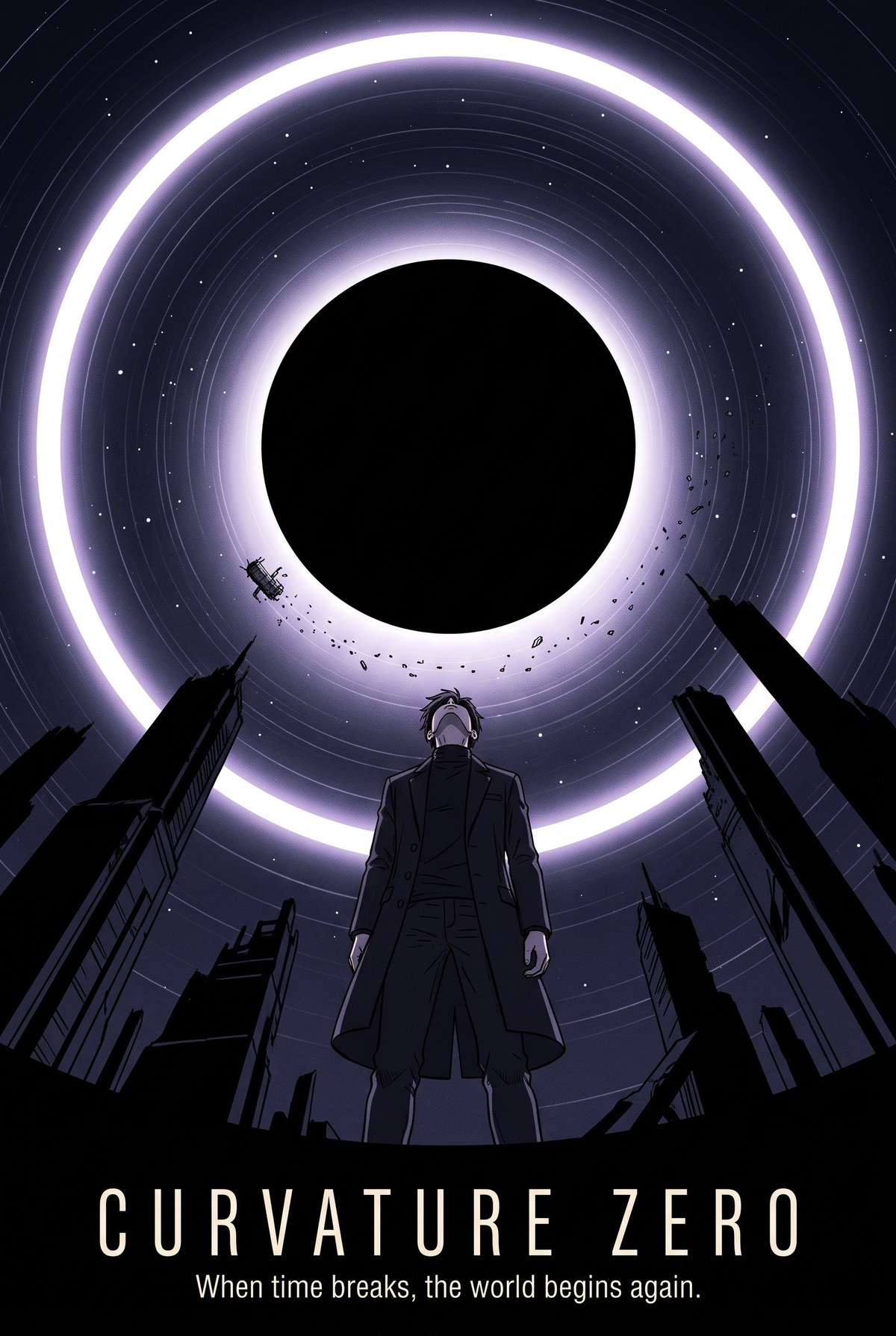

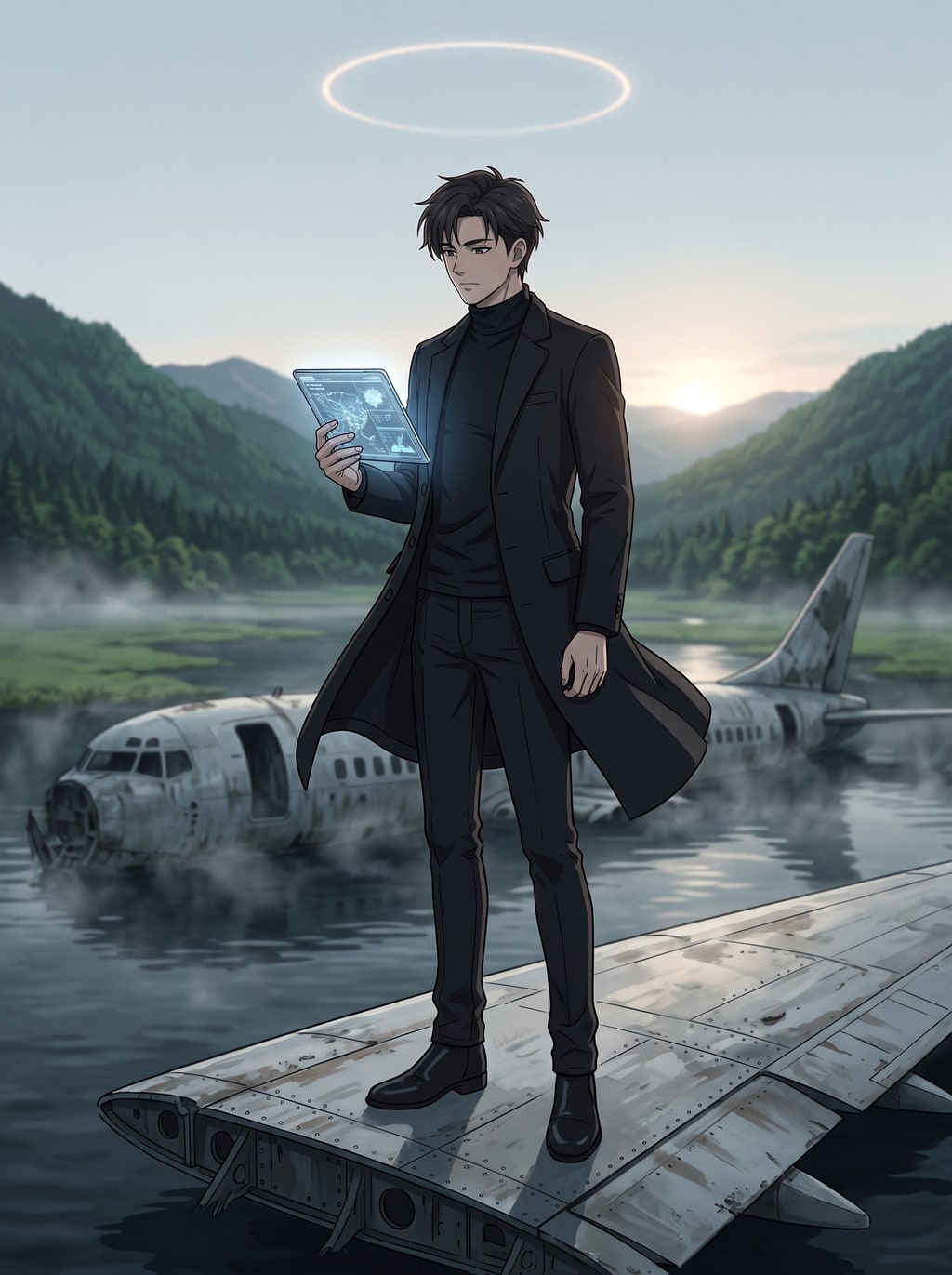
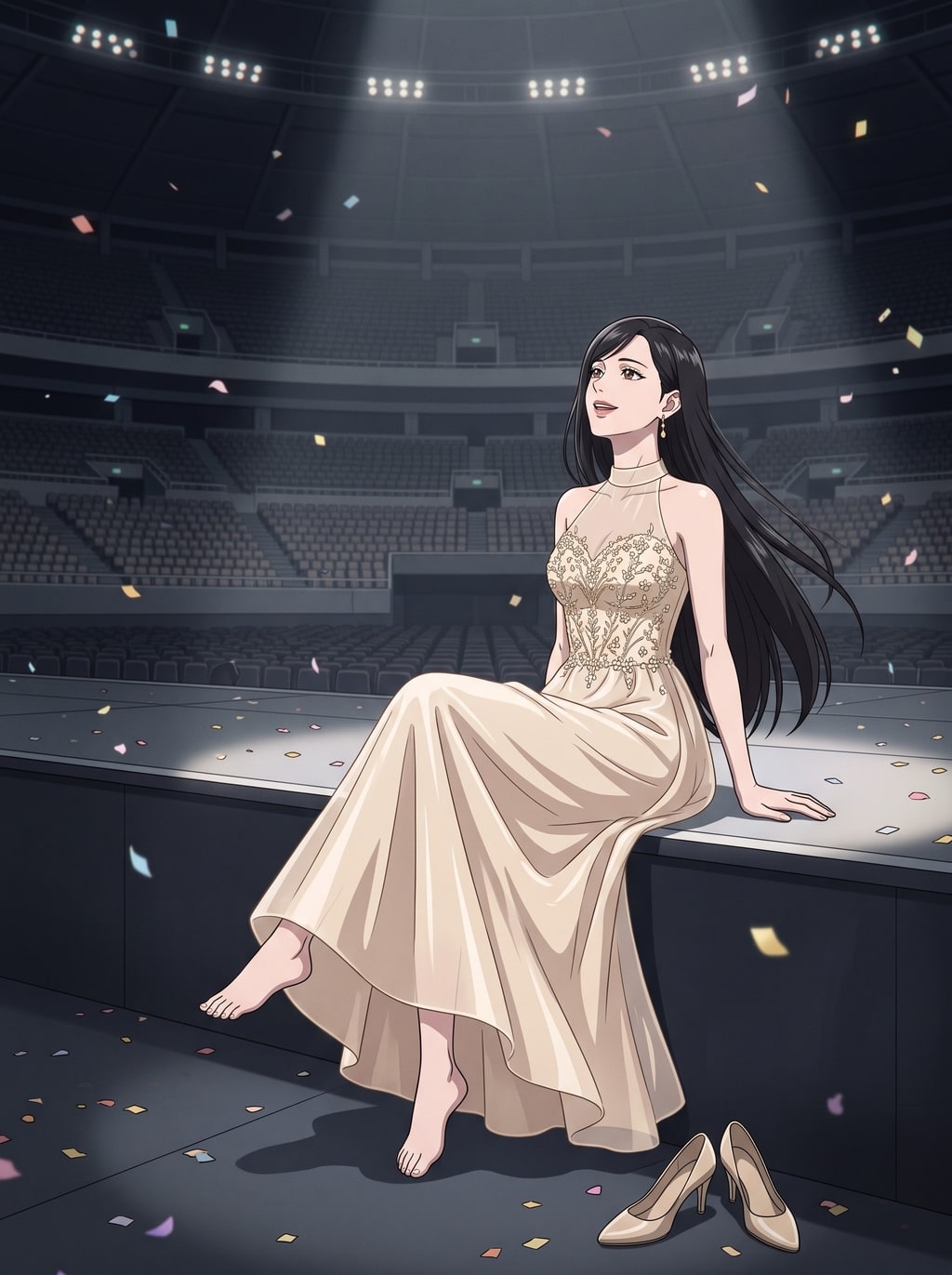
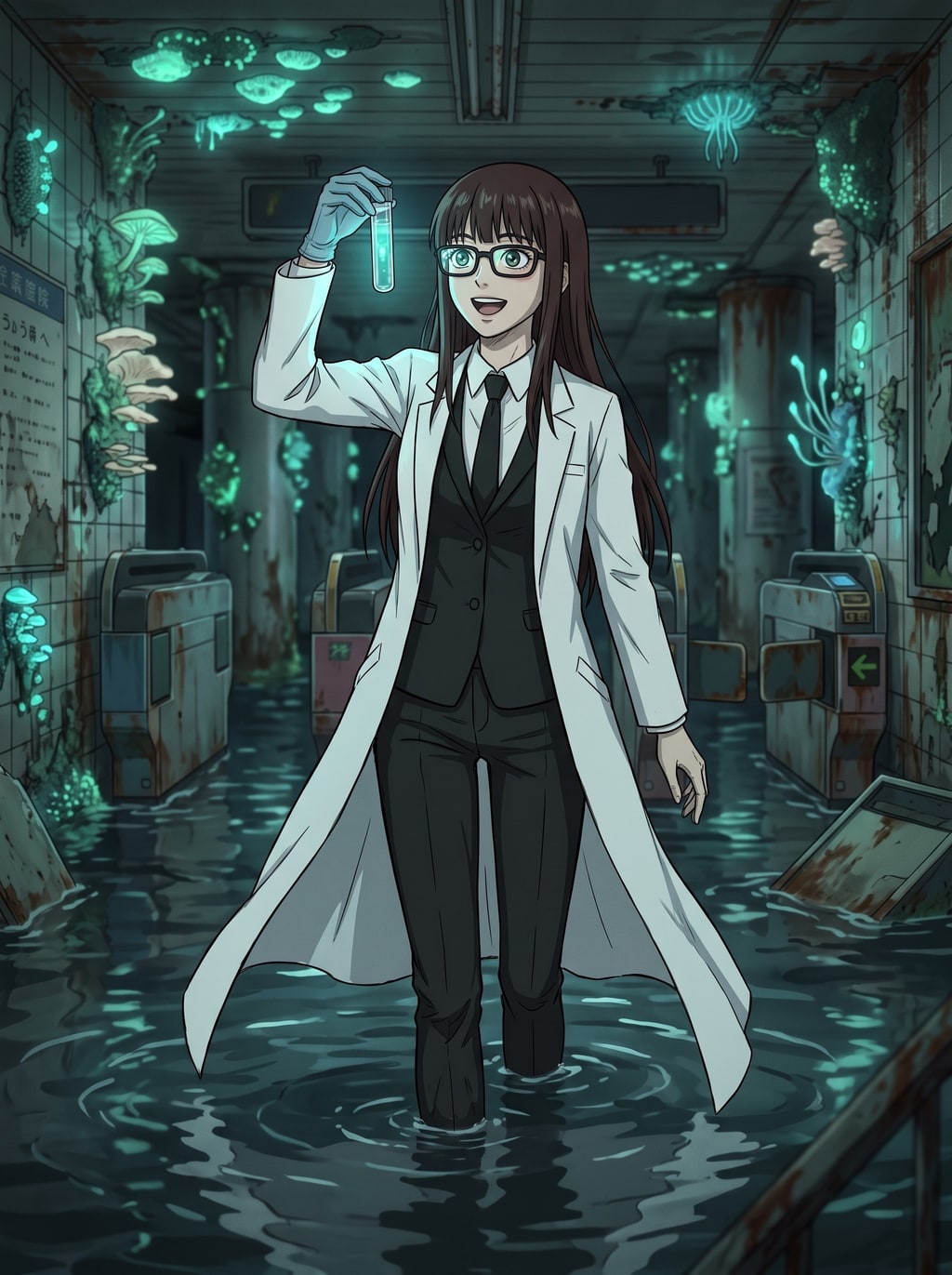
"In the second second after rupture, the medium ceases to resist. Do not mistake this for vacuum: it is not empty space; it is the floor upon which empty space is laid."
From Unit Nine Field Manual: Operational Physics, BOC Longwan, 2128
drew one straight line across the middle of the whiteboard and turned round to face Unit Nine.
"The math isn't broken," he said. "The frame is."
It was nearly midnight in the operations annex in Longwan, three nights after the Sky Gate had dropped 's beacon at his feet, and everyone in the room wanted to know what he made of it. Rain was hammering the corrugated roof. Somebody had dragged the whiteboard up from a flooded classroom in the basement, because the annex had nothing else to draw on, and its enamel was pitted with rust. sat cross-legged on a flight crate with a mug of cold chicory on her knee. had a swivel chair that did not belong to her rank and had pulled her knees up to her chest on it. was behind his radio bank with his headphones round his neck. The rest of Unit Nine was where it always was in a briefing, leaning on things.
"Which frame?" said. "Relativity, or the Coalition's patches to it?"
"Both. On the Kepler we thought the Halo was a tear in a sheet. Push something heavy through a sheet and it splits. The militaries thought the same, and every weapon they have built since the war works on that idea." He tapped the line. "Wanxing. Tell them about the debris."
Su sat up so fast the chair rolled. "The tracks out of the Sky Gate don't fit a hole. If you come through a hole, you lose speed against the edges. The debris didn't. It slowed down like something entering an established current. Like a river mouth." She went pink. "Sorry. I ran it twelve times."
"It carried the signal, too," said. "'s locator. Her message didn't lose anything coming through. It came out cleaner than it went in." He rubbed his eyes. "It wasn't a broadcast. It was an echo bouncing off walls that shouldn't be there."
turned back to the board and drew under the line: a mesh of small six-sided cells, dense and even, spreading out to the edges of the enamel. Then he drew five small circles where five of the cells met.
"Xinhe," he said, touching them one at a time. "The Stadium Hive. The Sky Gate. Longwan. And the Moon."
tapped her pencil on the shell of the lantern she had been gutting. "Space is never perfectly flat, . Not even in deep vacuum. Something always bends it."
"Our space, yes. But underneath it there's a floor." He capped the marker. "For eight years I've said that MECN-7 hears interference before a rupture comes. I never asked what was causing the interference. When the clocks at the Xinhe rail depot and the weather station drifted apart, they weren't broken. Each one had slipped onto a different cell of this." He pointed at the hexagons. "My program has been picking it up the whole time, and I've been calling it noise."
"So what is it?" Gu said.
"I've been calling it the Zero Lattice. It's a floor where space does not bend at all, built in cells, under everything. The war's weapons didn't punch through the ceiling. They stripped the plaster off the beams. Every rupture we've ever mapped is a place where our space has come away from the beam underneath."
was already pulling cables. "Give me that. Give me all of it, the debris, the rupture sites, the clock drifts. I want to see it in the tank."
He photographed the whiteboard with his slate, added Su's tracks and eight years of 's rupture maps, and threw the lot into the projection sphere in the middle of the room. The overhead lights went down. For a moment there was only the rain.
Then the floor went transparent, and a pale Earth the size of a cart turned slowly under their feet, its coastlines drawn in grey. Points of light came up on it one after another: the rupture sites, Xinhe and Shaanxi and Rotterdam and the drowned stadium on the estuary, dozens of them, then hundreds. From each one a thin bright line rose and met others, and where they met they made hexagons. The hexagons climbed up through the room around the people standing in it, through the crates and the radio bank and Su's chair, a honeycomb of light going up and up until it closed overhead in a ring that hung under the ceiling and turned slowly. It was the Halo.
was standing at the centre of it. The lines went through his chest. Somebody at the edge of the dark let out a breath.
had stood up on her crate, her mug forgotten in her hand, her glasses full of small white hexagons. had come round the table and was looking along one line from the floor to the ceiling, one eye shut, the way she sighted a weld.
"It isn't random," said softly. "God. Look at it. It was never random."
"It feels like iron stairs," said.
She was by the equipment racks with her sleeves pulled over her hands and the titanium band of her collar showing at her neck. In the light from the tank, her reflection in the dark rack doors moved a fraction after she did.
"When a rupture opens, I feel cold iron stairs under me. In the Citizen's Hall I knew which corridors would take our weight before the scanners booted. It's like stepping on joists behind rotting lath."
"You were feeling the joins," said. "The places where the cells meet."
"They ache." She looked at the lines going up past her face. "In my back teeth. In the places where Qiao's surgeons took things out."
By the balcony door had not moved since the lights went down. She was in an engineer's sweater two sizes too big, the sleeves over her knuckles, and the fine gold chain with her mother's two coins showed at the neck of it.
"The children in the shelters used to draw that," she said. "In the overflow basements after Busan. They took yellow construction chalk and drew honeycombs on the floor. None of them knew each other. My mother said it was the shape the floor made before it broke." She looked through the lines of light at . "You knew this on the Kepler."
"I knew something was there."
"So the Moon," Bo Han said. He was on a crate by the weapon racks, scraping old grease out of a hydraulic joint with a screwdriver, and he did not call it the Halo. He never did when he wanted the poetry off it. "What is sitting up there?"
looked at . She was in the doorway to the stairwell, where she had stood since the lights went down, in her undersuit, the burn on her left forearm healed now to a glossy sleeve of new skin. She was the only person in the room who already knew. She gave him nothing, which was what he had asked of her the night he first told her, and which was also, he understood, permission.
"When the Kepler went into the fold," he said, "the forward bulkheads opened onto something. I didn't see it. There was nothing to see. I felt it look at us. It was enormous and cold and very calm, and it had no more interest in us than a tide has in a matchstick, and when it leaned closer, half the bridge went. Osei. Karim. I have never put it in a deposition. In my head I called it the Presence, because I didn't have a better word. It is still up there, in the middle of that." He nodded up at the slowly turning ring. "That's what is sitting there, Bo."
Nobody said anything. The rain went on. Bo Han put the screwdriver down on the crate, very carefully, so it would not roll.
"If it's a framework," Gu said at last, "why does it kill people?"
"Why does a power line kill a bird?" said. She came down off the crate. "The wire isn't trying to. The bird touched two things at once that should never be touched together. We're the bird. Everything on this side is built to live in space that bends, and down there nothing bends."
"Can the Circle do it again?" said. They were her first words since the lights went down.
"No," said. "Dragging Longwan down onto the floor burned out their machines. But the city sits on four open joins now, and they are not healing. When the Moon swings closest to Earth and lines up over the Pacific, the strain on all of them peaks at once." He looked at the clock in the corner of Su's display. "Eighty-two days from tonight. At twelve minutes past midnight."
"And if we try to contain it?"
"You cannot contain a structural beam. You either rebind it, or you get crushed when the roof comes down."
came out of the doorway. She walked through the honeycomb, and the lines of light lay across her face and her scarred arm and did not move with her, and she stopped in front of him.
"You want to go back," she said.
His hands had gone cold. He put them in his pockets.
"I do not want to go," said. "But everything down here is the glass cracking. If you want to stop the glass from shattering, you have to go to the hammer."
"With what?" Gu said. "Jiuquan is gone. Wenchang has been underwater since spring. The only boosters left that can lift anything are the Federation's at Canaveral, and after the Longwan cordon they will not lend us a bolt."
"There is a hull," said from the corridor door.
She had come in without anyone hearing, with a leather-bound slate under her arm and salt fog drying on her coat. She looked once at the honeycomb, the way she looked at an exhibit, and then at .
"It was built under the old joint treaty, before the war froze the shared programmes. A long-range survey ship: Federation airframe, Coalition engines, Accord life support. It is mothballed in the sealed hangars under Tianmen, under the old name Project 712. It was never fitted with weapons. It was built to fly for months through damaged space." She laid the slate on the table. "Last week it appeared in the Helix Trust's books as scrap, waiting for a buyer. I have frozen the sale."
Su made a small sound, half a laugh and half something else. "The 712? That hull has six metres of composite shielding. Its insides float free of the outer frame, so a twist in space can't wring it apart. It's the only ship on the planet that could fly through what we saw at the Sky Gate." She stood up. She was a head shorter than , and she walked straight up to her and stopped with her chin tipped back and her fists closed at her sides. "I know the manuals by heart. I know why the third burn failed on the pre-war test: they planned it for flat space. Give me Dr. Neumann's coordinates and I can make it fly."
looked down at her for five seconds. Su did not blink.
"Good," said.
Then she turned back to . "The ship gets you there. What do you do when you arrive? Fire an anchor into it? Atlas-0 barely held a five-metre seam in the Citizen's Hall."
did not answer her. He looked at .
"Show them," he said.
came into the middle of the room, into the light. She put her hand to the neck of the sweater, and after a moment she drew the ribbing down, off the hollow of her throat.
Two centimetres above the notch of her collarbones was the scar. It was not raised and it was not stitched. It lay under the skin like a flaw in ice, a fern of grey light eight centimetres long branching along the muscle, and it had its own faint glow, pale violet and steady. When the tank light flickered, the scar stayed exactly as bright.
"When I was nine," she said, "the ceiling of the shelter fell. Not down. It fell away, into a grey place where there was no weight. My mother held my wrist." She stopped there. "The doctors called it nerve damage. When the sirens go, it doesn't hurt. It rings. Like a string on an instrument when somebody plays the same note in the next room."
took the boundary microphone off 's bench, a brass mesh disc the size of a palm, and held it eight centimetres from her throat.
". Put her on your screen, live."
"You're on."
"The refugee song," said to . "Just the first verse."
She closed her eyes. She did not clear her throat. She took one long breath and sang, with no hall and no amplifier, low and plain, the way it was sung on the roads.
The snow still falls upon the stones,
The fire is low, the kettle cold.
On the third line, the wavy trace on 's monitor stopped being a wave. It broke into sharp angles, and broke again, and locked into hexagons, row on row, as clean as the ones on the whiteboard. The faint crackle that had sat on every radio in Longwan since the Parade went quiet. Overhead, the honeycomb in the tank went still.
We count the names of those we keep,
stumbled back half a step and her heels hit the rack. Her hand went flat against her ribs.
"It stopped," she whispered. "The pulling. In my chest. It stopped."
Before the winter takes the road.
let the last note go. The hexagons held on the monitor for three seconds after the room was quiet. Then they shivered and fell apart into ordinary static, and the rain came back.
"When the shelter folded, her body closed round a thread of that floor," said. "When she sings, the thread answers."
pulled the sweater back up over her throat and held it there with one hand. "Can it reach the Moon?"
"Not by ordinary radio," said. His hands were already moving over his switches. "Push it up into the sky and it smears out in the first twenty kilometres. But send it through an Anchor Relay, wired to the ship's main dish, with Wanxing holding the nose on the zero line?" He whistled between his teeth. "Then it isn't crossing distance at all. It rides the lattice straight up. No delay worth the name. Nothing lost on the way."
"So we fly a pre-war hull four hundred thousand kilometres," said, "to have a conversation."
"To give it something that holds still," said. He nodded at the monitor, where the hexagons had been. "Everything up there is moving. That held for three seconds."
"The provincial council won't pay for a conversation," said. "They'll want the 712 fitted with warheads."
"Fire a warhead into it and it learns another weapon," said. "It learned the last one."
turned and looked out through the streaming glass at the city: the red lights of the patrol boats on the canal, a convoy crawling north over the suspension bridge with the lower wards' furniture lashed on top. Her reflection hung in the glass with the lines of light going through it.
"Unit Nine was made to hold the border," she said. "If the border is three hundred and eighty thousand kilometres above our heads, our jurisdiction goes with it." She did not turn round. "Prosecutor. Can you keep the Coalition off that hull?"
"I can keep the judicial bureau busy with hearings until the end of the month," said. "By then I will have filed an order declaring the 712 evidence in the Helix case." She closed her slate. "Nobody scraps evidence."
"Good." turned. "Lieutenant Su, Bo, Rao. Tianmen tonight. I want that hull surveyed in thirty-six hours: what flies, what doesn't, and what we will have to beg for. Gu, open the Federation channel through Whitlock. We need their tracking data for the western Pacific."
"Understood," Gu said, already walking.
"," said. "We need three Anchor Relays. One on the ship's flight deck. One on Atlas-0's frame. And one can stand at on the ground."
"I have two crystals in my locker." grinned. "The third I will have to steal out of the base siren, but Bo will not shoot me if I tell him it's for the singer."
"I'll hold the ladder," Bo said, and levered himself up off the crate.
The annex emptied the way rooms full of soldiers empty, all at once and noisily. The tank went dark. stayed by the whiteboard with her hand still at her collar.
"The link will be open both ways," said, low, under the scrape of the tool cases. "Whatever is on the other end, when you sing, it can pull back. It will pull on the scar. We could record you tonight and play that instead. A computer can hold a pitch."
"An algorithm does not know why it sings," said.
"Min-ji."
She took his hand. Her fingers were cold from the draught under the door, and she did not squeeze. She held it like a banister in the dark.
"In the shelter, before the floor went, I could hear people screaming two streets away," she said. "I thought they were screaming because they were dying. When the seam came through the floor I understood they were screaming because they were alone. Nobody was answering." She looked past him at the hexagons on the enamel. "That thing up there. The one you felt from the Kepler. It isn't an enemy, . It's the first thing that got left behind when the world cracked. But you have to go to it, and I have to sing from here. From the relay. We give it a ground to reach."
She let go. At the door was waiting with her arms crossed, and the two women went out together into the stairwell.
stood alone at the board. He picked up the eraser, looked at it, and put it back on the rail. Then he uncapped the marker and drew one straight line rising out of the centre of the honeycomb, up through the line he had drawn across the middle, toward the top of the board. Under it, in small exact letters, he wrote Su's coordinates and three lines more.
Node Target: Lunar Fracture (The Halo)\
Metric Curvature: 0.000000\
Status: Open.
He capped the marker. He switched the racks off one at a time and watched the amber lights go out down the row, and then he went out into the rain.