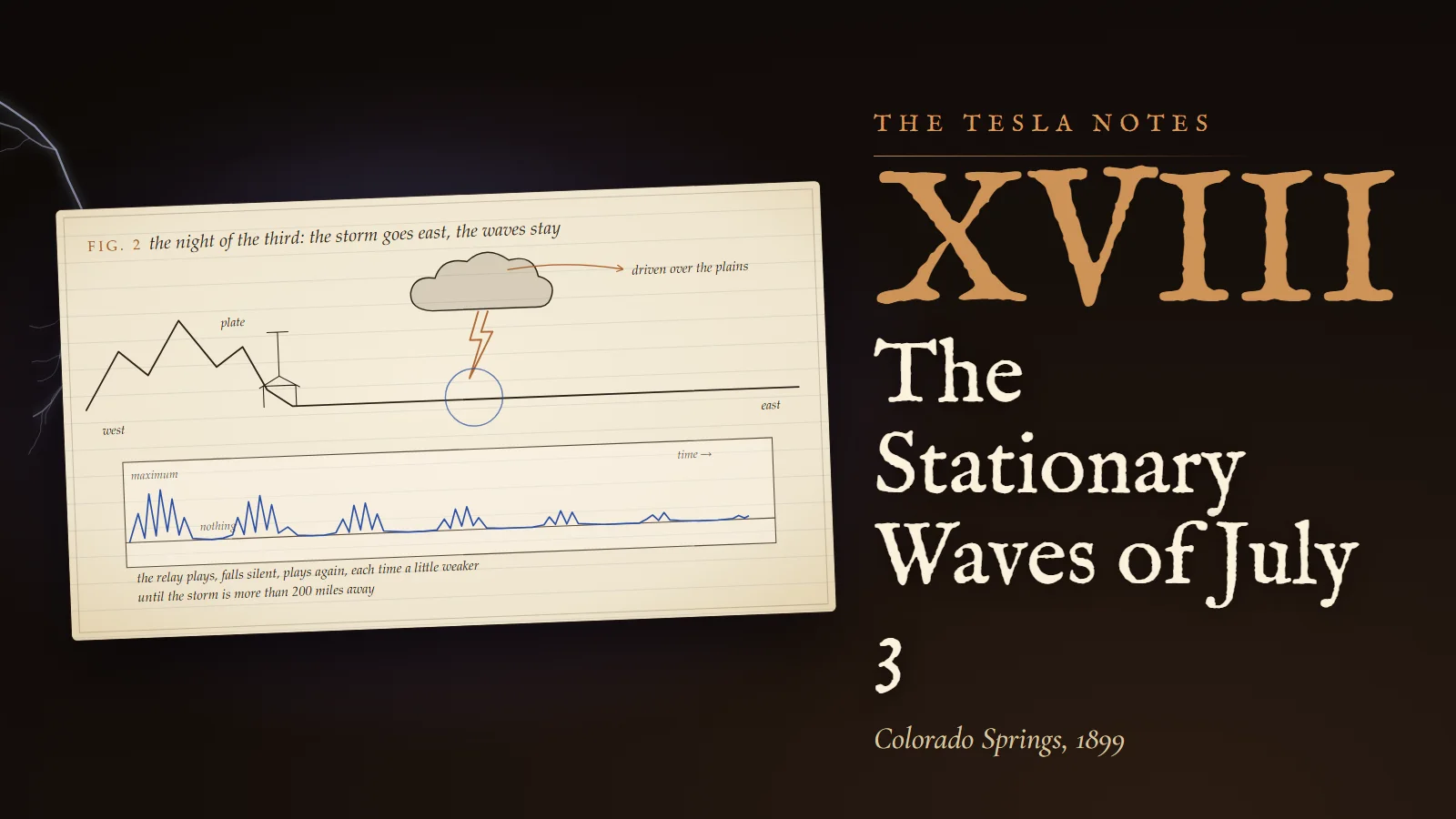
A storm walks east across the plains, my relay counts its nodes, and I spend five years deciding what was holding the waves still.
Tesla's night of 3 July 1899: the receding storm, his stationary waves, the 6 Hz of patent 787,412, and why Schumann's 7.83 Hz is a near-miss.
 Nikola Tesla
·
November 5, 2026
·
23 min
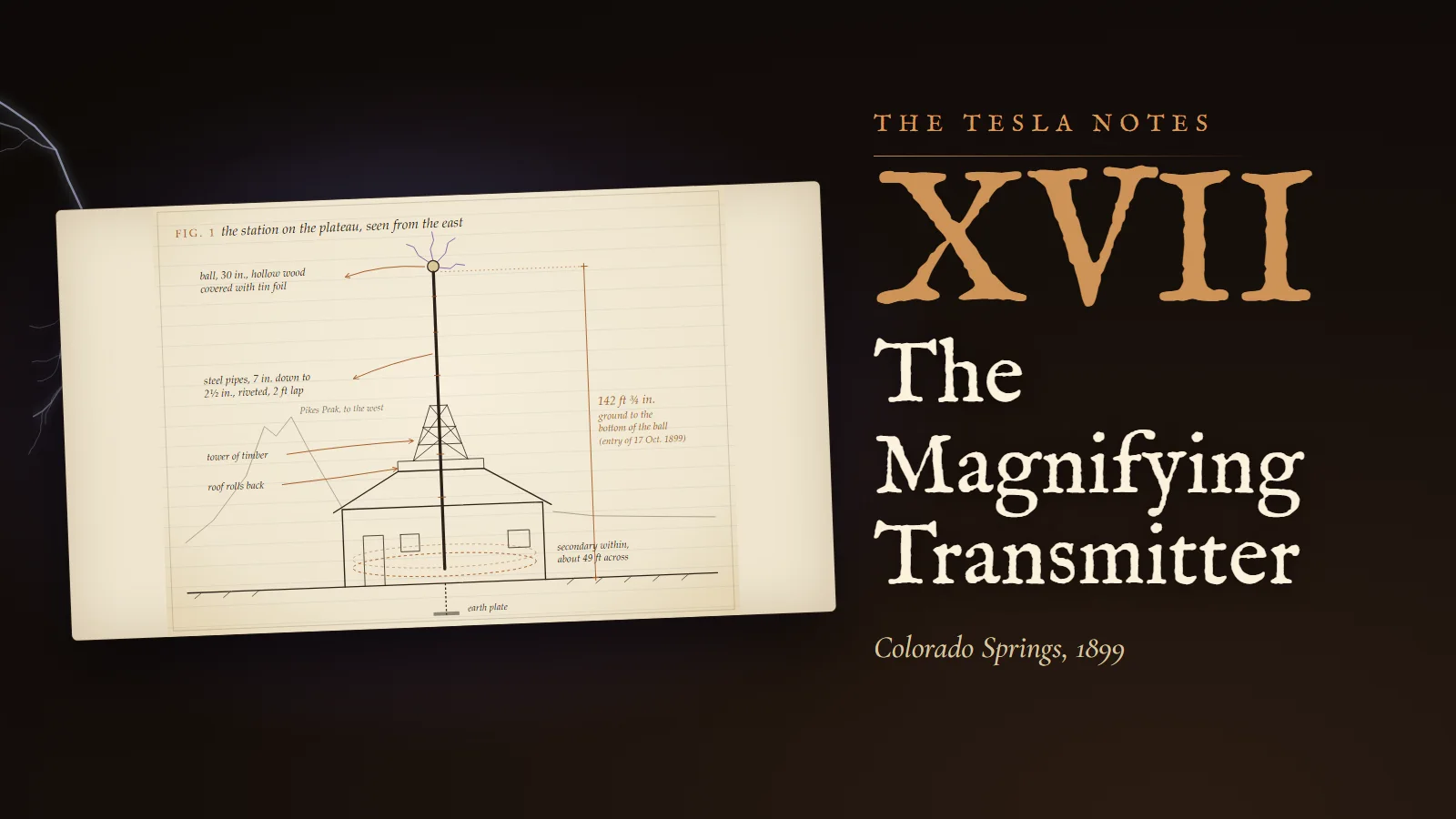
A barn on a plateau, a coil fifteen metres across, a free coil standing on a driven one, and the long work of finding its pitch.
Tesla's 1899 Colorado Springs notebook: the extra coil as a quarter wave, why a ball on top lowers its pitch, and three ways he measured capacity.
Nikola Tesla
·
November 5, 2026
·
28 min
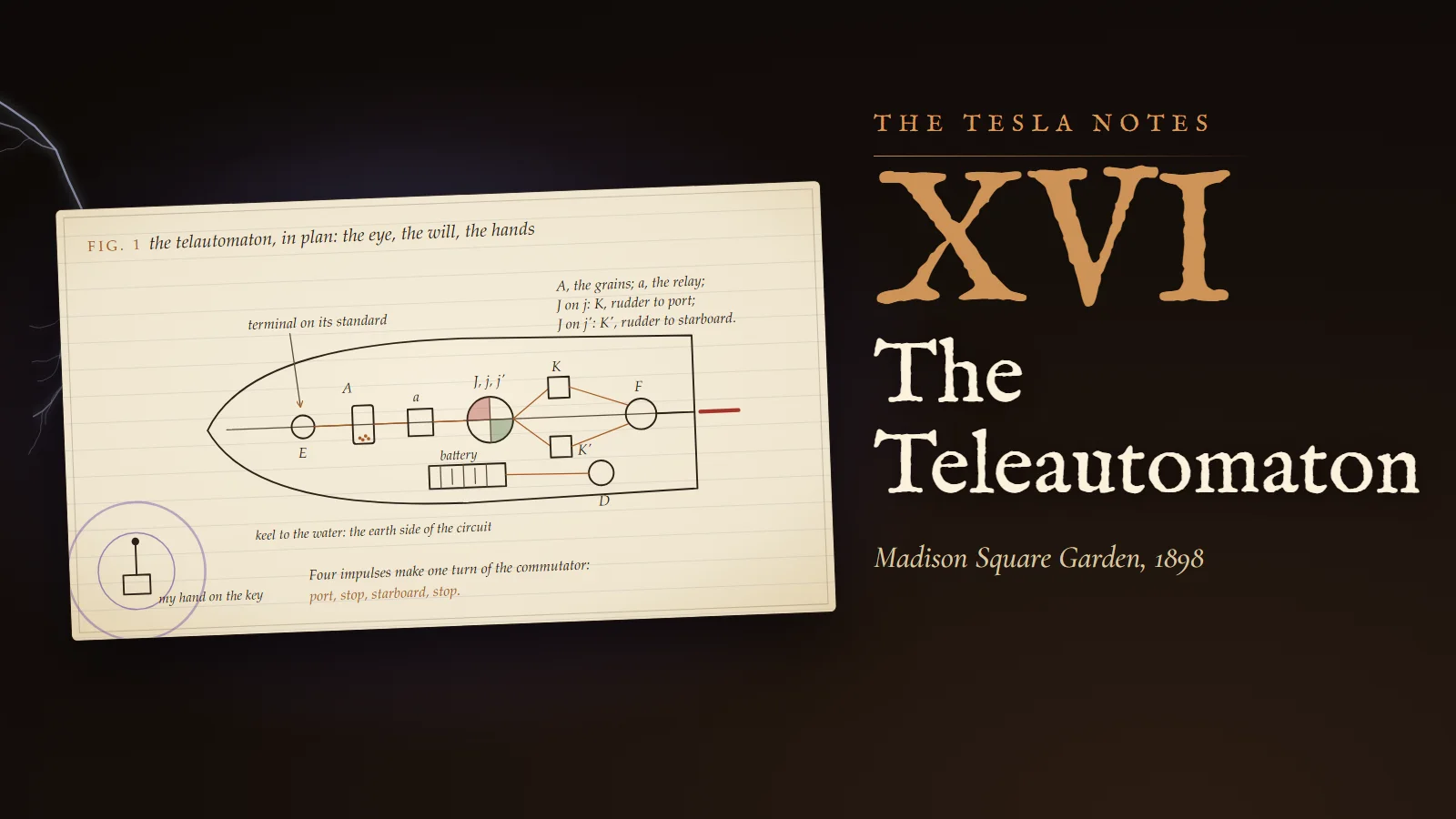
A boat steered by impulses through the air: the grains that listen, the circuit tuned to one note, and four states of a clockwork that make a machine obey.
Tesla's notebook of 1897 and 1898: how a coherer, a tuned circuit and a four-quarter commutator steered a boat, and why he thought it would end war.
Nikola Tesla
·
November 5, 2026
·
22 min
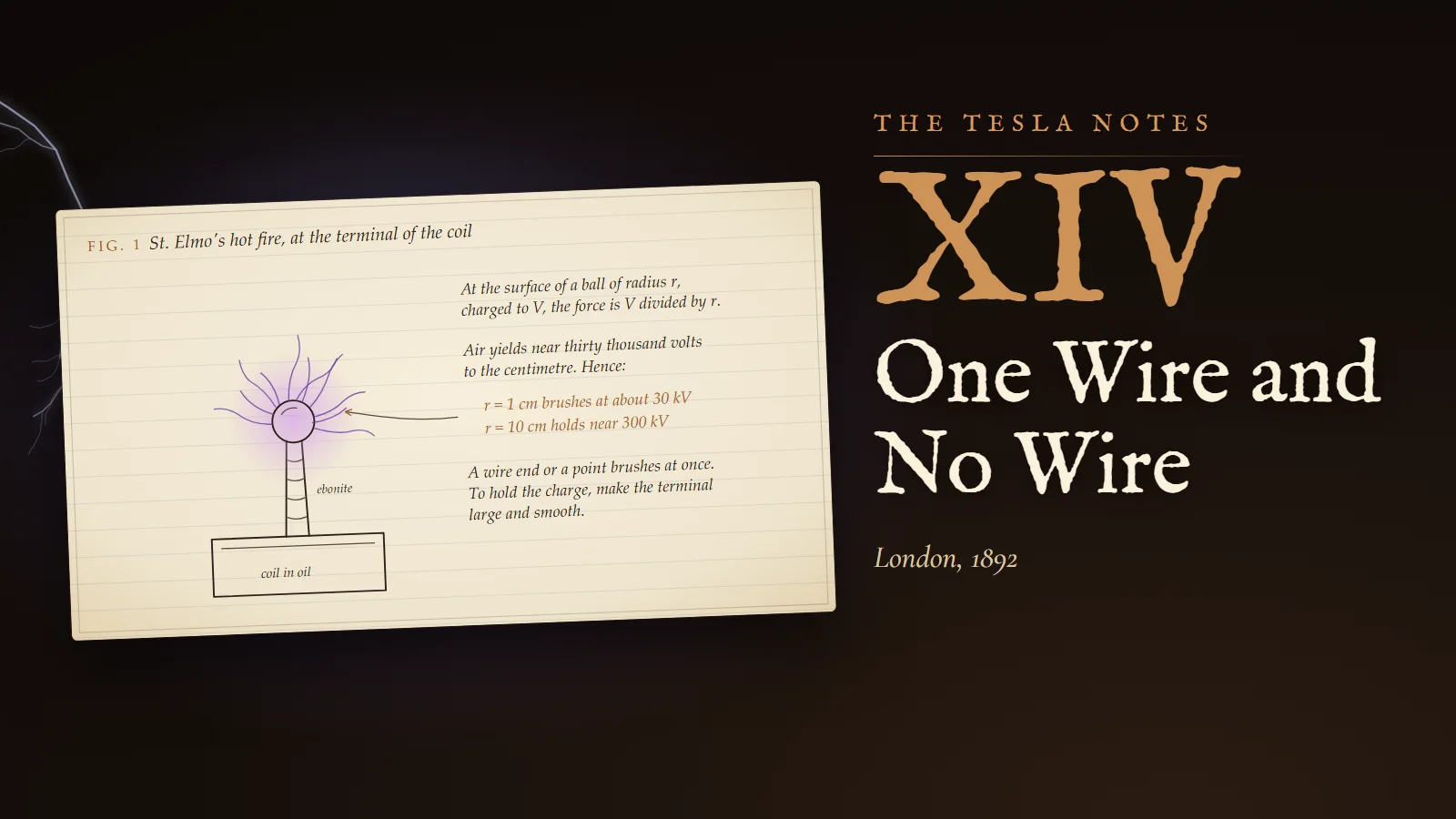
London and Paris, 1892: a lamp lit through one wire and a hanging plate, Faraday's chair, Rayleigh's praise, a mother's death, and a sorrowful visit to Hertz.
Tesla's 1892 notebook: why a plate in the air can close a circuit, how to keep a terminal from brushing, and the storm that set his course for life.
Nikola Tesla
·
November 5, 2026
·
26 min
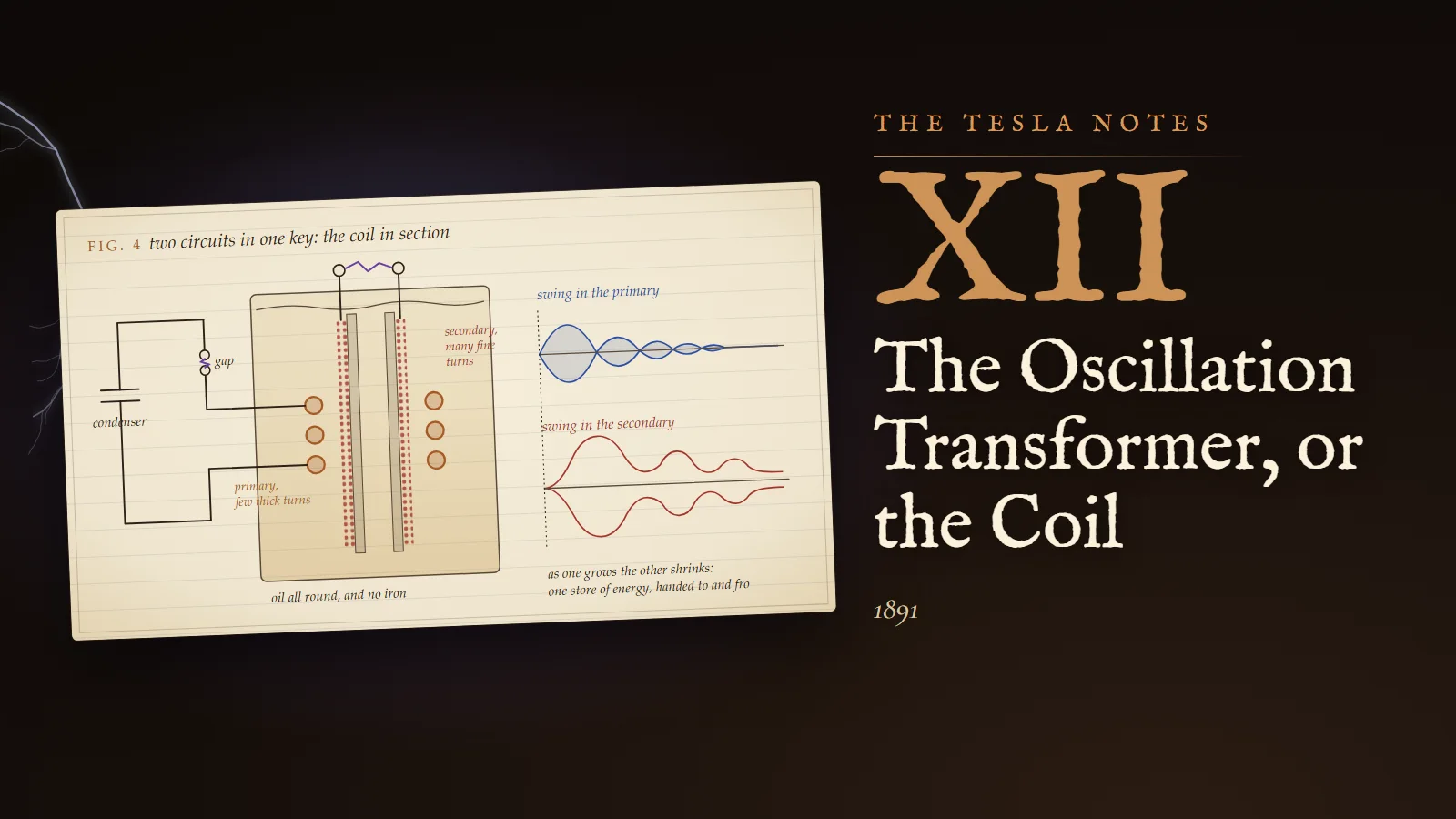
Why the induction coil fails at high frequency, and how a condenser, a spark and two tuned circuits without iron became the Tesla coil of patent 454,622.
Tesla tunes two coils without iron, derives their two frequencies and the voltage gain √(L₂/L₁), and files patent 454,622 for the coil.
Nikola Tesla
·
November 5, 2026
·
28 min
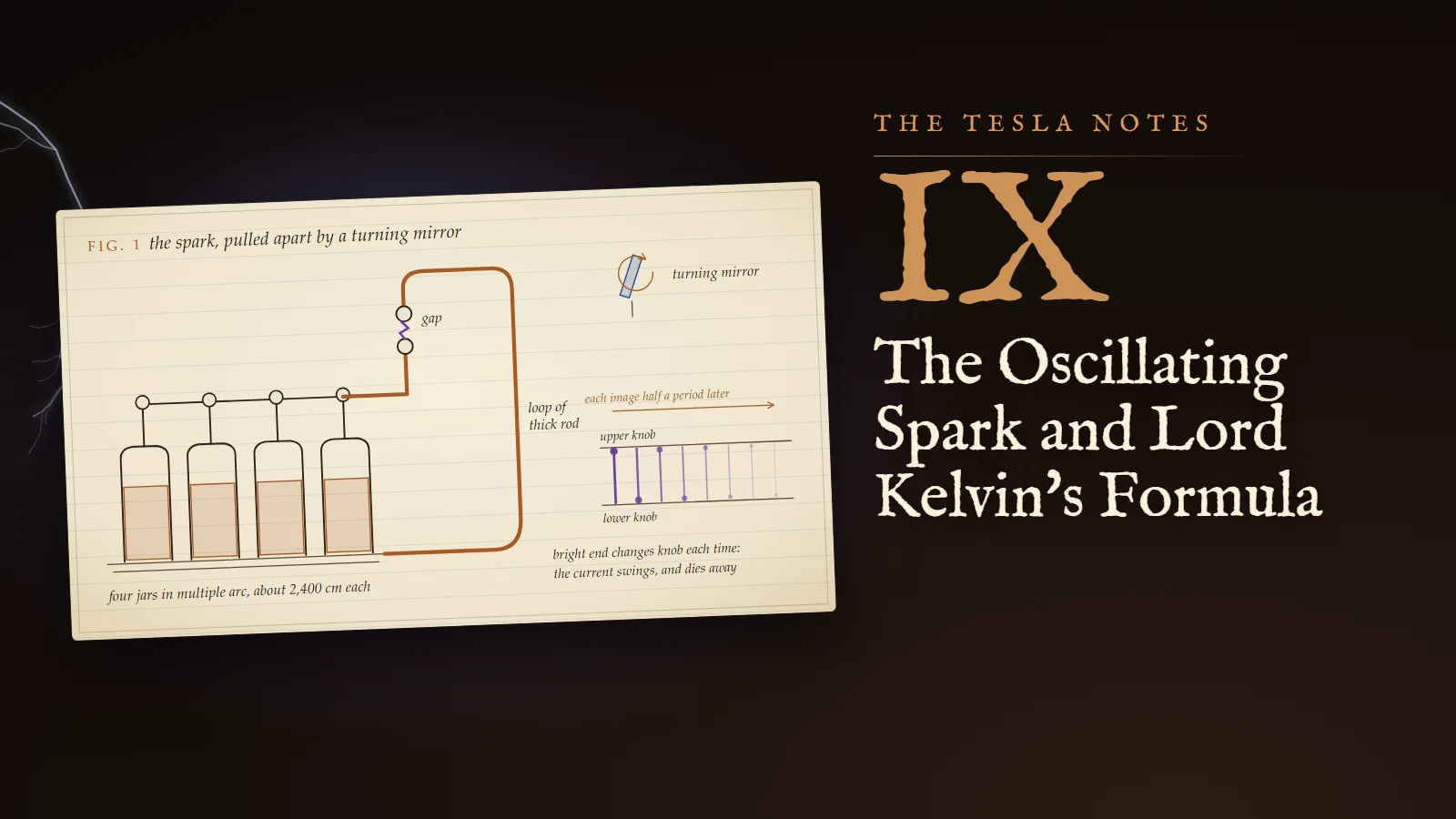
A jar of glass and a loop of copper swing a million times a second of their own accord. I derive why, count the swings in a turning mirror, and weigh the thief in the spark.
Tesla derives f = 1/(2π√(LC)) and the damping of a Leyden-jar discharge, counts the swings in a turning mirror, and finds the spark's loss.
Nikola Tesla
·
November 5, 2026
·
30 min

Exploring the Intangible Yet Impactful "Resonance" Shift in Hong Kong's Art Scene
In Hong Kong's vibrant art market, a new focus on "resonance" is reshaping the realm of contemporary art, encouraging deeper connections that extend beyond traditional metrics.
 Mei Lin
·
March 10, 2026
·
5 min