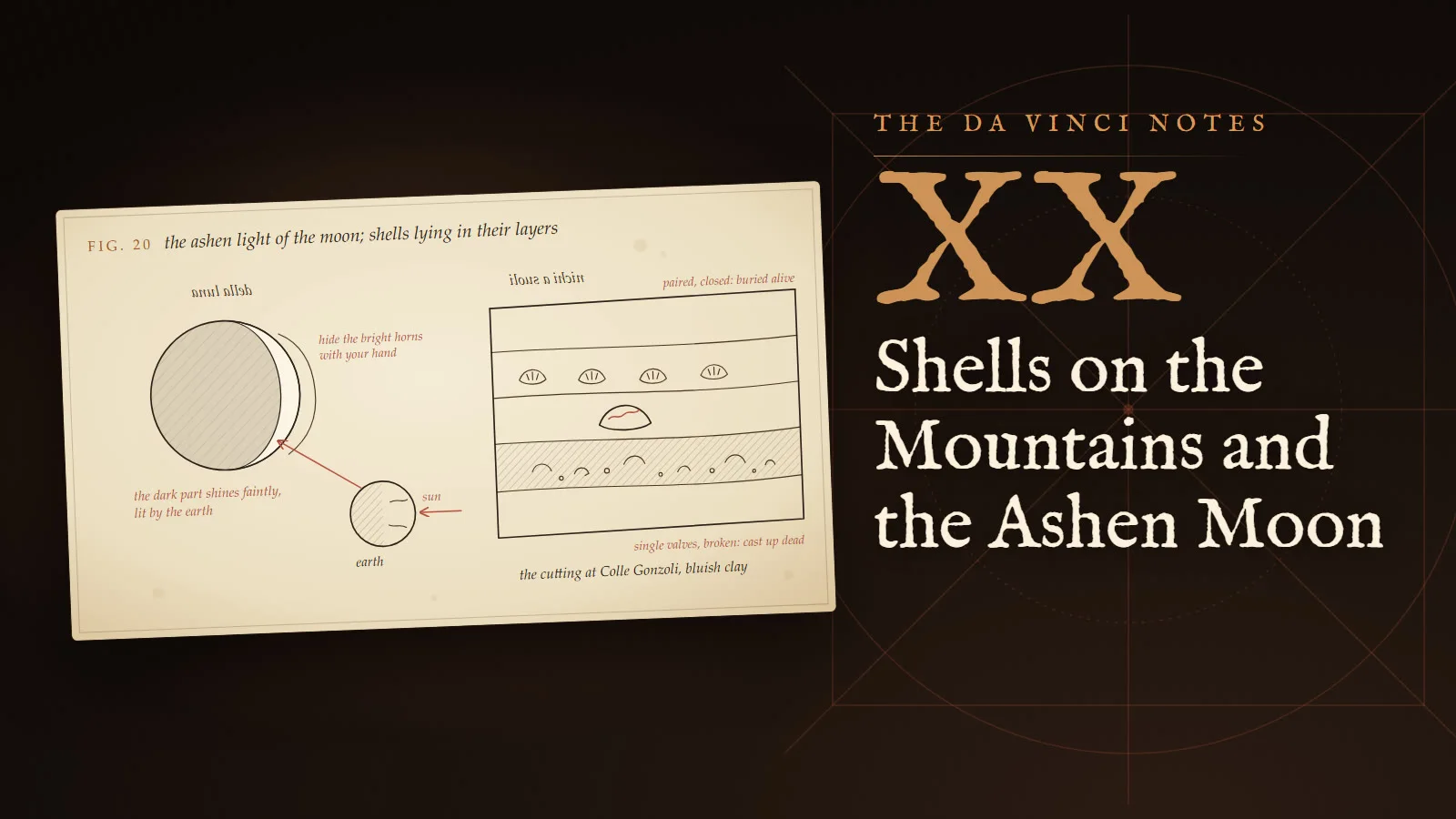
The shells in our hills lie in pairs and in layers, and no flood of forty days put them there; and the dark part of the new moon shines with light thrown back by the earth.
Leonardo's Codex Leicester arguments that fossil shells were not carried by the Flood, and his explanation of the moon's ashen light as earthshine.
 Leonardo da Vinci
·
November 8, 2026
·
30 min
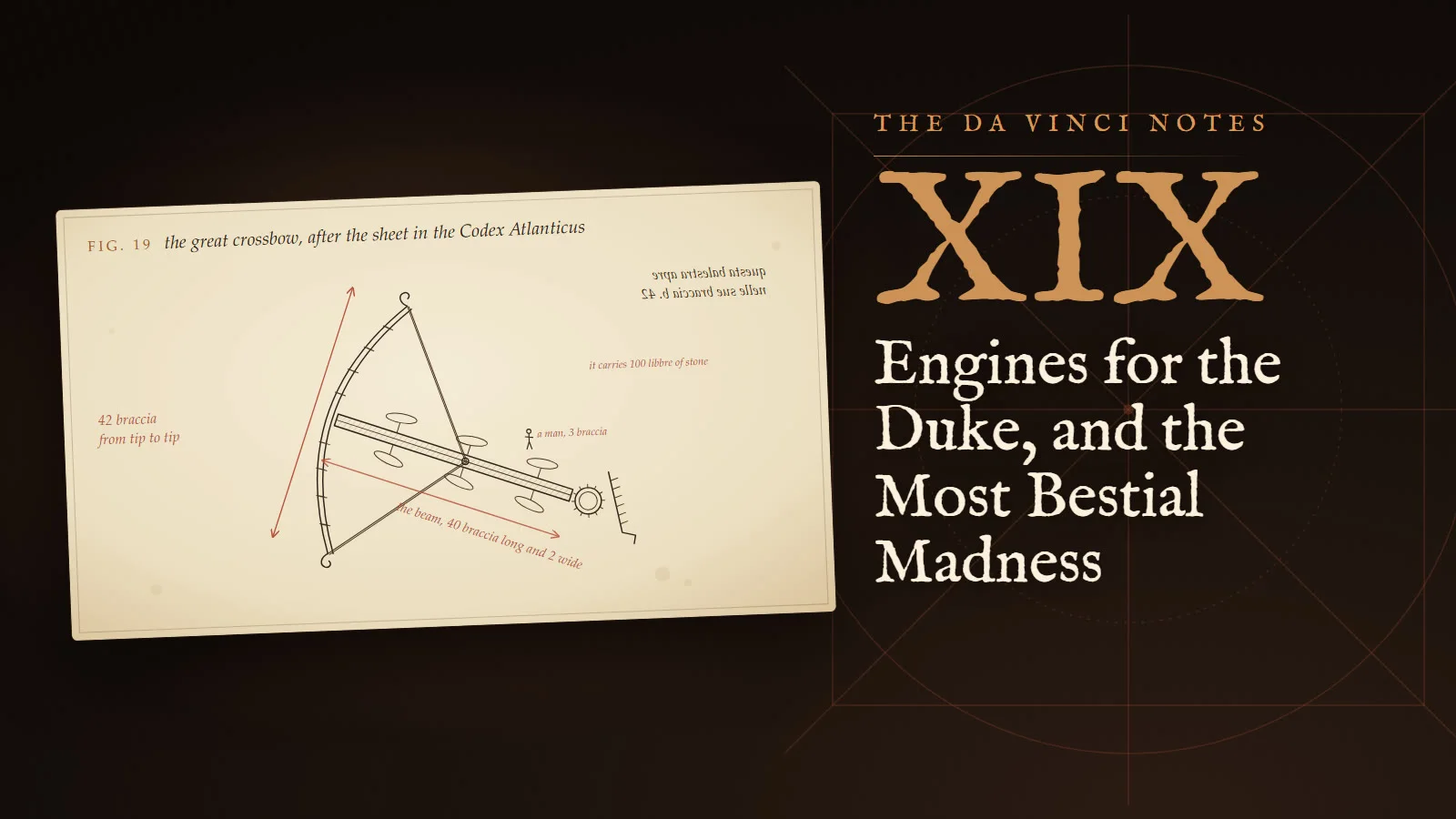
I offered the Lord Ludovico ten engines of war and only then a painting. Here is what I promised, what I drew, what was never built, and what I refused to write down.
Leonardo's letter to Ludovico Sforza, the giant crossbow of 42 braccia, the armoured car and its gearing, and why he called war a most bestial madness.
Leonardo da Vinci
·
November 8, 2026
·
30 min
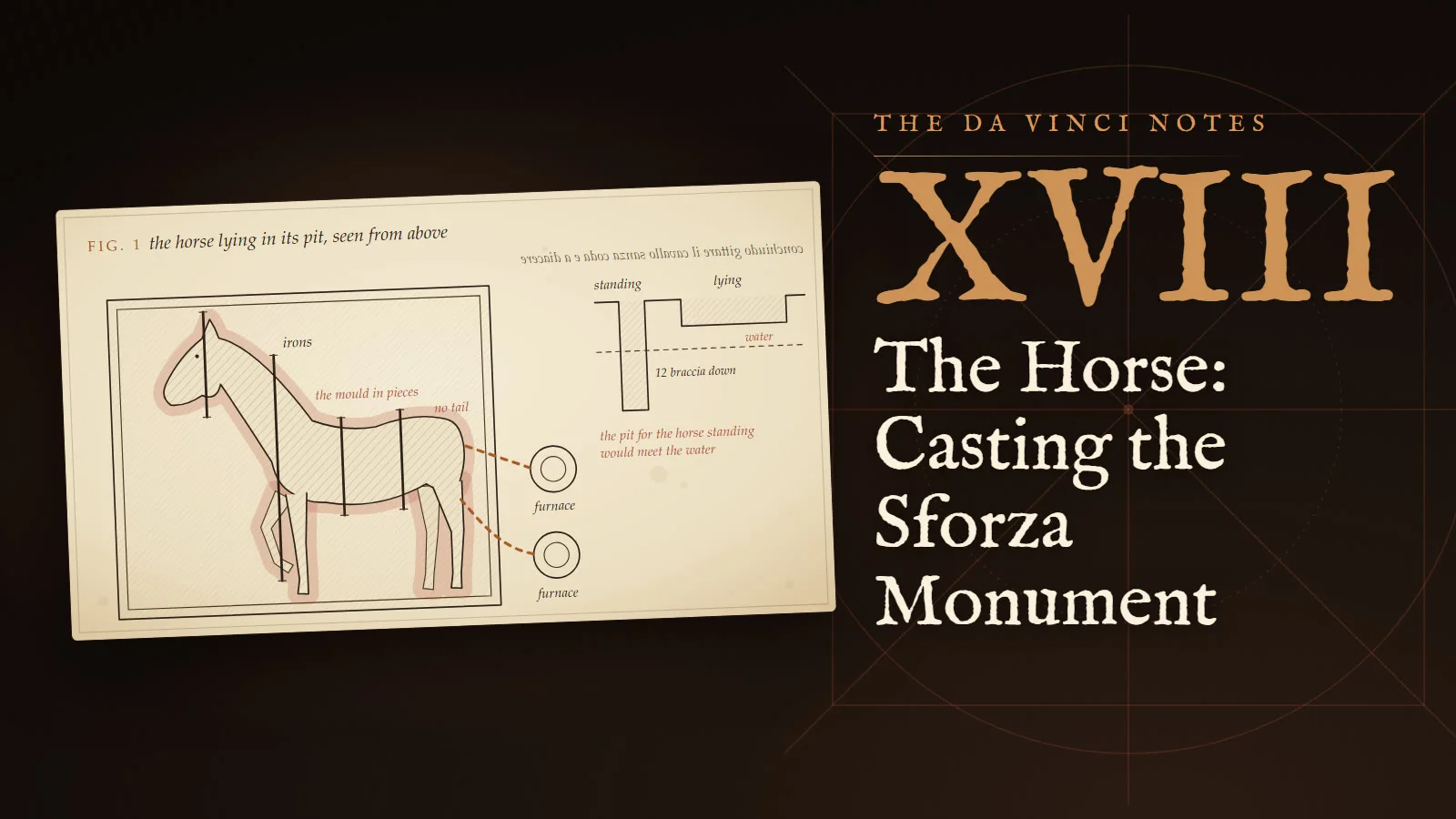
Twelve braccia of clay to the nape, two hundred thousand libbre of bronze to come, and a pit that met the water. I resolved to cast it lying down, and the metal went to war.
Leonardo's colossal horse for Francesco Sforza: the 1493 clay model, the square-cube law, the casting plan in Madrid II, the bronze sent for cannon, the French.
Leonardo da Vinci
·
November 8, 2026
·
28 min
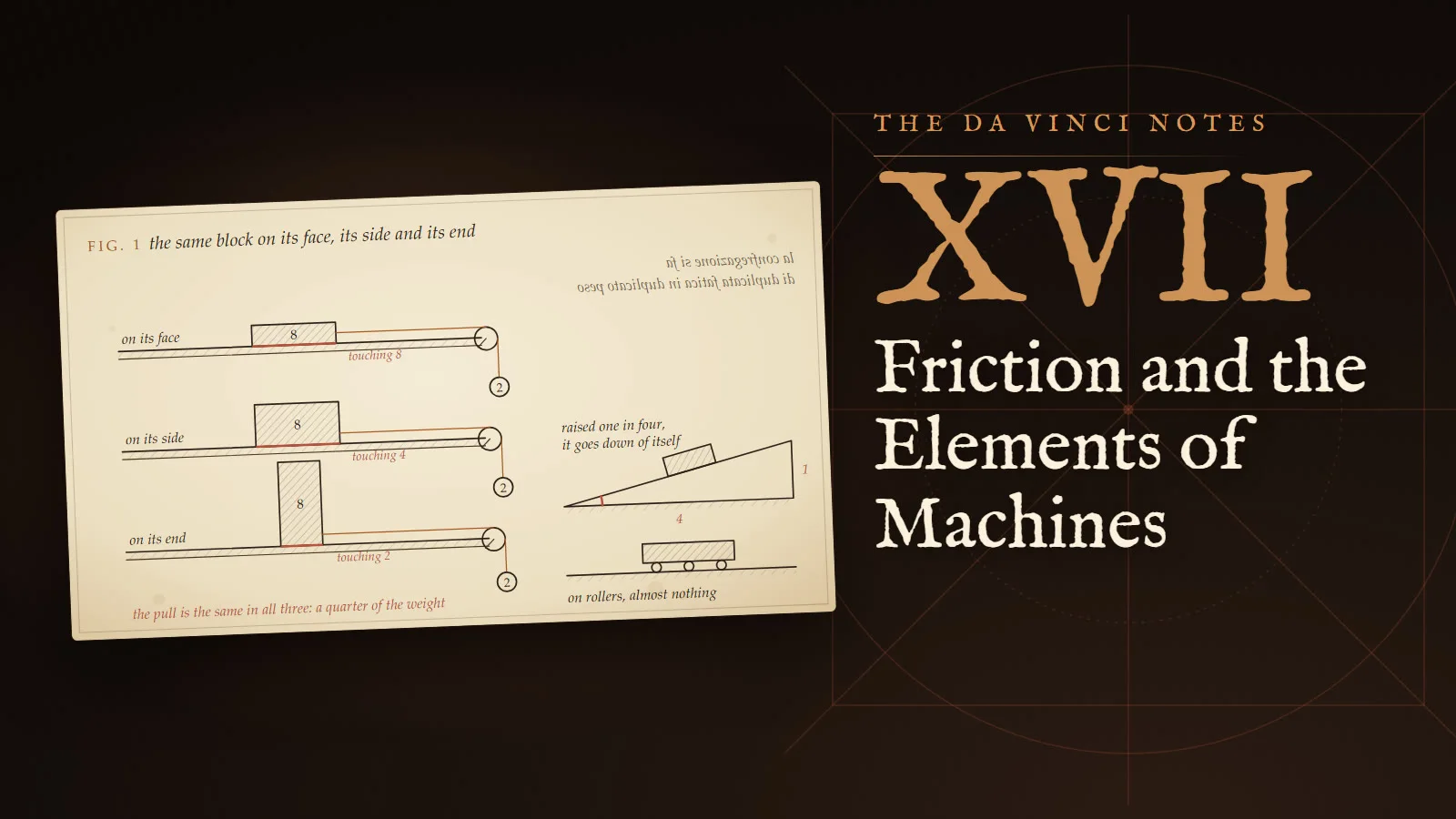
Double the weight, double the rubbing, and the face it lies on makes no difference. I found it with blocks, a cord and a pan of lead, and wrote a quarter into every machine.
Leonardo's friction rules two centuries before Amontons: load not area, a quarter of the weight, rollers and bearings, and the Madrid Codex elements of machines.
Leonardo da Vinci
·
November 8, 2026
·
28 min
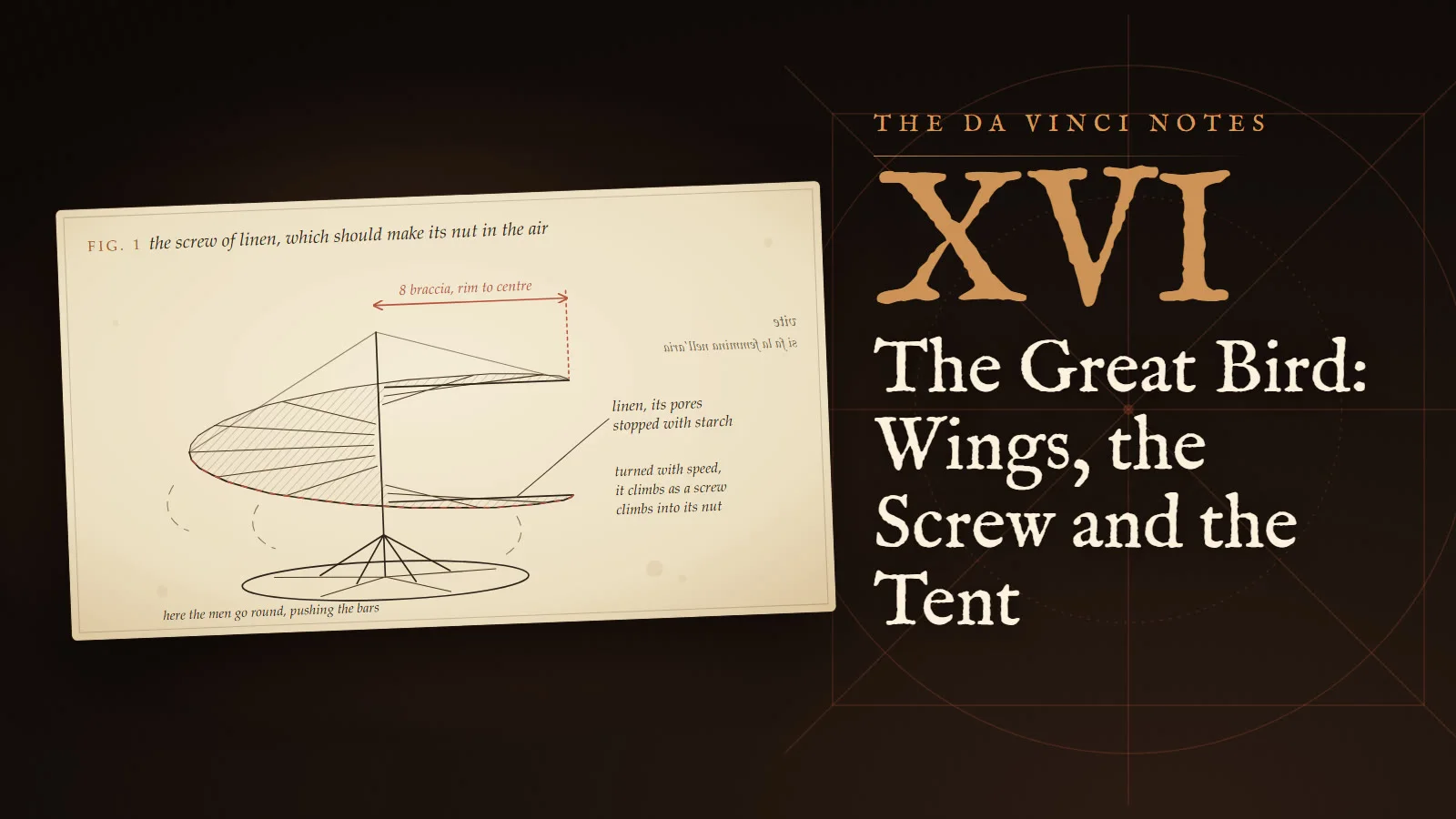
In Milan I drew wings for a man to beat, a screw of linen to climb the air and a tent to fall under. In Florence I learned why his arms could never drive them.
Leonardo's ornithopters, the aerial screw of Manuscript B and the pyramid parachute, why human muscle was too weak, and how the 2000 parachute test went.
Leonardo da Vinci
·
November 8, 2026
·
27 min
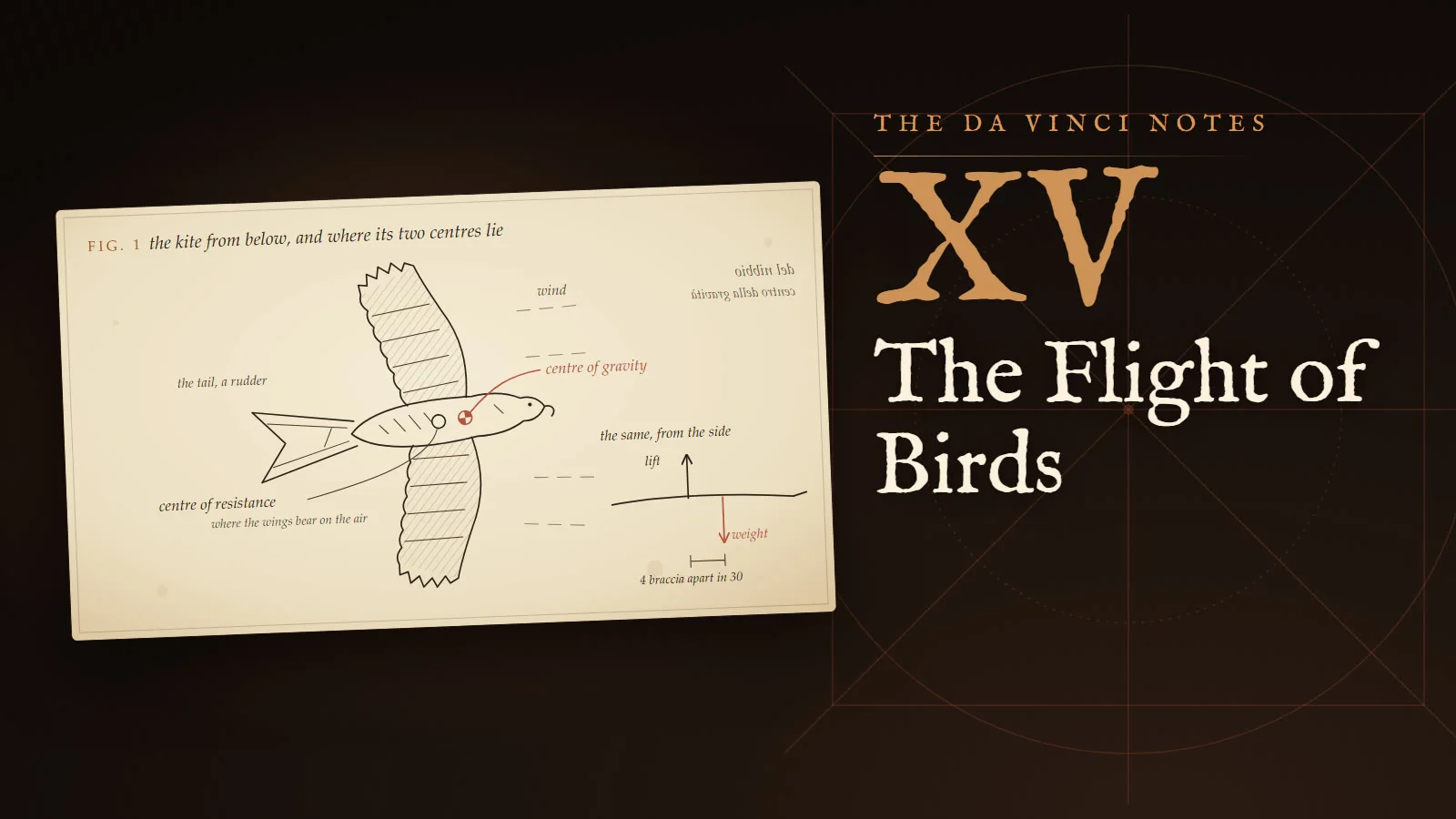
A bird is an instrument working by mathematical law. On the hill above Florence in 1505 I watched the kite balance its weight against the air and asked whether a man could learn it.
Leonardo's 1505 Codex on the Flight of Birds: the kite, its centre of gravity and centre of resistance, gliding, the cradle memory and the great bird prophecy.
Leonardo da Vinci
·
November 8, 2026
·
30 min
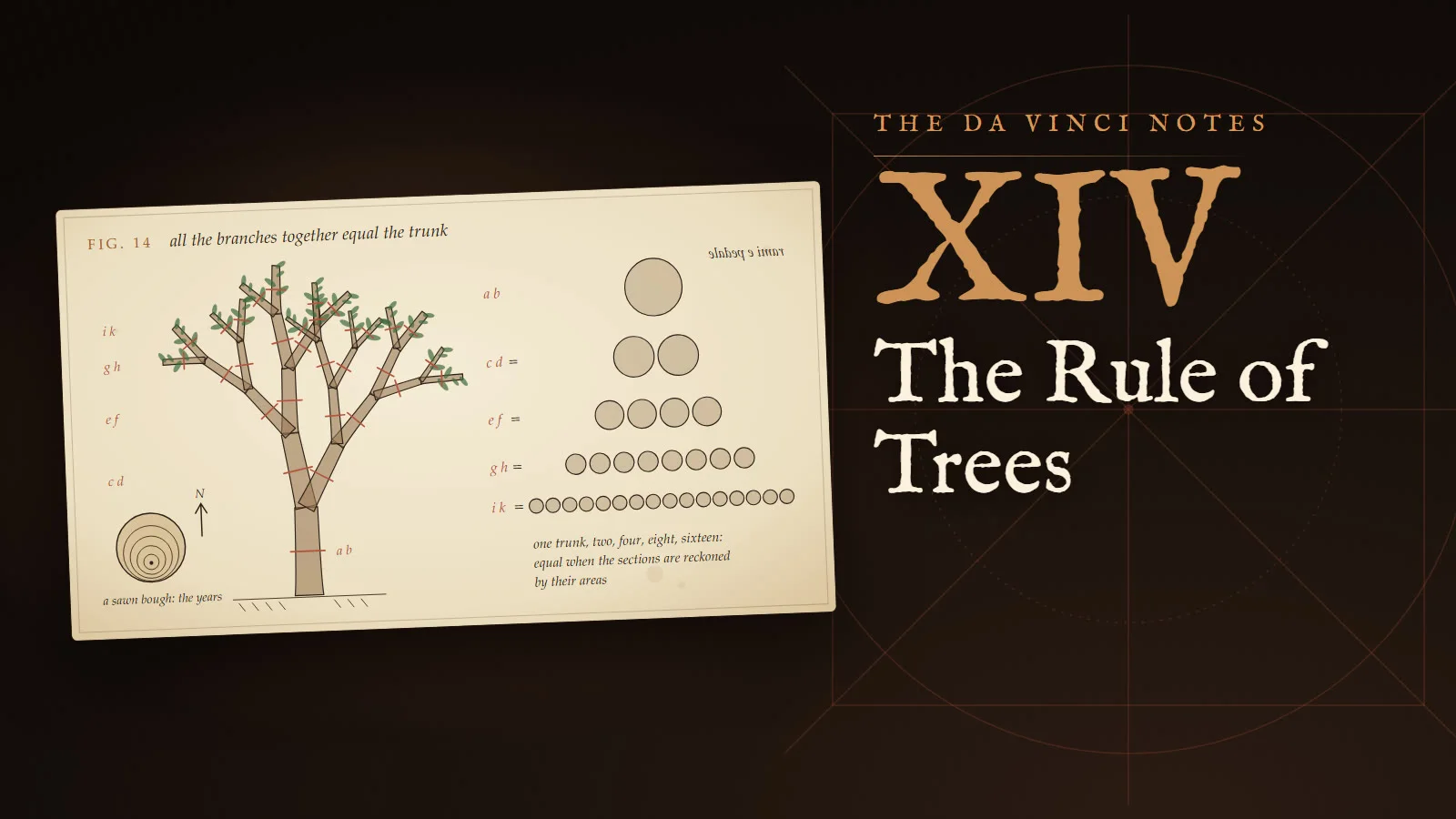
All the branches of a tree at every stage, put together, equal the trunk. I measured it on an elm, counted the leaves round a cherry shoot, and read the years in a sawn bough.
Leonardo's rule that a tree's branches together equal its trunk, the sixth leaf above the first, tree rings and the north side, and light in leaves for painters.
Leonardo da Vinci
·
November 8, 2026
·
29 min
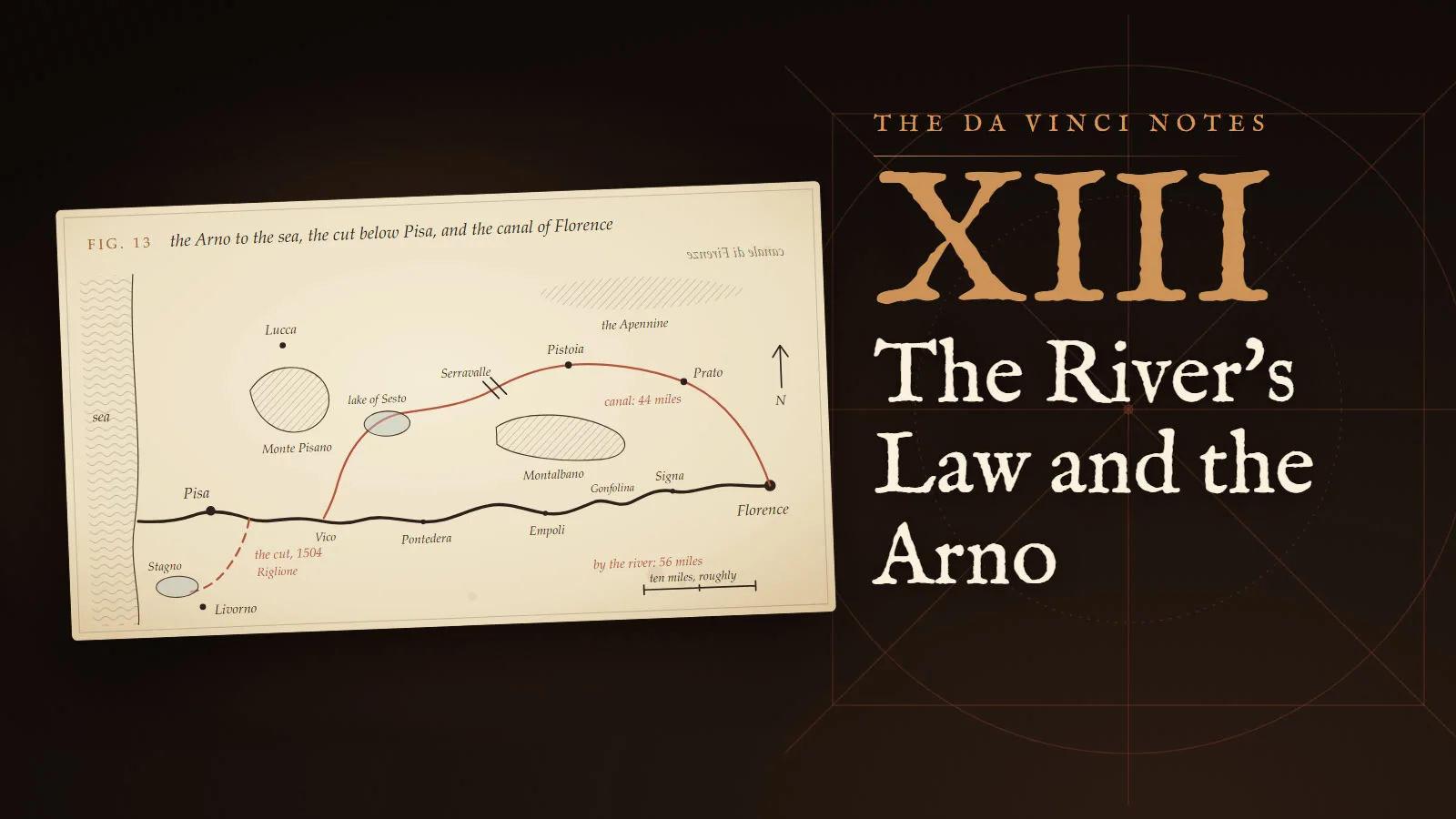
Water runs fastest where the river is narrowest, and the same quantity passes every section. I learned it in a trough, and the Arno taught it to Florence at Pisa in 1504.
Leonardo's rule that a river runs faster where it narrows, the 1503 to 1504 plan with Machiavelli to divert the Arno from Pisa, why it failed, and his canal.
Leonardo da Vinci
·
November 8, 2026
·
30 min
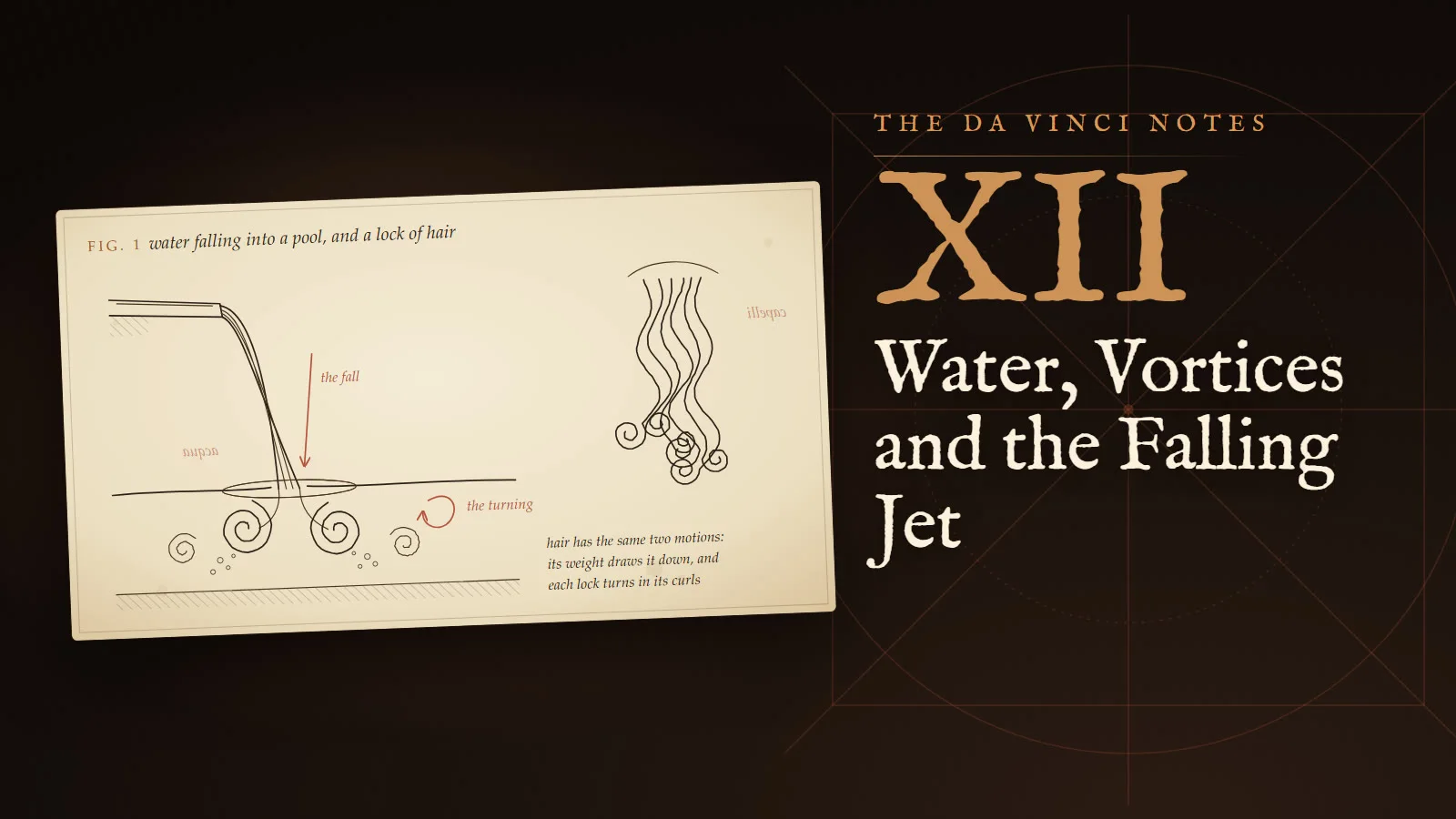
I watched water fall into a pool and found two motions in it, like a lock of hair, then set a post in a mill channel and counted the eddies that leave it by turns.
Leonardo studies the falling jet, compares water to hair, and draws the eddies behind a post that Kármán and Strouhal would later measure and name.
Leonardo da Vinci
·
November 8, 2026
·
30 min
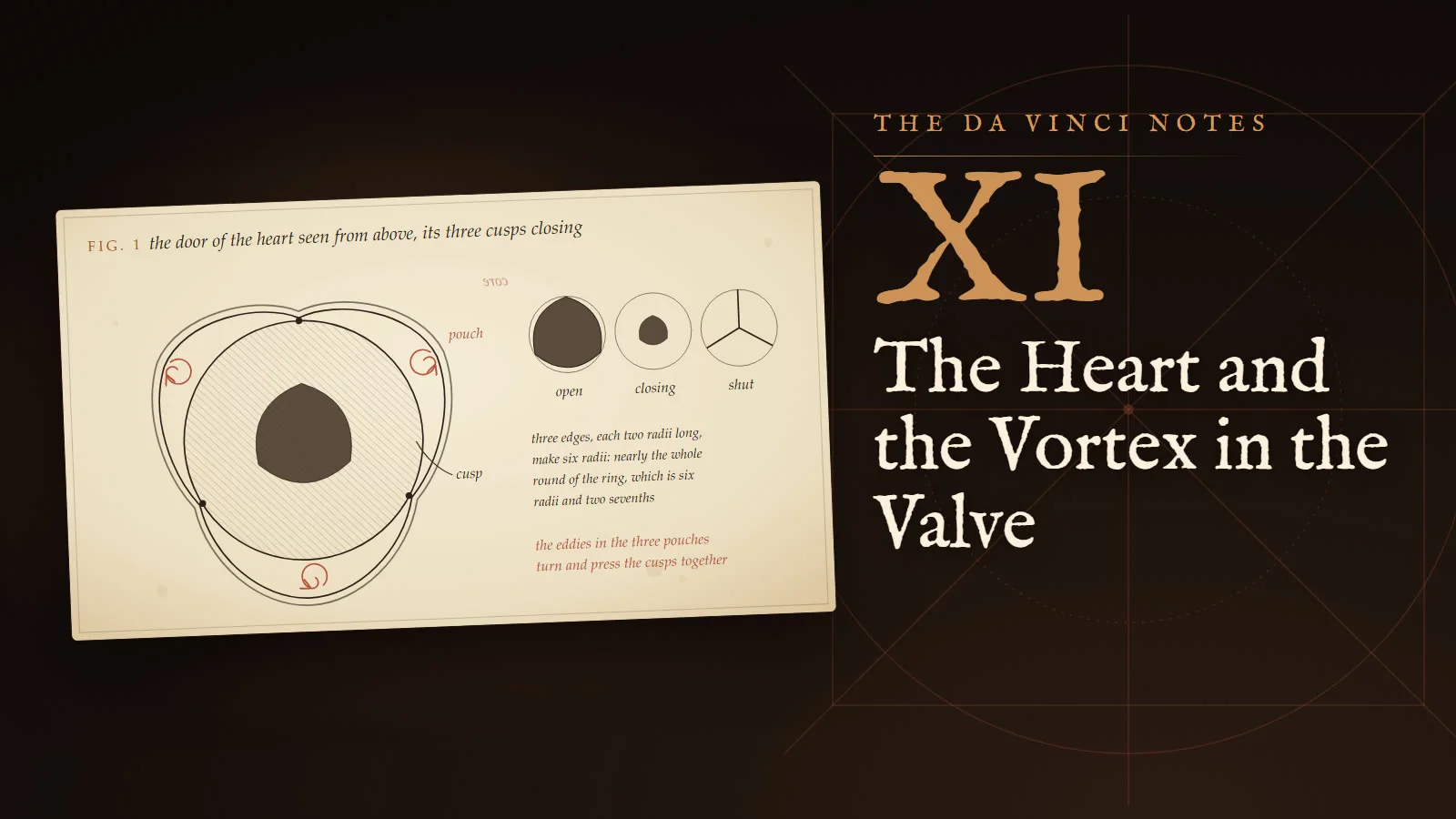
I cast the root of an ox's artery in wax, blew it in glass and sent seeds through it, and watched eddies in its three pouches shut the door of the heart before the blood could return.
Leonardo finds the heart is a muscle with four chambers, builds a glass aorta, and sees vortices close the aortic valve, confirmed by Bellhouse and 4D MRI.
Leonardo da Vinci
·
November 8, 2026
·
32 min
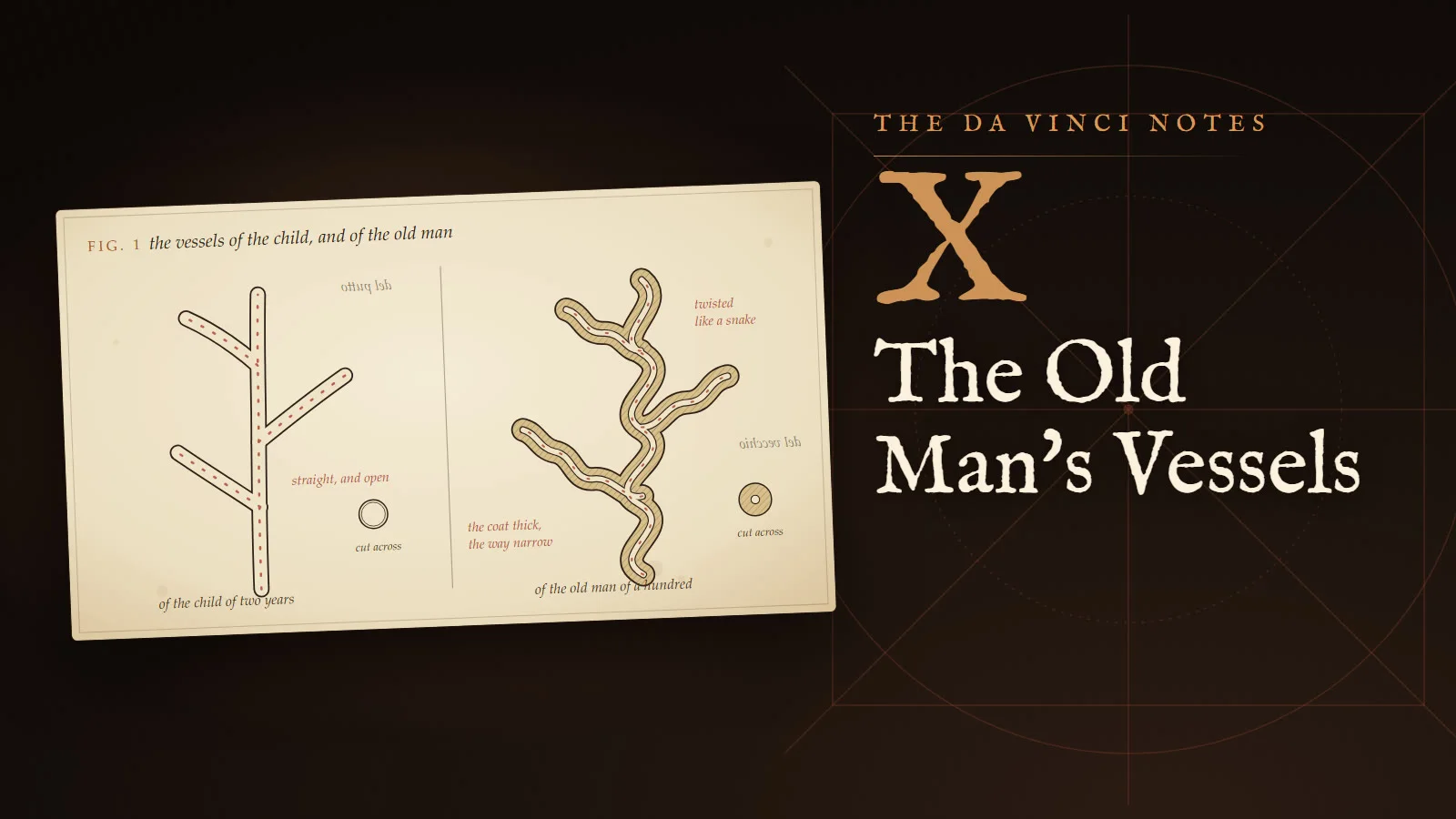
A man who said he was a hundred died beside me at Santa Maria Nuova. I opened him to see the cause of so sweet a death, and found it in his vessels.
Leonardo's centenarian dissection of 1507 to 1508: thickened, snake-like vessels, the child of two years, the oranges, and why narrow vessels carry so little blood.
Leonardo da Vinci
·
November 8, 2026
·
29 min
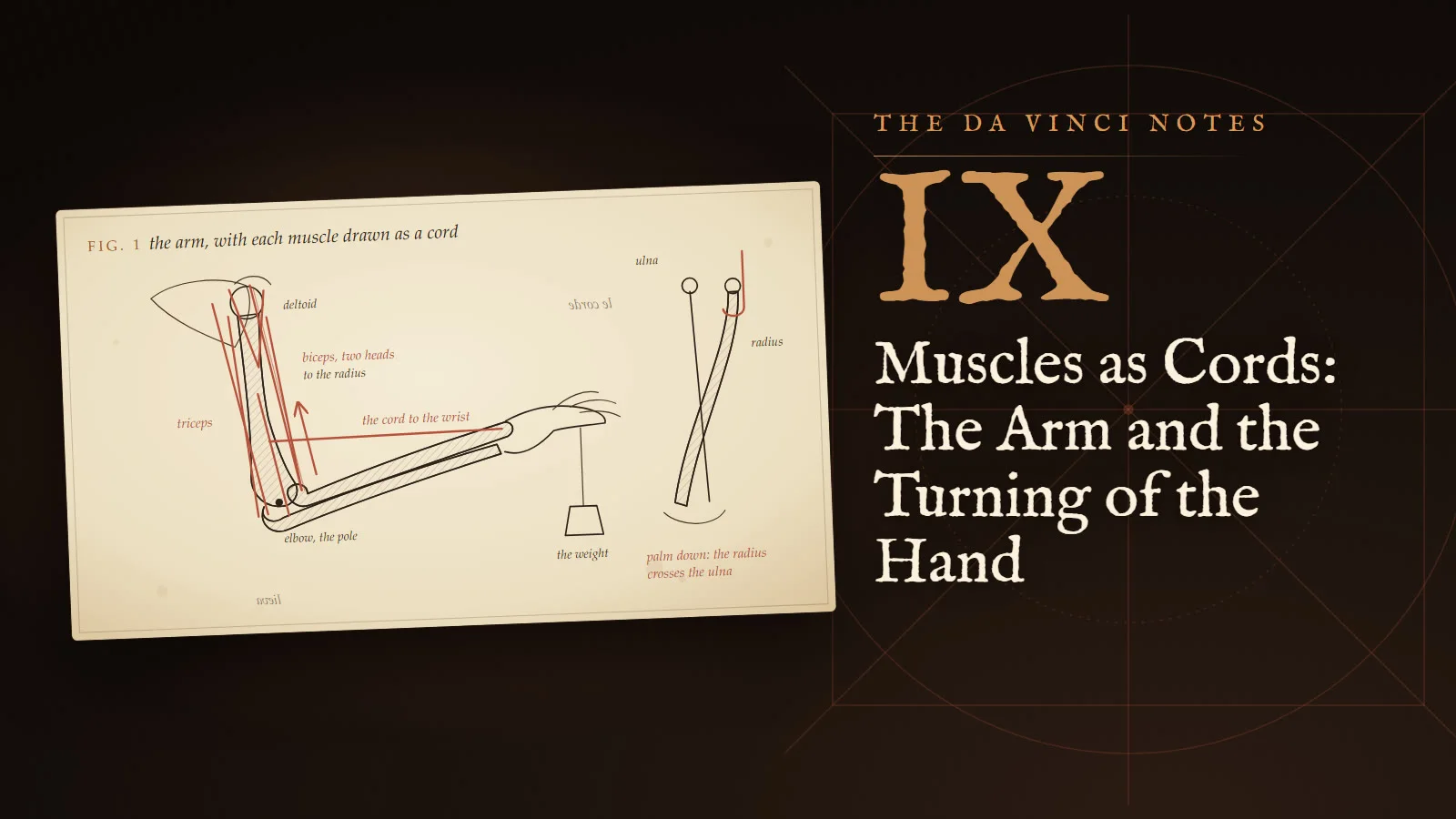
I draw each muscle as a thread from its beginning to its end, weigh the elbow as the pole of a balance, and find the cord that turns the hand palm up.
Leonardo's arm studies of 1510 to 1511: muscles drawn as threads, the elbow as a lever, why the biceps pulls nine times the weight, and how it turns the hand.
Leonardo da Vinci
·
November 8, 2026
·
32 min
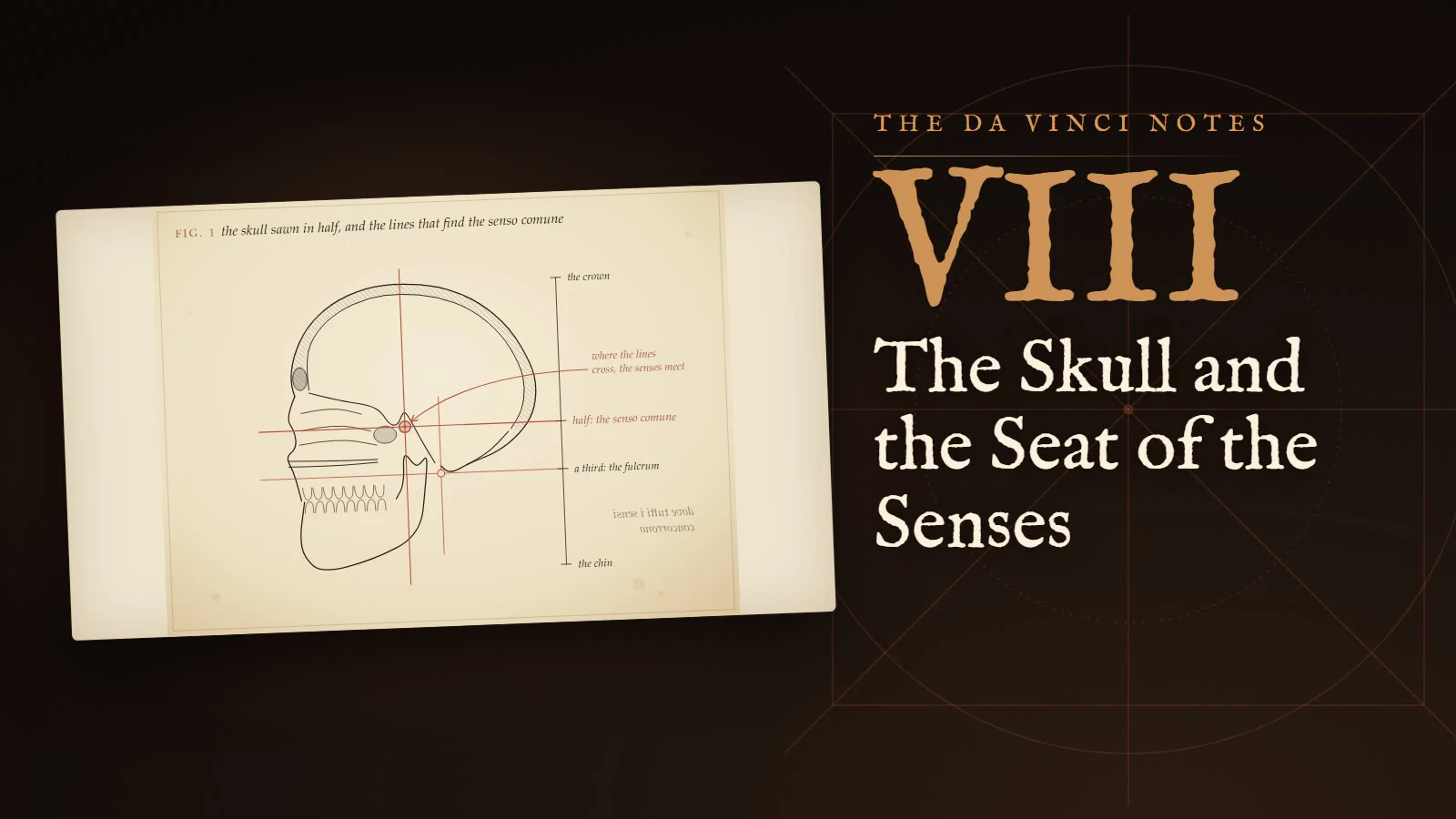
I sawed a skull in two, ruled a grid of twelve fingers over it, and found the meeting of the senses where my lines cross. Twenty years later I filled the brain's cells with wax.
Leonardo's 1489 skull drawings: the proportional grid, the senso comune where his axes cross, the wax cast of the ventricles, and what neuroscience found there.
Leonardo da Vinci
·
November 8, 2026
·
30 min
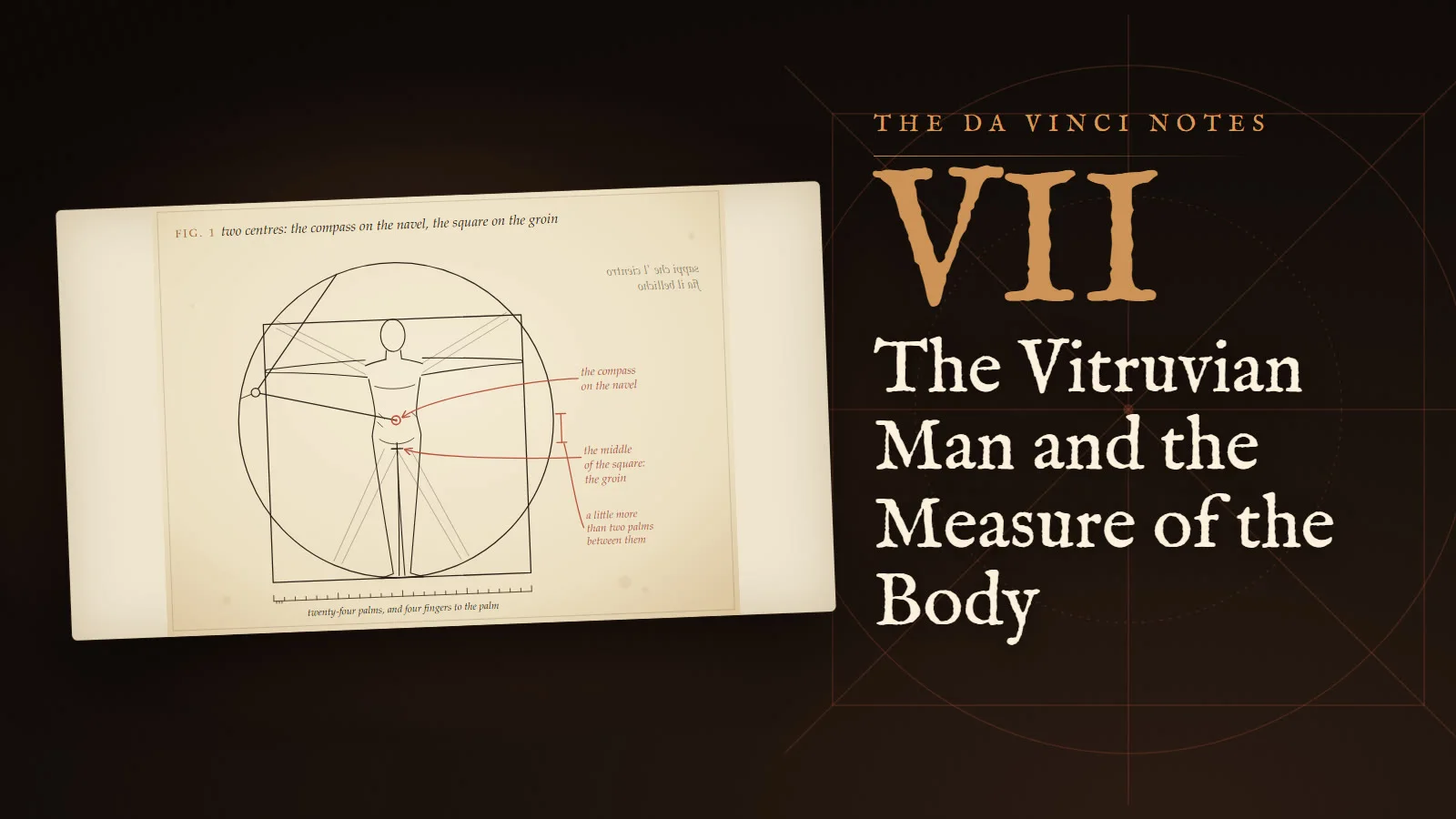
Vitruvius gave the circle and the square one centre. I gave the circle the navel and the square the groin, measured living men, and made the foot a seventh.
Leonardo's Vitruvian Man: the circle on the navel, the square on the groin, the text on the sheet translated, and the measures he took from living men.
Leonardo da Vinci
·
November 8, 2026
·
31 min
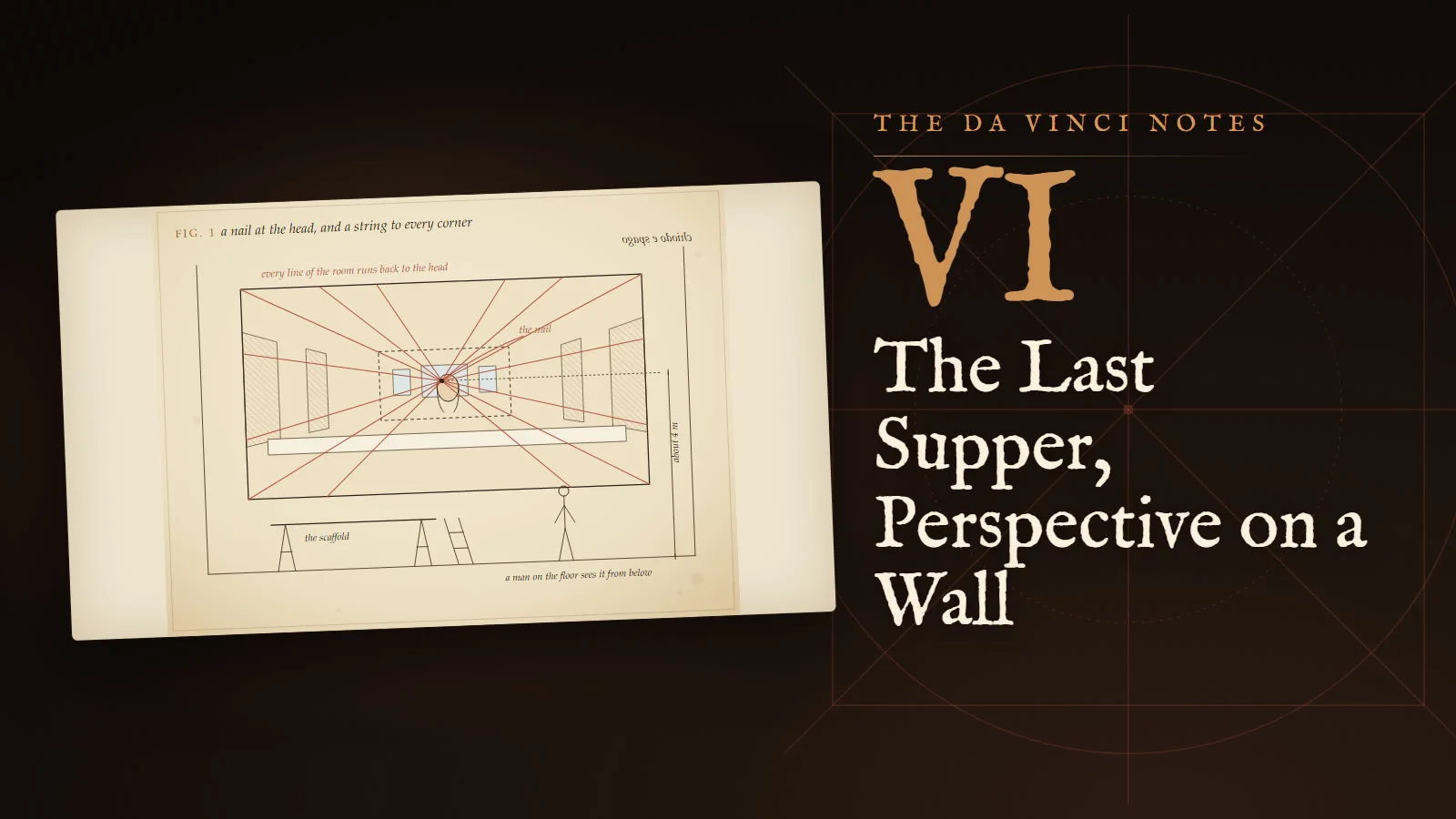
A painted room can be true from one point only, and the friars sit along sixty braccia of floor. I drive a nail into the head of Christ and snap the strings.
How Leonardo set the Last Supper's vanishing point high above the friars, drew its room with a nail and strings, and why his dry-wall paint began to fail.
Leonardo da Vinci
·
November 8, 2026
·
28 min
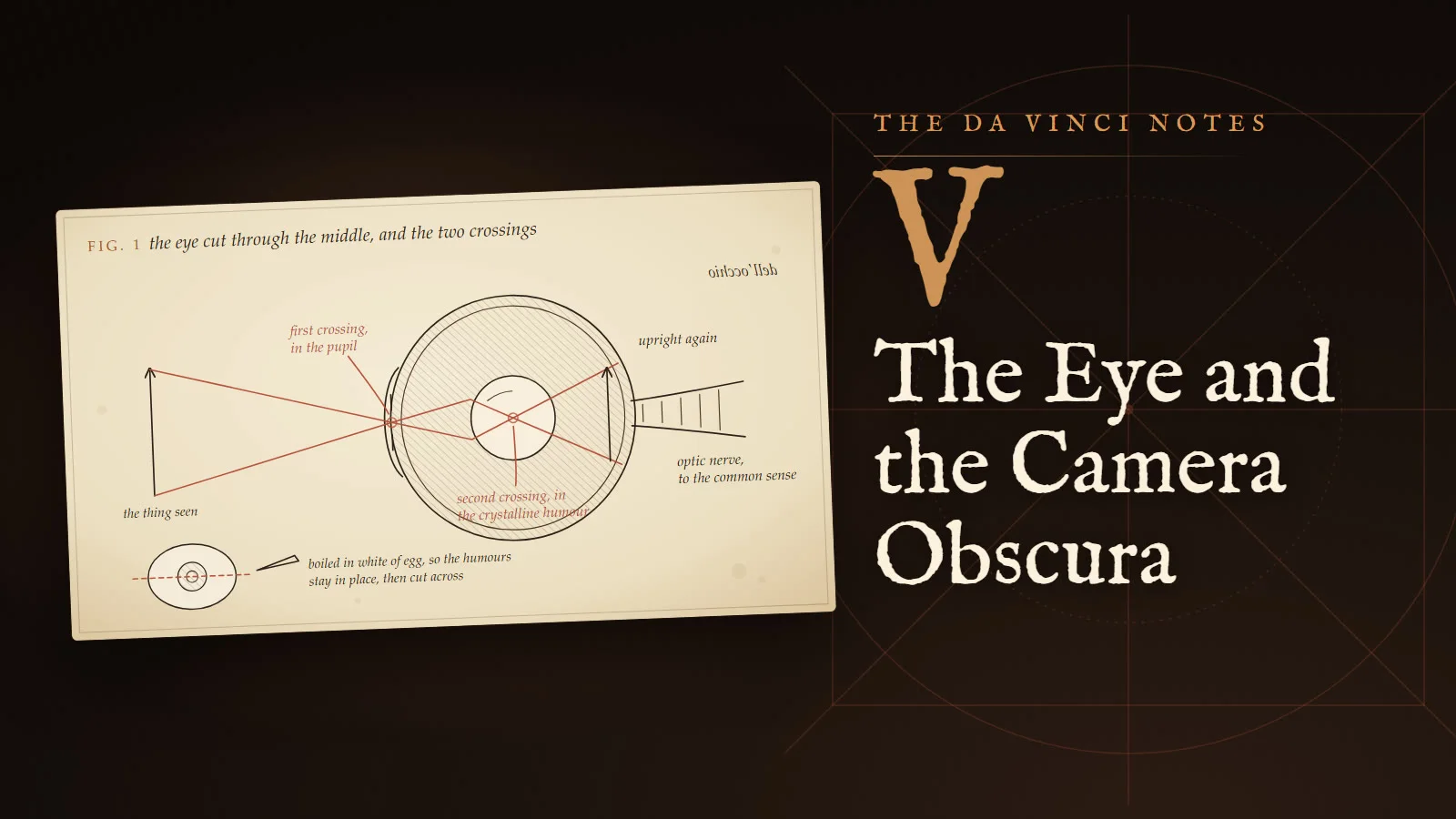
A whole piazza comes upside down through a hole the size of a millet grain. If the eye is such a chamber, what turns the world the right way up? I boil an eye in egg white to find out.
Leonardo darkens a room, works out how the hole trades sharpness for light, and models the eye with a second crossing that Kepler later disproved.
Leonardo da Vinci
·
November 8, 2026
·
28 min
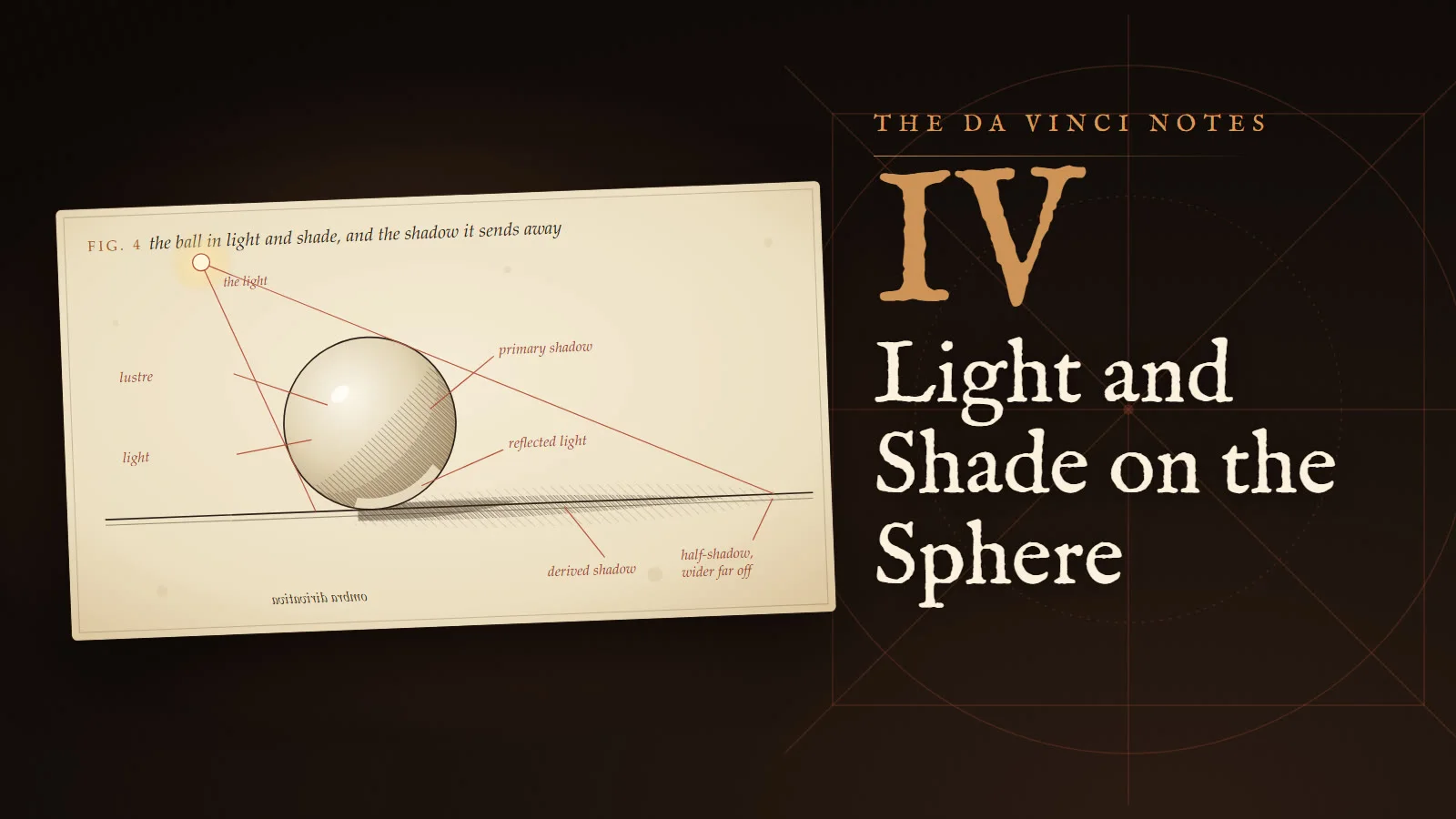
A white ball, a candle and a window: the shadow on the body and the shadow it sends away, why the half-shadow widens, the light the floor gives back, and smoke at the edges.
Leonardo's Manuscript C on light and shade: primary and derived shadows, the three forms, why the penumbra widens, reflected light, lustre and sfumato.
Leonardo da Vinci
·
November 8, 2026
·
28 min
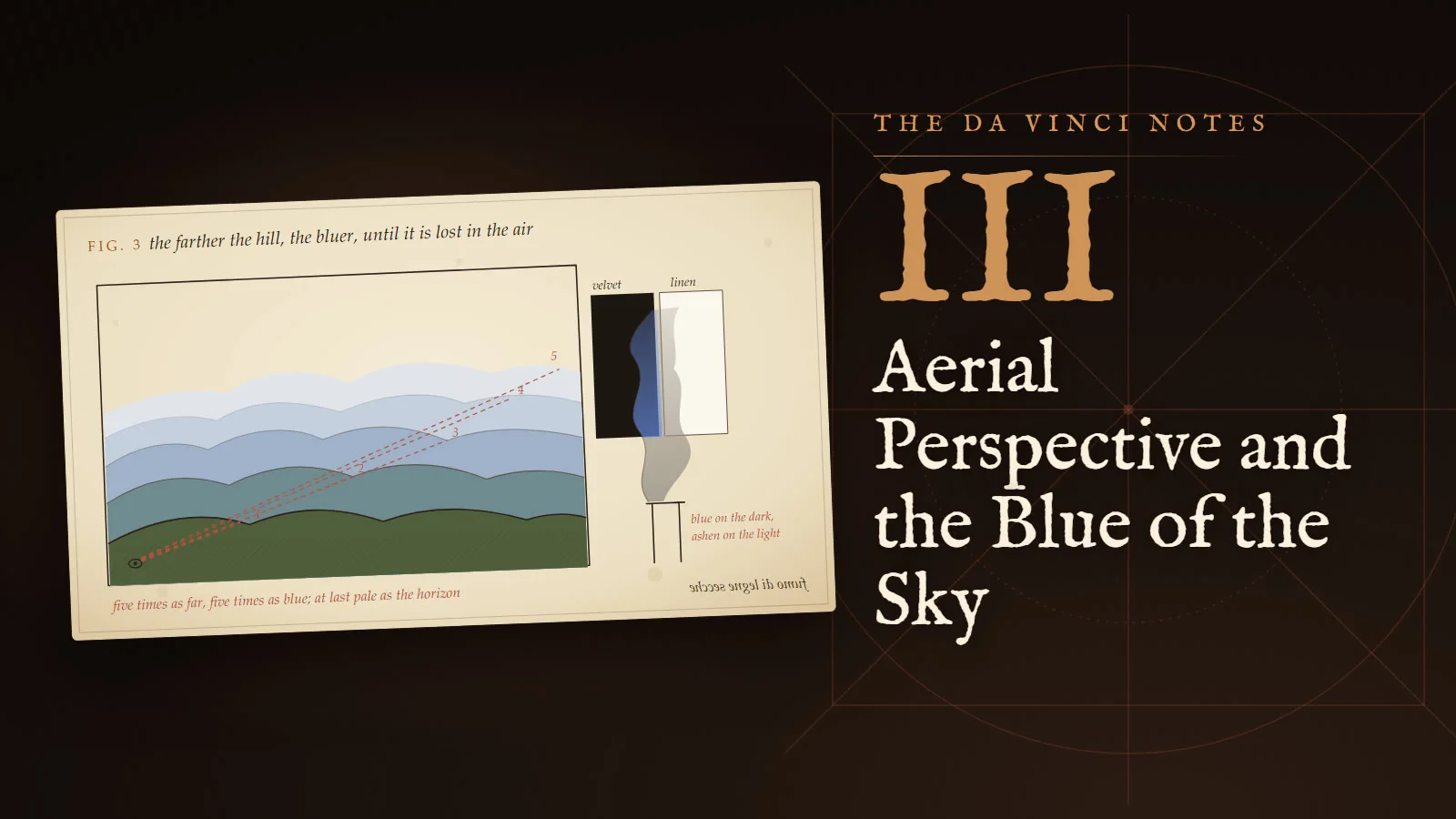
Why the far hills turn blue and then pale, why dry smoke is blue before black velvet and ashen before linen, and what I saw above me on Monboso.
Leonardo's aerial perspective: five times as far, five times bluer, the smoke and velvet test, the Codex Leicester blue sky, and what Tyndall and Rayleigh found.
Leonardo da Vinci
·
November 8, 2026
·
28 min
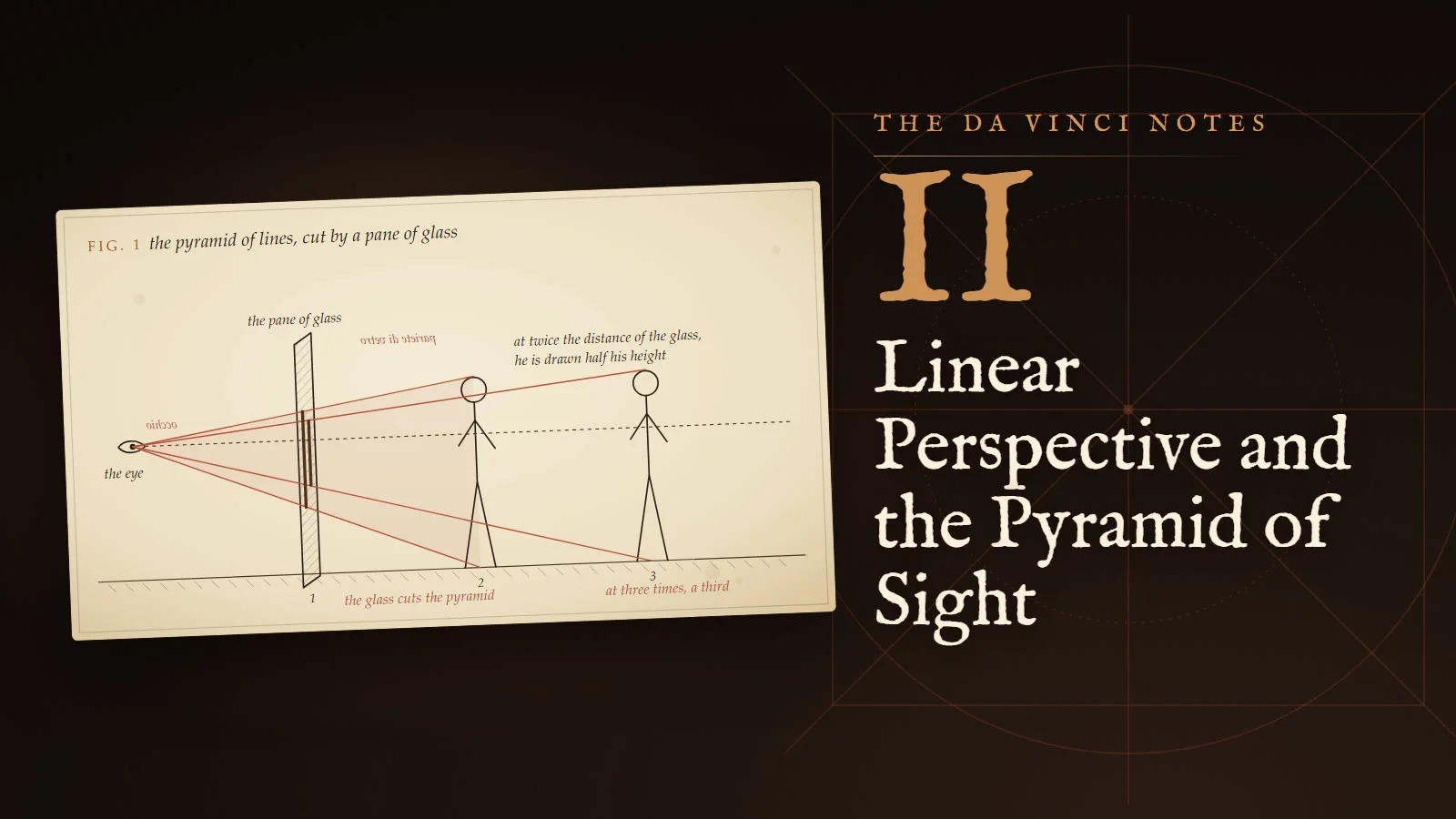
The glass, the pyramid of lines and the point of diminution, from Brunelleschi's panel to my own first rule, which was wrong.
Leonardo on linear perspective: the pyramid of sight and the pane of glass, why twice the distance looks half as tall, and the error in his first rule.
Leonardo da Vinci
·
November 8, 2026
·
31 min
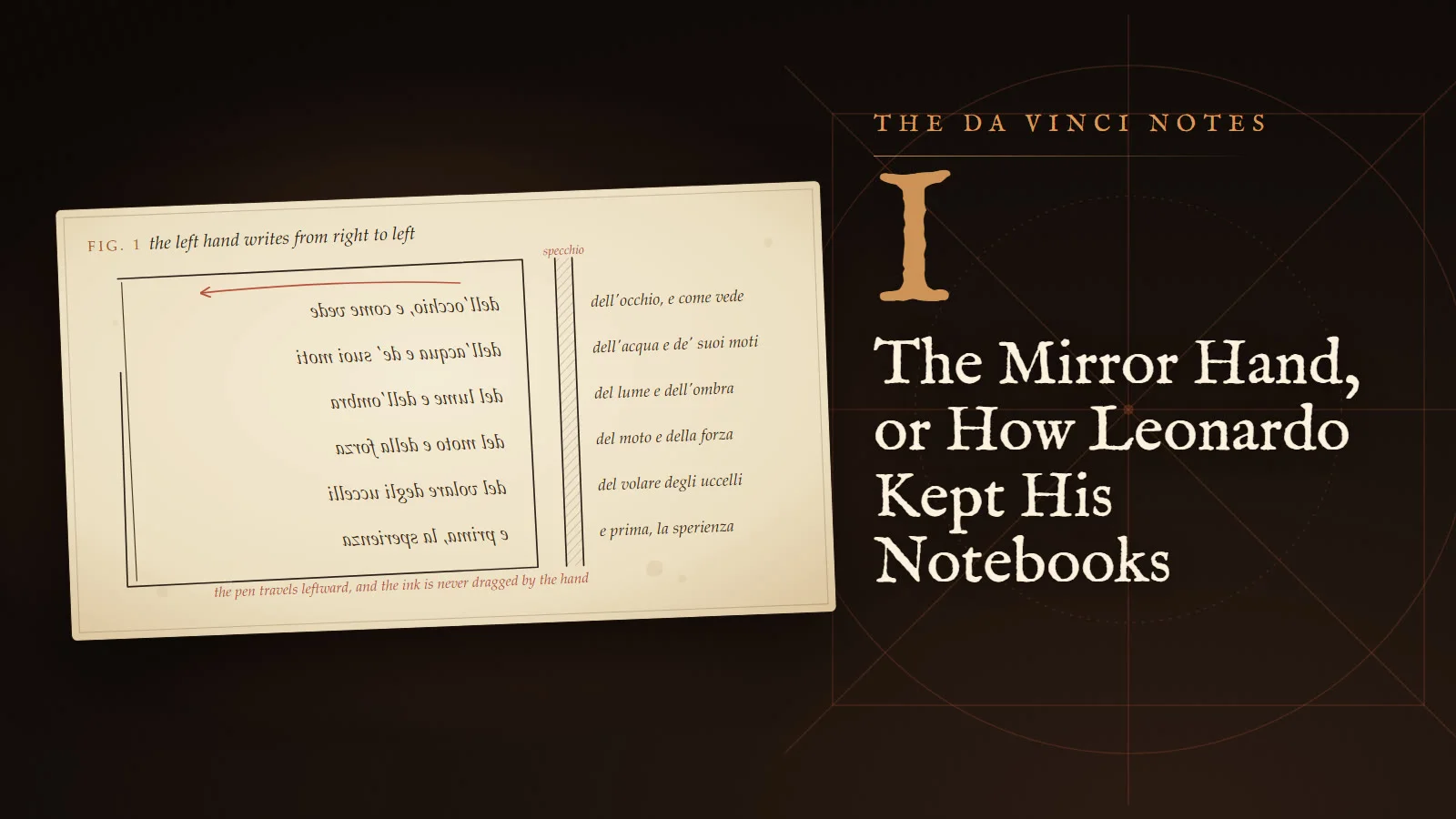
Why my left hand runs from right to left, what I put in my small books and long lists, and what I fear will become of them when I am gone.
How Leonardo kept his notebooks: mirror writing and the left hand, his to-do lists and word lists, and how the codices were scattered after Melzi.
Leonardo da Vinci
·
November 8, 2026
·
33 min







 by Marie Curie
